From incarcerated to CEO: driving change in youth justice from the inside-out with Michael Kwan
It starts with storytelling and reflecting on your own journey. Obviously, not everyone has been in youth detention before. But think about your story. Think about your perception of youth crime, of people who have been through this kind of thing and where do you sit with it?


During his first night in prison at 16 years old, Michael Kwan knew it was time to take accountability for the choices he’d made. Now, Michael wants to share the opportunities he made for himself - an education, a part-time job, a place to call home – with other at-risk youth and those already inside the youth justice system. He’s now the CEO and co-founder of Praxis Youth, a non-profit that is translating big ideas into real action for young people.
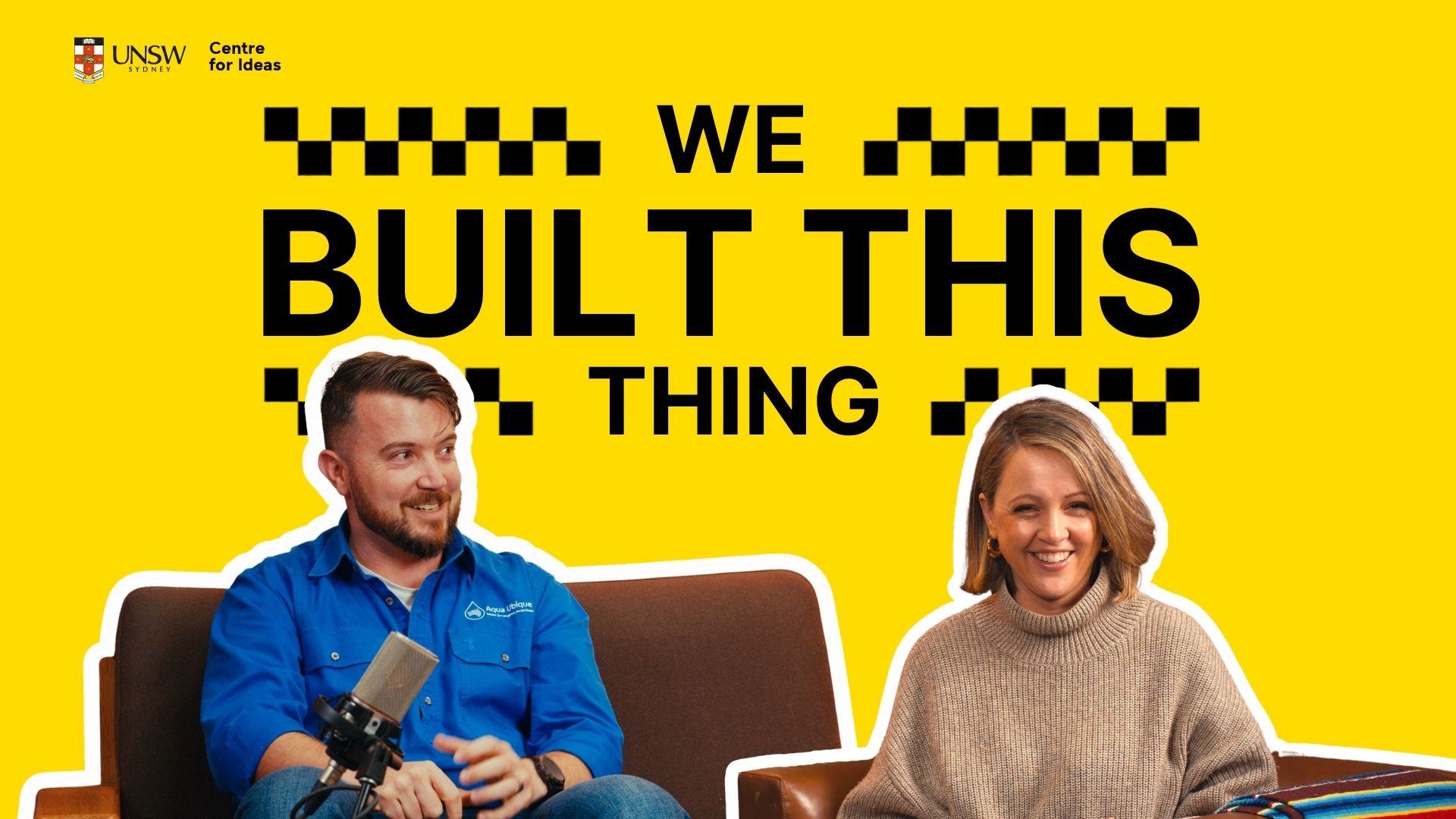
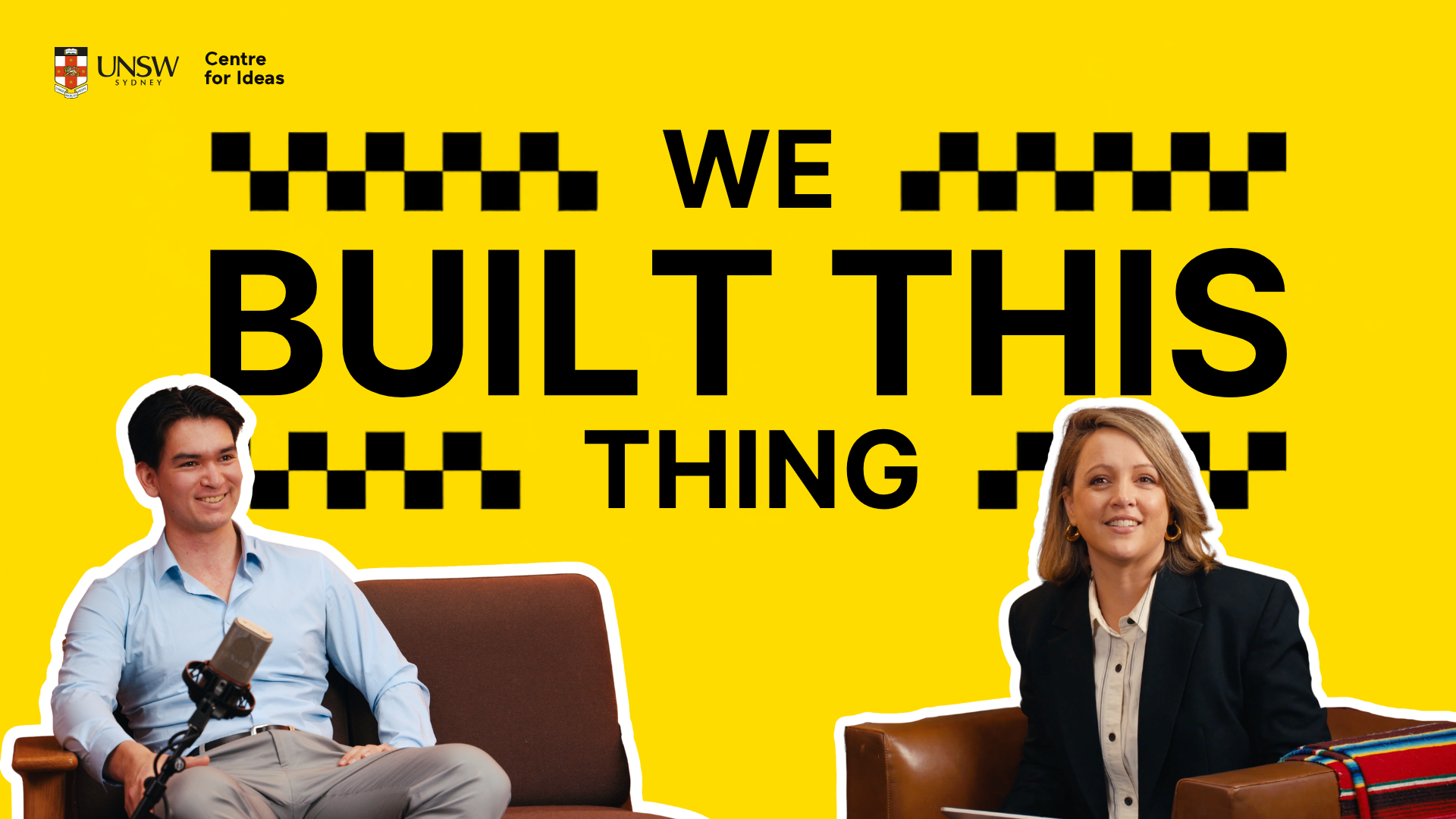
On this episode of We built this thing, Michael chats with host Justine Rogers about what drove him to complete an education from behind bars to graduate from high school and pursue engineering at UNSW. As if he hasn’t accomplished enough in such a short time, they’ll also dive into Michael’s life as a CEO in his 20s and how he’s turned his life’s mission into an award-winning organisation.
Watch on YouTube
Podcast Transcript
UNSW Centre for Ideas: UNSW Centre for Ideas
Michael Kwan: That night when I was sitting in this cell, concrete walls and floors and everything, I just had a kind of moment, I was like, wow, I really have made some terrible decisions and I've landed myself here. I need to make a change. In our youth justice system, its intent is to rehabilitate.
In reality, that is not how it If you don't advocate for yourself and you don't take the steps to change, it doesn't happen. You could spend years in there and come out the same person that you were when you first came in. Part of being a good founder is being able to learn quickly and learn enough about something that you know what's going on and you know which people you need to go to to get help.
How do you make systemic change or how do you make a kind of impact in an issue that is so large that it feels impossible? I think it starts with storytelling and reflecting on your own journey.
Justine Rogers: My name is Justine Rogers and you are listening to We Built This Thing. On today's episode, we're chatting with Michael Kwan. Michael is the co-founder and CEO of Praxis Youth, a not-for-profit dedicated to improving youth justice outcomes by providing housing and other support services to at-risk youth.
Michael's team and he were recently awarded with the Peter Farrell People's Choice Award for their work in this area. And we have Michael as a guest today and he's going to be speaking about his own experiences being incarcerated and the journey from being incarcerated right through to being a founder of this organization. We're going to get right into the nature of this company and how he has built it but I really want to get into his backstory first because it's critical to how this business has evolved.
So we're going to start back in a quite a difficult part of his story and but it is critical I think to hear it if you don't mind starting. When you were 14, Michael, you left home and by 16 you're in youth detention and I just think I read and I was just so struck by you believing on your first night inside that things were going to change for you. How did you even have that belief in that moment in that context?
Michael Kwan: Yeah, I think that it was a long journey. You know, back at 14 and going to 15, 16, I was facing a lot of kind of difficult circumstances and making some poor choices as well. So yeah, that night when I was kind of sitting in this cell, concrete walls and floors and everything, I just had a kind of moment I was like, wow, I really have made some terrible decisions and I've landed myself here.
I need to make a change. And yeah, I think it was even more than belief. I like to think of hope as having a very strong belief paired with ability to take action.
So in that moment, I believe that I could make a change and that I need to take action. I didn't know what that action looks like at that moment, but I knew I was going to change.
Justine Rogers: And in terms of getting you into youth detention, is there something that most people don't understand about the path to say your childhood into offending or into finding yourself involved within the justice system?
Michael Kwan: I think it's a very, very complex question, but the way that I see it is there's four kind of pillars. There's, you know, your housing stability, your involvement with education or employment, your mental health and your connection to community and sense of belonging. For me, all four of those things were just terrible when I was young and that paired with some, you know, poor decision-making as a young teenager.
That really was what landed me there.
Justine Rogers: And I've read when I was learning about you that you had some real key people who believed in you. What do you think they saw in you that you couldn't see in yourself?
Michael Kwan: Yeah, I think I'm actually not sure. I just know that I'm, you know, eternally grateful. You know, I remember that there was a teacher at when I was also, I went back to school when I was inside and there was an English teacher and I'd say he'd be about, you know, 66 and he delayed his retirement just to continue, you know, helping me with my English and my HSC.
So it was absolutely amazing. I wouldn't have been able to get the mark that I did get without his help. There were chaplains, there were mentors.
So I don't, I don't know to be honest, but I just know that I'm grateful and I wouldn't be here today without their support.
Justine Rogers: And so, and what did getting your HSC and then going to university mean to you at that time?
Michael Kwan: I think that then it was actually the first time in my life that I had committed to something over a long period of time. I mean, I'd gone back to school into year 10 after not being in school for a couple of years and then, you know, did year 11 and year 12. It was an accomplishment that took, you know, a couple of years of doing the work every single day.
And that's something that I had never done before. So it was huge. I think the power of education itself as well, you know, not just getting the piece of paper at the end of the day, but the process of learning and understanding how you learn was really important to, for me, I guess, growing up into my own person.
Justine Rogers: And were you on campus? Were you able to travel to university at the time?
Michael Kwan: So when I was doing my HSC and I was inside, so that was completely correspondence, you know, writing on a piece of paper, sending it out to Sydney, no internet, no, no ChatGPT. Then when I started university, I was actually the first person, first young person approved to go out to campus by myself to attend classes. So I'd go on the train, come out to my classes and then go back in the evening and stay at the centre overnight until I was released.
Justine Rogers: They must have seen something in you then to let you kind of go on your own.
Michael Kwan: Apparently, yeah.
Justine Rogers: You still haven't thought about what it is that you were kind of signalling about where you were going?
Michael Kwan: I think that I was showing that I was really committed to change. You know, I was very committed to my studies. I put a lot of hard work in, you know, that stay up doing, you know, kind of homework stuff. But really, yeah, I'm not too sure.
Justine Rogers: But did that whole experience, and I don't want to sum it up briefly, but did that whole thing give you a sense of responsibility for other people? Because it seems like a lot of things went right for you in a really difficult situation. And I'm just wondering if perhaps as youth, and we're going to talk about that now, but was there an intention to sort of operationalise what went well for you to get you out of this situation that you're in?
Michael Kwan: So I think in our youth justice system, its intent is to rehabilitate. In reality, that is not how it works. If you don't advocate for yourself, and you don't, you know, take the steps to change, make change for yourself, it doesn't happen.
You know, you could spend years in there and come out the same person that you were when you when you first came in, if you don't, you know, advocate for yourself. So I was able to do that. I was very lucky to be able to do that.
Over the years of going through education, I learned how to communicate my thoughts and, you know, what I wanted for myself. So that, you know, led to bigger and bigger things to eventually I was going to university. For the majority of young people, they don't have the ability to advocate for themselves.
They don't have the communication skills. They don't know what the possibilities are.
Justine Rogers: Because who are you talking to when you say advocating to you?
Michael Kwan: Yeah, so everything is kind of gatekept by staff and by different levels of management and risk assessments. So even for something as simple as getting enrolled in a short TAFE course, that might take, you know, weeks to months to get approved. There's the, you know, funding question as well.
Everything is risk assessed and a long process.
Justine Rogers: So for people hearing about Praxis Youth for the first time, what are the problems that it's solving?
Michael Kwan: So when I was released, I was one of very few people to go into my own private rental. I've been working a part-time job. I was studying at university and I secured a rental.
This is really something that no one gets to do. It's very, very rare. And for me, it was very difficult to get that process approved.
There was a huge push for me to go back to environments that would not have been helpful for me. And, you know, I've studied engineering. I guess any engineer will agree with me.
I think the big thing that we do is take really big problems and break them down. We are, you know, being trained how to solve problems. And with that kind of lens, I looked back on my experience of exiting custody and looking at the landscape of what support is there.
And there was a huge gap and really still is a huge gap. It's very hard to get safe, secure housing upon release. It's difficult to get a job at all, let alone as a young person with no work experience potentially coming out custody.
There was a huge gap there.
Justine Rogers: So, yeah, what is it like psychologically when you leave sort of youth detention? Like sort of what do young people need? Because I would have thought, initially, I would have thought housing might be needed last in a way.
But in practice, youth, it's housing led. And then I think you then get casework help. Is that the model?
Michael Kwan: So we really are focused on housing first. We take the approach that you need housing, not just a roof over your head, but a place to feel like you belong, you have some ownership over. You can't have a job without having an address, without having a home.
You know, hard to have a sense of community. So, yeah, we really do believe you have to have that housing first. So our kind of model, our program, we do four weeks from the point of a young person leaving, focusing on those four pillars I mentioned.
So making sure they have secure housing, getting them some type of income, employment, and seeing if they can get involved in education. And then, you know, supporting them in their mental health and building a community around them. So we're really focused on being a relational kind of point for them to come to with, okay, I'm struggling with this.
I'm finding this hard, building rapport so that they feel like they're supported.
Justine Rogers: Who do you work with as Praxis Youth? Is it just you or have you got a team and who are you engaging with to supply this model?
Michael Kwan: Yeah. So I lead the organisation and have a team of caseworkers that work directly with young people and I kind of oversee that. And in the non-profit space, we're a registered non-profit.
It's quite different to a typical business landscape. We don't so much have competitors as we do have allies and people that we are working with. We're all trying to come together and band together to solve these huge, huge issues.
So yeah, we're really focused on partnerships. We work closely with Conflict Pathways, another non-profit that works with young people in the justice system. We're making connections with community legal centres and other non-profits, universities, that type of thing.
Justine Rogers: And can you talk about some of the outcomes that you see working? Like what evidence that you're seeing that your model's actually helping?
Michael Kwan: Yeah. So just at the beginning of this year, we had our first little pilot program finish up and it was super encouraging. We helped a young person into their own university pathway, which was incredible to see, both in stable, independent housing situations and are both still on really good trajectories.
And we've just started with our next cohort. We're going to be working with up to 24 young people before around August. And yeah, we're seeing some positive stuff.
It's a very difficult, I guess, landscape. There's a lot of complex issues that a young person can be facing. But yeah, we do have pretty strict evaluation frameworks that we stick to to make sure that we're doing the right thing.
Justine Rogers: Is there anything distinct about what you're doing today that's more challenging, say with the internet and access to other influencers online with the Manosphere or other things or other groups online that can be influencers? Is it another pressure or is that not so?
Michael Kwan: I think that there's two parts to that. First of all, is the influence on the young people we support. So, you know, seeing influencers over YouTube and like social media that can be negative for them.
Sometimes that can be difficult to break down. That is actually not reality to, you know, be driving a $500,000 car. So that's one element is changing their perception.
I think the other and the more dangerous part is the perception of public society on criminals and these kind of labels. It's very easy to dehumanise kids. You know, these kids are from age 10 through 18 and ignore the situations that led to them committing crimes.
So, you know, people with really complex trauma, being homeless when you're young, not having social connection. Yeah, I think there's a really complex story behind each young person. We need to remember that these are people, these kids.
And yeah, we've done the wrong thing and there has to be consequences for that. But if we dehumanise them, it's a really dangerous path.
Justine Rogers: So in you saying that, it really strikes me how you're doing something that you've lived yourself and you're, you know, how do you kind of manage having a sort of lived experience as well as trying to develop certain business skills and all the other things? So how are you managing being, having lived it as well as trying to be this founder of an organisation?
Michael Kwan: Yeah, I think it's difficult. And in our society now, you're all over the news. There's all of these terrible stories.
It really feels overwhelming. You know, cost of living is insane right now. I think it's very easy to feel like, what can I actually do?
Can I actually make an impact? And yeah, I think I have a very strong connection to practice youth in this justice space because I have lived it. As a founder and a CEO, it's your job to be the face of the organisation.
I think that it can be counterproductive if you are the business. There has to be a solid model behind the idea. So yeah, I think it's a fine line to walk.
Yes, I have this lived experience and it's my story, but I am not the business model. There's there's me, if that makes sense.
Justine Rogers: So I guess what expertise and skills have you had to learn on the go?
Michael Kwan: Yeah, it's been a deep learning curve. There's many, many things.
Justine Rogers: Who's helped you or what's helped you?
Michael Kwan: Yeah, a combination. I mean, YouTube has been awesome. I've had a lot of great mentors, but it's all the little things, learning how to use Xero and how to process payroll, how to use WordPress.
We've had nightmares in the past week with migrating off WordPress.com to WordPress.org, which I had no idea that they were separate things. Lots of little things, but I think that's part of being a good founder is being able to learn quickly and learn enough about something that you know what's going on and you know which people you need to go to to get help. You don't need to be an expert at everything, but I think you need to get your head around things in such a passive that you know who to go to.
Justine Rogers: And so what do you think has been the hardest part of turning a mission into an organisation?
Michael Kwan: I think that it's very difficult as a non-profit. There is no kind of path to profitability. We're not going to break even.
We are reliant on philanthropic funding. And in that sense, we are trying to do a lot with little resources. And that's kind of just the nature of what being a non-profit is in Australia.
So I think that's challenging.
Justine Rogers: What stage is Praxis Youth up to now in terms of its development?
Michael Kwan: Yeah. So we just got funding from Waratah Education Foundation, which was awesome. So we're going to do some great stuff with them.
We incorporated in September of last year and it's a bit more complex with a non-profit than just a normal business. There's all of the kind of compliance registration stuff we have to do. We have to have a board of directors and proper governance.
Justine Rogers: So what's that Waratah support going to mean for you guys?
Michael Kwan: So yeah, we've just been able to bring on a new caseworker who's going to be leading the program with young girls who are in custody and coming out of custody. And yeah, support looks a lot different than for the guys. And yeah, so on track to support 24 young people pretty intensively over the next couple of months.
Justine Rogers: How do your friends and family see you now? I mean, you mentioned when you left, there was a lot of pressures to kind of go back to that kind of a certain way of living. And maybe, I'm not saying all those friends are still around, but just generally, just does it feel different now? And are people proud of you?
Michael Kwan: Yeah, it's a lot different now. I mean, I've been able to build up my relationship with my dad and siblings again, which has been awesome. I have a really supportive group of mates.
And thinking about where I am now compared to five years, 10 years ago, it's crazy. Leading an organisation, advocating for social justice for these young kids. Yeah, it's really special.
I have a great network of people backing me.
Justine Rogers: Do you feel pressure now to just be basically perfect? Do you feel at all? I'm just saying in between being an angel and not an angel, do you feel like sometimes you can just slob out and watch MAFS and just not be perfect all the time?
Do you feel the burden of now that you have to almost always be kind of a good and virtuous person? Can you just sometimes not be a little bit?
Michael Kwan: Yeah, I think that it's a bit of a pulling back and forth thing. On one side, we get told, make sure to take care of yourself and take a break and have a holiday. On the other hand, it's like you're in your 20s, work 13, 14-hour days every day, you'll get over it.
But yeah, I think it's just about finding the balance day to day. I'm big on health and fitness. Fitness was a big thing for me for my mental health and taught me a lot about how dedication works when I was coming through custody.
Same thing now. So I'll make sure to stay on top of my gym and take a break when I need it. Kind of self-regulation is important.
Yes, we need to work really hard. I work very hard. I work long days.
But self-regulating when I need it is still important. Yeah. I think there is a lot of responsibility.
I work in a space where things are very high stakes. If we stuff up with a young person, that could mean that that young person, potentially their kids, even their kids' kids, that they could be in a cycle of incarceration. What we do has effects for potentially generations.
So it's very high stakes, a lot of responsibility, but very privileged to be when we do things right, when we can have an impact. It's really special to see what can actually happen.
Justine Rogers: And if someone's listening who wants to start a mission led organisation, what advice would you give them even just to start?
Michael Kwan: Yeah, I would say two important things. One, in advocacy, in community organising, we talk about, this is something I've really been learning about in the past couple of weeks, is think about your sphere of influence. What things can you control?
Where do you have strengths? What little things can you do now? One thing could be reflecting on your life story, on your experiences.
Where do you have expertise that other people don't? The second thing I think is, one thing that has always stuck with me, there was a lecturer here, I did a course with UNSW Founders, and the biggest takeaway I got from him was focus on the problem. And yeah, if you have a good problem, then you've got a good business.
Understand the problem. Who are the people facing this problem? What are their pain points?
Yeah, really get into the details of it. Don't start with the solution, start with the problem.
Justine Rogers: If people want to get involved in youth praxis, how might they get involved?
Michael Kwan: It starts with, we have this idea in, how do you make systemic change? Or how do you make a kind of impact in an issue that is so large that it feels impossible? I think it starts with storytelling and reflecting on your own journey.
Obviously, not everyone has been in youth detention before, but think about your story. Think about your perception of youth crime, of people who have been through this kind of thing. And where do you sit with it?
What do you actually think about it? In terms of practical things to support Praxis Youth right now, we're always kind of looking for volunteers. We run workshops with our young people around life skills.
So yeah, we're always looking for volunteers to kind of help out with those.
Justine Rogers: Is the best way to get in touch with you via your website?
Michael Kwan: Yeah, or email me.
Justine Rogers: And so if we sat down again in say 10 years time, what would be the dream situation, the report back to me about what's happened with Praxis Youth?
Michael Kwan: Well, our approach is we think that you need innovation and you need programs. You need stuff on the ground level. And we do in the kind of hard yards, working with young people.
You also need work from the top down, systemic work, influencing our decision makers. And you need both of them to kind of come and meet in the middle. In 10 years time, I'd really like to see our program be established.
We want this to be a government funded program across New South Wales and eventually across Australia. We don't want to see young people leaving custody into dangerous situations that are just leading them to go back into custody. Yeah, we want to see this kind of punitive view gone from top down, a view of supporting young people, not labeling them as criminals and lock them up, throw away the key.
Justine Rogers: If you got to go back to that first night in youth detention and meet young Michael there, is there something that you'd like to say to him?
Michael Kwan: Yeah, I think I would say that there is a future ahead and there are great things to come, but you need to put in the work every day. I've always been a strong believer of do the little things right every single day and the big things will come. I think that's what I'd tell him.
Justine Rogers: Thank you so much. I really appreciate it, Michael.
Michael Kwan: Thanks.
Justine Rogers: So that was We built this thing and we just heard from Michael Kwan, the founder of Praxis Youth.
Tune in to the full series
Michael Kwan
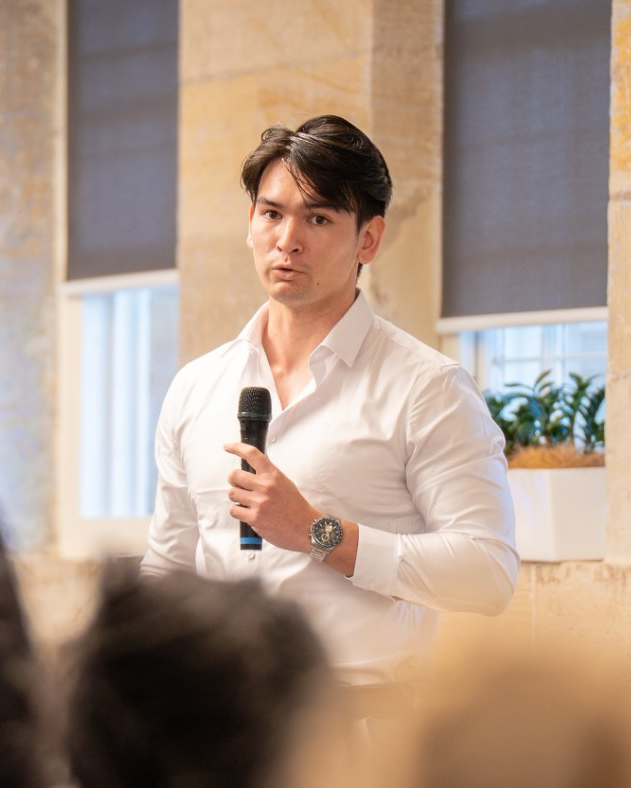
Co-founder and CEO, Praxis YouthMichael Kwan is the co-founder and CEO of Praxis Youth, a nonprofit dedicated to reducing youth crime recidivism by providing housing, mental health support, employment, education and connection for youth who are justice involved or at-risk of incarceration. He and his team won the Peter Farrell Cup People’s Choice Award for their work in 2025, and he is currently pursuing a bachelor's in engineering at UNSW.
Justine Rogers
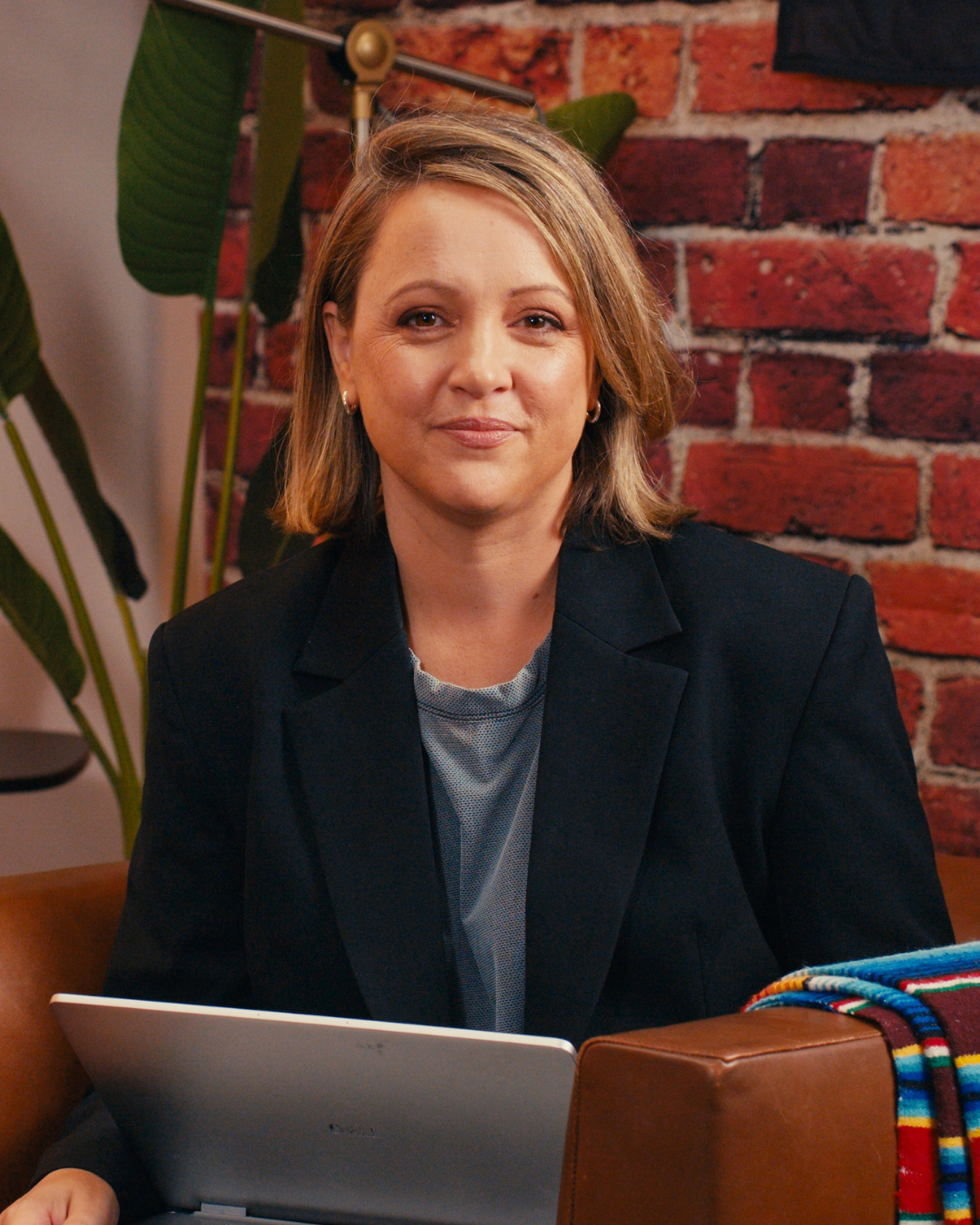
Associate Professor, UNSW Law & JusticeDr Justine Rogers is an Associate Professor at the Faculty of Law & Justice, UNSW Sydney, specialising in ethics, justice, and new technologies. A lapsed stand-up, she found life without self-doubt oddly unsatisfying and is now co-writing a comedy feature film – proof that it's never too late to follow your dreams that you'll give up again.