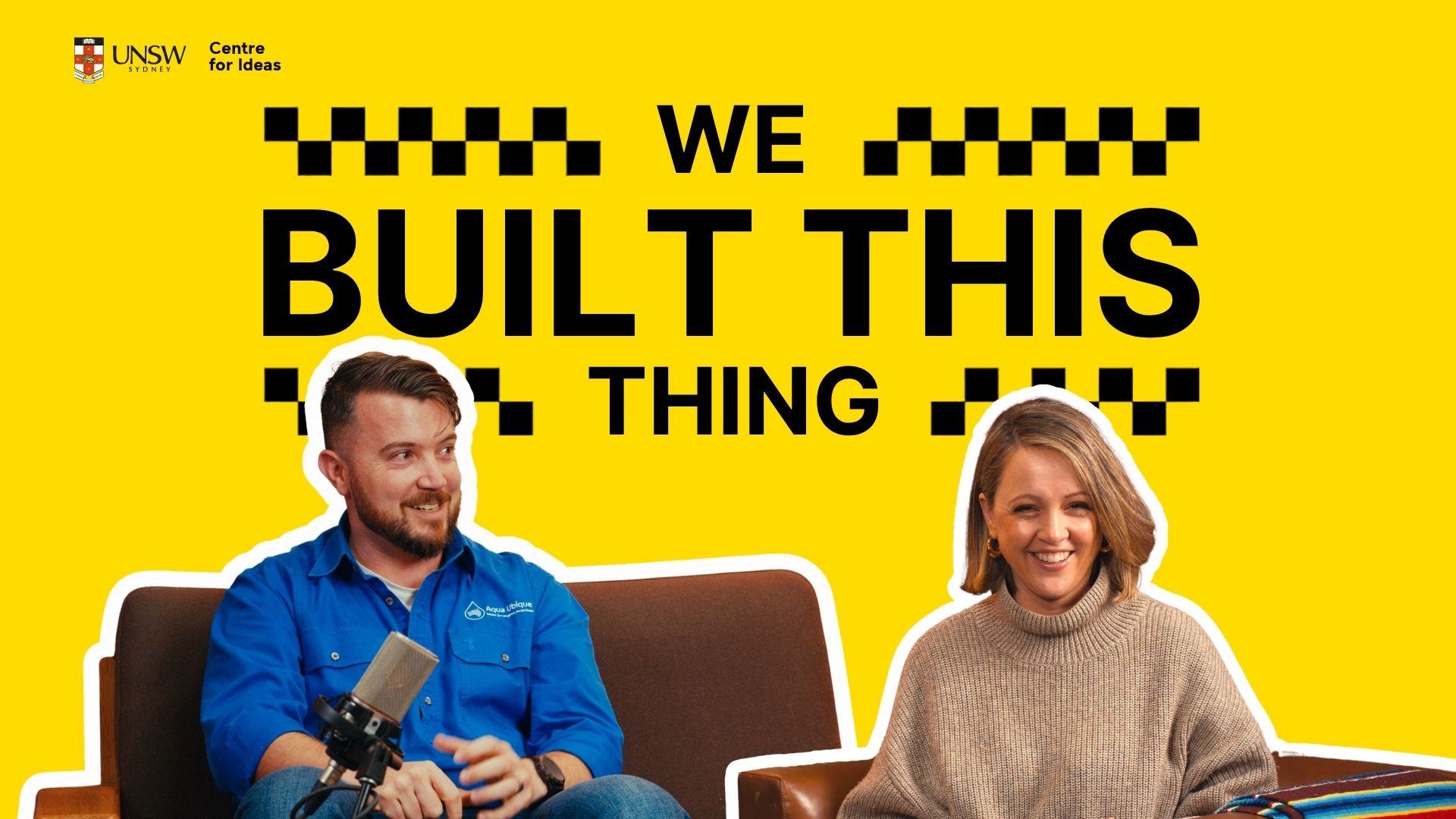
The competitive edge as a first-time founder in your 40s with Janet Salem

Every financial decision can be made towards a better future if you have the right information.


After 17 years at the United Nations, Janet Salem was growing frustrated with the gap between the sustainability data she was gathering, and the information businesses were using to make investment decisions. She saw an opportunity to give business’s crucial insight into their resource consumption and environmental impact to make more informed decisions, the same way food packaging provides nutritional information so that consumers can make more informed decisions. Now, she’s co-founded a start-up to help get sustainable investment a green thumbs up from the CFO.
Her journey from UNSW environmental engineering graduate to UN advisor to start-up co-founder sounds like a perfectly executed career path, but none of it was planned. On this episode of We built this thing, Janet chats with host Justine Rogers about being a first-time founder in her 40s. From getting over imposter syndrome in the tech-bro universe to the benefits of breaking the mould from the traditional ideas of what a fin tech founder, UN advisor or engineer should be.
Watch on YouTube

Podcast Transcript
Janet Salem: It's all well and good to have a great solution, but people need to want to have it for the business to actually work. And CFOs, you know, they could save society from climate change. The CFO will have, I guess, three questions.
One is the what, then there's the so what, and then there's the now what. And so we really help them with the first one, which is the what. It was a real, it was a real left turn to work for the UN, because that's not a typical engineering degree next step.
And I was nearing 40, so I thought at age 50, you know, I want to be still very technical. And I just enjoy it. You need to bring your solution to the table, and maybe some guts, a good attitude, and a bit of grit.
But then you need to seek, seek all that help.
Justine Rogers: My name is Justine Rogers, and you're listening to We Built This Thing. On today's episode, we're chatting with Janet Salem, co-founder of Footprint Lab, an organisation that helps businesses integrate sustainability data into their financial accounting systems to support their decision making and their accountability. Janet also worked at the UN for 17 years, and then decided to pursue a PhD on sustainability data.
Janet holds two degrees in engineering from UNSW, and was also the 2022 recipient of the Ada Lovelace Medal for Excellence in Engineering. Welcome, Janet. Hi, Justine.
Hi. If I'm a CFO, and you come to me and try to tell me that I should make my financial decisions more sustainable, and you may have all the data to prove that, why should I care?
Janet Salem: That's the million dollar question. Because before I answer that, I want to say that when you work in sustainability, it's all well and good to have a great solution, but people need to want to have it for the business to actually work. And CFOs, you know, they could save society from climate change.
So, what I would say is a CFO is laser focused on the strategy behind all financial decisions, where to spend, where to lend, where to invest. And what we can do at Footprint Lab is give them all the sustainability layers behind those financial decisions. So, if their investors are saying, we need you to minimize climate risk, we can give them all the climate data about every single financial decision.
But then there's all these other metrics we can provide them, like the water footprint, or the labor footprint, all these insights that are happening in supply chains. And quite often, it's too deep for them to really be aware of them. That can help them kind of see the future, see the dynamics of what's going on in the world, and then know, okay, this is how I can make that strategy resilient towards crude oil prices, or restrictions in a nickel ore supply, if I'm in renewable energy, that's a big one.
Or if I think that a price on carbon is coming, either domestically or in some of my downstream markets, where my downstream customers care about that, well, how exposed am I? So really, for the CFO, it's about minimizing or being aware of the risk in a really easy, automated way. There's already a number for everything.
And what we can do is help bring that as a layer into existing financial data architecture that they already use.
Justine Rogers: Yeah, so for non-accountants listening, what does it look like when you're providing sustainability data? Does it look like a kind of some kind of spreadsheet? Does it look like an online portal?
What do they get from it?
Janet Salem: Well, we actually try to go one step back from the business. So if there's a business and the CFO is in this business, what we would prefer is, why don't we integrate with the software that you're using? So businesses will have accounting software, ERPs, even the banks themselves that are managing all those transactions that the business is performing.
What we do is actually go into those systems. And that way, the sustainability data becomes sort of an extra layer, what they call like enrichment of the financial or transaction data. But literally what it looks like is we provide, for instance, the carbon footprint per dollar for every sector in every country time series, right?
So what it looks like is their accounts or general ledgers, or if you think of your own bank statement, there's layers in there where the bank knows, well, what did you spend the money on in which year, in which country, and how much did you spend? This would then go, okay, for those variables, it's 0.5 kilograms carbon footprint per dollar, you spend $100. So that's going to be 50 kilograms of carbon footprint equivalent for that single transaction.
Justine Rogers: How far do you go? If you've given them that they've got that data, do you feel, and we'll get to your journey to building Footprint Lab, but do you feel like you then have, do you have then access to what they do about it? Or is it then just up to them?
Is there an enforcement piece? I mean, say you saw this transaction is like killing 1 million. There's not even a million existing.
That's part of the problem about polar bears or something. And they were just like, I don't care. Do you have any follow-up or is it just up to them at that point?
Janet Salem: Well, the CFO will have, I guess, three questions. One is the what, then there's the so what, and then there's the now what. And so we really help the first one, which is the what.
What is the number? What is the quantity and where and all of that? Or maybe it's another business that is trying to go net zero.
Now they can look at different companies and go, okay, well, that one's got this much carbon. This one's got that much carbon associated with it. So rather than the implications, there is such weak policy right now that enforcement isn't really a concern.
There's only enforcement when it comes to disclosing and being transparent. It's more letting the market forces then exert those pressures for better or for worse. So for me, the most important thing is that it's creating that pipeline to all of those climate solutions that actually do exist, but they have a real problem scaling or getting demand, but they don't have demand quite often because businesses don't know to what extent they're contributing to climate change.
It starts with knowing a number and then whether you take action commensurate to that number, it depends on so many different things, regulations, market, your own business philosophy, but at least they now know the magnitude. Yeah. And that's the idea is to create demand for the solutions.
Justine Rogers: I wanted to go into the start of your journey. Actually, when I was looking at your biography to prep for today, I was like, wow, this is so decisive and linear. Like, well, environmental engineering, the UN, then a spinoff clean tech company.
Did it feel that way when you were experiencing just like I knew what I was going to do and it all was so almost inevitable?
Janet Salem: I wish you could go back in the past and tell my parents that this was a very logical decision because no, and I actually started university studying physiotherapy. So I pivoted pretty hard in the early years, but I did physiotherapy for two years. It was great, very solution oriented.
That's quite stimulating to me. But then, you know, for reasons I went, I thought the environment just, they just said too many headlines about another problem or another species that's in trouble when it comes to the environment. And it just felt like, is someone working on this?
Like, obviously many people are, but if I felt that real tension between the problem and like closing the gap of that problem, and then I switched. And then I just thought I would go into a sort of standard engineering consultancy after that. And it was a real left turn to work for the UN because that's not a typical engineering degree next step.
You know, so tell us about that step.
Justine Rogers: Like how did you go to make it or, and then what was, what were you doing in the UN?
Janet Salem: That, yeah, it was, it was completely unintended, but I did have to do industrial experience as part of my degree, which actually was here, the UNSW. And so I just thought, oh, it would be great to do something that has a bit of a global view. And also because I have a multicultural background.
So I was kind of interested in seeing how other parts of the world see it as well. So I did an internship, part of that internship was developing a proposal for a science policy interface on the sustainable management of natural resources, something that felt very esoteric to me, but was very, very interesting. I really enjoyed it.
And it just turned out that that proposal sort of led to that being created and they invited me to apply for that job. And so I worked in a secretariat for this science policy interface, which was, I was not trained for that, but the solution, sort of the problem constraint solution orientation of engineering was pretty well suited to it in hindsight. So they would say, we need a global consensus from science on this topic, this topic, this topic.
So the idea was to convert those into science questions and then convene the right scientists to answer those questions. You've got to get that balance right. And then those conclusions can then be taken forward at that national level.
And after I'd been doing that for a while, an old colleague of mine said, I've got a new project in the Asia-Pacific office of the UN. So I applied, I got that and then really worked at those front lines with different countries around Asia and the Pacific. And then, and that's where, I guess that's where Footprint Lab came out, because we had all this really great data that we used to advise countries.
Basically, they'd say, this is an area where we'd like some technical assistance. And we'd say, okay, let's look at the numbers and see how you compare with other countries. And then we can narrow in on one specific area where it would make sense to improve.
And from there you go on. But it was really limiting to see, they could set a really interesting policy goal. Great.
But the policy instruments, like the mechanisms, is it a tax? Is it a regulation? What is it?
That's really limited unless companies can respond. And so what I was sort of thinking, I wish that all that data exists. I wish that companies had access to it so that they could quickly see, if that's the policy, how do I, where do I stand?
And then within what I'm doing, what are the hot spots? Why is that the number and how can I reduce it? So that's why I left the UN to see, okay, how can we close that gap for businesses?
And that would align with those global policy goals.
Justine Rogers: So I think I read somewhere, you're saying that UN gave you a really good bird's eye view, but you think in a way that everyone who works there should then spin off and focus on a singular problem.
Janet Salem: Is that how you put it? Yeah, the UN is a great place to work. And I recommend it for anyone that has a real, there's something that bothers them in the world that they can really dedicate themselves to and really, because it's a hard slog, minimal resources, a lot of resistance and well, and a lot of travel.
It's quite a, it's not an easy profession, I'd say. But through the time at the UN, you spend, you get so many insights on why, why there are problems in the world, whether that's in health or education or the environment or security. And that's where I think entrepreneurship is such a great next step with the right support for the right people, at least, I'd say not everyone should be an entrepreneur, but you have that deep understanding of a problem.
And hopefully you've seen enough examples of solutions and why they haven't worked that you can start to narrow in on.
Justine Rogers: I have to say, you didn't just go straight from the UN into entrepreneur land. You thought as a, as the kind of high achiever that you are, you know what, I'll just do a PhD.
Janet Salem: Yeah.
Justine Rogers: So you were like, no, I'll just go into academia and do one of the hardest things ever. Yeah. Is that just something where I think you just didn't, even though you were highly qualified and you had the expertise, it was just something that you needed to do to sort of almost protect yourself from being like seen as maybe an imposter or something.
Janet Salem: Yeah. I remember partway into the PhD when yeah, companies started to ask, all these new startups started to ask for data. And my professor would say, I'll talk to Janet.
And I'd sort of think, oh, like maybe I should have just done an MBA because now I'm helping other people build the solution that I wanted to do. So I, but I think, I think the, you know, you see a problem, you want to find a solution. Oh, I'll do a PhD.
I think it's a real gendered approach in hindsight, because I, I'd never studied anything to do with business. I, I, my family background is nothing to do with that. Everyone in my family had always been sort of in education or sociology or health or something like that.
So I really wasn't exposed to a more like a commercial world. And so that was the natural kind of like, oh, well, I'll investigate this and find, you know, good peer reviewed, you know, solid scientific ways to move forward. Yeah.
Justine Rogers: So you're already sort of, speaking of sociologists, the kind of, you know, the classic study of when men want to go for interview, they may have, you know, four of the necessary criteria, but women need to have like nine or 10 or something to go. So you're like, I need to be really ready for this to go into the commercial world.
Janet Salem: Yeah. Imposter syndrome.
Justine Rogers: And do you look back though, when you were saying there were other, say, more of the financial bro type guys asking you for your data and raising capital? How do you see that now? Were they just, were they kind of cocky, but also did you admire that or were you being too cautious or was it a bit of both?
Like, what do you, how do you see it now?
Janet Salem: Well, I do think that every founder has a different, they bring something different to the table. So sometimes you do need that sort of gutsy, like, yeah, just gonna, I just had an idea and I'll do it. Zero background, but hey, we'll catch up.
But the right personality can make that work. For me, what I had was more international networks. So I knew governments in different countries.
I knew experts in different countries. But strategically, and this is sort of, I guess, Footprint Labs moat, is I wanted this to be part of the motivation of producing this data. So one thing I missed is that these enormous datasets used by the UN are produced in Sydney, between the University of Sydney and University of New South Wales and an international network of universities.
And I have always been close to, I like being close to scientists. I like learning. So being part of that team and then commercializing as a research spinout is a much stronger, more credible way to build that specific kind of startup for me as a specific kind of founder as well.
Justine Rogers: So it's actually turned out as a worthwhile kind of detour, not detour, but it actually worked out in the end as what it should have been.
Janet Salem: Yes. And you know what, I just submitted a paper on Saturday night, midnight, wild weekend plans, because I was still doing the PhD part-time. And this is maybe also a gender thing, but it's kept me really technical.
I was never really very interested or motivated by the managerial aspects of advancing your career. And that's certainly what happens in the UN. You become more and more senior, you're more in management, and more and more, you have to engage experts to actually have the time and expertise to execute the interesting stuff.
So I didn't really want to go down that route and I was nearing 40. So I thought at age 50, you know, I want to be still very technical and I just enjoy it. So it was also kind of steering my career away from this bureaucratic way forward, and more into this analytical, creative, technical way forward.
Justine Rogers:I was going to say you're really lucky that you've sort of, you've had experiences at three major forms of institutions, you know, academia, UN, intergovernmental, and now in business. Do you have any other, you've kind of outlined a few of them, but are there any other kind of strengths or limits of each of those types of logics that you see now as particularly beneficial?
Janet Salem: Policymakers are really trying to be at that wisdom level where they have enough information to then introduce a new rule for society. That means that we will all act in a certain way. And so I think working in the policy side, I could see how much demand there is, or like how many limits there are to policymakers if we don't have the right information.
And it's not only for them to make decisions, but it's also for the intended targets of those policies. They can't make those decisions. And so science is back here producing incredible data and producing incredible methodologies, but my view was showing that science is not bridging that gap.
And I think that engineering is actually not a bad way to bridge between science and policy because it's a science of solutions. So it's a very practical way of interpreting technical information, but through the lens of an objective or a goal, and with a bunch of constraints along the way. So yeah.
Justine Rogers: I know that any times when you think that the data that you're collecting may be too, say quantitative focused, too much about stats, is there any moments for qualitative research where you're looking more at non-obvious issues, deeper meanings, attitudes, beliefs, those sorts of things we can't quantify. How does that piece fit into what you do?
Janet Salem: Yeah. Data on its own is not enough. So my research is all about how you apply this type of data into financial decision-making.
And so what you're looking for is it's a few different things that it's where are the final decisions being made that cause climate change, that cause biodiversity loss, all the sorts of things that as a society we've agreed we want to tackle. Whether individuals agree or not, at least there are societal goals. So if you just try to raise awareness of it, you're actually not getting that into where did that actual decision get made.
It's actually when people spend, lend and invest. And insure actually now. There's a lot of industries that can't get insurance or they have really high insurance premiums because they're too exposed to sustainability risk.
But anyway, so the idea was the data could be more compelling, could be more wisdom-oriented, more action-oriented if it's led into the spot where those financial decisions are made. And that's the CFOs, it's the procurement officers, it's board members, shareholders, it's lenders, it's investors, it's all those things. And that's more the social engineering of it.
And also, I guess a lot of my job is showing those use cases and saying, well, why do I need this? Well, this is, you don't want to expose yourself to risk here or there. So it's also been a process of, I guess, stepping back from the sustainability story, which is my motivation, let it go and understand what's the motivation of the people you're trying to get to change behavior.
And then pass it through that lens, address that problem that they've got.
Justine Rogers: So when I was reading your story, I just was struck by this sort of theme of not quite belonging, sort of not being one of the boys, not being one of the finance guys. And I think you were reflecting sometimes not feeling like you were recognized as an Arabic woman. So I was wondering if you would mind just reflecting on being an outsider and being at certain intersections and when that's been and felt to be a disadvantage and when it's potentially been an advantage.
Janet Salem: Yeah, I've always felt a bit on the back foot, I think. And I do wonder if that's a typical immigrant experience when you have an ethnic background. So my background is German and Egyptian, and my parents are very much from those countries.
And it's a miracle that they even found each other and stayed married until this day. But that sort of meant that I didn't really fit in with either parent. And I didn't also, as an immigrant, fully fit in with the sort of typical Australian culture, at least in the 80s, when we migrated.
So a lot of things my family was catching up on that were very normal for others. And it's a typical immigrant thing as well. Like, you know, food is different.
And yeah, just your family culture. Luckily, though, I had three siblings. So, you know, at least you have that unit of people that understand each other.
And then in engineering, I wasn't really a guys girl. And this was now the 90s or early 2000s, when that was still a thing. I'm really happy that it's changed now.
You can really see that gender ratios and gender culture, I think, is different in engineering. And I just sort of thought, oh, maybe I shouldn't be here. Or maybe it's sort of like a bit of a, maybe it's a bit provocative that I'm here, like I'm sort of imposing.
Justine Rogers: And I think did that carry over even because you've been well awarded, if I may say, with some major awards. And I saw some way you reflecting that even when you were being given these pretty major awards in your field, that you still had a feeling of like, you know, not quite, not quite feeling right, or somehow just mixed feelings and not being able to fully enjoy being celebrated.
Janet Salem: I did feel a bit uncomfortable with some of the awards, or maybe like I was taking them from someone else. And even, you know, actually, even at the UN, as an engineer, you know, I hadn't studied international relations or policy. Even there, I felt quite unusual.
And of course, now as an entrepreneur who's never studied business in any way, again, I sort of feel like, but yeah, it doesn't really stop. But I do feel comfortable with being an outsider now. And I think it's a real, I do see it now when you, especially in entrepreneurship, you do see a lot of the very same profile quite often.
And you do think, it would be nice to have a different viewpoint here. And so I'm happy to be the environmentalist at the FinTech events, or, you know, the engineer in, yeah, finance sector or sustainable finance. It's a very unusual feeling, but I like it.
Justine Rogers: I'm glad about that. So what about someone listening who wants to engage in meaningful systemic change through a company? What advice would you give them looking back and how to even get started, like even stepping away from an idea or a hope?
What would, what should they do?
Janet Salem: Yeah, I have a lot of thoughts on that now, because I think if you can see the problem well, if you are in love with the problem, they say that in this startup world, if you're in love with a problem, go for it. And don't wait until you've finished a PhD or an MBA or whatever, because the other thing I've learned is that in the startup world or in entrepreneurship, a lot of people don't go into it because they think, well, I've never really started a company. I don't know much about business strategy.
I don't know how to do finances or HR, et cetera. That doesn't matter because systems are there to help you. So you need to bring your solution to the table and maybe some guts, a good attitude and a bit of grit, but then you need to seek all that help.
So you join boot camps and accelerators, incubators, there's a whole ecosystem of them, depending on whether you just have an idea or you've already started, or you've got some traction and need to grow. There's all of these systems out there to help. So don't feel like you need to know everything.
In fact, you shouldn't because that'll spread you too thin. Get help from the start.
Justine Rogers: Is there a place that you went to that helped you the most?
Janet Salem: Yeah, I did a university incubator. Incubator is when you have the idea. And then I moved on to another program that was more about mentorship for scaling.
Yeah, definitely helps.
Justine Rogers: Okay. So, and before I ask for a final reflection, if someone wants to know more about you and your work, where's best to find you?
Janet Salem: I guess footprintlab.io or follow me on LinkedIn. I kind of don't post much about my business. I just kind of like to post about what I find interesting in the world.
So I guess that would be a good spot.
Justine Rogers: And to finish off, I wondered if you could just reflect on a belief that you hope becomes commonplace and normal in the next 10 to 20 years that would really support what Footprint Lab is doing.
Janet Salem: Every financial decision can be made towards a better future if you have the right information.
Justine Rogers: Okay. Thank you so much. Thank you, Janet.
Tune in to the full series
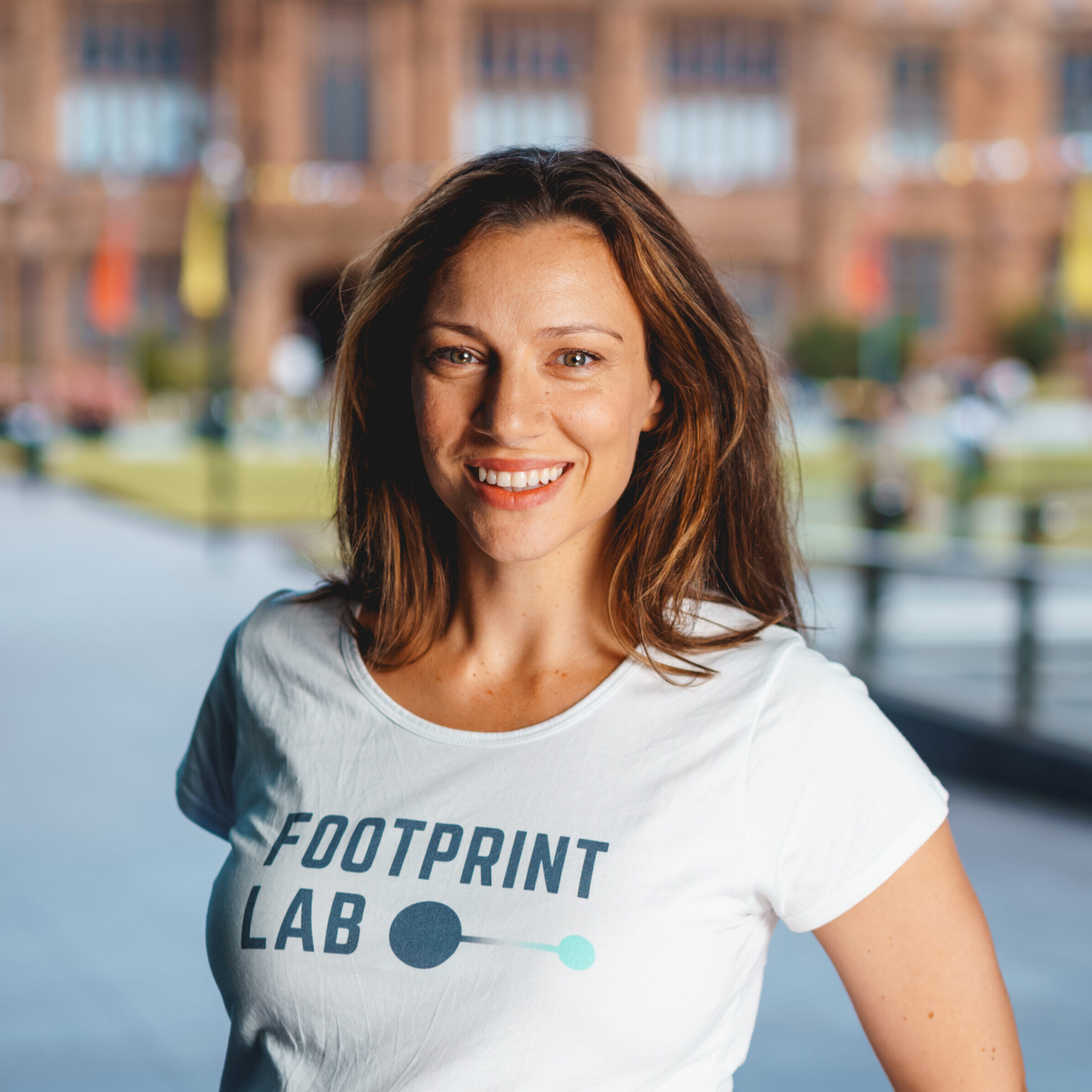
Janet Salem
Co-founder, FootprintLabJanet Salem is the co-founder of FootprintLab, which integrates sustainability data into financial data. Janet spent 17 years at the United Nations working on sustainability, the circular economy and sustainable lifestyles in Vienna, Paris and Bangkok. She’s also currently pursuing a PhD on how to fit environmental, social, and governance data into the financial system. Before that, she led sustainability programmes at UNEP, UNESCAP, FAO, and UNIDO. She has a bachelor’s in environmental engineering and a master’s in environmental engineering science from UNSW and was awarded the 2022 UNSW Women in Engineering Ada Lovelace Medal.
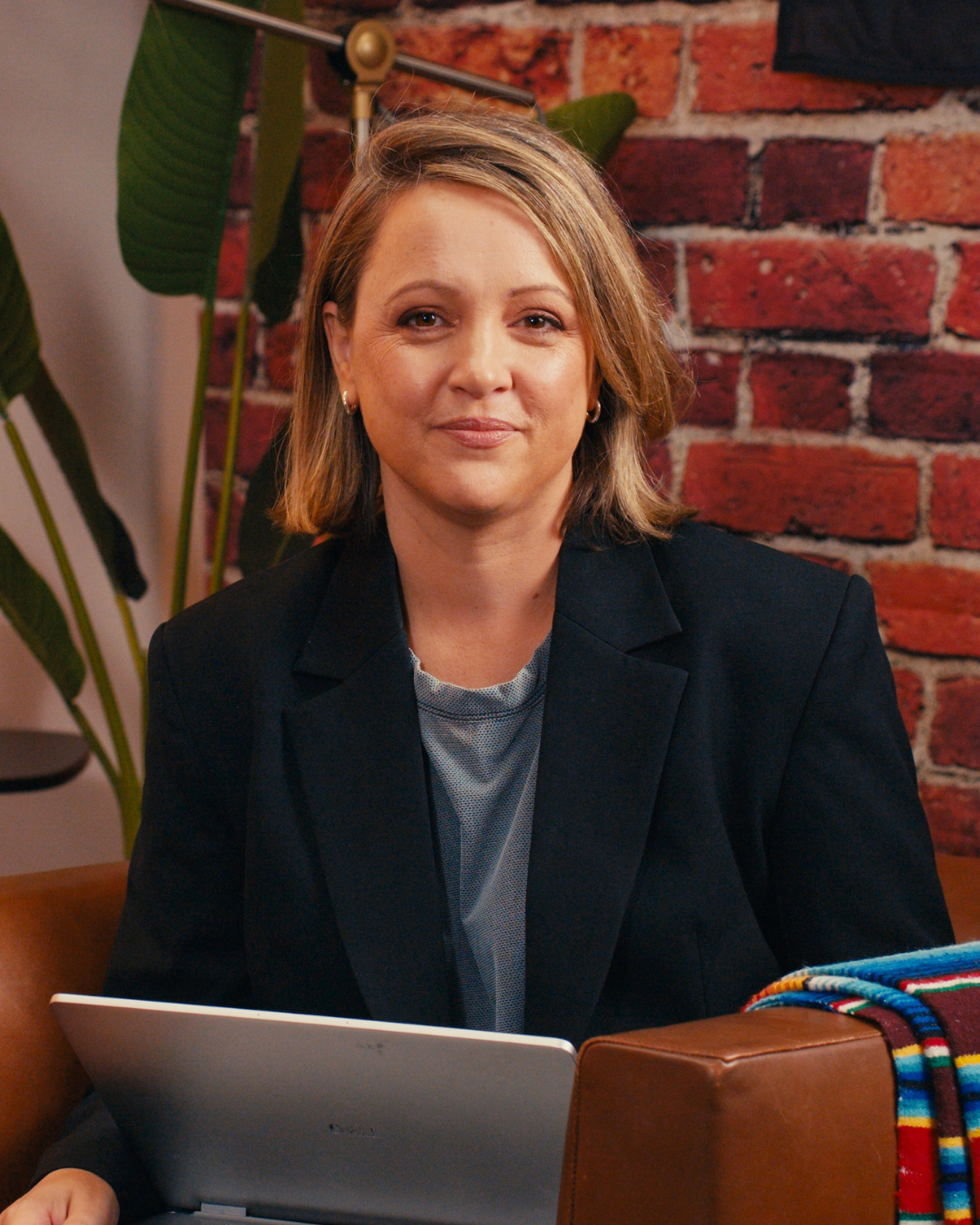
Justine Rogers
Associate Professor, UNSW Law & JusticeDr Justine Rogers is an Associate Professor at the Faculty of Law & Justice, UNSW Sydney, specialising in ethics, justice, and new technologies. A lapsed stand-up, she found life without self-doubt oddly unsatisfying and is now co-writing a comedy feature film – proof that it's never too late to follow your dreams that you'll give up again.