The ethical executive: when your moral compass guides your career decisions with Raji Ambikairajah

There have been several jobs that I've turned down where the salary might be great, but the actual role itself and what I'll be able to do and how it would impact change was such that it wasn't anything that would align with my values.


Raji Ambikairajah has had a very successful career. She was awarded NSW Woman of the Year for her work with Room to Read, she has a PhD in electrical engineering from UNSW, she’s been the CEO of several start-ups, and she’s been on company boards since she was in her 20s. But if you asked her right after graduating what she wanted to do, she wouldn’t have been able to tell you. In fact, she was one of the few graduates in her year without a job lined up. What makes Raji stand out has been a clear moral compass that has guided her across careers, companies and boardrooms.
On this episode of We built this thing, Raji chats with host Justine Rogers about letting your moral compass guide your career decisions. Tune in to hear how she committed to donating her time, treasure or talent from the very beginning of her career. Don’t miss her advice for dealing with an uncertain future and building a career that may not be linear but makes sense to you.
Watch on YouTube

Podcast transcript
Raji Ambikairajah: In my graduation ceremony, I was one of the only people who didn't have a job lined up, had a long list of things I didn't want to do, but had no idea of what I actually wanted to do. My personal definition of philanthropy is being able to give your time, your talent or your treasure, however that looks like over the journey of your life. There are people that you will impact who you will never meet, whose lives will have been transformed because of something you chose to do or something that you changed.
And we thought as long as everyone is on the same passion for the vision mission, then that's all you need. But actually it's really about having the ability to manage and grow people and their potential towards the direction of the vision.
Justine Rogers: Hi there, my name is Justine Rogers and you're listening to We Built This Thing. On today's episode, I'm sitting down with Dr. Raji Ambikairajah. Raji has worked across a number of industries, including startups, education, technology and the arts, as a senior leader, board member and advisor.
Raji has been recognised with numerous awards for her social impact, including the New South Wales Woman of the Year. But perhaps what's most remarkable isn't the recognition itself, it's how she's aligned every stage of her career with a clear sense of purpose and ethics. One of the first questions I want to ask Raji about is her experience being on board since she was in her 20s.
Welcome Raji. Thanks Justine. So being on board since your 20s, that's pretty impressive.
Is that how it felt at the time? Take me back to your 20s. Did you have it all worked out?
No, nothing like that at all.
Raji Ambikairajah: My first job was in a startup and when I was in that startup, the CTO said, look, at some point in time, you're going to move from being a technical role to a business managerial role. Here's the time to hone your technical capability. And so I took that and kind of thought, okay, well, if I'm going to be in a managerial role or one day maybe be the CEO, I want to understand what boards think like, what do they do, etc.
So that way as the CEO, I'll be well-placed. And so all I did really was look up the different board conferences that were out there and invested the time and money to be able to attend those just to absorb as much as possible. And that really was the beginning of discovering the board roles that I could then be part of.
Justine Rogers: It's still pretty impressive. I don't know if many 20-year-olds are thinking about that during say their graduation ceremony. Were you already thinking, how do I get to CEO?
Raji Ambikairajah: No, not at all. In my graduation ceremony, I was one of the only people who didn't have a job lined up, had a long list of things I didn't want to do, but had no idea of what I actually wanted to do. And so it was in many ways a process of elimination, but also kind of thinking and self-reflecting on why is it that I don't want to do the same things as everyone else?
What is it out there? What is out there for me to be able to pursue? And what lines with my values that I feel like I can contribute to the world?
And so it was very much so measuring my own risk appetite to kind of think about what can I do? What can't I do? And trial, a bit of trial and error really.
Justine Rogers: But even once you became a board member in your 20s, what skills did you have or what mindset did you have to even confidently and competently contribute at that age? Because it's still quite a young age. No, of course.
Raji Ambikairajah: I think for me, one of the things I learned really early on is I, in a boardroom, was often the only engineer in the room. And so I kind of worked out pretty quickly. There was a technology slash technical lens that I could bring to the conversation that others couldn't bring.
Most people were lawyers or accountants or had a finance background in the boardroom anyway. But then from attending these conferences, I kind of got a real sense of what governance means. But in those early years, I was very much still learning.
Like my first board meetings were very much so absorbing the room, the conversation, the direction of an organisation before understanding where I could contribute.
Justine Rogers: So why do you think they took you on? Why did they take that risk with you at that time?
Raji Ambikairajah: Well, I don't know. I don't know other than the fact that a specific skillset was there that perhaps they were looking for.
Justine Rogers: Yeah. Because you said you were often the only engineer. What do you think engineering gives you that's different or offers a new lens?
Raji Ambikairajah: The problem-solving capability that is very, you know, an engineer is trained to think about the most complex problems in the world and to work out how to solve them, but to be able to step into the unknown. There's very little that's known in an engineering capability that you then have to navigate. So I think that was part of it, but also that technology acumen that wasn't there necessarily in a boardroom setting at the time.
Justine Rogers: So I've read somewhere that you had this sort of formative moment of going into, I think, even UNSW bookstore. I don't think that's just a plug. And finding a book that changed your life, changed your career trajectory.
Can you tell me about that book? You know, it's a pretty big thing to be changed by a single book.
Raji Ambikairajah: Yeah, absolutely. I think I, in general, I've always had a deep belief in living my life's purpose, whatever that is, and finding what that is. And that's sort of centered around social impact anyway.
This happened to be a particular semester in my final year at uni, where I was terrible at organising my timetable and I had a three hour break between my last class and the lab I had to do in the evening. And so sometimes as part of that three hour break, I would wander into the UNSW bookshop and usually to the travel section and kind of potter about. And this book one day happened to be in that section.
And I thought leaving Microsoft to change the world. I mean, they say don't judge a book by its cover, its title, but I definitely did. I picked up that book and I read it cover to cover and was really moved by the way the author and the organisation had thought about social change.
It was looking at how you could transform the public school system in order to ensure that every child has access to a quality education. So this is John Wood's book from Microsoft. So it's his story and his journey.
It's his story from literally how he left Microsoft to set up Room to Read. And so having read that book, there was an email address at the back that said, you know, if you want to join Room to Read or be part of the movement, you know, reach out. And I did.
And they wrote back to me to say there's nothing in Sydney like that we're doing with our closest chapter to you is Hong Kong. We'll reach out if that changes. And then a year later, they reached out.
And so there's another version of that story that's, you know, I could have gone into a bookshop and picked up a book and read it and put it back and wouldn't like, you know, not send the email. Exactly. All of that.
So it's just those sometimes opportunities come about. What struck you about the mission of? I firmly believe in education and its transformative power.
And I really appreciate the fact that this wasn't someone going into a country to set up and build their own school. It was to work with governments and to work with local communities and have those partnerships to transform the public education system. And if you do that in every country, then every child will have access to a quality education.
Like you train the teachers, you ensure there's a well-functioning library. I really believed that model could work. And I loved that how he thought about it and the people at Room to Read thought about it as a business.
It wasn't just a passion. It was very much so we need to make this work. And so that really resonated with me.
So you worked with them for a little for them and led them for a long time. For eight years of my my life was was part of Room to Read in Sydney. It was right right up until a point when I thought, OK, I can move on to the next thing.
But it was very much so from that book led to the next eight years.
Justine Rogers: So you've worked in not for profits, technology, startups, governance. Someone might look from the outside and think, oh, these are all disparate things. But you've already mentioned a kind of pretty strong mission.
What do you think is your North Star?
Raji Ambikairajah: Very much so to have a measurable, tangible, positive impact on the world. And I've kind of reverse engineered everything from that. So in my 20s, I would have gone as an engineer.
How do I use my capability to do to do that, to hit that North Star? And then since then, it's just ensuring that that my everything I do and everything I choose to do or not do is anchored to that set of values.
Justine Rogers: So can you talk about the values that have guided your career, maybe perhaps two or three of them that you think have really helped shaped the choices you've made?
Raji Ambikairajah: Yeah, sure. I'm I'm a big I'm a big believer in integrity. That's the non-negotiable value for me.
Purpose, that an organisation has a clear purpose or at least the role itself has a purpose that lends itself to to whatever the cause is. And then that impact piece, that social impact piece, that there is some kind of outcome that is designed for the betterment of humanity. Like there are the three things.
Now, it doesn't always line up that all three are are in place in one role in one organisation. But the integrity piece is very personal to me. Like I will always operate with integrity and I want to ensure that the organisations I am governing or working in are the same.
And then the purpose and this the impact piece can vary depending on what the role is and what the work it is I'm doing. But they're the three anchor ones and everything else that's around that.
Justine Rogers: Can you talk a bit more about the things you choose not to do? Like is there's can you tell us some experiences where you've actually said no or chosen a different path because it didn't align with your values?
Raji Ambikairajah: Yeah, I think there've been several jobs that I've turned down where the salary might be great, but the actual role itself and what I'd be able to do and how it would impact change was such that it wasn't anything that would align with my values. And so I've said no to those. There've been some boards where I've turned down and kind of thought, OK, this is not I'm not the right fit for this company and this organisation at this stage.
Justine Rogers: What do you look at when you're deciding that? Like what sorts of clues or cues do you take that this is not a good match?
Raji Ambikairajah: Yeah, from a board perspective, the organisation's strategy and the leadership and where like the openness to new ideas or if it's just to keep things going as they are, then I'm not the right fit. Whereas I'm very much so about where can innovation come in? How can we ensure that there is inclusion and diversity and everything is sitting at the cutting edge?
So that's a big indicator of how I can be a positive contributor in terms of my own sort of day to day life. It just again, just aligning to my values and making sure that that's the that's the anchor point.
Justine Rogers: Yeah, I was thinking about that when you join something, what's the thing that they go? Oh, she's here. That's what she's going to bring.
Raji Ambikairajah: Like when it's it's often my technical skills, my technology skills. It's my it's the diversity of my experiences sometimes. It's my lived experience.
What I am sure of is that I do everything I do with intention and with the aspiration to bring my best to that, whatever that looks like.
Justine Rogers: And is it something from your background that helps me understand where this came from? You know, did we just born like this or is there some you know, did you have certain influences or mentors along the way or your parents kind of in? I think it's probably a bit of a mix of everything.
Raji Ambikairajah: I do have a very, I guess, you know, I talked to you about success and responsibility. I have a very ancestral view of what purpose and impact means. And what I mean by that is I believe that there are people who made choices and decisions long before I was born, like centuries before I was born, that actually led to the circumstances that I got to have in my life.
And so I feel really strongly that, well, I can do the same for those who are yet to be born.
Justine Rogers: Right.
Raji Ambikairajah: You know, make the changes and the choices. That means that the system that they grow up in or are born into is different to the one that I was.
Justine Rogers: And if it was better than I've done an OK job. Wow. Thank you.
And so you've worked in philanthropy from several perspectives and positions. And as we've mentioned across different industries, what does philanthropy mean to you or philanthropy or social impact, whichever word you want to take? But and has that changed or has it stayed the same?
Raji Ambikairajah: It stems, I think, from my personal belief around what success is. So I have a belief that success and responsibility are two sides of the same coin. And so whenever success comes my way, in the other hand, I'm handed responsibility to do something with that success to ensure that others have the same kind of platform.
And for me, that's you know, that could be very tangible, like mentoring or really helping others to to find their potential or it manifests in the form of philanthropy. And my personal definition of philanthropy is being able to give your time, your talent or your treasure, however that looks like over the journey of your life. And so in my early 20s or through my mid 20s, I was best placed to give my time and my talent, but I had no treasure to give.
That's just not the stage of life I was in. And as I've gone through life, there's been different combinations of those three things. And I really believe that that's really important to do and to give for me anyway, in order to live a life of social impact.
Justine Rogers: That's a really good framing and I guess test because I suspect some people think I'm just not able to give anything. I can't be a philanthropist, but you're sort of suggesting that anyone could be.
Raji Ambikairajah: Oh, for sure. I think there's this old school view of philanthropy as, you know, very senior wealthy people who can give away huge sums of money. And that that is that does exist.
But I think it's much more there's a there's a more democratised way of to think about philanthropy. And I think there are many organisations and many causes that actually just need people with time and the genuine belief and passion to do things, people who want talent. And the treasure piece is just another part of it.
Justine Rogers: And we may be not well, maybe we can't democratise boards, but can we at least demystify them a bit? Because I think a lot of people wouldn't know what goes on in a board, what they even are. And if they've thought about it might be just in terms of very dry, like running the numbers or compliance.
Can you just tell us a bit more from the inside? What does a board do? And is there anything unexpected that happens in a board?
Yeah.
Raji Ambikairajah: Well, I mean, if I take you back to what I thought or my whole rationale of joining boards very early in my career was to position myself for the future to kind of think, okay, well, if one day I'm leading a company and I'm reporting to a board, I need to understand how they think. And so that was my initial piece. But really, boards are responsible for the governance of an organisation.
So the executive team, the CEO, the vice chancellor, anyone in that executive role and their team is responsible for the operations, running the operations of a business. But a board is there to help keep that accountability and to ensure that everything is being done in line with the organisation's strategy and on some level legally as well, in terms with financials being done appropriately. And so you'll see in boards, they'll have committees, subcommittees, like a finance committee, an audit and risk committee, who are also charged with checking and those kinds of things.
It's also a sounding board for the executive team to be able to cross-check things.
Justine Rogers: And so are there any things that happen that people wouldn't expect or not necessarily happen? I know you can't disclose that, but I just mean aspects of a board.
Raji Ambikairajah: I think one of the best things is that you end up being with people who come from such different industries, like there's no one really who has had the same life experience as you from a personal or a career perspective. And so there's a lot of learning that happens amongst board members. So when you think of that level of diversity, like thinking about a particular problem, the ideas that come through can be quite novel, which is helpful to an executive team to then think about whether they are positioned to execute those.
So I think I really enjoyed that aspect and still do enjoy that aspect of a board.
Justine Rogers: And does that get at your kind of conception of diversity? Is it more around diversity of thinking, diversity of experience?
Raji Ambikairajah: In all facets that you can think of for diversity. So yes, diversity of thought, diversity of expertise, diversity of humans, diversity of backgrounds, everything. I really believe a good board encompasses and thinks about that in a very holistic way.
Justine Rogers: And what about from your experience, what have you seen among the organisations where you've thought that those qualities really help that organisation create and sustain meaningful social impact or change?
Raji Ambikairajah: I think it's definitely more than, and again, in my late 20s, I would have thought if as long as everyone is on the same passion for the vision mission, then that's all you need. But actually, it's really about having the ability to manage and grow people and their potential towards a direction of a vision. I think that's probably the most important thing that executives have to deal with as well as boards and really understanding, how do you manage people's personalities and how can you help them all grow into their own potential to steer towards a vision?
Justine Rogers: That requires flexibility, I imagine, in leadership.
Raji Ambikairajah: It's not just one type of leadership. No, not at all. I mean, over my entire career, people have always told me the hardest part of any job is managing people's personalities.
It's not about even whether you have a team, whether you're running a team, whether you're the junior in the team, it doesn't really matter. It's just managing people's personalities.
Justine Rogers: I wondered if you could talk, we could talk a bit about technology because you've worked so closely with emerging technologies. Have you got a sort of philosophy or could you reflect just on how you think we should approach it? Should we be cautious, optimistic?
Raji Ambikairajah: Yeah, I mean, look, I don't think it matters what the technology is. I really think that technology is nothing more than the collective soul of all of those people who created it. Use it as the vessel to create what it is you want to create.
Don't be just the consumer of it. Once you turn it into a mindset of it's a vessel for me to create something new, you're empowered then to do what you want with it and what you believe is the right thing to do. I think where people can get really into a state of fear about it is when A, they don't A, understand it and B, they assume it's going to consume things from them.
But human beings have the power to change that. It doesn't matter what, I mean, if you look back through the timeline of human history, there was a period in time where everyone was in horse and carts and then cars came along and that was the technology that everyone was fearful about. There's different points where different technologies have come through and really it's about making sure that you can use it to create what it is you want to create.
Justine Rogers: Yeah, so that does require some understanding and education because I guess people would be thinking that there's only a certain number of people who are kind of pulling the levers when it comes to tech, but you're saying something else. No, I'm definitely saying use it as the vessel.
Raji Ambikairajah: I think that's the trap we get into. There are four or five different companies that run the technology of the world, but I don't know that that's necessarily true. Lots of technology is open sourced.
You can be the one to self-teach and work out what it is you want to create with something.
Justine Rogers: In fact, lots of Australians have done that. What would you say to people who are just starting out their careers and feeling like they're the first generation maybe who'll be in competition with technology and thinking more specifically around gen AI? Should they be nervous, worried?
Should they be upskilling in certain ways or what advice would you give them?
Raji Ambikairajah: Anyone coming out of uni now or heading into the workforce now, they are the future senior workforce. It is in every country's economy's best interest to nurture that generation. Otherwise, as a world, we're in trouble.
I would say you are in the best position to explore, understand your own risk appetite, to sit in the uncertainty, whether it's the uncertainty of the world or the uncertainty of the technology. All you have in your control is the present moment. Take one step forward, whatever that is, into that present moment and trust that the next one is what you will decide is the right thing for you at that time.
As long as you just do that, I think things will pan out the way they should. Yes, you don't want to get too far ahead. No.
Well, because no one actually knows. Anything can change two years from now, five years from now, 10 years. Mapping out some kind of trajectory isn't necessarily going to work.
You have full control of your current moment.
Justine Rogers: That's good advice. For more advice, actually, I'm going to ask you some more if you don't mind. Thinking about across these areas that you've been involved in business and governance and social impact and technology, what kind of skills and mindsets do you think have mattered the most?
Raji Ambikairajah: In terms of tangible skills, that can vary from industry to industry. I've leaned very heavily on my technical slash technology skills, but through my work with Room to Read, I learned marketing skills. I learned how to grow other people's potential.
There were other roles where I learned how to manage a crisis. They're the tangible skills that you learn with life's experience and work experience. In terms of a mindset, it's about always just being open and trusting that what you're doing aligns with who you believe you are.
I think that has been the thing that has meant that I've had a very nonlinear pathway, but there's been never any point in time where I've had such certainty of I know what I'm doing and what the next thing is going to be. That still doesn't exist for me. I won't say be comfortable with the uncertainty, but accept it and sit in it and find your way through it, whatever that looks like for you.
Justine Rogers: When you are making those next steps in your career and you're sitting in an interview situation, for example, do you have to explain the path that you've taken or how do you give a narrative?
Raji Ambikairajah: I don't necessarily interview very well in job interviews, but I'm very much so focused on what is it I'd rather than tell the narrative because it's never been a planned pathway for me. I'm telling you my story in hindsight, but actually when it comes to an interview setting, I'm trying to explore what is it that I've done so far that can contribute to the role that is sitting in front of me or for the job that I'm talking about or the contract, et cetera, or the business that I'm wanting to work with. That's it.
That's all I bring to the interview. I don't try and bring a story of this is the picture and this was the plan because that's not true. That's not real.
I kind of almost went with the flow and the only anchor I had was my values. That was it.
Justine Rogers: The best anchor, really. If someone were to say to you, I just really want to change the world, it's a big goal to have, but what advice might you give them or something you wish you'd heard earlier in your career, if anything, that would have sort of made this, I'm going to change the world, maybe a more practical thing?
Raji Ambikairajah: I love the aspiration of it because it refines itself as you go because everyone wants to change the world in some way, I believe. Then there's that concept of think global, but act local. What is it you can do in your current environment that will make a positive change is all you need to think about.
If you do that every step of the way, then you have changed the world. There are people that you will impact who you will never meet, whose lives will have been transformed because of something you chose to do or something that you changed. That's changing the world.
Really understanding what is it that you have the power to do now that can be transformative and always staying in the now, I think brings about that world change.
Justine Rogers: What's been your most fulfilling or memorable moment being a board member, looking back?
Raji Ambikairajah: I sit on the board of the State Library. A couple of years ago, the State Library received an unexpected bequest in the order of millions of dollars from someone that the library didn't know. We kind of did some research to work out who is this person who has left their estate to us.
It ended up being a beautiful story about someone who, through the pandemic, was possibly sleeping rough or at least living a very, very modest life. The library was his home away from home, so to speak, or his anchor. I don't know what experiences he had.
He would have met maybe a couple of staff. We were all obviously wearing masks and hardly anyone was in buildings at that time or maybe security guards, but whatever it was, he was made to feel welcome enough that he gave his estate to the State Library. We took that and we have used it to refurbish part of the Macquarie side of the library to create new study spaces and reading rooms and expand the bookshop and the cafe and have his name just in the foyer so that he will be remembered for that.
I loved the fact that you don't, and this is back to philanthropy, you don't have to be well known. It can just be something as simple as someone's smile or someone saying welcome or come in makes a difference to your life and that can be transformative. And that to date is still one of my favourite moments as a board member.
Justine Rogers: Wow. And what an ongoing impact. Yeah.
And I hope I can just quickly ask before I finish up, how are libraries looking at the moment in terms of their health? Because we sort of had this idealised view of them as this public space and then maybe people thought, no one's there anymore, we're all reading our Kindles or whatever at home. But had- It's the opposite.
It's the opposite.
Raji Ambikairajah: The State Library has probably at least a million people come through its doors every single year. And when I've been through it, I can see people from lots of different backgrounds, not just there to study or learn to read. Some people are just there to explore, to discover, to sit.
We'll have new migrants come through and that is their, it's their home away from home. And so despite sort of the majesty of the buildings, when people walk in, there's a real softness in the air because that is the culture. Like the State Library is a public institution that belongs to you and you belong to it.
And you can kind of see that in how it's being used. It's actually, I think libraries matter more now than ever before in today's society.
Justine Rogers: I wondered if you could talk about role models. Have you had any in your life that have played a particular role or have you got a conception of role models that's helped you?
Raji Ambikairajah: Yeah, absolutely. I mean, role models, mentors, a personal advisory board, even like there's been lots of people in my personal and professional life who've been role models at different points. But there are also people who don't even know that they have been a role model for me.
An example I can give you is, as you know, I have a very long surname. And so at the very start of my career in my 20s, I genuinely thought about legally shortening my name because no one could pronounce it and it was very long for people to write. And at the time, I'd read a newspaper article about how Nicholas Moore was the CEO of Macquarie Bank, but the article wasn't actually about him.
The journalist was hypothesising that maybe one day Shemara Wikramanayake would become the CEO of Macquarie Bank and talked a bit about her, her life, her career and her potential to be this. And as you know, she has now, A, become the CEO, but also is just about to retire as the CEO. But at that time, I remember reading that article multiple times over and over and thinking, if she's going to become the CEO of Macquarie Bank with a surname like Wikramanayake, then not only am I keeping my surname, but I am going to make everybody learn how to spell it and pronounce it properly. And, you know, she and I have never met. We don't work in the same industry. We may never cross paths.
But for her to live her life and her career and to keep her name, absolutely meant that me, someone who she will never meet, and this is about the impact you have that's unseen, meant that I kept my surname as it was and I made sure that everyone knew how to spell it and pronounce it properly.
Justine Rogers: That's a lovely story. Hopefully she listens to this. OK, so finally, if people want to learn more about you, Raji, or get in touch, what's the best way of them doing that?
Raji Ambikairajah: Yeah, absolutely.
They can just reach out on LinkedIn.
If they send me a direct message, they're very happy to get in touch that way.
Justine Rogers: Well, thank you for joining us today, Raji.
Raji Ambikairajah: Oh, thanks for having me.
Tune in to the full series

Raji Ambikairajah
Co-Chair, State Library of NSW Foundation BoardDr Raji Ambikairajah holds a PhD in electrical engineering from UNSW. She has spent most of her career in large tech companies, start-ups and the non-profit sectors. She is an experienced board director and is currently the Co-Chair of the State Library of NSW Foundation Board. She also holds directorships at the Bradman Foundation and UNSW Foundation. Raji was the Chief Executive Officer of social enterprise Folo, and prior to that was the Chief Operating Officer of Women in Banking and Finance. Dr Ambikairajah won the 2019 Chief Executive Women’s scholarship to study strategic innovation at Massachusetts Institute of Technology, USA. In 2018, she was awarded the NSW Woman of the Year Award for her leadership over seven years as the Sydney Chapter Leader for Room to Read, a global non-profit organisation that provides children in low-income countries with access to a quality education.
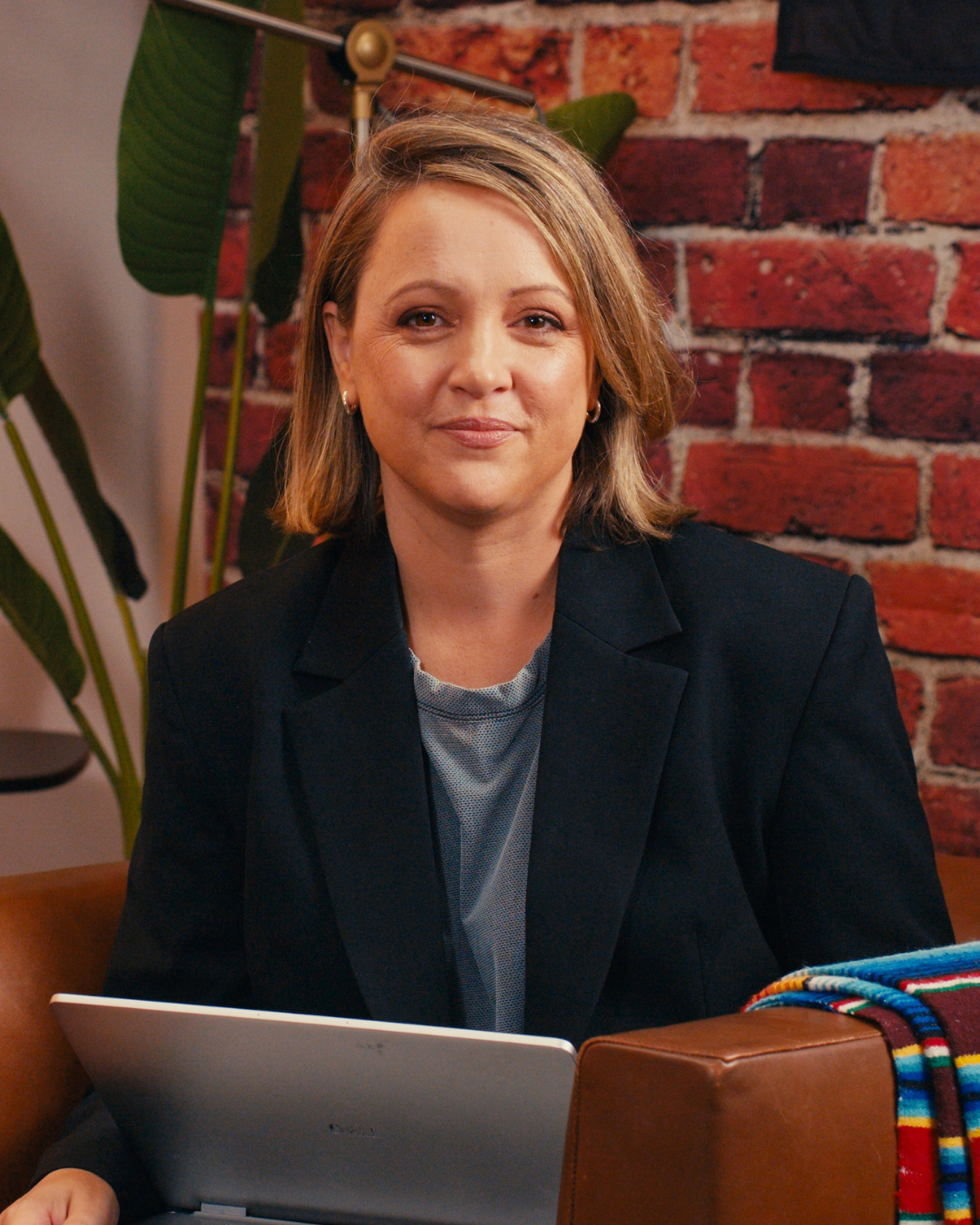
Justine Rogers
Associate Professor, UNSW Law & JusticeDr Justine Rogers is an Associate Professor at the Faculty of Law & Justice, UNSW Sydney, specialising in ethics, justice, and new technologies. A lapsed stand-up, she found life without self-doubt oddly unsatisfying and is now co-writing a comedy feature film – proof that it's never too late to follow your dreams that you'll give up again.