Daniel Joinbee: Indigenous aerospace trailblazer
It has always been inspirational to try and push the minds and boundaries of what these big primes think that Aboriginal businesses can do.
From a family story rooted in Yarrabah, Far North Queensland, to the lawns of the White House in Washington DC, Daniel Joinbee has packed a lot into the first thirty-five years of his life. He’s a proud Gunggandji man, the first Air Force officer to receive his navy diving and demolitions qualifications, founder of Australia’s first and only 100% Aboriginal-owned aerospace consultancy, a champion for creating aspiration and opportunity for young First Nations people, and a devoted father of soon-to-be-four.
Throughout his life, Daniel’s resilience and entrepreneurial spirit have taken him from diving into pitch-black water under naval boats at night, to building an aerospace venture grounded in his Gunggandji heritage and working with the highest levels of government and business.
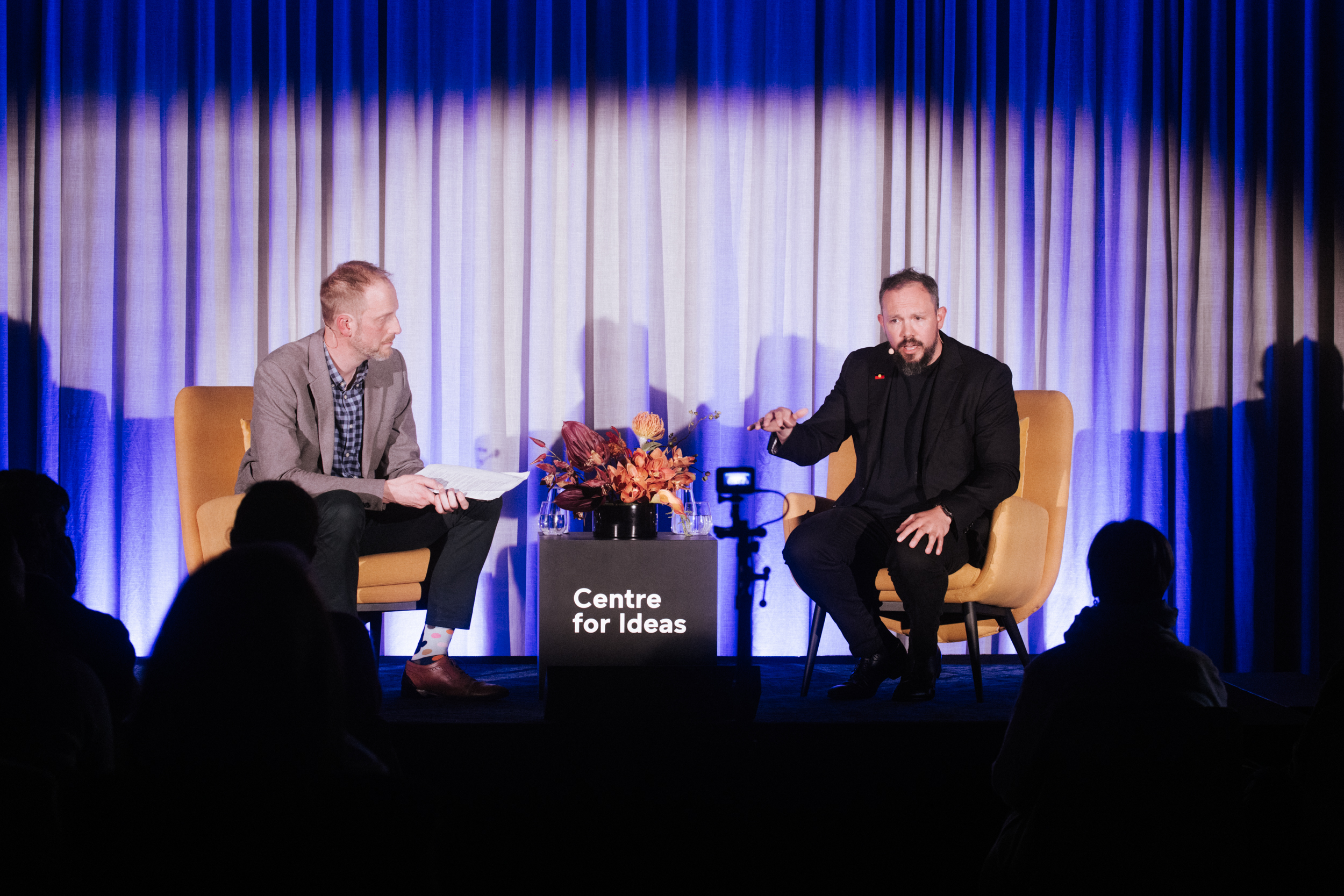
In this conversation, Daniel shared his journey from the challenges of his early childhood to his groundbreaking military service and his work as a social entrepreneur, founder and aerospace leader. Daniel and host Jonathan Webb also had a conversation about enabling Indigenous communities to blaze their own trails through empowering programs like Raising Horizons.


Podcast transcript
UNSW: UNSW Centre for Ideas.
Jonathan Webb: Good evening everyone and welcome to tonight's UNSW Centre for Ideas event, Daniel Joinbee: Indigenous Aerospace Trailblazer. My name is Jonathan Webb. I am the Science Editor at ABC Radio National and the first thing I would like to do is to acknowledge the Bidjigal people who are the traditional custodians of this land and its first scientists. I would also like to pay my respects to their elders past and present, and extend that respect to all other Aboriginal and Torres Strait Islander people who are here with us tonight.
Now Daniel Joinbee is a proud Gunggandji man and a veteran of the Royal Australian Air Force where he served as an air traffic controller for 12 years and yes, it is a good week to be speaking to an air traffic controller in Sydney, we'll get to that. He was also the first ever RAF officer to receive Navy qualifications in diving and demolitions which I also intend to get to.
He's a father of three, soon to be four, and the founder and managing director of Gunggandji Aerospace which is Australia's only 100% Aboriginal and veteran-owned aerospace consultancy. Daniel through Gunggandji Aerospace and elsewhere, is working to create long-term employment and career pathways for Aboriginal and Torres Strait Islander people in the aviation and aerospace sector. It's something he's hugely passionate about and he draws on his experience across military, government and industry to make this positive change.
Through multiple initiatives that we will hear about tonight, Daniel advocates for practical culturally aware approaches to workforce participation and to leadership and on building stronger relationships between industry and community. And I should add that I learned just a moment earlier that last night in Perth, it has been a long day of aerospace experience for Daniel today getting over right across the country, last night in Perth Gunggandji Aerospace was named Supply Nation Certified Supplier of the Year, so another gong to add to the list.
So tonight we'll go from a family story rooted in Yarrabah in far north Queensland, to Parliament House in Canberra and the lawns of the White House, from pitch black water under naval boats to if we can fit it in the Vehicle Assembly Building at NASA. Your job this evening is to listen, to be inspired and to reflect.
My job this evening is to ask the first few questions and to get cracking to see how much of this remarkable 36-year-old's life we can cover in 75 minutes. So please without further ado, welcome Daniel Joinbee.
Now Daniel, I got my hair cut this week, you know, I didn't want to show up looking shaggy for this event and I was telling the barber why I needed a haircut this week in particular and I rattled through just a few of the things that were on that intro and who I was going to be interviewing and I got to the end and then I said – I don't think I even mentioned the three kids – and I got to the end and I said, “yeah and he's only 36” and the barber put his clippers down and looked at me and went, “he's 36? Who is this guy?”
So, the first question I want to ask is, with all of these achievements and the many different, you know, businesses and other things that you do, where does the drive come from to get all of this done? There seems to be a lot of energy inside you.
Daniel Joinbee: That's probably a deeper question than I expected for my first one, right? G'day everyone, thank you so much for coming down. I too would like to acknowledge the traditional owners. The privilege of living not too far away from here as well and pay my respects to the eldest past, present and emerging.
Where does the drive come from? I think drive has changed for me personally over the course of my life. Through high school, I think it was surviving, looking for opportunities.
Through the military, I was probably surviving for the first few years as I was at the Defence Academy in Canberra and I think that there was a point at which I think the military system made it safe for me to say “yes” and where “yes” comes into it was, not big noting myself, other things that they're on that list or that didn't quite make that list was that I was the last Air Force air traffic controller to become a parachutist, do a static line parachuting course with an SAS reinforcement cycle down in Nowra.
Why is there an air traffic controller jumping out of a plane? There's a capability story there but it's also because I said “yes”. The Navy diving qualifications when I was posted to HMAS Canberra down at Kuttabul was an opportunity. The real story is they said “we need a diving officer” and I said “I'm never going to have an opportunity to dive on a Navy ship ever. Like why would they ever let an air traffic controller do that? Of course, I'm going to do this” and just do it.
So where does the drive come from? I think throughout those careers it was a sense of fun, it was a sense of adventure that the military gave me the framework to explore that and have a really good time doing that. Towards the back end I guess where Gunggandji Aerospace started and the work that we're doing in North Queensland, that for me is all about the reinvestment into the future.
It's the reinvestment into the young kids and the young minds and there's a journey there that I think we'll start to unpack.
Jonathan Webb: We definitely will. That's a great answer. On getting into the military you were recently quoted in the National Indigenous Times.
This is an article from the last week or so, so you can fact check me and look it up. You said you joined the Air Force accidentally after attending a career expo in Melbourne I think as a 16-year-old. How do you accidentally join the Air Force?
Daniel Joinbee: Yeah, so I signed up to the military. So picture this, and we're going all the way back into deep dark history. This is 2006. This is Nokia 3310s. We're playing Snake on our phones. Laptops aren't a real big thing for high school students and UNSW at ADFA at their careers day had, “join the military, get a free laptop”. Sign me up.
So, I signed up and there's a little bit of a recruiting process to go through and we were sort of laughing about some of the breadth of when you can dig into a story and I'll try and summarize it. I completed it. I selected air traffic control because I thought it would be the least competitive way to get a laptop.
If I had a chosen pilot, I'd be competing against pilots who wanted to be fast jet top gun pilots their entire life. You know captains of teams and rowing clubs and stuff like that and that wasn't me, but I really wanted a laptop so I thought I'd pick the worst job which was air traffic control. I fell into a career that I had a real gift for and the rest is history.
The depth of the story goes to they never actually gave me the laptop. Another student at my high school was awarded the laptop. He was, actually got it for engineering and a Black Hawk helicopter arrived and landed on the oval and out came a man in camouflage and a little face mask and stuff like that and handed over a laptop and you know salutes and it was amazing.
The helicopter flew off and everyone's going “wow Matt, that's amazing you got, won a laptop.” I'm going to the same place he's going, just you know no laptop or Black Hawks.
Jonathan Webb: There's an omission there.
Daniel Joinbee: There's a chip on my shoulder, right?
Jonathan Webb: I feel like the Air Force should remedy that. True or false that you mostly wanted the laptop so you could play Call of Duty?
Daniel Joinbee: True.
Jonathan Webb: Okay just checking.
Daniel Joinbee: Yeah.
Jonathan Webb: So, you ended up studying.
Daniel Joinbee: I think it was Counterstrike then. I may have been misquoted, but Counterstrike was. Yeah.
Jonathan Webb: You ended up studying air traffic control. You obviously ended up being pretty good at it. I think we have a picture of you winning an award during your air traffic control kind of studies as a baby Daniel.
Daniel Joinbee: I look young there don't I?
Jonathan Webb: What was it like learning those skills and where did it take you first of all?
Daniel Joinbee: The school of air traffic control is as difficult to pass as it is being a pilot. Pilot adds in the hands and feet and typically air traffic controller right all you're doing is doing these ones right up down left right it shouldn't be that hard. I don't know why they make it sound really hard.
Yeah, come at me pilots. But for air traffic control the standards are there for a reason. You are literally controlling hundreds of lives at a time in the air sometimes you know through multiple sequences in difficult environments and so 80% pass mark for all the exams we used to have to rote learn the rules.
Thou shalt not permit an aircraft to commence its departure roll until the proceeding departing aircraft has at least reached a point which is 6,000 meters ahead of the departing aircraft and has a) commenced it's something and b) done something else or c), right? And so, some of that isn't perfect but that was what we had to learn, and we would apply that rigorously every single time we launched an aircraft. Has it hit at 6,000 feet? Has it achieved these things? Yes. Qantas 123 cleared for take-off.
That award was the RAF Values Award, which I was quite humbled to sort of get at the end of my first posting at school of air traffic. It was difficult. I hated the exams, but I fell in love with air traffic control.
There's two ways that you can be an air traffic controller: one is is doing the maths and there are very, very talented people that can change the heading of an aircraft by 10 degrees and predict that at 10, we'll know mathematically that at 10 miles they'll have a certain distance of separation and they can plot it all in and they're incredibly intelligent people. I was a vibe controller. I picked the sequence that I wanted and I made it work and I think there are there are streams that lend into some of the characteristics of a good entrepreneur about being decisive and fixing mistakes when you see them.
As you've seen in Sydney, sometimes mistakes can happen. I think that the aviation system in Sydney worked. It didn't work as well as it should have and things should have happened, but the pilots still press the brakes, and no airplanes crash together so the aviation system has still worked. Someone was looking out of the airplane.
For me as a vibe controller and being decisive, things would happen in the sky and you have to make a decision and it may not be the perfect decision, but you have to follow it through. Or, as I would say, you'd have to “force the sequence.” So, you're going to be number one, you're going to be number two, you're going to be number three, and then you make it work. You make decisions, you turn aircraft, you change headings and stuff like that.
Jonathan Webb: This idea of “doing air traffic control by gutfeel” is sort of fascinating and a little terrifying I think for those of us who haven't done it. You obviously learned the maths, like you had to pass the test. You didn't you didn't love it but you passed them and presumably could have done the maths if you had to. This sort of slightly different way of doing it when you're actually in the tower, does that mean that you can make decisions more quickly than someone who's falling back on the maths and then correct mistakes more quickly?
Daniel Joinbee: Yeah, I think so and a lot of the “vibe-controlling” I sort of describe is actually on the radar where at RAAF Base Pearce, we actually control almost 50% of the sky around Perth airport just by the way the airports are located and so there's a lot of military airspace over there and we sequence any of the FIFO flights that are heading up to Karratha, Broome, Port Hedland would all come through military airspace so it's not done by airport. Towers are done by airport, it's actually done by volume of airspace and so -
Jonathan Webb: You can ride the changes and make it work. Can I just ask also does anyone else talk about vibe-controlling being a way that you can do air traffic control or is that just a Daniel Joinbee thing?
Daniel Joinbee: I think it's a Dan thing but it's also some of the real naturally gifted controllers we would work really, really effectively together. One of my best friends, Michael, at the time he would sequence aircraft out of you know 50 to 80 nautical miles in a way that I could catch them and I'd be pumping aircraft back into RAAF Base Pearce and there's certain different rules that make Pearce, gives us the ability to do this, but he would set them up for me and I'd catch them and get them back onto the ground and we're talking about situations where there might be an in-flight emergency, someone loses an engine, or there's really bad weather coming across and they need to get all the aircraft back on the ground really quickly for whatever reason.
Jonathan Webb: Did you ever see a near miss as close as the ones that we've been hearing about at Sydney Airport, that you're allowed to tell us about?
Daniel Joinbee: There have been incidents where two civil flights, yes, aircraft. This is going to sound terrible, right? Aircraft loses an engine you've got two, right? Circle, burn off your fuel, come back and we'll make it safe for you. We can't get into the emotions of how many lives are on board we have to continue with our job and everything is really meticulous and check listed and so, aircraft declares some sort of an emergency we can almost pick up the checklist. Some of the checklists we know off the top of our head – we know exactly what we need to say back to that aircraft, the supervisor hears the magic words, “mayday mayday mayday,” or “pan pan pan.” They are over your shoulder, watching everything you're doing, immediately. There, it is actually – as laissez-faire as I make it sound – it is really, and it is practiced. It is practiced all the time, it's practiced in the simulators, how you're going to get this aircraft home, and so when it happens for real we're pretty comfortable in managing the situation, having someone second, overlooking, supervising what you're doing, and helping bring that that aircraft home.
Jonathan Webb: We've got another photo of you on board the HMAS Canberra I believe which is an aircraft carrier. Were you ever doing traffic control on one of those?
Daniel Joinbee: Yeah, so I was fortunate to have a representational posting on HMAS Canberra as one of the maritime airspace control officers. So, HMAS Canberra being a landing helicopter dock – so we have multiple helicopters that land on the ship. I was posted there for 18 to 24 months and the purpose of having us on there is not just telling the helicopters to “clear the land and clear for take-off”, that wasn't the role. It was managing the airspace between the fleet, so HMAS Canberra would be here and then there'd be other ships in the fleet that we'd practice with, where they'd be launching helicopters off their decks and we're making sure that they're safe we may have other aircraft coming over to protect the fleet, P-8s looking for submarines around what we're doing, we may also be naval surface fire support is when they're firing their weapons towards the land or to some sort of targets and so we'd ensure that the aircraft that we're managing in our airspace in our volume of airspace are being kept safe away from those lanes of fire and positively identifying anyone that starts flying towards our ships.
Jonathan Webb: Sounds like another very important job.
Daniel Joinbee: It was fun.
Jonathan Webb: Yeah?
Daniel Joinbee: Yeah!
Jonathan Webb: Where were you stationed on the carrier?
Daniel Joinbee: So, we were right up the top, best views except they trapped the air traffic controllers in the back. And if I was to expand my time on Canberra you heard at the start this attitude towards “yes”, and I think sometimes you can be in a situation like on a ship and sit in your very comfortable air force lane because they would say “we don't want the air force involved in this, you guys just stay in your little pockets and don't come downstairs” whereas Dan's approach to being on the ship was like, “can I go fight the fires?” Because we practice that all the time – the ships go out to sea and we go down to damage control stations where we practice plugging holes in the ship, we practice reeling out the fire hoses and stuff like that, because emergency situations in the ocean are really, really critical and I didn't want to be trapped upstairs doing it. I wanted to be part of that, really deeply involved in ships company. So quite often you'd see the air traffic controller in the engine room practicing putting out engine fires because it was fun.
Jonathan Webb: You mentioned that one of the other things you just put your hand up for was the diving. “Diving and demolitions training.”
Daniel Joinbee: Yeah.
Jonathan Webb: Where did you end up using those, and if the fact, did you have both so that you could blow things up underwater?
Daniel Joinbee: Yeah, so diving came about because the ship needs divers, and ships divers not clearance divers’ clearance divers are a very, very specialized capability that navy has. I’m an air traffic controller, I'm not very, not very special. But ships divers basically can work on ships instruments around, so in certain locations as ships travel around the world, things may get caught in intake valves, things may get caught around the rudders or the propellers or something like that. So the ships divers are a capability that all ships have to go down, clean the ship, maybe take a sonar pod out, put a new one back in if engineering wants us to do that. So, we'd be on the bottom of the ship, under, underwater, trying to find them. And we'd practice and rehearse that, so we'd dive in go under the ship, make sure the ship was safe, so they weren't radiating underwater, and then we'd crawl along the bottom of the ship until we had to find what we needed to do, and then almost simulate taking a sonar out, or, you know, and then putting another one back in. And then, yeah, so –
Jonathan Webb: Pretty dark under there?
Daniel Joinbee: Pitch black, yeah. But it was all a way, like I sort of said it – I was never going to get that opportunity to ever do that again, who would ever let me do that? – so of course I jumped at it with two hands. no regrets.
Jonathan Webb: I don't know how many other people in the room would jump at that with two hands. They might they might leave you to it. It sounds very exciting, but uh –
Daniel Joinbee: And the demolitions part, sorry I should answer that
Jonathan Webb: Yeah.
Daniel Joinbee: If we had to scuttle the ship and there are certain places that you can set demolitions to destroy the ship so that it would sink and they can't get your parts.
Jonathan Webb: Right, okay.
Daniel Joinbee: That's the reason I had that qualification.
Jonathan Webb: Cleaning up on the way out.
Daniel Joinbee: Yeah, yeah.
Jonathan Webb: Okay, at what point did the idea of leaving the air force behind and starting a social enterprise come out. When did you decide that indigenous advocacy was something that you really wanted to be a big part of your career?
Daniel Joinbee: Two questions in one.
Jonathan Webb: Sorry.
Daniel Joinbee: No, no, you're right, yeah. Leaving the air force came about when the air force and I disagreed on the future of my career. My now wife was posted to Canberra. I was posted somewhere else. There was a disagreement about where I should be posted, and I was, I made the threat, “I'll discharge” and they said, “we'll take your discharge.” Which I still think to this day is a, is crazy short-sightedness
Jonathan Webb: On their part?
Daniel Joinbee: On their part – of an Aboriginal air traffic controller, who's done lots of different things, to not create a mutually beneficial solution, I think is where big systems can lose talent, and I've seen it through a lot of my friends as well. So that's my personal opinion. The Gunggandji Aerospace and the indigenous advocacy side probably steps into a little bit more of this broader journey that I've been on – on getting back into touch with my Aboriginal heritage. There's a story that I know that we're going to start to touch on, but from the military perspective one of my best friends always encouraged me as I became an air traffic controller at RAAF Base Richmond to get around the Defence Aboriginal and Torres Strait Islander network, to get around all of these certain programs, to bring Aboriginal youth onto bases and work with them, and see – and I always sort of thought, “I never have a story that would resonate with these young kids, like what do they care about me?” and it wasn't until I sat and I we spoke about my father leaving when I was six months old, we spoke about me growing up in a single-parent household, we spoke about all these other things. At sometimes it's not this Flash Murri standing there in a blue uniform. There's a human that sits behind that, that can actually resonate with some of the tension and the hardships of these kids, but also demonstrate that there's a journey out on the other side through application of you know. And I guess what I saw was, we can, we can inspire these young kids but then how do we actually support them? How do we nurture that inspiration? And I think that's where we started to – I personally, and it was a journey, it wasn't something I'm like, “I'm just going to go do this”, it was a journey across five, eight, ten years of my life of working with young students, working with Aboriginal businesses, working around the space to sort of say “well this is the part that I'm going to focus on.” And I'm really deliberate in saying that, “I don't think that I can solve a lot of the systemic issues but I can create meaningful change where I'm applying my focus and effort.”
Jonathan Webb: Let's talk a bit about that journey that you mentioned. We've got another photo here of you with what, I think in the photo caption I was sent, it was described as your Yarrabah family.
Daniel Joinbee: Yeah.
Jonathan Webb: You had an Aboriginal Dad, who you mentioned left when you were really small. You grew up with your Mum. At what point did you really start to feel that connection with your Dad and the indigenous community kind of return?
Daniel Joinbee: Yeah it wasn't, it wasn't immediate. I was quite angry at my father. And in, an anger for a child is expressed in different ways – refused to call him on his birthday, even if he called me on mine. I'm like, “why would I call him? He left me.” And so, some, and they're simple words from a simple child, but there's this resentment. And I don't want to know anything about his heritage, I don't want to know anything about him, or where he's come from because he left me. And that is a deeply personal sort of reflection that I've carried all through my high school. It wasn't until I was in year 11, that I flew to Darwin and we went out to a place called Humpty Doo, and at the back of Humpty Doo, I found my Dad and he was living in a shipping container, or you know basically just had a bed and I said, you know, “where's your tv? where's your car?” and he's like “why would I need any of that? I can walk to work, I can walk to my girlfriend's place, and I can walk to the pub, and I've got the stars at night to tell me stories” and there was a beautiful, beautiful simplicity of the life that he lived and how happy he was compared to my urban Melbourne upbringing and bits and pieces like that. But I also found in that moment, that I resonated and connected with him, and his outlook on life, this laissez-faire, this “Dan vibe-controller” sort of thing. I actually think has a lot to do with – there’s smarter people who talk about genetics than me, right – but there's something there that, that he, that we shared in this, this outlook, this “she'll be right” attitude of life. And that was when I was in year 11. And so, we stayed in in touch a little bit, you know I was joining the military, I was in air force, whatever, right? And then some situations happened when I was at RAAF Base Richmond where, I won't go into the details, but Dad got locked up in Western Australia – and Dad moved around – I was born in Darwin, he was from Cairns, he met my Mum in Townsville – but Dad got locked up over in Western Australia. And, I remember that as I was helping family navigate this – and I still had really good connections with some of my aunties who had stayed in touch with my family through this period – that they were trying to railroad Dad into pleading guilty for something that he, that would, that he didn't do. And virtuously through relationships that I had here, I had some not-for-profits reach out and support his case, but the Geraldton magistrate at the time basically said “you're going to plead guilty to this or you're going to stay locked up for another month until I come back again for the next round” and so there was this this sense of injustice. The man I mentioned before, Mark Maloney, moved everything he could in the background to get me posted from RAAF Base Richmond in Sydney out to RAAF Base Pearce so that I could reconnect with Dad, and we spent a lot of time when he was in jail there rebuilding the connection. I joke about, “it's the only time you've stayed put for one place that I knew where he was, I could go and like have a yarn with him, right?” but there, it was a space that we reconnected –
Jonathan Webb: And at some point, because I think that's where the photo comes from, you started going with him back to his country, your country in far north Queensland.
Daniel Joinbee: That's right, yeah. So, Dad and I would still talk and bits and pieces like that, but it wasn't till I had my first son which was in 2019 that we – when you have a baby it changes your world. It changed my world in a way that none of the superficial stuff mattered anymore. That doesn't mean I don't like nice things, but I had, I had to care for this this thing, and yeah, they say “there's no instruction manual” but there truly is. Some of the situations that come up, there's no instruction manual but I – I'm not allowed to cry – I'm, I didn't want him to grow up not knowing what his family connections were, the way that I did. And there was a deep effort from me, to then work with Dad for him. And the photo isn't there, of my son meeting my Dad for the first time, of them spending time together, of my Dad taking my son back out onto country, of him taking me back out onto country for the first time – showing me where he grew up, showing me that, and telling me stories of where he mucked up, and mucked around, and played in the cane fields, and stuff like that, pointed out to different spaces in the hills, in Yarrabah, in Gunggandji country up there, in some of our sacred locations there are paintings of the first fleet because it came past and there are things that he shared with me and stuff like that that was really, really personal, deep, impactful. It was it was a turning point in my life. So that was the family side of that.
Jonathan Webb: Amazing. Thanks so much for sharing with us Daniel. You are, for the record just, you are allowed to cry. Noone's going to mind, and feel free to have a drink of water as well if you need to because the next subject – like we don't have to go to this – but I think it is worth addressing and confronting, because there's a story about your great-grandmother Tottie. (I’m) wondering when you first learned that, and we have a document that tells some of the story that we can put up on the screen as well.
Daniel Joinbee: I’m going to stand up for this because I can, I'm on a roving mic. You're not going to be able to see this, and sorry for the – making noises – for the video that's not going to capture this: Office of the Chief Protector of Aboriginals, Brisbane, 20th of July 1914. Now, this is a templated document: Sir, I have the honor to enclose here within, Order by the Honourable Home Secretary for the removal of one Aboriginal, Tottie, in the District of Innisfail to the Aboriginal settlement at Yarrabah, and ask that you be good enough to have it put to affect. That's my family history. The reason that she was removed, when you go through the documents, is because she was raped. And the indignity of her being an indentured slave on property as a pregnant Aboriginal slave, was too much for the slave owners to suffer through, and so they had her removed. And for all of the “wages,” if you will, that she earned while working on the property (and she was 16 at the time, she was young), all of the wages that she earned she had to still pay for her own medical fees when she got to the Yarrabah settlement and it's documented. One thing that is terrible, but beautiful in its own thing, is how well some of this was documented, and you can see the cursive script, and the templates and stuff like that of how they managed her account, and how they managed things, so –
Jonathan Webb: Now you actually suggested that this was something that we discussed, so it's not something that you shy away from – you own it as part of your story. How has that family history shaped your passion for first nations advocacy?
Daniel Joinbee: So, this to me, is the truth-telling part that I think Aboriginal people across the country are crying out for. This is real. This happened. And I think that just because in 1967-69 the referendum happened that racism ended on the spot. I can tell you about a federal government contract where I had to call around we're placing we're doing traditional owner engagement and landholder engagement to place some censors around the country and this was in far north Queensland, and I called up a property in Queensland and I said “oh hey, we're going to bring some TO’s out and just to do a land clearance of this” and he said, “there's no TO’s up here, we killed them all” and hung up the phone. Two or three years ago. Two or three years ago, that is still the attitude in far north Queensland and so I referenced this document because my Great-Grandmother was removed because of the indignity of her rape. My Father was born and considered an animal of this country, when he was alive. And the test of that is at the Australian War Memorial when you stand where the eternal flame is, and on either side of the eternal flame are male and female animals. There's goanna, there's koala, there's kangaroo, there's all sorts, right? Echidna, platypus and at the end there's a male and female Aboriginal head because they were fauna of the country when my dad was born, and yet his son represents the only Australian business that went to NASA this year to look at the Artemis II rocket before it went to the moon. And so, I like to use this as this – we're not shying away from it, and we're not getting away from the fact that there is a history there. But there is hope, and there is opportunity for Aboriginal people across the country, and I really want to get around these young minds and I want to inspire them and I want to nurture that ambition and that fire that we know that we can give them and create different trajectories. Just like the opportunities that I’ve had, and I’ve seized and I’ve taken advantage of. The opportunities that were denied to Tottie, the opportunities that I think my mother created for me in in her journey. The opportunities that I’ve taken advantage of. I want to, I guess invest into the future minds of young Aboriginal men and women.
Jonathan Webb: Let's get to that. I want you to introduce us to Gunggandji, the company, which you've given the name of the country where you have this incredible deep history, but a really complicated and confronting one as well. But you've, even in the name, and in the logo of the company, you've used some of that traditional knowledge. Can you tell us a little bit about the Yalma?
Daniel Joinbee: Yeah, so Gunggandji Aerospace, I’m proud to say we're Australia’s only 100% Aboriginal owned and controlled, Veteran owned company in Australia, and there's so many different things, and if you put them all, then of course we're the only one, like that's, you're a bit of a unicorn when you get to that point. But if you, even if you wipe some off, and we're the only Aboriginal owned Aerospace consultancy, partially owned, it doesn't exist so Gunggandji Aerospace is sitting in a space where for the first few years of my, and I won't go into all of the details of my defence history, but I would go to big contractors that have big contracts with defence and stuff like that, and they'd say “oh hey Dan, like you know Gunggandji Aerospace, that's real deadly, can you give us a team name for our tender? We want it to be something in Aboriginal language that says, ‘flaming spear.’” “Like nah bruz, like that's not my bag.” “Uh, well can you give us some artwork?” I'm like, “I have a higher security clearance than you, I've worked in global air force operations in the Aerospace Operations Centre. I have done so much more, and we have a technical capacity and capability to support your tender for this program, yet you are limiting us to artwork and language for team names.” Now that's not to say that those parts, maybe not in this context are important, and I’m not dismissive of that, but it has been a journey for us to change the minds of big business, big international business sometimes. The Aboriginal businesses have a meaning, and a purposeful place. So, to get contributing capability to complex industries. The Yalma that was up there, the artwork was done by the late Simone Arnol who was one of my aunties. And we were yarning about what I’m trying to achieve with Gunggandji. The Gunggandji people, when they set up Yarrabah mission, our language was crushed, our stories and our culture was crushed because they brought people in from all over. So, my, on my great-grandfather's side we’re traditional Gunggandji. And from my great-grandmother's side she obviously came from Innisfail right, but they were bringing people in from all over north Queensland and when you do that, you create a melting pot where the oppression of language and culture and stuff like that is still sort of having its effects today. Simone Arnol and I were talking about this, about this this elevation, this raising of the Gunggandji name, of – we have the only aerospace company. We were crushed, we were oppressed, they tried to erase us and yet now we have an aerospace company, and I know that my old people are real proud of some of this because earlier this year they gifted me a name. And that name is Gunggandji Yigan-da, and it was their way of talking to their countrymen, their Bama about what we're doing. And it's “Gunggandji in sky country” it was their way of talking with community members that there's an Aboriginal business that's working in sky country, and how deadly is that? The Yalma is a four-sided boomerang that Gunggandji people traditionally used for ceremony and stuff, and so yeah, it looks a little bit like a propeller and Simone did some real deadly artwork around it, and that's a little bit of the background.
Jonathan Webb: That's a cracking story Daniel. I want to talk about the work that Gunggandji does. You're, it's a profit-for-purpose business so I want to hear about how you, you know the work that you do to make the money and what you do with it.
One example might be there's an operation centre in Adelaide that you're basically in charge of establishing, that's going to work across a few different domains, what's happening there?
Daniel Joinbee: Yeah, and I think giving the origin of the story I think is, for this one is important as well: Large international company and I – actually it's public right, so I don't have to shy away from it – it's TOLL.
TOLL came to me said, “Dan, we want to do something really important in South Australia, how do we create some really meaningful impact? You know can we get some Aboriginal pilots?” And immediately in my head I was like, “there are some probably real deadly Aboriginal pilots that are out there, but if the effect or the intent of what you want to do is create some really meaningful generational change, then supporting some of those young men and women that are already killing it, isn't the pathway. Potentially they can get job at Qantas, or Virgin, or Etihad, or Emirates, anywhere right? How do we change the conversations at the dinner table?”
And so, in a boardroom in Brisbane, one of my really good friends now, Matt and I crafted the Gunggandji Aerospace Ops Room, the SPARAS ops room. And what we wanted to do with it was to create low barrier pathways, or even just remove low barriers. We wanted to create pathways into aviation, and the ops room is that. It is the hub, it is the centre node of everything that happens at an airline, right? Your flight goes bad; the ops room replaces the aircraft. That's on Qantas. For an ops room that's managing emergency services, one helicopter might be configured in search and rescue, the others configured in paediatric, the others configured in roadside emergency. There's a car crash right? “Oh crew one, you're taking helicopter three, and you're going over there.” That's the sort of work that an ops room would do.
On day one, for these young men and women, and coupled with the training that we're going to provide, my barrier to entry is “can you press control p, print? Print off the weather, put it in the in tray.”
Time plus 3 months, I want them to be able to brief the weather – “okay everyone time for morning brief – the freezing levels are 10,000 feet today QNH is 1013, we're expecting a low front from the northwest to come through at about two o'clock this afternoon. It might adjust the freezing level; um you know we're expecting low fog to the north of South Australia.”
Time plus 3 months, right? But that's not, that's the standard that we need the map, but it's not the standard we're going to hold them to. On day one, we're going to create the environment for them to be successful. My idea is that at time plus 6 months, 12 months, 18 months, 36 months, however long they need to personally have a career building moment, a capacity building moment, a training building sort of journey, where their aspirations are raised, their vision of what is even possible is raised. That they will move on from the job – I don't want them in the ops room forever, I want them to raise their aspirations as young mums, young dads, young Aboriginal men and women in South Australia, to raise their horizons and go “I might be a pilot, I might be a nurse, I might be a licensed aircraft mechanic, I might go into aviation marketing, I might go into aviation legal, I might go into something else.” But without that stable first environment, that safe space, that safe space to say “yes,” which is what I had, and I was gifted by the military, how can they create that journey forward?
Jonathan Webb: And so that is all happening in what will be the operations room for Adelaide airport?
Daniel Joinbee: Ah, negative so it'll be the operations room for emergency services in South Australia. So, rotary will be managed by TOLL helicopters and fixed wing will be a mixture of South Australian Police and Royal Flying Doctors.
Jonathan Webb: Right. Sounds amazing.
Daniel Joinbee: It's pretty cool. First of type, never been done in Australia before. And I said to TOLL at the time – and I don't think I’m breaking any confidentiality here – “give me a scope. I don't want a handout. I don't want a, ‘here’s a little bit of work on the back end.’ Performance manage me. I’m on financial penalties if we don't perform. This is a genuine capability, contract that I am providing value to them, I'm providing a service to them, and I really want, I make that point because it's something that I’m really proud of. Like, “come at me.” We're going to knock this thing and our KPI’s out of the park and then repeat this ops room idea and this concept, this pathways concept over and over again.
Jonathan Webb: When do the doors open?
Daniel Joinbee: 1st of November
Jonathan Webb: Yeah, right.
Daniel Joinbee: Yeah.
Jonathan Webb: Exciting!
Daniel Joinbee: It's coming quick! And – I mean the journey of small business – we tended for this 6 years ago. Like small business has to survive in the throws, the ups and downs of that all along the way to create some of these meaningful opportunities. But we've done it. We're going to prove that we can do it, and we're going to be able to repeat it.
Jonathan Webb: And you've got contracts like this across you know private sector, government, military. It's an impressive thing you're building.
Daniel Joinbee: Yeah.
Jonathan Webb: Should we talk about Raising Horizons?
Daniel Joinbee: Yeah.
Jonathan Webb: How does it fit within Gunggandji? It's your kind of careers program is that a fair way to describe it?
Daniel Joinbee: Raising Horizons is my “why.” Probably not the answer you wanted.
SPARAS is and what we're doing in South Australia. South Australian police and.. there's an acronym, what we're doing in South Australia is important, it's commercial, it's meaningful, it's profit-for-purpose, if you will. We're able to create some really meaningful change.
What we're doing with Raising Horizons is trying to get ahead of problems that may be created. It's trying to work with these young kids minds and inspire them. And what I mean by that is, I want to create moments of tactile inspiration, moments of “wow, like I didn't even know that was the thing.” And there are count countless examples where we work with the kids and we do that. And we're but we're a little bit bold, a little bit, we're bold, we're ambitious, we try and do things. Earlier this year at one of the boarding schools in Cairns, AFL Cape York House, who is a tremendous institution that we're big supporters of, we landed a helicopter on the students oval. This is where they live.
Jonathan Webb: I think we've got a picture of this. Which if we wanted to know what Raising Horizons does, I think that picture sums it up pretty well.
Daniel Joinbee: Yeah.
Jonathan Webb: What was happening? What was it like?
Daniel Joinbee: So that oval is where the students, their boarding houses are just behind it and they go to Cairns schools and stuff like that. The boarding school is quite impressive in creating a safe environment for the students to come in from community. They come in from over 29 remote Aboriginal and Torres Strait Islander communities all across the top end – Coen, Weipa, Aurukun, Doomadgee all across the Torres Strait as well. And they are provided with three meals a day, they're taken to school, they're supported through supports and stuff like that. And so, we work in partnership and Raising Horizons specifically, we don't want to be a competitor with AFL Cape York House. We want to be an amplifier of what's possible. They have a role to play, and I think our role is this really tactile inspiration and so landing the helicopter on the oval. And you would have seen maybe in the video as you walked in, of taking the students out to some of the flying schools and stuff like that. When we took them out to Townsville Helicopters, they walked into the hangar and said “wow!”
When a helicopter landed and you hear the thruster, and you get the downdraft and it pushes back and stuff like that the kids go “wow!” And it's the, it's the impact on their faces where they look and go “wow, this is really, really cool.” We had over 10 industry players come and support that particular event that day, and they brought robots, they brought deconstructed parts of airplanes. They brought all sorts of things, to let the kids feel it, smell it, touch it, play with it, have fun with it, let kids be kids, and not try and you know, stifle them into something. And that's really, really cool and exciting, but if we don't nurture that, that fire that we've just lit, then it it's transactional. It doesn't go anywhere. So, the relationship model that we're really, really proud of is that we keep coming back. It's the same faces who come back. It's the same faces who breathe life into – or not breathe life into the kids – breathe inspiration into these kids and go “you can do anything.” And some of the stickers that you might have picked up from out the front, my team thought it was funny to put it on a sticker for me of “we can do anything,” because I say it all the time. Like, “we can do anything” and testament to that: the only Australian business that went to Artemis II earlier this year was an Aboriginal business. And I take that story back to the kids from those communities and I show them Gunggandji Aerospace was there. And I mean, the look that they give me of like “what do you mean? Aboriginal business? Like that's you? That's you and the rocket?” I’m like “that rocket went to the moon.” And that what we're, that's what Raising Horizons is about.
Jonathan Webb: Definitely worthy of applause. I've seen that photo. The smile on Daniel's face being next to the Artemis II rocket is pretty broad as well. You were quoted in 2023 saying that you were confident the first Indigenous astronaut within 10 years. You've got seven left. Are you still confident?
Daniel Joinbee: Yes, I know who he is. He and I talk infrequently, but he's currently studying his PhD. He's had projects on the International Space Station, he's a very proud Aboriginal man but at this journey of his, where we're probably not, I won't tell you who he is.
The idea of Mars is really important, and I'll share a very quick story which I think sums it up. Have you all heard of the business model, “canvas?” 9 boxes – boardrooms use it – you know, how to shape a business, where values come from, what's the revenue pathways and stuff? We did that with the kids as part of Raising Horizons, because the kids are like you know, “how do we run an aerospace business one day?” So, we talk through it, and we use Raising Horizons as the basis of what we wanted to talk about. And on the surface – cool, they're learning about entrepreneurship. Underneath it a little bit, was us doing a little bit of customer development. It's a little bit of co-design, a little bit of “what do you want out of this? Where do you see the value?” Where do these kids look at this and go, “hey, this is the parts that I really like. Keep doing that. Don't do these parts that, you know, the classroom stuff's a bit boring, want to keep going out and seeing stuff.” And as we were sort of – I won't go into details about who this young boy was, but – he said, we were asking him questions, and he had some real deadly ideas about his own businesses and stuff like that. And he said, we said, “oh, so why would someone want to come and do Raising Horizons?” and he said, “oh, you know, so they can see different employment opportunities and go and get a real deadly job.” And I was like, “Amazing! Sick answer, I'm happy with that,” and then, he finished his sentence, “so that I can afford to pay rent.” Kids in Townsville this year believe that they are going into employment, so they can afford to pay rent. That is not a ceiling that they have put on himself. He hasn't finished high school yet. He hasn't had his first pay slip. He hasn't done any of those things yet. Yet, the ambition that he has set, or the ceiling that he feels and sees, is that he's going to go and get employment so that he can he can pay rent. And my idea – purpose – is to break some of those ceilings. I think Gunggandji Aerospace does it in the way that we approach how we're doing technical defence consulting and working and stuff like that. I think we're doing it in how we're working with these young kids in North Queensland and showing them what's possible. That ceiling wasn't put there by him. That ceiling was put there, layer by layer, plank by plank, over generations and I hope that the work that we're doing with Raising Horizons is going to change that.
Jonathan Webb: But this was a kid then. This person that you, with all of your expertise, are predicting will be Australia's first indigenous astronaut –
Daniel Joinbee: I should have finished it –
Jonathan Webb: He came through Raising Horizons?
Daniel Joinbee: No, no, no, sorry completely different.
Jonathan Webb: different kids
Daniel Joinbee: Yeah, yeah. So, this young student is still in high school right now. He's still in school today. That student with the rent story, right? The purpose of using Mars as a metaphor, is the reality that when you do the maths, the person, the first person to walk on Mars is a student in high school right now. And so, the radical ambition to say that that could be an Aboriginal person is deliberately radical. It's almost deliberately diverse, the divisive contrarian thinking, however you want to sort of say it, right? It's out there. But why shouldn't we be aiming for that? Why shouldn't Aboriginal people – I mean we're going to have a hard enough time getting Katherine Bennell-Pegg into space, let alone getting an Aboriginal person through the training system and having support, and then getting on a NASA mission to go there. But if we're not aiming for Mars, then we're going to keep having the same results that we're seeing in our young kids today. And I think that we will just continue to be bold. I said “I'm going to put a satellite up” – like, what's it going to do? “I want to play Treaty back in Australia!” Like, I don't care what it does, right? But there's going to be an Aboriginal satellite and we're going to own it and that's going to be deadly. So, I don't know I'm – Centre for Ideas – thank you, like there's two. I'm deliberately contrarian, provocative, if you will, but hopefully underpinning it is inspiration of maybe there is some, that we can do it.
Jonathan Webb: I find it pretty inspiring. We've got some questions that have already come through, and we've got 15 or 20 minutes for me to ask these and some more. I’m going to start with a broader one, Daniel. Maybe take some of the heat out of the conversation just for a second. How do you see the aerospace industry changing in the next 10 to 20 years?
Daniel Joinbee: This is my thinking stance now, right? I'm going to cross the leg, like a journalist.
Jonathan Webb: You can sit back.
Daniel Joinbee: Yeah. How's it going to change? Dramatically. I think if we look at the developments, and even the ethos. Take away the founder, and what you think about him, what Elon Musk has done with SpaceX is phenomenal. And reading into some of the mindset, he went to some of the big companies and he said, “I wanted a rocket that's going to take me to space,” and they quoted him some astronomical number right, $500 million dollars. And he looked at the Royal Bill of Materials, and he said, “I reckon the Royal Bill of Materials is about five hundred thousand dollars.” We're using just simple numbers, right? He goes, “why don't we just build it ourselves?” and he did, and he goes, “to build the sustainability, we need a production line, we need to have a space industry” right? And he has changed, or SpaceX if we take the person away, has created the lowest cost per kilogram to get into space ever. And it is phenomenal.
We were prophesising earlier, Centre for Ideas, here’s number three – it won't take much to get heavy launch out of Australia if SpaceX start landing their rockets back here. You launch, payload goes off, Falcon 9 comes and lands in Australia. All we need to do is refurb it, put a payload on it, and now we have heavy launch out of Australia. That's not too far away. So, what's the future of aerospace look like? It's going to be pretty exciting. I think it's going to change really quickly. I think the impact of artificial intelligence is probably the bigger question that sits below it. I'm not an expert, so it's probably not my space to comment on, but I think we're going to see rapid improvements in sustainability. I think that jobs are going to be really exciting, but I think we're not going to have – I listened to something the other day about robotics. I don't think robots are going to be replacing us anytime soon. It was an MIT based study that basically, the venture capital backed people that are showing you robots – they're going to fold your laundry, they're a long way from actually being a commercial reality of what we're going to be able to do. But I do think that the aerospace, the purpose of that is there's still going to be need to be jobs. There's still going to need to be people to put things together. Skycraft is an Australian satellite business that looks at air traffic management. It said that the type of people that it needs to put its satellites together are actually bicycle mechanics, not engineers. Any engineers in the room? Well almost? All right, there's a joke at engineers. It's because engineers always try to optimize and make things better, whereas bicycle mechanics will just put something precision together the same every time, and that's exactly what they wanted from their satellites that were going up on mass. That wasn't that bad, was it? Yeah, so they don't want people optimizing, and they don't need the smartest people in the world. That was a positive for you. They just need people just to be in the industry.
Jonathan Webb: Since you brought up SpaceX, I have a quick follow-up because I've been wondering with that revolution, that they've brought to, you know, bringing launch costs down – one of the things they're doing is sending tens of thousands, maybe eventually hundreds of thousands of satellites up into low earth orbit. And I wonder if you feel a tension between that industrial boom that you are a part of and that connection to the sky that you talked about experiencing with your dad. And how that view might be going to change.
Daniel Joinbee: That is a deep question that I think Aboriginal people, or first nations people, or native people, or however in, native Americans, or whatever, right? Are battling with all over the world. The colonisation of the moon, as an example – even using the loaded language of “colonisation” to say that we're going to go and do that. Colonisation of Mars and stuff like that. So, I don't have a well-rounded answer for that. But I think that there are companies that are considering it. I spoke with a company in Washington – I'm just trying not to be specific – I spoke with a company in Washington DC last month who said that the way that they're battling some of that problem is to paint one of the sides of the satellites black, so that it reduces some of that reflection, where you're not seeing it.
Jonathan Webb: Some of the glare.
Daniel Joinbee: Having said that, at the same time, I take my – I get an alert on my phone when I – where the ISS is going to fly over, and I take my kids into the background, and we sit on the grass. My little boy and two little girls: six, four and two, and we sit and we watch the space station fly over our horizon, and I go, “there are people on that, and this is what the picture of it looks like, and they’re floating around in that”, and we watch little space videos and stuff. And so, I think there is a tension between traditional knowledges, and the marvel of what humanity has created and I'm not the person to solve that.
Jonathan Webb: It's a great answer though. There's another one here about going back to the start of the conversation, and air traffic control. You mentioned that you're kind of, seems you were naturally, almost naturally gifted for it once you got there. What skills do you think you had that made you good at it?
Daniel Joinbee: The skill of air traffic control, I think the underpinning skill is decisiveness. You have to make a decision. It's not something that you can sit and watch a problem indefinitely. Respectfully to my engineer brother, but you can look at a problem and go “I'm going to 100% solve this and have the most optimal solution.” That's not air traffic control, and that's not how you fly in and out of Sydney every single day. We will make judgment calls on the fly. Goodness, you shouldn't be flying towards that mountain. The ultimate correct answer is at a 40 degree heading turn, or something like that, and I'm just going to go, “just go that way.” “Velocity 122, turn left heading 270 vectors for separation of terrain.” And he goes like that. “Okay, oh now I can figure out what to do with him.” Have you ever played that game where you're using your fingers to land the helicopters or the planes? I just got a shake of the head, so I'll explain it quickly. There's a runway there, and you basically – planes come in from different directions and you have to just point them. Sometimes you just need to put planes in little circles. Sometimes you just need to get them out of the way. That is real life air traffic control some days. Now, there are more technical ways of how we actually do that. I'm making it sound fun, a little bit loose. But sometimes I have literally said, “aircraft turn left and I'm going to figure out what to do with you in a second.” Aircraft captains have annoyed me, and so I've put them into the hold. So, when, next time you go into a hold, this might be because I said something smart, and they get a delay. That's, I'm not even joking with that.
Jonathan Webb: I wasn't expecting pettiness to be the answer to that question, but decisiveness is a good one. Are there any unique ways that you've approached the Raising Horizons program – this is an excellent question – that you wish were more common in Australian education?
Daniel Joinbee: So, Raising Horizons – and this is free, this isn't – I think that what we're doing in Raising Horizons can be repeated for Indigenous, non-Indigenous communities. We're not trying to take a cookie cutter approach to what we're doing. We're not trying to scale a program across the country. We're not trying to take what we know about North Queensland kids and just slap it in Katherine or slap it in Port Hedland or Roebourne or something over in Western Australia. And so, what we've done in a relationship-based model is, and I mentioned the word ‘co-design’ earlier, is actually sit and really, really actively listen and look at what the kids are doing. We've had a phenomenal support from Anna Alexander who's a qualified teacher who's worked with us on this program. She – and shout out Anna and a listener – she would work or she identified something in one day that that I didn't pick up. We had done these journals on day one of Raising Horizons and we expected the kids to you know write in journals and stuff like that, and the boys stuck stickers all over it, all over their faces, and stuff like that and we're just like that, “boys will be boys.” And we're trying to get for the kids to take a little photo that they could stick in their journal. And it was something physical that they could take back to community, that was an idea, it was a hypothesis that they would do something with these journals. What we observed was that the girls didn't want to take what – I didn't observe it, my team observed – is the girls didn't want to take photos in front of the boys. And so, Anna just quietly took all the girls outside, and they got to pose for the photos, and they got to have their beautiful journals all put together. But they're a little thing. I think that we, we try to, I don't know what it is, we overcomplicate kids. They're just kids right? They want to have fun, they want to go and touch things, they want to go and play with things, they want to ask questions.
One of the other things I think is – there's two other things I'll touch on quickly – we needed to make it a safe space for them. So, they needed to trust us. They needed to trust who I was. I mean those kids went and vetted me. These are North Queensland kids – they come from my communities, and they came in and they're like, “Joinbee, huh? Who's your father?” Right? These kids are like 12 or 15, like, “what's your family line?” And so, we talked through it and stuff like that. They're like, “we'll go and vet you” and they went back to their communities, or you know, spoke to mum and dad like, “Nah we know who he is.” And there was a sense of, “we know who you are now.”
The second thing was the same people that were coming back, and so we built a relationship, we built trust, we built this constant, “hey, it's me, back here again. It's me who's believing in you, and that you can do everything,” and we go and do some really cool things. I think what I would say in a sort of thematic sort of area, or one of the things that we put as a as a statement on it is, “nothing is bigger than the kids, this is a program about the kids,” and what I mean by that is, that we have turned away money from organizations that wanted to come up and put their logo on little black kids, who have spent more money flying from Sydney to Townsville, to make a nominal contribution into t-shirts so that they can put photos in their apps, so they can put photos in their things, right? And we have deliberately and fortuitously – we weren't you know screaming out for support for the program at this juncture – we were looking at it at a really values-based thing where we will choose who we want to work with. I have never put a Gunggandji Aerospace logo on any of those kids. I will not turn those kids into little black NASCARs, covered in logos of people trying to support their own, their own journeys. So that has always been an underpinning thing – that this is about the kids. I don't care what job they take – and this is a theme from my Mum, she's always said, “I don't care if you're a garbage man, as long as that's what you choose.” That's self-determination, and Mum breathed that into me my entire life. And so for these kids, I don't need them to go into aviation. If they choose that because we've given them a good experience, and they're aware that that's out there, deadly. But I don't care, as long as they choose. In the future, I hope to expose them to investment banking, I want to expose them to space, I want to expose them to maritime, cyber, AI, all sorts of different things, right? So that they can make an informed choice about what they want to do, not choose a career or a life or a journey because they're isolated in the regions away from opportunity.
Jonathan Webb: You've already answered this one a little bit I think, but it's a worth coming back to – what was the moment that you decided you wanted to found your own business? Was it a sudden inspiration, or a long time coming?
Daniel Joinbee: There's a journey into doing it. Founding Gunggandji Aerospace came out of a sovereign satellite communications program, where I was writing an Australian industry capability statement for one of the defence primes. There's an introduction – “how'd you start your business?” But I identified in that, that there were no Aboriginal businesses that could have a meaningful contribution to a national program of significance. That beyond industries that we routinely find ourselves in, and so I would say that Gunggandji Aerospace has always been inspirational. It has always been because of the virtue of my background, and we have stayed in my lane of what I'm comfortable with, of what I can talk to – aviation and space. And so, the – it has always been inspirational to try and push the minds and boundaries of what these big primes think that Aboriginal businesses can do.
Jonathan Webb: This is another question that I think is well worth coming back to, because you mentioned how and why you left the Air Force – and this occurred to me at the time as well – If you hadn't left, if someone had made a better decision and supported you to move to, locate in the same place as your wife, what do you think you'd be doing today.
Daniel Joinbee: I never really fit into the Air Force box, or the military box, and bits and pieces like that. There is – is the first way of saying it – I've always been an outlier. I destroyed a pool room at HMAS Albatross in Nowra and turned it into an innovation lab and had 3D printers in there and stuff like that, because I'm like, “we need to be able to do this sort of stuff.” I think some of those outliers need to be nurtured. I don't know if I would have been nurtured in that way. Having said that, I talked about the drive. The drive through the start of my career, or life of survival. The start of my military career was survival. I think that I would have created the way that the military created the safe “yes” for me. I would have found that their reinvestment in me to co-locate with my partner, who's now my wife and mother of my three children, about to be four, would have created an investment of me back into the organization – that I have seen that they value me, that they looked after me, and that I will continue to invest in them, and create – and try and create some really meaningful changes from an innovative perspective. I think that I would have been on pa- I was already on pathways to promotions, from the reporting that was there, and I think it was a missed opportunity not to capture – sounds a bit weird when I'm talking about myself, right? Sounds like a mind that isn't, that you're traditional, down the line.
Jonathan Webb: Yeah, it's quite the sliding doors moment now, isn't it?
Daniel Joinbee: Yeah, and I've never looked back. I landed out of the military – I transitioned via Soldier On. I ended up in construction management; I built embassies all over the world with the Department of Foreign Affairs and Trade. I came out of that into consulting to defence primes, and then I saw a business opportunity. I'm like, “there's no other businesses doing that, I'm going to start that” and away we go.
Jonathan Webb: There's stuff in these 36 years we haven't even covered tonight folks. This is a great one to finish on – you yourself are an inspiration to young kids. Who was your biggest inspiration when you were younger, and who's your biggest inspiration now?
Daniel Joinbee: Can't say it, it’ll make me cry. It's my Mum. One of the stories we didn't get to cover was, you know, where some of the thematic areas that sit below, that beneath of, below the surface of what we do – this “you can be anything,” the self-determination has all come from my Mum. As a single parent, Mum and I, Mum worked three different jobs to send me to a really good school. She sacrificed so much to give me the opportunities. And all she asked was that I had the choice of what I wanted to do on the outside. And as a, as a 16-year-old, you never really respect that. But as an adult you really can reflect on that and see how much work she had to do. And one of the stories I shared earlier was that we used to deliver junk mail. That was our Friday night – boxes and boxes of material and advertising. If you remember you know the junk mail that would come into your thing? Now it's email. But we'd pack and band it up that was our Friday night activity together and then we'd spend Saturday and Sunday walking the streets putting it in your letterbox – don't hate me. That was what we did. That's how we survived. And so that idea of survival through this period was something, but she was an inspiration. She continues to be an inspiration for me on my journey.
Jonathan Webb: Sounds like one answer to both questions – an inspiration then and an inspiration now.
That's about all we've got time for tonight folks. It's worth mentioning that the UNSW Centre for Ideas wants these conversations not just to happen, but to inspire and to lead to action that positively impacts the world. So, if I can leave you with a final thought from the event tonight, it's to continue the conversation. Take a look at the work that Raising Horizons and Gunggandji Aerospace are doing and explore how it's creating opportunities. Have a good look at the work that it's doing – and there are some online options for you to do that. One of the questions that I didn't ask that someone submitted was “can we donate to Raising Horizons?” You can ask Daniel that later, and you can probably find the answer on that on the website if that's something that you would like to do. But definitely engage positively, make contact and see what difference you can make with them or in a similar way in your own world and life. There's also some stickers on the seats that you can plaster all over the place because we've also learnt that Daniel is pretty good at guerrilla marketing. So, make the most of those.
I would like to thank you all for being a part of this Centre for Ideas event tonight and for coming to meet Daniel Joinbee: Indigenous Aerospace Trailblazer. We hope to see you again at the Centre for Ideas, and of course National Science Week is just about to get properly underway on Saturday, so I hope you'll find plenty more to do in Sydney and beyond in the next 10 days or so. Thanks to the Centre for Ideas team. Finally, I would like to thank, and I like you to all thank as well, Daniel so much for taking part in this conversation and for sharing so much tonight.
UNSW: Thanks for listening. For more information visit unswcentreforideas.com and don't forget to subscribe wherever you get your podcasts.
-
1/8
-
2/8
-
3/8
-
4/8
-
5/8
-
6/8
-
7/8
-
8/8
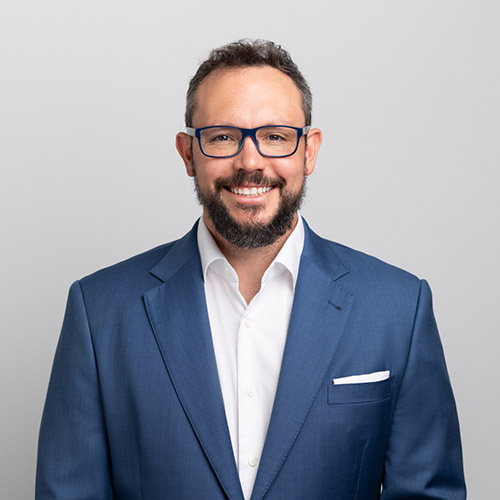
Daniel Joinbee
Daniel Joinbee is a proud Gunggandji man, former Air Traffic Controller and Managing Director of Gunggandji Aerospace, Australia’s only 100% Aboriginal and veteran-owned aerospace consultancy. Drawing on experience across the military, government and industry, Daniel is passionate about creating long-term employment and career pathways for Aboriginal and Torres Strait Islander peoples. Through initiatives including Raising Horizons and SPARAS, he advocates for practical, culturally aware approaches to workforce participation, leadership and stronger relationships between industry and community.
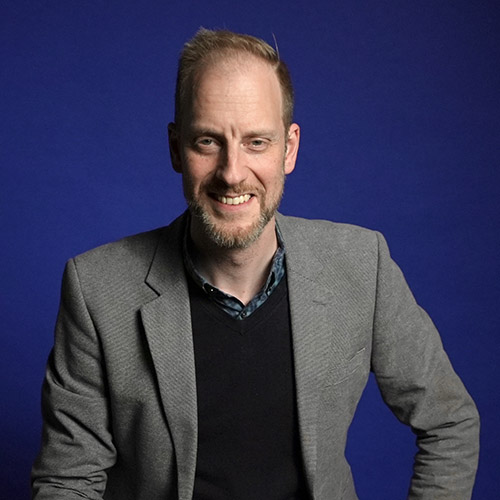
Jonathan Webb
Dr Jonathan Webb is the Science Editor at ABC Radio National, where he leads a team of specialist science and health journalists working across radio, podcasts, the web and social media. He hosts the short weekly program Lab Notes and appears regularly across ABC Radio. Originally from Adelaide, Jonathan has a PhD in neuroscience from Oxford University and was previously a science reporter for BBC News. For the ABC, he has overseen many successful and award-winning series including The Challenger Legacy, Brain Rot, Hello AI Overlords, Patient Zero and Coronacast.