Karen Hao: Empire of AI
2025 WALLACE WURTH LECTURE | NEW SOUTH WALES EXCLUSIVE
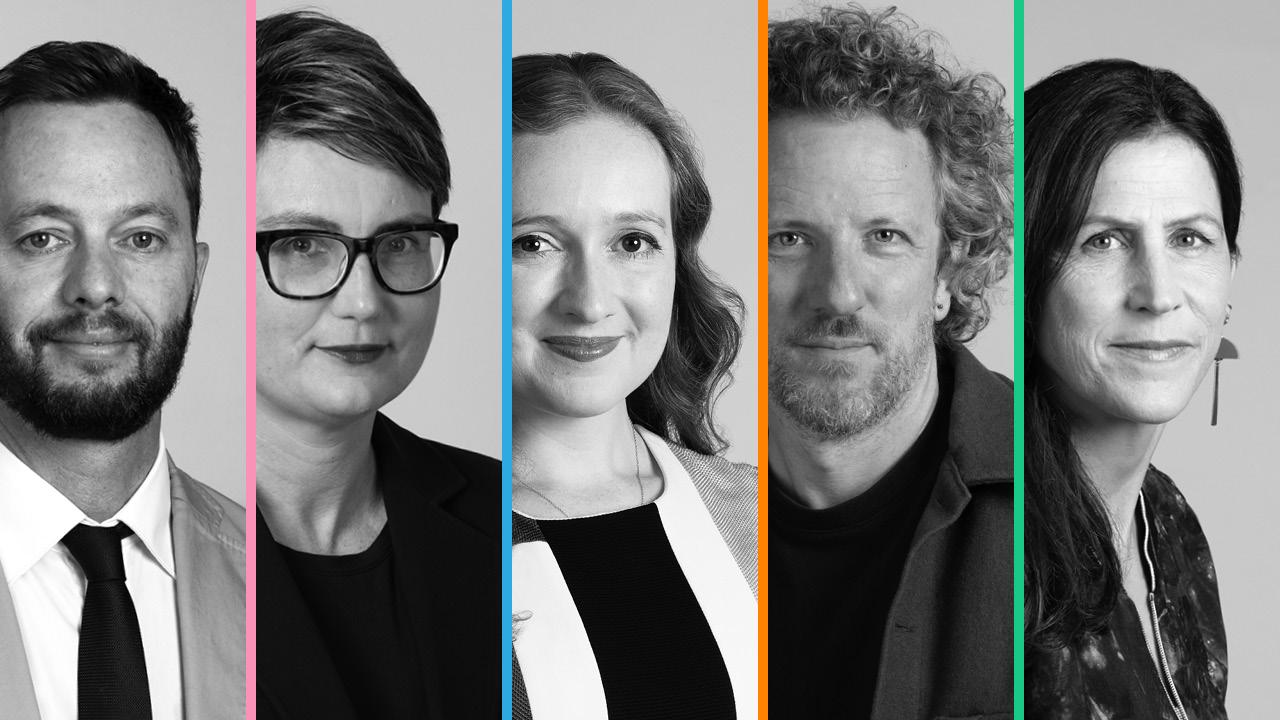
Karen Hao | Joel Pearson | Mimi Zou | Ange Lavoipierre
Programs like ChatGPT have become ubiquitous with AI, promising to kick start the next industrial evolution. But the scale of resources needed to support AI are staggering, with the cost largely being levied on the marginalised. From energy demands eclipsing whole cities, to labour exploitation in the global south, this behaviour bodes poorly for an equitable future.
In Empire of AI, award-winning investigative journalist Karen Hao unpacks the rise of OpenAI and their race for global dominance – prompting the question, what will it take to reign in this laissez-faire approach to growth? Answers are needed and UNSW legal expert Mimi Zou is exploring the possibilities surrounding the regulation of AI, along with UNSW neuroscientist Joel Pearson who is scrutinising the human impact of AI at an individual and societal level.
Join ABC journalist Ange Lavoipierre in conversation with Karen Hao and then Mimi Zou and Joel Pearson on what it will take to usher in a sustainable, equitable AI revolution.
INTERESTED IN AI? BOOK A TICKET TO PIGEON FOOL
Part game show, part Turing Test, part existential crisis. From 2 – 6 September test your ability to spot the bot in the half-hour theatrical game show, Pigeon Fool. Limited tickets, book now!
ABOUT THE WALLACE WURTH LECTURE
The Wallace Wurth Lecture was first held in 1964 to commemorate the memory of the late Wallace Charles Wurth, the first Chancellor of UNSW Sydney (at the time known as the New South Wales University of Technology) and first President of the Council of the University. The first Wallace Wurth Lecture was delivered by the then Prime Minister of Australia, the Right Honourable Sir Robert Menzies and recent acclaimed speakers include Gail Kelly, Stan Grant and Daniel Dennett.
LIVE EVENT & VENUE INFORMATION
The Science Theatre is located at UNSW Sydney's Kensington Campus. Please note this is a live event only, and will not be available via livestream.
TICKETS
ACCESS
Wheelchair Access
The Science Theatre is located at UNSW Sydney's Kensington campus (highlighted red on this map). The closest accessible drop-off point to the Science Theatre is towards the rear of the building, with access via Gate 2, High Street. Vehicles can drop off patrons directly adjacent to the Business School west wing which is then a 200 metre walk approximately. More information on getting there can be found via our interactive accessibility map available here.
Assisted Listening
The Science Theatre has hearing assistive technology available. Patrons wishing to utilise this service must collect a Roger™ inductive neck-loop receiver from the venue staff, and this system can be used with a hearing aid or cochlear implant with a T-coil, or with headphones.
Auslan & Captioning
Auslan interpreting services and/or live captioning can be provided for selected talks upon request.
Contact
To book and discuss access services, please call the Centre for Ideas on 02 9065 0485 or email centreforideas@unsw.edu.au.
PUBLIC TRANSPORT & PARKING
The Science Theatre is easily accessible via public transport and the closest light rail stop is UNSW Anzac Parade (L3 line). The closest bus stop is UNSW Gate 2, High Street (348, 370). For more information please call the Transport Infoline on 131 500 or visit transportnsw.info.
Free parking is also available in the Barker St Car Park (Gate 14) from 5.30pm. For access to free parking, event patrons must park in the UNSW Permit Holder bays, available on all levels. The Barker St Car Park (Gate 14) parking station is located here.
Paid casual and visitor parking is offered via the CellOPark App and ‘pay by plate meters’ in all other UNSW car parks. For more information head here.
PROGRESS FOR ALL
In 2025, Australia faces multifaceted challenges including critical skills shortages, productivity challenges, income and intergenerational inequality, health and education inequities, the cost of living and housing affordability. Recent years have accelerated the increasing wealth gap across the globe.
UNSW’s ultimate objective of Progress for All is born of our founding purpose to advance the economic and social prosperity of NSW and Australia. We carry that objective into this Strategy and recognise that one of the most direct ways that a university can advance prosperity is through the teaching and learning activities we provide alongside our research and innovation. We are unconditionally committed to increasing higher education access and success for groups that are traditionally underrepresented at university.
We will continue to develop relationships with industry, the not-for-profit sector, governments and the broader community that deepen our understanding and enable evidence-based, robust and viable solutions to the current economic and social challenges our society faces. We reaffirm our role as a university for the whole of NSW, just as we embrace the unique challenges and opportunities of being a world-leading university in a global operating environment.
You can read more about our objectives in our UNSW Strategy: Progress for All.
CONTACT
For all enquiries, please email centreforideas@unsw.edu.au or call the Centre for Ideas on 02 9065 0485.
The Centre for Ideas is happy to receive phone calls via the National Relay Service. TTY users, phone 133 677, then ask for 02 9065 0485. Speak and Listen users, phone 1300 555 727 then ask for 02 9065 0485. For more information on all other relay calls visit here.
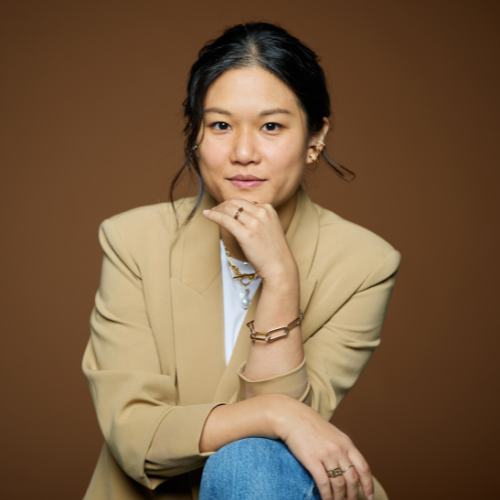
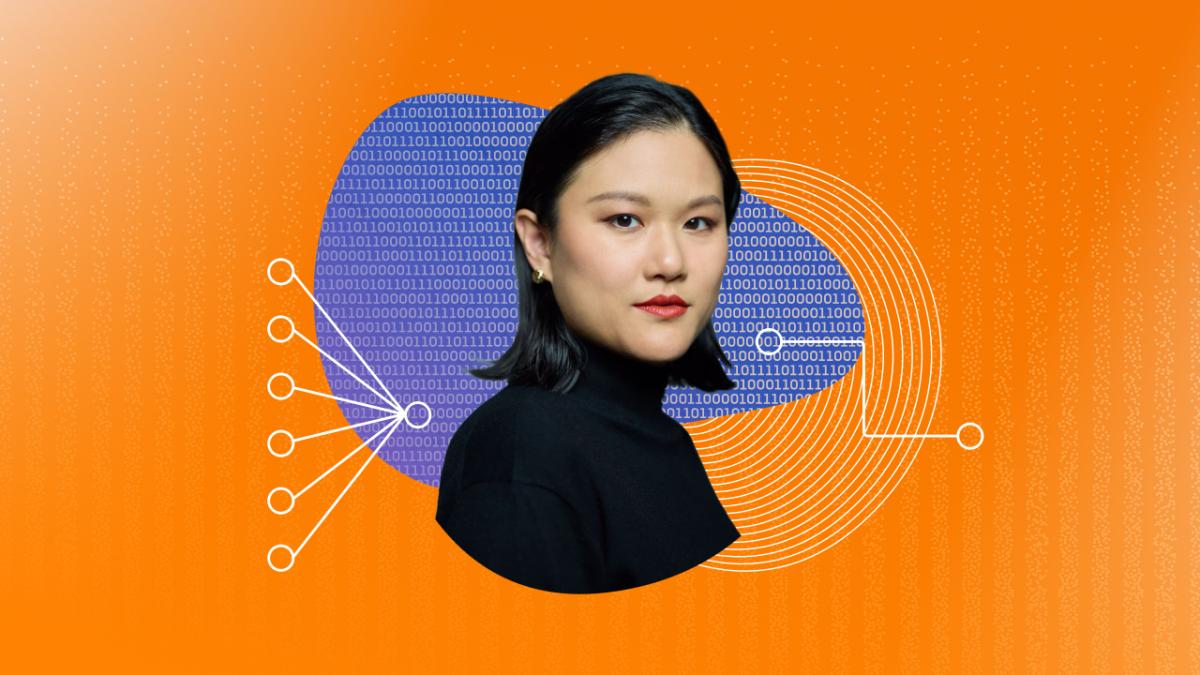
Karen Hao
Called “one of the foremost tech journalists covering AI” by Dr Joy Buolamwini, Karen Hao writes for publications like The Atlantic and leads the Pulitzer Center’s AI Spotlight Series, which trains journalists around the world on how to cover artificial intelligence.
In Empire of AI: Dreams and Nightmares in Sam Altman’s OpenAI, Karen, the first journalist to ever profile OpenAI, tells the behind-the-scenes story of how a cadre of the most powerful companies in human history is reshaping the world in its image. “Excellent and deeply reported” (The New York Times), Empire of AI is a page-turning thriller, an “essential work of public education” (Zuboff), and a revelatory portrait of the people controlling this technology. It is the jaw-dropping story of ambition and ego, hype and speculation, plunder and destruction, politics and labour, and, of course, money and power—a brilliant and deeply necessary look at the industry defining our era, and what the future holds.
Karen was formerly a reporter for The Wall Street Journal, covering American and Chinese tech companies, and a senior editor for AI at MIT Technology Review. Her work has been cited by Congress, featured in university curriculums, and remade into museum exhibits. She has won numerous accolades, including an American Humanist Media Award and a National Magazine Award for Journalists Under 30. Karen also sits on the AI advisory board of the Craig Newmark Graduate School of Journalism at CUNY. Prior to journalism, she was an application engineer at the first startup to spin out of Google, and she received a B.S. in mechanical engineering and minor in energy studies from MIT.
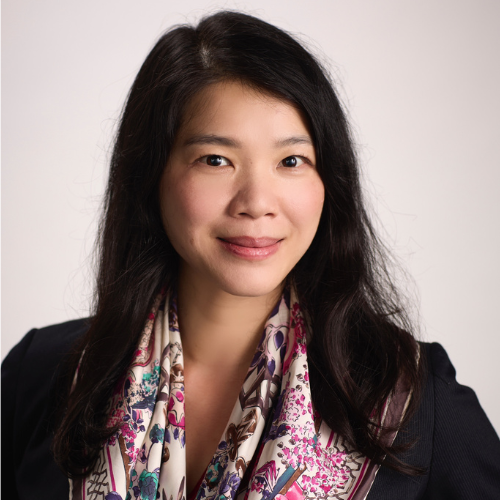
Mimi Zou
Professor Mimi Zou is internationally renowned for her work in the fields of artificial intelligence (AI) governance and financial, regulatory and legal technology. Her latest books include the Cambridge Handbook of Generative AI and Law and the Artificial Intelligence Act: Article-by-Article Commentary. She received a Global Australian Award in 2024 for her significant research and policy contributions in this field, including as a former expert advising the G7, World Economic Forum and the UK Government's responsible technology adoption body.
Prior to joining UNSW Sydney, Professor Zou held various senior academic positions at top institutions worldwide, including the chair in commercial law at the University of Exeter and the first fellowship in Chinese law at the University of Oxford, where she also founded Oxford's first lawtech innovation lab and an AI regtech spinout.
Professor Zou actively collaborates with industry, government bodies, and civil society organisations to advance responsible AI practices and enhance ethical standards in technology use. Her insights are regularly sought by global media, and she frequently speaks at prestigious conferences around the world. A committed educator, Professor Zou actively mentors the next generation of lawyers, fostering critical thinking and interdisciplinary knowledge in her students.
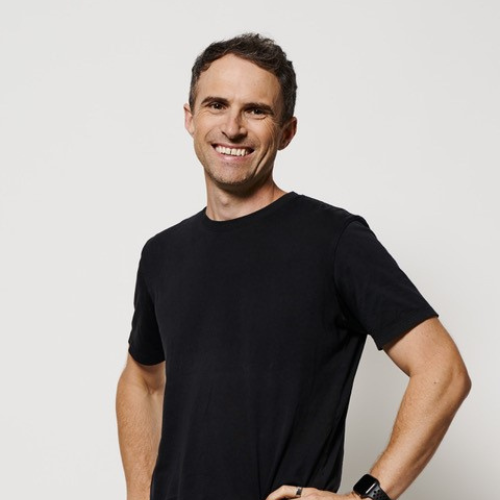
Joel Pearson
Joel Pearson is a neuroscientist, neuro futurist, author and Director of the Future Minds Lab, and an ARC Future Fellow at the University of New South Wales. He initially studied art and filmmaking at the College of Fine Arts before turning to the scientific mysteries of human consciousness and the complexities of the brain. His debut book, The Intuition Toolkit: The New Science of Knowing What, Without Knowing Why, came out in 2024. His pioneering research has changed our understanding of intuition, the human imagination, aphantasia and the psychological impact of AI on humanity. He is now helping companies prepare for the disruptive change of the AI revolution.

Ange Lavoipierre
Ange Lavoipierre is the ABC’s national technology reporter. Their coverage of emerging phenomena in generative AI won a 2023 Australian Podcast Award, and their writing on AI’s existential risk features in the Best Australian Science Writing 2024 anthology. Their features have appeared in The Guardian, The Monthly and more. Ange is the creator and host of the ABC’s tech and culture podcast Schmeitgeist, about trends and phenomena in tech and internet culture, which attracted a Walkley nomination for its investigation into ADHD care. Ange was also the host of the ABC’s Brain Rot, a podcast about how tech is changing our brains, and the co-host of the ABC’s first daily news podcast, The Signal.