Whistleblowers: In defence of truth
The cost of courage is too hard at the moment and that’s what we need to fix to have a better society. Until we fundamentally shift that power imbalance ... it’s still going to be too hard to speak out.
Kieran Pender | Gabriel Shipton | Lenore Taylor
The first thought that comes to mind when hearing the term “whistleblower” may be high-profile cases like Julian Assange of WikiLeaks, David McBride who was jailed for exposing war crimes and Jeannie‑Marie, who revealed serious misconduct in the Robodebt scheme. But most whistleblowers are unknown and ordinary people who shed light on corporate, government or organisational corruption and misconduct.
Yet the very act of whistleblowing is fraught with challenges and experts are calling for greater protections to ensure Australians can exercise their democratic and moral rights.
Join two of the foremost experts in Australia on protecting and defending the rights of whistleblowers, Kieran Pender and Gabriel Shipton. Pender is an associate legal director at the Human Rights Law Centre and the founder of the Whistleblower Project, which has advised more than 200 whistleblowers since 2023. Shipton is an Australian film producer, human rights advocate and founder of The Information Rights Project. He is best known for the global campaign he ran for the release of his brother, WikiLeaks' founder Julian Assange.
We will also hear from a whistleblower on a harrowing case of wrongdoing they exposed in the prison system.
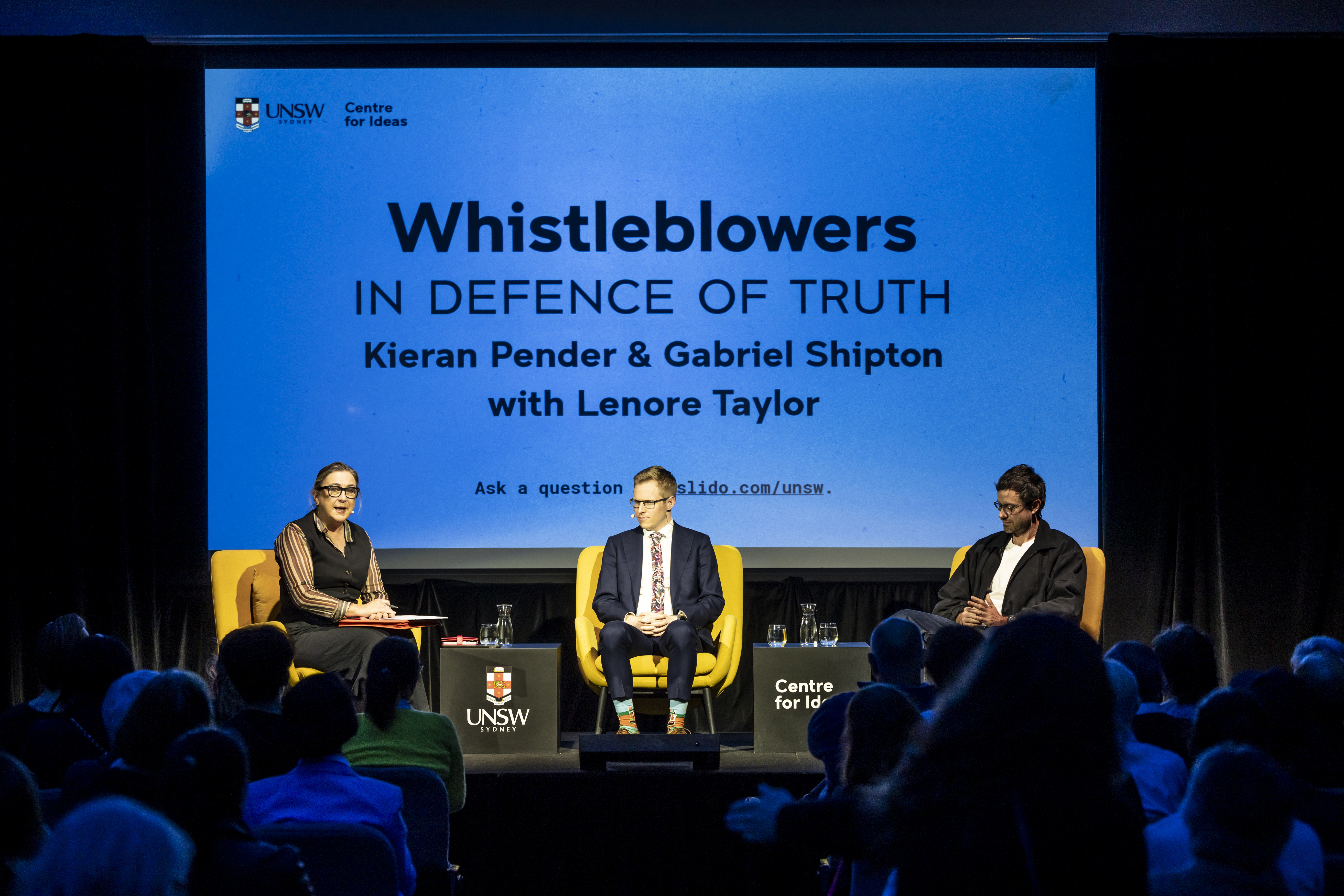
Leading commentator and former editor of Guardian Australia, Lenore Taylor, hosted a critical discussion with Pender and Shipton on the crucial role whistleblowing plays to Australian democracy, and what can be done to strengthen it.
Podcast transcript
Lenore Taylor: Hello everyone. Thank you all for coming out on this wintry night to talk about whistleblowing. I’m Lenore Taylor. Until February, I was the editor of Guardian Australia. Now I’m deep in a book project which is challenging in a whole lot of different ways.
I’d like to start tonight by acknowledging the traditional custodians of the land that we’re meeting on, the Bidjigal people. Extend respect to Elders past and present and to any First Nations people who are here with us tonight. And I’d like to welcome our panel. Gabriel Shipton is a filmmaker, a storyteller, a human rights advocate.
He’s the founder of the Information Rights Project, which is a charity established to support and protect whistleblowers. He also advocated and fought for many years alongside his father for the rights and the freedom of his brother, Julian Assange. And that was a huge multinational campaign that ran for far too many years.
Kieran Pender is an academic, a writer. He also covered a lot of sport for Guardian Australia, just coincidentally, Men’s World Cup, Women’s World Cup, two Olympics and surfing, I think. But more importantly for tonight, he’s also the Associate Legal Director of the Human Rights Law Centre. And he led the establishment of the Whistleblower Project there, which is a specialist legal service for whistleblowers. It’s advised hundreds of whistleblowers. It advocates for better protection for whistleblowers and runs test cases and litigation.
I think he’s a man of many talents. We used to joke at the Guardian that there had to be two or three Kieran Penders to do all the things that he does, but whistleblowing is chief among them. So we are here tonight, obviously, to talk about whistleblowing, why it’s so important, why it’s important that people can safely say something when they see something that is quite evidently wrong, fraud, corruption, illegality, misconduct, so that they can say something, no matter what position of power they themselves hold in the organisation, where they see the wrongdoing happening.
Why it’s important for people to be able to tell the truth about what they see, not just for them and their organisation, but for all of us. We want to talk about what whistleblowing can achieve, but also to have a realistic conversation about not only the difference it can make, but the difficulties in doing it, about how it is possible to stand up and talk about things that you see wrong and call things out. And also about the sort of attitudinal, the attitude that everyone should bring or would ideally bring to whistleblowing and to the idea of speaking up and how we view people who do talk about things when they see things that are wrong.
So let’s start with what whistleblowers have achieved, the difference they’ve made. I mean, as a journalist and an editor, I know that many, many really big and impactful stories, many of them start with a whistleblower who wanted to reveal some information. Sometimes we know their names, oftentimes we don’t.
So I’d like to just talk about some of those cases. So we set the scene about what whistleblowing can do.
Kieran, do you want to start with some examples of the biggest whistleblowing cases that you’ve been involved with or that you’ve seen and what they’ve done?
Kieran Pender: Sure. Thanks, Lenore, and thanks everyone for coming along tonight. I think your point is really important that there are so many people who’ve blown the whistle, many of whom have done that at great personal costs, and we only know the tip of the iceberg cases.
But the two cases that I often reflect on are firstly some of the whistleblowers whose very courageous whistleblowing led to the Banking Royal Commission. I think it’s a really tangible example because everyone in the audience tonight is better off because brave people spoke up about wrongdoing in the financial sector. The banking sector affects every person in this country.
We had a Banking Royal Commission, we had change as a result, but some of those people, the Geoff Morrises of the world, the Dr Ben Kohs of the world, sacrificed a lot to expose that wrongdoing, to get that change, which has benefited all of us. Another example that we’re involved in at the Human Rights Law Centre is that of those who blew the whistle on Robodebt. The Guardian did a lot of important reporting under your tenure, Lenore, on Robodebt that wouldn’t have been possible without brave people speaking up.
We’re very proud to act for Jeannie Marie Blake, who was one of the original Robodebt whistleblowers who gave evidence to the Royal Commission, and I often reflect on her whistleblowing and others and what might have been different if they’d been listened to. So, from the very beginning of Robodebt, people said, this is wrong, this is unlawful, this is unethical. We’re talking literally over a billion dollars that could have been saved, untold human suffering and, tragically, actual human lives that could have been saved if people like Jeannie were listened to from the start.
Lenore Taylor: Yeah, and both she and Colleen Taylor wrote to the head of the department and said, this is wrong, we should not be stealing from our own clients and were completely ignored. Gabriel, you are also helping whistleblowers and supporting them in many ways. Can you talk to us about somebody you’ve been dealing with who’s really made a difference?
Gabriel Shipton: Yeah, so one of our, I guess, one of our most recent live cases that we’re working on at Information Rights Project at the moment is an ex-ASIO spy codenamed Marcus. Marcus worked undercover as an ASIO spy for six years in radical Islamic groups in western Sydney, and he did a Four Corners episode where he blew the whistle on what he saw there and what he’d reported to ASIO in regard to the two Bondi shooters, that he’d identified one of the shooters back in 2019 and reported that to his superiors. Now, I think we’re still seeing the impact of what his whistleblowing will do, but Marcus is already, I guess, suffering from his...
Lenore Taylor: He’s living overseas.
Gabriel Shipton: That’s right, he’s living on the run. We’ve raised around $50,000 to cover his safe houses and living expenses while he’s overseas because he’s facing death threats from the ISIS-linked groups that he infiltrated. And I think in Marcus’s case, whistleblowers...
The Bondi massacre or the Bondi shooting was an atrocious thing, a sort of blight on our culture and society, right? It’s one of these things that I think everybody in Australia just turns your stomach. And having someone like Marcus come forward and blow the whistle on our institutions that they could have done better, that they could have stopped this, potentially stopped this, is very important and very important that he’s heard at the highest level.
So, his case still has a bit of space to run and hopefully there are some changes within ASIO because of what he’s revealed.
Lenore Taylor: But ASIO said initially that they didn’t accept that they could have known about the radicalisation of the younger shooter at that time, right?
Gabriel Shipton: Well, this is the amazing thing about this case, right? So, Marcus was due to appear on Four Corners and ASIO did something unprecedented. They released a statement in advance of the Four Corners episode.
Lenore Taylor: Just ASIO releasing a statement is kind of wild.
Gabriel Shipton: Yeah, so they released a statement in advance of this Four Corners episode and doing exactly what I’ve seen happen time and time again to whistleblowers. It happened to my brother Julian. They took the spotlight off them and put it on the whistleblower.
They said Marcus is unreliable, you know, and sort of turned it on him rather than address the allegations that he had made. And they actually did address the allegations because what they said was that they would use everything in their power to go after the ABC, to go after the journalists for exposing this stuff, for platforming Marcus and his allegations. And so, it’s sort of this perfect example of what happens in our institutions when they’re exposed.
Not only are they going after Marcus and his credibility, but they’re going after the journalists too. And that’s why I think it’s so important. Marcus has said that he wants to come and have his testimony heard at the Royal Commission.
Lenore Taylor: And do you think that’s going to happen?
Gabriel Shipton: I hope it happens for him. Yeah, I hope it happens for him because as a whistleblower, to take this incredible risk to his life, he’s got small children and a wife that he’s now separated from. He’s risked everything to bring this information to us.
And I really hope that he can have, you know, the biggest platform that he could possibly have to share his testimony.
Lenore Taylor: National security is a particularly tricky area though, isn’t it? Because by definition, national security is about secrecy. But by the same token, there has to be some mechanism to call out wrongdoing, particularly in an area that is by definition, secret.
And some of the trickiest cases over the years like the Bernard Collaery and Witness K and Marcus and, you know, even your brother was charged under the Espionage Act, right? Like, talk to me a bit about how you, can you take national security cases at the Whistleblowing Project?
Kieran Pender: Only in very limited circumstances. So the law is very limited in the extent we can assist people by the whistle on national security matters. That’s a problem because it means that people can’t get the legal assistance they need.
I think too often that we have this false dichotomy that transparency and national security are in tension. And I’d say in most cases, the opposite. So certainly, I’m not a transparency absolutist.
I accept that ASIO needs some degree of secrecy to operate effectively. But in Australia, the balance is entirely tilted in the other direction. We have at the moment over 850 secrecy laws on the federal statute book, over 850 ways in which people can be prosecuted for speaking up.
To their credit, the Labor government, which in some respects has enacted on whistleblowing and other things we might talk about later, the government is in the process of repealing some of those laws. Yes, national security whistleblowing, you know, maybe is not the archetype and a lot of the important whistleblowing we see is in other areas. But in some ways, it’s the canary in the coal mine because it’s the most acute example of that clash between state power, wrongdoing and really courageous people speaking up.
Lenore Taylor: Yeah. Did you want to quickly talk to that before we go to the first part of our video?
Gabriel Shipton: Yeah, I think those particular cases, the national security cases, they’re the ones arguably where whistleblowers take the biggest risk because the power that they’re going up against is, you know, all-powerful, right? Like they can, you know, ASIO has these incredible powers, you know, just to take you in question, you not release you. The secrecy laws, like we saw in Bernard Collaery’s case where the whistleblower, we still don’t know who it is, they can’t leave the country, like all these, and even if talking to them and if you’re a journalist, you talk to them, it’s a crime.
And so that is really, I think, that edge of whistleblowing that we try to work in, that we try to support those whistleblowers, because that is where the most power in the state exists. And so it needs, we argue, more scrutiny than other areas.
Lenore Taylor: We’re now going to hear the first part of this testimony from a whistleblower who’s agreed to share their experience with you all here tonight. Their voice has been altered and their appearance is obscured to protect their anonymity. I think they have asked us to tell you that choosing not to reveal their identity is not in any way taking away from their commitment to come forward to tell their story and to try to make a difference.
And what they have to say and their experience really does go to the heart of the discussion and about what it means to speak up. So let’s just hear from the first part of their testimony.
Testimony Speaker: I was working in a children’s prison when I witnessed several events, which made me extremely concerned for the welfare of young people. In this prison, young people faced extended periods of isolation. There were not enough staff to be able to facilitate the children leaving their rooms.
They were kept like animals in spaces the size of a car park for 23 and a half hours a day. This quickly became a normalised part of working in prison. Then one day, a young person managed to set light to his mattress while he was locked in his room.
The fire alarms went off and everyone had to evacuate. But it was determined by more senior ranking staff that there were not enough staff members to safely remove the boy from his room. The rigid internal hierarchies meant that the humane decision to remove the boy could not be made by the staff member. It’s lucky he didn’t die.
But these things don’t need to be left to luck. Our obsession with protecting ourselves meant that the imminent danger to the young person was less important than the possible risk to the staff member.
We have a colossal issue with indigenous deaths in custody in this country. These issues are caught up in dehumanising hierarchies and rigid pathways of authority. That staff member was technically a guardian to that boy. He had a responsibility to protect him.
I first realised things were not right when my male colleague broke down and cried in the office. It is not usual in this country for a grown man to cry at work, especially not a man who works in a prison.
On this day, my colleague had witnessed children on the cameras pacing back and forth, bashing on the doors, screaming, desperate. Things were very tense. When we were able to have contact with the young people, they spoke from a place of experiencing intense terror. Some became suicidal.
We consoled ourselves with phrases like you have to be tough to work in here, and that’s just how things are. It was continuously confusing and hurtful to us that leadership failed to listen when we approached them as calm and concerned humans witnessing inhumane activities.
It is challenging to say that you believe something is wrong when people around you condone and even endorse the behaviour.
I knew we had to do something and we started by using the organisation’s internal channels with no positive result. After having exhausted internal channels, a group of employees collectively wrote an account of the wrongdoing we had witnessed and sought legal advice.
In our case, we were protected because we acted as a group. Being part of a group gave us courage and it protected our sanity and our humanity. The legal advice we received made us aware that despite the protections that come with raising concerns through parliament, there were grave practical risks to us and our employment.
For some of us, the risk extended to visa statuses and the capacity to continue to live and work in this country. The threat of these reprisals was enough to silence us. The members of our group have families, they have dependents, they have mortgages.
The power of the government to destroy livelihoods, to resort to unjust sanctions because they can and we cannot, well that’s violence right there. Those are the bars of our cage as cold and hard as any steel.
Lenore Taylor: So that really does highlight how hard whistleblowing can be and the toll that it can take.
Kieran, can you tell us about the kind of assistance that your organisation can offer, the kind of demand that there is for your services and how it works out for whistleblowers in sort of the best and worst case scenarios?
Kieran Pender: Sure. So I’m permitted to say that that individual in the video is a client of ours, very proud to have assisted that person. We launched the Whistleblower Project at the Human Rights Law Centre three years ago because we recognised how hard it was for people to speak up.
In Australia, we have all of these laws that say if you speak up, you’re protected. They weren’t working, they still are not working in many cases, but we launched our service to say these people need specialist assistance because of the public interest in what they’re doing. We’ve been overwhelmed by the demand since we launched.
We’ve been contacted by over 700 individuals, triaged their cases. We’ve advised over 220, 230 whistleblowers, represented over 60, been involved in a bunch of different litigation. I think one of the challenges is that every experience is unique and there are some really positive experiences where the wrongdoing is addressed and the whistleblower is never known.
We’ve had some great outcomes, you know, front pages, investigations, inquiries, change, really substantial change that have come about because our clients have spoken up, often working together with journalists at The Guardian and other publications. In the worst case scenario, we know people lose their jobs, lose their livelihoods, and we’re not directly involved, but we were peripherally involved and did a lot of advocacy in cases like Richard Boyle, the tax office whistleblower, David McBride, who leaked documents about war crimes in Afghanistan to the ABC. People can lose their liberty and David McBride’s still in jail right now in Canberra.
Even in the best case scenario, I don’t think any of my clients don’t have a difficult time, but if you ask most of my clients would they do it again, they say yes because they know that they’ve done the right thing and they can look in the mirror and feel that they’ve made a positive difference to society and I think part of, you know, we do a lot of work to then change the law, improve the structures, because it shouldn’t be that hard to speak truth.
The cost of courage is too hard at the moment and that’s what we need to fix to have a better society.
Lenore Taylor: Do you see any change in the way that, say, corporations, their attitude towards whistleblowers, like the KPMG case that’s in the news at the moment? I mean, that to me looks like the sort of 1-0-1 of how a corporation shouldn’t deal with a whistleblower.
Kieran Pender: Exactly. I think those high-profile cases have a salient effect and probably the next whistleblower in a large corporation will be treated slightly differently, but unfortunately until we get the, you know, at heart we have a power imbalance. We have powerful institutions, government agencies, corporations and individuals exposing inconvenient truths.
Who look like troublemakers. And until we fundamentally shift that power imbalance and use the structures of the law and the laws that on paper look okay but aren’t working in practice, until we fix that, it’s still going to be too hard to speak out.
Lenore Taylor: And, Gabriel, your organisation also offers support, as you’re saying, to people like Marcus. How does your capacity meet demand and what’s your reflection on the testimony that we just heard about how difficult this can be?
Gabriel Shipton: Yeah, congratulations to Kieran. I mean, without his organisation, I think we should just give them a round of applause for all the work they do. You know, it’s left to a handful of organisations to do this work in Australia and we’re all funded by donations, by people, by individuals out there like you all here.
And it’s amazing to see this turn out tonight. It’s very, yeah, heartwarming to see that you’re coming out and care about this. But just to sort of, I think, bounce off a bit what Kieran said, is changing this idea about whistleblowers, that they’re troublemakers, you know, and switching that to it is all our civic duty to do this.
If we see something wrong, it’s our civic duty to speak out. And sort of beginning to reframe that culturally, I think, is a really important part of the work that we both do. I mean, we can do it here on platforms like this, but it also has to happen, you know, in films and books and other things like that.
The work that we do at Information Rights, I think, sort of stemmed from our fight to free Julian Assange. We found, particularly in Julian’s case, where he was butting up against this extreme state power, you know, that’s sort of uninhibited, that there were a lot of organisations who just, you know, a lot of closed doors. Organisations that would have normally come to the aid of somebody like Julian, they weren’t there at the very beginning.
Eventually, they did all come around, but at the beginning, they weren’t there. And so, what we did during that campaign is, we built up this, we sort of built the bike as we were riding it, in a sense, and we built up this infrastructure, this campaigning infrastructure, this network of people who care about truth, about their right to know. And now we’ve moved that into the Information Rights Project and using that same machinery, that same network, to help other people who have blown the whistle.
And we can help them in very, sort of, practical ways because we have that practical experience, right? Like, I know as a family, like, the hardship that we went through, you know, just trying to raise money to try and find housing, pay for food, like, campaigning as a family member as well, like, quitting your job, like, you risk everything. And so, we have an understanding of that.
And so, we built this organisation to be able to support precisely on that level. And that’s what we’ve been doing, basically raising money and paying for safe houses, paying for living expenses, so that these whistleblowers not only know that they have, you know, an incredible mind like Kieran and his team behind them to defend them legally, but there is someone else who will support them as well when they do lose their jobs. And so, hopefully, our idea is like, well, if these whistleblowers know that there is someone out there, that there will be more of them.
Lenore Taylor: And obviously, this is also linked to a question for press freedom, right? Like, one place whistleblowers can go at it as a last resort is the media. They’re often punished for it, like Richard Boyle or David McBride were.
But, you know, you can see Australia dropping down the World Press Freedom Index. You can see that even when they do everything right, it can go badly for them. I know Julian said he was found guilty of committing journalism, you know, because he had to plead guilty under the Espionage Act.
It’s a connected question, press freedom and whistleblowing, yeah.
Kieran Pender: A hundred percent. It would be, I think, a lot of media outlets have recognised that and have done some good work in this area, but I think we need more campaigning from press organisations because whistleblower protections are a press freedom issue. If you don’t have sources, you don’t have journalism.
And if we don’t have protections for people to speak up, and as you say, that’s the last resort, but it’s also an avenue that the law recognises. So, almost all Australian whistleblowing laws say speak up internally, speak up to the regulator. If it doesn’t work, you are legally permitted to go to a journalist, to an MP.
Unfortunately, it’s just been too hard. You know, Richard Boyle, a great case, blew the whistle the right way, thought he was doing the right thing, ends up on Four Corners. You know, you have investigations that vindicate him.
Lenore Taylor: He made a couple of mistakes.
Kieran Pender: But the court says, actually, we’re not going to, you know, the prosecution wasn’t for his whistleblowing. It was for the evidence he gathered to blow the whistle internally, that he could never have known that that wasn’t going to be protected.
And that wasn’t evidence he gathered to give to the journalist. It was just to blow the whistle internally.
Lenore Taylor: Yeah, and it took him years.
Kieran Pender: Yeah, and he was prosecuted, and that dragged on for seven or eight years. And, you know, the reason we’ve done so much work on those cases and also acknowledge the good work of Gabriel and his team is the chilling effect that sends. You know, I think what’s really hard and something that I reflect on a lot is we have great outcomes that no one ever knows about, where the whistleblower speaks up, the wrongdoings are addressed, they move on with their life.
But the cases that are in the media are where things go wrong. And so part of it’s that cultural change piece that Gabriel mentioned. How do we get everyone in the audience to know that if you go to work tomorrow and you see something wrong, come to us, get good legal advice, and there can be good outcomes and your life doesn’t have to suffer.
Like, it’s not, it’s never going to be a pleasant journey, but it doesn’t have to be an incredibly hard journey if we do it right. And that’s what I, it’s really hard in our work. We don’t want to discourage people from blowing the whistle because that would be bad for the public interest but people do need to go into it eyes wide open.
Lenore Taylor: Yeah. Okay. So now we’re going to hear the second part of the video with the whistleblower talking about the system and what kind of change is needed for people like them to speak up.
Testimony Speaker: The outcome from our group’s efforts to speak out was silenced. The power of the government to threaten our employment and our livelihoods meant that we couldn’t take the case to court or to parliament. The case did get some exposure in the media, but it wasn’t the significant impact we envisioned.
Overall, we couldn’t change the situation for these children. However, there are many more strong individuals who have been able to speak out in important ways, including David McBride, Richard Boyle, Liz Thompson, Colleen Taylor, and Jeannie Marie Blake. They are our heroes, but we have failed to recognise them.
For some reason, we prefer to be blind to the actions of the authorities that claim to defend us. We would rather not know about the violent acts done in our name. Is this true? Is this who we are?
In each of these circumstances, there were hundreds of individuals in these workplaces who were happy enough to just keep working. They turned away. They took home the wage. They kept their heads down.
These people are not free.
Our freedom is deeply bound up in each other. Have you witnessed unethical practices? Have you seen something you believe to be wrong?
If you raise the problem following the correct internal channels laid out for you to follow, what happens? What do you experience? You will soon feel the bars of your cage, and it is your cage.
It is your voice, your reason, your knowledge which is being repressed. Your humanity. This voice you have is the capacity to shape something new, to imagine a different future, a more just future.
Lenore Taylor: So that whistleblower didn’t achieve what they set out to do, but they still obviously believe fervently and with all their heart in the process of what they were trying to do, which is a difficult thing to hear.
Kieran, I know there are legal changes that are being discussed right now, a review of the current laws. Can you just kind of talk us through what is being proposed and what you think should be proposed?
Kieran Pender: Sure. We need better laws and we need better support for people who blow the whistle. So about 30 years ago, the first ever federal parliamentary inquiry into whistleblowing laws said we need whistleblowing laws and we need a whistleblowing institution to oversee and enforce those laws and to support whistleblowers.
Eventually, we got the laws. We still are waiting on that institution. We’ve been calling for a long time now for a Whistleblower Protection Authority, not a novel idea, been called for many times.
Here, we have whistleblower protection authorities overseas in a range of different countries. Right now, there’s a review of our private sector laws undertaken by the Department of Treasury. It’s open for consultation right now.
I’d encourage everyone here to get on their website and have a look at that and make a submission. We’ve got proposed reform to public sector whistleblowing laws. So the Albanese government is moving forward. We don’t think it’s moving fast enough or boldly enough.
Lenore Taylor: Or quickly enough.
Kieran Pender: Certainly not quickly enough. These were commitments made before the first election in 2022 that we’re still waiting on. And I guess the KPMG example is a good one. There’s a gap where people who work for partnerships...
Lenore Taylor: Should we just talk a bit about what happened there because I’m not maybe...
Kieran Pender: Yeah, certainly. So someone tried to blow the whistle on wrongdoing at KPMG, big consulting, accounting, auditing firm, ultimately have to escalate it to a senator who raises it in parliament. Now there’s been all of this accountability.
One of the reasons that person had to go to a senator was because our partnerships are not covered by Australian whistleblowing law. So that’s just a big gap right there. But then it’s also the question of...
Lenore Taylor: Which covers most law firms, accounting firms. That’s a lot of...
Kieran Pender: A big part of our economy, a big part of the power in our society that’s totally emitted from our whistleblowing laws. But then there’s that question of support. Where can people go for support?
Our work is philanthropically funded and we currently have a partnership with the New South Wales Ombudsman where we assist people referred from them. We can’t help everyone. Where are the structures and support processes?
Where’s the Whistleblower Protection Authority? I’d like to say, if you are discriminated against at work, you can go to the Human Rights Commission. If you’re underpaid at work, you can go to the Fair Work Ombudsman.
Given the public interest in whistleblowing, why don’t we have a Whistleblower Protection Authority?
Lenore Taylor: But there was a private member’s bill, right? And it got... Can you tell us what happened to that? I mean, it just got nixed, didn’t it?
Kieran Pender: Yeah. Andrew Wilkie, Helen Haynes, David Pocock and Jackie Lambie put forward a proposal for that bill and the government didn’t take it forward. That’s really disappointing because this Labor government, after the Banking Royal Commission, when they were in opposition, said, we’re going to set up a Whistleblower Protection Authority.
Obviously, everyone remembers that election was lost and all of those ideas were forgotten. But it was a good idea then. It’s an even better idea now.
Rex Patrick, the former senator, likes to say that you only like transparency when you’re in opposition. But worked in other countries, the US, you know, it’s funny, there’s so much commentary about the decline of democracy in the United States. And obviously, there are big problems in the US right now, but they’re light years ahead of Australia when it comes to protecting whistleblowers. So, you know, we shouldn’t throw stones.
Lenore Taylor: And there’s a kind of cross-party, there’s a lot of support for whistleblowing in unexpected places in our parliament too, right?
Kieran Pender: Yeah, one of the really heartening things is we’ve done a lot of polling over the years that shows the breadth and depth of support for whistleblowing in Australia. 80-90% of Australians want better whistleblowing laws, think whistleblowers make Australia a better place. Whether you vote for the Greens, Teals, Libs, Labor or One Nation, you like whistleblowers.
But that hasn’t translated yet to reform. Now, I’m an optimist. I think that reform will come, but we’ve been waiting for too long. And while we wait, things continue to go wrong in the darkness. You know, that famous saying that democracy dies in the darkness. What wrongdoing is going on right now that we don’t know about because people can’t speak up?
You know, the KPMG example is such a great one. If it wasn’t for Senator Deborah O’Neill standing up on a Thursday night at 9pm in the Senate and saying KPMG are doing these bad things, we’d never know about that. That’s not a system that’s working well.
Lenore Taylor: Do you have any thoughts about the systemic change, the legal change that we need to have?
Gabriel Shipton: Yeah, look, I think, you know, you made a reference to the United States. I think that they’ve got, we don’t have freedom of speech enshrined in our constitution. They have their Bill of Rights, freedom of speech enshrined in their constitution that protects journalists as well as whistleblowers.
So I think having something very strong in the constitution, I think would help us. We don’t have to, it doesn’t have to be, you know, US centric, but it can be an Australian, an Australianised version, something that suits us here in Australia, but not just protecting whistleblowers, but protecting whistleblowers, journalists, that whole line of information of how the public gets informed about what our governments are doing, what our corporations are doing, but more importantly, what our governments are doing in our name. I think it’s important to, for any democracy to have that whole line. But you mentioned the bipartisan support and, you know, we saw some odd bedfellows in our time.
We’d go to have meetings in parliament and we’d have people like...
Lenore Taylor: With the Free Julian campaign?
Gabriel Shipton: Yeah, with the Free Julian, Friends of Julian Assange parliamentary group. And we’d have, you know, Adam Bant, the ex-Greens leader, sitting next to Malcolm Roberts from One Nation. And, you know, both of them, you know, supporting Julian Assange.
And just two months ago, it was two months ago, right? We spoke at the, yeah, so Kieran and I spoke at this Friends of Whistleblowers group in parliament, which is, again, a bipartisan, multi-partisan group actually, with co-chaired Labour, Liberal and two Independents. And so, yeah, it’s very odd walking into those rooms and seeing, you know, people like Barnaby Joyce and Monique Ryan getting together.
Lenore Taylor: It’s good that they can agree on something.
Gabriel Shipton: I know, it’s incredible. It becomes a story in itself, right? And, you know, I think that has some power and some momentum into it.
But it’s just about, can we forget about our partisan politics and focus on these democratic principles and really drive something home that helps everybody?
Lenore Taylor: Before we just go off that point, one thing I was reading something you wrote, Kieran, and it really struck me, because we’ve been talking about a lot of examples from banking and finance. But I read that you said a lot of the cases that you’re taking at the moment are from care professions, which I think, I mean, kind of sent a chill through me because of the kinds of things that a whistleblower in aged care or child care might be blowing the whistle on.
Kieran Pender: Yeah. So, we did a really great piece of work and acknowledge my amazing team, a few of whom are here tonight. Last year, we published a report called Women Speaking Up about the gendered dynamics of whistleblowing.
You know, the high-profile whistleblowers in Australia recently have been the David McBrides and Richard Boyles. But in our client data, we were saying that a majority of our clients were women, and a lot of them were raising concerns about wrongdoing in the NDIS, in aged care, in nursing, in hospitals. And in those sectors, we have some really weak laws.
So, the NDIS sector has the worst whistleblower protection laws under any federal law. We just managed to get some reform to that a couple of months ago. That was a significant step forward, more work to be done.
But as you say, the wrongdoing that’s going on in those places, where there’s no accountability, there’s such power imbalances, that is so critical we get right. And yet, unfortunately, for too long, that wrongdoing has been allowed to go on unchecked.
Lenore Taylor: Yeah. And I guess the last thing I wanted to raise with both of you, which we’ve sort of touched on through this discussion, is about not just the legal change, but the attitudinal change. How do we get to a point where whistleblowers are seen as heroes, are seen as people doing the right thing?
What are your thoughts about how that shift in attitude can happen? Do you want to start on that?
Gabriel Shipton: Yeah. You need the media to be on side. I think we sort of touched on it already. We need media, artists, there has to be a whole cultural movement. These sort of things are great. These sort of events are really wonderful, getting people together, talking about it amongst yourselves. I’m sure you will after you leave here tonight. Hopefully, you’re telling people tomorrow what a great whistleblower event that you went to, and maybe inspiring someone who has seen something to come forward and speak to Kieran.
But yeah, it’s not going to happen easily, but it’s going to take a lot of effort, and it’s going to take a whole community to do that. That’s what we are sort of doing at Information Rights, is we’re coalescing that community, keeping them informed of what’s going on, and having these cultural events. I guess I can sort of think back to Julian’s case, how we sort of moved the dial for his case.
It didn’t happen overnight. It took five years to get Julian Assange out of prison. We had to change the way people thought about Julian, and we had to do hundreds of events like these.
There were three or four films made. There were books made. Artists were writing songs. People like Ai Weiwei were doing art pieces. It takes that sort of movement and momentum to really change our cultural perspective.
Kieran Pender: The laws are one thing, but I think one of the things that most of our clients find so hard is how isolating the journey is blowing the whistle. There’s so much secrecy or confidentiality wrapped up in the process, it’s very hard for people to talk about it. I think something that everyone can do is, in your own workplaces, support people who are speaking up, are raising concerns, maybe are being ostracised as troublemakers, but are trying to do the right thing, trying to raise concerns that are in the public interest.
Everyone can play that part, and then that bigger piece, the law reform, it’s letting the government know that this matters to you, writing to your local MP, your local senator, speaking to them and saying whistleblowing matters. The government needs to do more. The Albanese government talks a good game on transparency. In some areas, they’ve delivered. In some areas, they haven’t. We need to push them to go further.
Lenore Taylor: We are getting some fantastic questions through on Slido, so I’m going to go to some of them. Group these two together. One is, what advice would you give someone who’s witnessed serious wrongdoing but is terrified that using the formal reporting challenges will just expose them? Then, with the availability and ease of digital investigation, what advice can you give to whistleblowers about how not to be discovered?
Kieran Pender: I’ll go first on those. I mean, get legal advice first. Most whistleblowing laws allow you to blow the whistle anonymously.
Something we say to a lot of people if they’re concerned. Of course, if they work in a five-person organisation, that may be difficult, but if you’re in a large organisation, you can blow the whistle anonymously, and then you can see how it’s dealt with. It may be that you gain confidence that they are taking it seriously and you’re willing to come forward, but you can start with those small steps.
Information security is a big concern. We’ve published a number of guides on our website that deal with digital footprints. That is a big concern, that people can be tracked, that the whistleblowing can be monitored, and so that’s something that we encourage people to take seriously. Certainly, don’t go emailing confidential documents to your personal Gmail. Don’t do that. That’s not legal advice.
Lenore Taylor: Do you do – this is sort of asking for a friend, but do you do education for journalists as well? I mean, I know my best investigative reporters knew exactly what to do and how to – but if someone picks a high-profile journalist, would they necessarily know what to do and not do?
Kieran Pender: A lot of our best referrals come from investigative journalists. Whistleblower goes to the journalist, journalist says, get legal advice, speak to Kieren’s team.
Gabriel Shipton: Totally. Finding a sympathetic journalist, I think, is probably one way to go. Someone – obviously, do your research on them and make sure they haven’t burnt off their sources in the past, I think, is probably a good example of someone who treats sources with care.
And practice that digital hygiene. You can go on – there’s lots of guides online. Kieren’s website has some, but also Freedom of the Press Foundation. They have really strong guides of how to use different operating systems and things like that, if that’s what you’re really worried about.
Lenore Taylor: I have another question. If you could each secure one reform in the next 12 months, what would it be and why that one first?
Kieran Pender: It’s been our number one campaign platform for a long time, a Whistleblower Protection Authority that covers the public and private sector in Australia. It’s a no-brainer. They work elsewhere in the US, in the Netherlands, in Slovakia.
I recently discovered there’s a Whistleblower Protection Authority in the Maldives. I’ve been angling for a study trip to the Maldives to go and have a look at that. So, if I can get the study trip first and then we can get one in 12 months in Australia, that’d be great.
Lenore Taylor: That’d be the right way around. What did the major parties of the government say when that private members bill was put up? Why did it get such short shrift?
Kieran Pender: The government has said it’s not convinced it’s necessary and is unfortunately proceeding in quite a segmented way, public sector reform, private sector reform separate. We say it’s all related. You’ve got a lot of contractors that are private sector but working for government.
Unfortunately, the government hasn’t yet seen the light, but as I said, I’m an optimist. We’ll get there.
Lenore Taylor: Did you have a top-of-the-pops reform?
Gabriel Shipton: Yes, we’d get David McBride out of jail.
Lenore Taylor: We should talk about that because he’s got a parole hearing coming up, yes?
Gabriel Shipton: Yes, that’s right. He’s got a potential parole hearing coming up in August. He got around a five-year sentence, so I think it would be two years into his sentence.
He’s now up for parole and we’re hearing from some sources that the government, the Attorney-General, is pushing back quite hard against his parole, as in they don’t want to give David parole even though he’s been an exemplary inmate while he’s been serving his sentence. We have a campaign on our website, informationrights.org, writing letters to the Attorney-General. I recommend everybody here, if you take one action tonight, go on, write that letter to the Attorney-General.
Then if you’re feeling like doing something else, write to your local member as well and ask them to write to the Attorney-General because that is very effective. That political pressure actually does make a difference. We’re really pushing for that to get David McBride out of prison.
And stop treating whistleblowers like they’re criminals. David should be treated like a hero. From my perspective, even though he’s convicted of a crime in this country, he’s not a criminal at all. I think getting him out of jail would be nice to have him back to his family. If we could do that for him, that would be amazing.
Lenore Taylor: This is an interesting question. The question is what organisational conditions make whistleblowing the last resort rather than internal reporting, which is interesting, right? What is a “best practice” company, organisation, faculty with internal processes that might mean you never actually have to blow the whistle? Is there templates for that? Who does it well?
Kieran Pender: You can have all the policies and processes and that’s obviously important, but I think it comes down to culture. Is the organisational culture one that values people speaking up? There are lots of organisations where that happens.
Sometimes we help people speak up internally. They’re listened to. It’s dealt with. It’s addressed.
We also find that a lot of times people come to us only after they realise that they are a whistleblower.
People speak up because they think it’s their job. They think they’re just doing what they should and it’s only when things go wrong that they approach us. I don’t want this to be all doom and gloom. There are lots of organisations that do have all of the right processes and I think the change, the reform, some of these high-profile examples are good in terms of pushing that further, but ultimately what makes organisations and agencies act is regulation and the law and oversight and enforcement.
The private sector regulator in Australia has brought one enforcement action in the six years since the law was changed. They secured a $7 million penalty for a company that mistreated a whistleblower. We need more of that.
We could fund the Whistleblower Protection Authority just by enforcement action. I often use the example of Robodebt. If Robodebt had been stopped at the start, we’d pay for a whistleblowing authority for 100 years.
Lenore Taylor: 10 times over. 100 times over. Yes, exactly.
This question goes to what you were mentioning before, but I think it’s interesting to think about. What role can storytelling, whether through film, media or campaigns, play in building public empathy for whistleblowers before they’re dismissed or demonised?
Gabriel Shipton: I’m a filmmaker, that’s by trade, so I’ve seen storytelling change people’s minds in many cases and we’re using it all the time to convince people to come around to our side and it’s really these individual human stories that I think really change people’s minds and putting ourselves in their shoes, in that person’s shoes, and asking ourselves, would we do the same thing, given what this person is going through? I think that we’ve found that really moves people.
Storytelling works on many levels. If you’re in a congressional office talking to a lawmaker, we’re still doing that storytelling, doing that work in those settings, but also in a grander sense with filmmaking or writing books.
I’m biased and I just think we’re all humans and we all connect with each other through these personal stories and these emotions. I think once you open somebody’s heart, then you open their mind to these changes.
Lenore Taylor: There was the television series on Robodebt or two, I think, that pulled it all together in a story. Even though we in the Saturday Paper had written a lot of those stories along the way and I’d read the Royal Commission report, it still had such an impact on me to see it all brought together in a narrative.
Kieran Pender: I think the personal dimension to it, a lot of our discussion tonight has been underpinned by democratic values, transparency, secrecy, accountability, but at the heart of it is the people whose lives are affected by corporate wrongdoing or government wrongdoing. Then so much of the whistleblowing journey is so personal as well. Certainly, I think what’s led to some of the successful campaigns, I think about Richard Boyle, there was a very moving 7.30 story with Adele Ferguson talking about him and his wife and the impact that it had on them and their life on hold because for six, seven years he was pursued by the tax office for doing the right thing.
Lenore Taylor: Then in the end, there was no penalty, right?
Kieran Pender: It was given a non-conviction order.
Lenore Taylor: After all of that, yeah. He spoke at the Walkley Awards, was that last year or the year before, and that was incredibly, incredibly moving.
Do you think Australia’s whistleblower laws are mainly failing in design or in enforcement or in political will?
Kieran Pender: There’s no doubt that the laws can be improved on paper, but a lot of it is how they’re operating in practice and a lot of that is enforcement and support. A couple of years ago, we looked at every whistleblowing case to go to judgment in a court ever in Australia across 30 years. Under the federal laws, we’ve got eight different federal whistleblowing laws.
Only a single whistleblower had received compensation from a court. That whistleblower received $5,000. We’ve had these new private sector whistleblowing laws that on paper look really great. They are considered relatively strong. We’ve had them for six or seven years. We haven’t had a single whistleblower win in court because that power imbalance is so stacked. That sort of institutional access to remedies...
Lenore Taylor: Explain, they’ve gone to court and lost or they’ve pulled out before they got to court?
Kieran Pender: Both, but we’ve had a number of cases where they’ve gone to court and lost. That’s why we’re calling for a Whistleblower Protection Authority and that’s why we’re calling for access to support the New South Wales Ombudsman Scheme. I mentioned it’s a really great example.
They’ve set up a support team internally. If you’re a New South Wales public sector whistleblower, you want to blow the whistle, you can go to them. You can get support within the Ombudsman.
You can get referred to us for legal help. You can get referred to a psychologist for wellbeing support. That’s a great example of something that’s so far working really well. We need to see that rolled out across the country.
Gabriel Shipton: I think my experience is more on people doing things like you and me and the people here doing something. The whistleblower laws, they will come and we’ll keep marching towards those, but it’s the individual acts that I’ve seen that actually really can make a difference. Being able to go into an office of an MP and say, these people in your area and your constituency want you to do this and have that list of names.
Then that turns into that MP taking an action and that leads to someone like Julian Assange being brought home or individual donations, for instance, keeping Marcus safe. These are all things that we can do ourselves without any legal change whatsoever. Anybody here who’s contributed or done anything like that, congratulations and please keep doing that.
It’s one thing to vote every three years or so, but to continue that democratic engagement is so important, particularly for these cases that Kieran and I are working on. It’s just so useful and so powerful to have individuals taking action.
Lenore Taylor: I’m getting quite a few practical questions here, which we were going to at the end, but I think it seems to be what people really want to know about if people are seeking whistleblowing advice, what’s the best way people can get in touch to receive assistance?
I guess maybe a bit of a guide to if you work in a particular sector where you can go when you go to the Ombudsman, when you come to your organisation, just a mud map of how people can get help.
Kieran Pender: Sure. If you go to our website, if you Google the Whistleblower Project, we have templates, we have flowcharts that explain all of the different whistleblowing laws. Right now, we’ve temporarily paused our intake of new clients because we’re just rejigging our processes. We’ll reopen shortly. You can contact us.
If you work in the private sector, you can go to ASIC. If you work in the federal public sector, the Commonwealth Ombudsman in New South Wales, the New South Wales Ombudsman, that’s where we need to improve this so that people can access the support and are not reliant on coming to one legal service that’s funded by philanthropy and run on the smell of an oily rag.
Lenore Taylor: And if someone was going to come to you, what should they expect? How long does that process? If I was going to come to you next week, how would that roll out? How long would it take? What would the process look like?
Kieran Pender: So we triage everyone who comes to us. We assess their enquiry. We offer them resources. If we can’t assist them, we’ll try and send them somewhere, point them in the right direction, give them templates, give them flowcharts. If we can assist them, we’ll give them an appointment, we’ll give them some legal advice. If we can assist them on an ongoing basis, we’ll take them on as a client. We might help them write to their employer, write to the Ombudsman. We may assist them in ultimately blowing the whistle to a journalist, to a member of parliament, in some cases taking to court.
Lenore Taylor: Yeah. There’s two questions here that you’re both going to love. One is about whether you get any money from the Federal Attorney-General’s Department, which I see the answer is no. But the second one is, can you give us a few names of organisations that we can donate to before the end of the financial year? Over to you.
Gabriel Shipton: Yeah, well, you know, Kieran and I both represent different organisations and I’m sure we’ll put your donation to very good use with all the work that we’re doing. Informationrights.org, you can go to our website and make a donation there. We’re actually doing a drive at the moment, given the end of financial year.
So, yeah, your donation would be very handy at this time. So, and Kieran?
Kieran Pender: Similarly, and I must say, some of the most impactful donations we’ve received from individuals and indeed from former clients who’ve made small donations to say thank you, that’s always extremely touching and always extremely grateful for that. We’re advocating, you know, we need in Australia more than one dedicated legal service for whistleblowers. In the United States, there are hundreds of whistleblower lawyers. In Australia, the number of lawyers who help whistleblowers on a full-time basis is my team of five amazing attorneys. We need more than that.
Lenore Taylor: And largely philanthropically funded.
Kieran Pender: And our work, with the exception of this New South Wales program, is entirely philanthropically funded. That needs to change. We’ve been calling for the government to better support whistleblowers at a federal level and in other states and territories.
Lenore Taylor: And is there any, is that falling entirely on deaf ears?
Kieran Pender: No, I think we’re seeing progress, but change is slow. But we’ll keep knocking on that door and until then, we’re very fortunate to get philanthropic support so we can keep doing what we’re doing.
Lenore Taylor: I think you would all agree that this has been a pretty amazing discussion, extremely interesting with lots of case studies and a lot of food for thought. I’d encourage you all to donate or look further at the important work that both these organisations do. If you’re considering making a disclosure or if you’re supporting someone who’s looking to make a disclosure, then please use the support that’s available.
I think tonight’s discussion has really underlined why getting legal support, legal advice and support early is absolutely critical if you or anybody you know is thinking of taking any action like that.
I think it’s really interesting to think about. I mean, I’ve never been in a position where I had to think about whistleblowing. And I guess for a lot of people, we don’t really know what we would do if we saw something wrong or how we would go about calling it out. And what is very evident is that if you find yourself in that position, the support and the services are scant. They’re here, but they’re scant.
And it’s a really important thing for you, the person seeing the wrongdoing, but it’s an important thing for all of us because the kinds of things that whistleblowers call to the attention of everybody else are the kinds of things that we all would want rectified, that we all would want called out. So I think it’s an incredibly important conversation. It’s incredibly important to hear what these organisations are doing.
So I want to thank you all for coming out on a winter’s night to talk about whistleblowing and to hear about this. I want to thank the whistleblower, the anonymous whistleblower who gave us that incredibly powerful testimony. But most of all, I want to thank Gabriel and Kieran for talking about the amazing work that they do, and could please join me in thanking them.
-
1/6
-
2/6
-
3/6
-
4/6
-
5/6
-
6/6

Kieran Pender
Kieran Pender is an associate legal director at the Human Rights Law Centre and a founder of the Whistleblower Project, which has advised more than 200 whistleblowers since 2023. Since launching in mid-2023, the Project has triaged over 600 whistleblower inquiries, advised more than 200 whistleblowers, represented over 50 clients and participated in important litigation in the High Court, Federal Court and South Australian Court of Appeal. Kieran is also an award-winning writer for the Guardian and an honorary senior lecturer at the Australian National University. Kieran previously worked on whistleblower protections at the International Bar Association in London and the CEELI Institute in Prague.
Gabriel Shipton
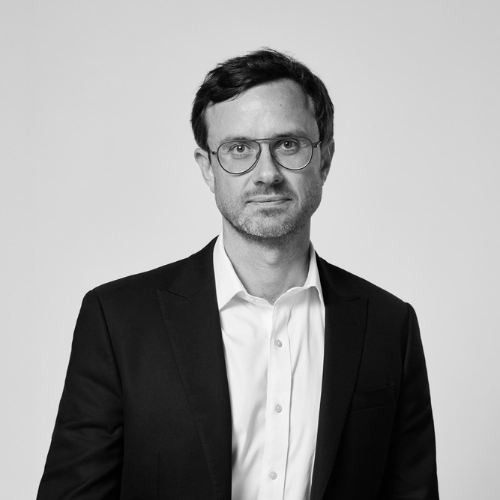
Gabriel Shipton is an Australian film producer, human rights advocate, and founder of The Information Rights Project. As the brother of WikiLeaks' founder Julian Assange, Gabriel played a pivotal role in the global campaign for his brother’s release, building bipartisan coalitions across Australia and the United States, mobilising grassroots support, and leading innovative fundraising efforts, including in the cryptocurrency space.

Lenore Taylor
Lenore Taylor has been a leading commentator on Australian politics for almost 40 years. During her decades in the parliamentary press gallery she won two Walkley awards and twice won the Paul Lyneham award for excellence in political journalism. She co-authored a book Shitstorm about Australia’s response to the global financial crisis.
For the past ten years, until her recent decision to stand aside, she was also the editor of Guardian Australia and, with her team, built the masthead to be the fourth most read news site in the country. As editor she oversaw the news coverage and also participated in strategic thinking on media policy and transformation.