Tailor-made childhood cancer treatments with Professor Maria Kavallaris AM
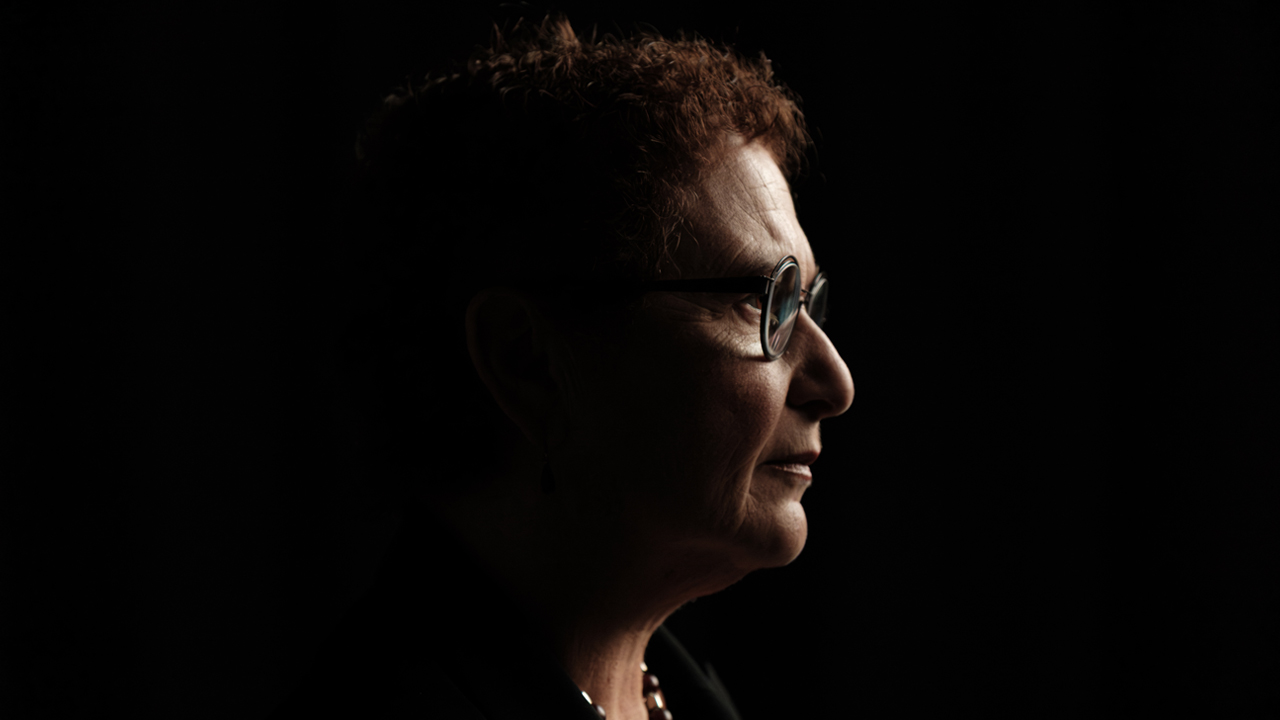
Roughly one in every 900 adults under the age of 50 is a survivor of childhood cancer in Australia. For many of them, they're going to have long term side effects because of the treatment they were given as a child to save their life.
More than 400,000 children and adolescents will be diagnosed with cancer worldwide this year. Many treatments that are meant to save a child can leave them with lifelong side-effects, including heart damage, infertility and cognitive issues. But for the first time, precision medicine is using the tiniest tools – nanoparticles – to design tailor-made treatments to beat childhood cancer.
Tune in to learn how precision medicine is changing the odds in the fight against childhood cancer with Professor Maria Kavallaris AM, a researcher whose own cancer diagnosis occurred at the same time as a career-changing opportunity to join the Children's Cancer Institute.
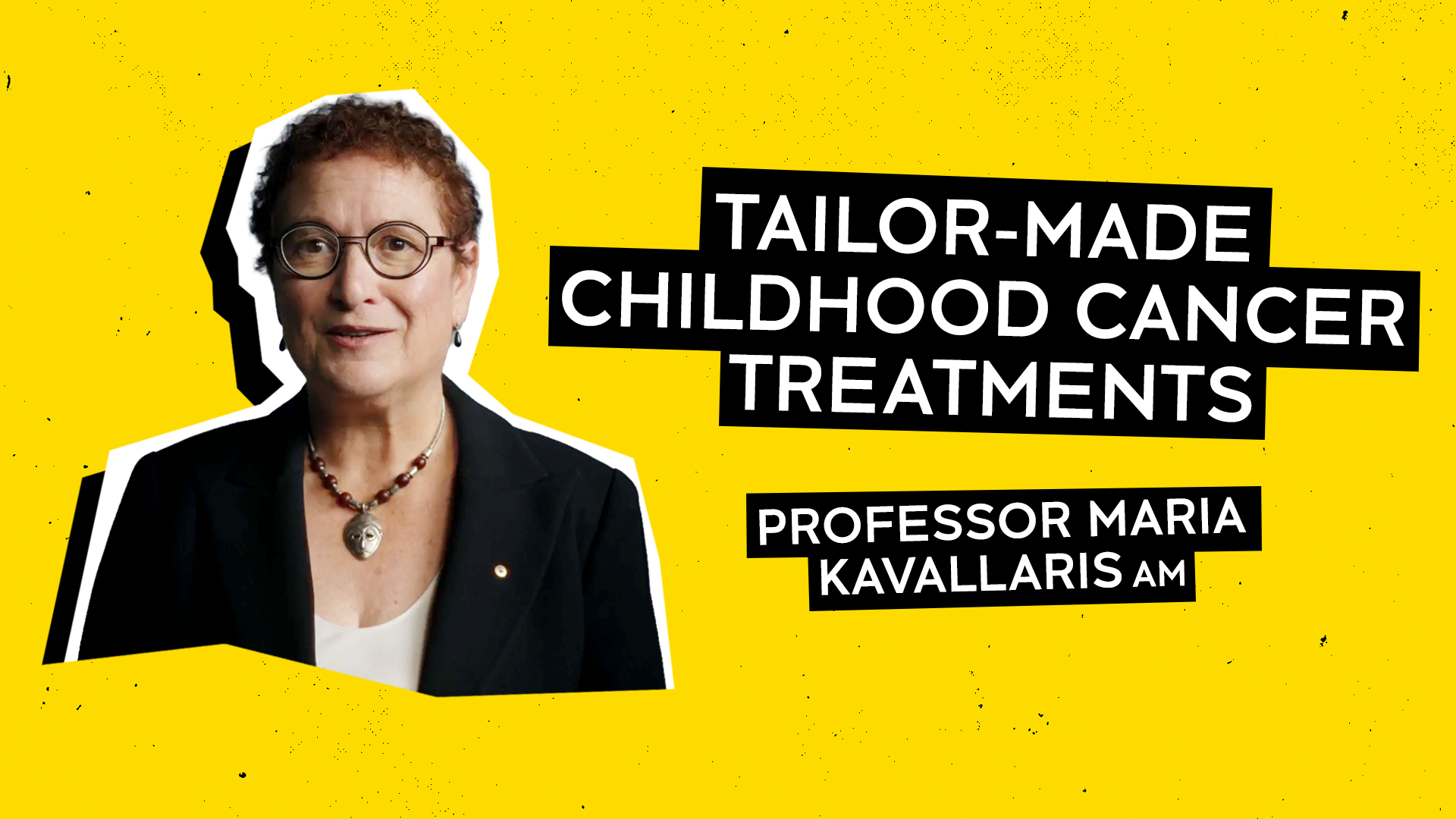
Dive further into how nanoparticles could beat childhood cancer in the podcast below. Hosted by Benjamin Law.
Transcript
Maria Kavallaris: Childhood Cancer is the number one cause of disease related death in children in Australia. The most common cancer actually, is leukaemia in children. But we have done so much better over the years in treating leukaemia. More and more kids are surviving, that now brain cancers have taken over. But there's also other cancers that really, in the last 40-50, years, there's been very little progress. The other aspect that's really important is there are more and more survivors. So roughly one in every 900 adults under the age of 50 is a survivor of childhood cancer in Australia, for many of them, not all of them, but for many of them, they're going to have long term side effects because of the treatment they were given as a child. We've just got a long way to go. It's not just we need increased survival. We need better treatments. We need less toxic treatments.
Benjamin Law: G'day, you're listening to One Big Idea presented by the University of New South Wales Centre for ideas. I'm writer and broadcaster Benjamin Law, and I can't wait to talk to seven incredible women whose research and ideas are changing the game in fields from the environment to education, quantum physics to cancer research.
Now, First Nations, people on this continent have been sharing ideas and knowledge for 10s of 1000s of years. They're humanity's first astronomers, first agriculturalists, first architects, first inventors, and together, those indigenous nations constitute the oldest continuing civilization the planet has ever known. So we're really grateful to the elders of the Gadigal, of the Eora nation, where we're recording this podcast, that we can continue sharing knowledge here on Aboriginal land. And if you're a listener who's Aboriginal or Torres Strait Islander, we extend that gratitude to you, too.
Over the course of this series, I'm going to be chatting with seven incredible women from UNSW who have recently completed the one big idea programme. This is the ninth year of this wonderful programme designed to showcase the university's innovative approach to some of the naughtiest issues of our time. Every episode, I'm interviewing a different UNSW academic, learning more about the person behind the big idea.
And today, I'm sitting down with the founding director of the Australian Centre for nanomedicine at UNSW, the head of translational cancer nanomedicine at the Children's Cancer Institute whose award winning research has identified clinically important mechanisms of resistance to cancer therapies. Now, more than 400,000 kids and adolescents will be diagnosed with cancer worldwide this year, so I really can't wait to discuss how the tiniest tools, nanoparticles, could beat childhood cancer with today's guests, Professor Maria Kavallaris AM.
Professor, welcome to One Big Idea.
Maria Kavallaris: Thank you for having me here.
Benjamin Law: I'm so thrilled to be talking to you today, and I've heard a bit of your story, and I want to get into your childhood soon as well. But the first question I want to ask is, when you meet someone new, how do you describe what you do for a living?
Maria Kavallaris: It's always the party question that you get asked, what you do? What I say is that I work on children's cancer research, and I'm developing more effective and less toxic therapies for children with cancer, and there's a reason for that.
Benjamin Law: And when you tell people that, do they just give you a hug?
Maria Kavallaris: No, they actually. They often will either thank me, or they go, Wow, or it stops the conversation because they feel intimidated. Or they stop the conversation because they don't know what to say.
Benjamin Law: How many times do you get a really emotional response because someone's had an experience of childhood cancer themselves, or know a kid who's experienced cancer?
Maria Kavallaris: Oh, look, I think you know what it is. It's gratitude often that I get, I mean, there is emotion, but a lot, a lot of times it's gratitude, and then they often will tell you the story about someone that they know.
Benjamin Law: I mean, speaking of stories of childhood cancer. Is it true that part of the reason you're here today doing this research is because of your own story?
Maria Kavallaris: Yeah, I had cancer. When I was 21 I was diagnosed with cancer, and it was, yeah, that's a relatively young age. I wasn't a child but, but I actually had, I had a cancer that often does appear in children. So it's what we call an embryonal cancer. It's something that happens, so defected during development, essentially, and at some point, it acquires more genetic changes and becomes a cancer, a full blown cancer. So yeah, I had, yeah, I probably just never matured and ended up getting a child’s - you know what it often appears in childhood and adolescence as well young adults.
Benjamin Law: How scary was that for you? Yeah, it was.
Maria Kavallaris: It was a bit of a shock. You know, not what you expect, and it was unusual. I had emergency surgery. I didn't know I had a tumour. It obstructed something, and, you know, I needed to be rushed to hospital and have it moved through emergency surgery.
So it's couple of weeks till I found out that I actually had cancer, and then it's just a roller coaster from there, you know, being sent for different doctors, getting different opinions. Yeah, it was a shock, you know, just not what you expect.
Benjamin Law: And so from what age until, what age were you living with and managing cancer?
Maria Kavallaris: It was probably about a year and a half where I was on therapy and constant surveillance for my cancer, you know, then it's just the waiting game, you know, like you go on your regular checkups and you hope the scans are going to be okay, you hope the blood results are going to be okay, and yeah. So then, they followed me up for about seven years afterwards, and then said, Oh, look, you're fine.
Benjamin Law: And by that age, already, did you have a strong idea of what you wanted to do for the rest of your life?
Maria Kavallaris: Well, you know, I was actually working in research at that time. I was a junior technician in a research lab, and I had, actually, I was working in a cancer research lab, but doing very fundamental cancer research, you know, down to the DNA level, cancer research, you know, not really even working on cancer cells as a regular thing, if you know what I mean. So, you know, I was sort of working there, and I knew that I wanted to do research. I was enjoying research. But what a big change for me was, was when I did get diagnosed with cancer soon after, and I started my therapy and everything, the head of my lab actually got offered this role to head this new institute that was starting dedicated to Children's Cancer here at the University of New South Wales and the Sydney Children's Hospital. And he offered for me to go and join him. And so I did.
You know, at that time, it was very personal as well. What really was the pivotal point for me is, I think meeting children with cancer, seeing what they were going through was similar to what I was going through, but, you know, they were young. And you could see, I mean, the kids, the parents would drag them to the hospital because they knew what was coming when they when they went there, and also meeting kids that actually didn't survive in the end as well. And so that, that was a real turning point for me. You know, that's when I decided, okay. I was doing my undergraduate degree, part time at the time too. And I thought, I want to do a PhD. I want to become a scientist.
Benjamin Law: Wow, a lot of things are kind of conspiring to kind of push you into that direction. One of the things I'm going to be talking about with everyone that I interview, like, what are the stakes of your research? And when you talk about sick kids and kids who have even died, those stakes feel so personal, don't they?
Maria Kavallaris: Yeah, absolutely, it's just and it's the impact also. I mean, there's the impact on the children, there's impact on the family and friends as well. With childhood cancer, you know, it's a broader, it's a community thing, right? With kids, and, yeah, we've got to do something better.
Benjamin Law: What is the current patient experience? So I imagine from when you started in this field, a child going into hospital and receiving care is different to what it is now, what does it look like? What does it feel like in this age?
Maria Kavallaris: It's quite different. Normally. I think diagnoses and stuff are done a little bit faster than they were when I first started. We've got more sophisticated scanning now. Your MRIs, you've got the CT, so you know, you've got all of that, which is much faster. So after that trauma of the first diagnosis for the kids and the family, depending on what type of cancer and where it's located, what the size is will depend on the treatment. So I can't give you like a general thing, but let's just say a patient's got neuroblastoma, which is a tumour that is can be quite aggressive. 70% of the kids have got metastases at the time of diagnosis. So often, what they will do in that situation is treat the patient with chemotherapy to reduce the tumour masses, or the tumour mass, and then go in and do the surgery. So that way, it's not as invasive as a surgery, and then continue with chemotherapy after that.
You asked me, what changed a lot when I was going through my own treatment, I used to have to spend seven days in hospital being infused with these highly toxic drugs. I had a cocktail of five drugs that I was given and got really sick and often end up back in hospital with side effects. Well, the same thing used to happen with kids nowadays. A lot of the treatments, not all of them, but a lot of the treatments can be given as day infusions, and the child can go home or, you know, they can be given oral treatments as well.
So they try and minimise hospital stays, and try and keep the kids that have to be in hospital in hospital, particularly if their immune system is drastically suppressed, or their platelets are low, so you don't want them to bleed out, at home, or anything like that. So they'll treat and they'll keep them in hospital if they need to. And it's also it's the kids that are really relapsing and they've got really aggressive disease that often will be in hospital, because then they get given pretty acute treatment to, you know, try and really high dose treatments. So, you know, in that case, they would be in hospital to be monitored.
Benjamin Law: You mentioned before that when you introduce yourself to people that you get a spectrum of reactions that some people thank you, some people are really interested, and some people just clam up. And I imagine the people who clam up are probably a big, vast percentage of the population who feel really scared about the idea of cancer, don't know how to approach it. And even thinking about sick kids, it's heartbreaking, and they don't know what to do with those emotions. Do you think it takes a certain type of person or a certain kind of personality to be able to do the research that you're doing and to be thinking about the people that it applies to?
Maria Kavallaris: Look, I think people generally care about people. It's my you know, I'm a very optimistic type person, I think in terms of working in this field, I don't work directly with children because I'm not a clinician, but I meet a lot of families and children through our work. It can be hard at times when you hear about things, but I think what keeps us going is the success stories as well, and there's more and more success stories.
And also, you asked the question about, you know, does it take a particular personality? I think doing research in general, like medical research, or any type of research, you've got to understand that over 95% of what you do is not going to work, and you have to have that vision about what you want to achieve and learn from what doesn't work, so you can move towards what does work. And so the personality is more around accepting that you're not going to go home every day and you're going to have an answer to your question.
Benjamin Law: You're not going to cure cancer immediately. It takes time. Did you have to build up that resilience over time, because that sounds a little bit heartbreaking to me, the idea that you're investing so much time and that most of your work actually is about I mean, I want to say failure, but I'm not sure. Is that the right way to frame…
Maria Kavallaris: No, because I always believe that we learn from things that haven't gone quite the way we want them to go. I mean, for me, it's curiosity that drives me as well. And I think that curiosity and that sort of drive and the purpose just keeps me going. So, you know, that's, yeah, that that fills my world.
Benjamin Law: Now I'm going to play the role of the person at the party. I'm going to be also the person who didn't do particularly well at science. So if you could explain to me the work that you do in such childlike terms that I could get it, that would be great. You've mentioned DNA already, the DNA level of research, but the level of research that you're doing is what the nano level, the nanomedicine level. What are we talking about when we talk about nano medicine?
Maria Kavallaris: Yeah, good, because it's a good question. So I normally don't mention nano medicine up front at the party, because people really do go blank. A lot of people have heard about nano technology, but they don't quite understand it. So it's basically working at the nanometer scale. So it's about, think about a grain of sand. It's 1000s of times smaller than a grain of sand a nanometer so, very, very small. So you're not going to get a ruler to measure it. Put it that way. Very specialised instruments to do it.
So what we can do is use nanotechnology, which is used in medical industry, applications, etc, but actually develop it for medicine. And here we can create things, what we call nano particles. These are these tiny structures, like I said, thousands of times smaller than a grain of sand. And we can use these to package. We can load them up with chemotherapy or other types of cancer drugs, or even genetic material, where we want to control the genes in the cancer cells, so we can load them up, and then we can direct them to tumour cells using what we call bispecific antibodies. So these are antibodies that recognise two sites and one site binds to the nanoparticle. The other side actually locks onto the cancer cell and delivers the drug. And so that's the way to deliver directly to tumour cells as much as possible and spare normal, healthy cells.
Benjamin Law: You are blowing my mind with the scale that we're talking about 1000 times smaller than a grain of sand. I can't imagine you're using the world's tiniest tweezers for this work. Can you lead me through what it looks like a typical day of work? What kind of tools are you using to actually carry out this research?
Maria Kavallaris: Yeah, I wish there was a typical day of work then, but there's not. But look, let's, let's start with the nanoparticle for example. So we have a couple of machines that we can develop these. These are called - the ones we're developing at the moment - are lipid nanoparticles. So many people know about the covid vaccines moderna and Pfizer, they use these lipid nanoparticles to package the mRNA that was used to induce an immune response in people, and so we use modifications of these. We use ones that are more adaptable to the type of research we're doing. And we've got machines and we dial input the reagents in, dial in exactly what proportions of everything we want, because these nanoparticles are made up of different components. How you put those components together, how you assemble them, influences where they're going to go in the body, how they're going to release their material, etc. So we've done this through experimentation. We still do it through experimentation. So we can, we design these, we've made the material. So I've got my nanoparticle, and in that nanoparticle I've got a gene silencing material, so it's a piece of RNA that can, when it gets into the cancer cell, can switch off the cancer gene.
Benjamin Law: Wow.
Maria Kavallaris: And so we've made this, then we'll take it, we'll mix it with our bispecific antibodies so we can look to see, will it target cancer cells and leave the normal cells alone? So we've got tools in the lab. We've got some really good cell lines we can use in the lab to test that. So we do that initial testing, and then on top of that, we also test it in what we call three dimensional models where we've developed this technology where we can bioprint a patient's tumour cells and grow them in three dimensions, in this jelly like structure. And they grow, they expand, they display all the features of the tumours.
Benjamin Law: So wait, you're growing a patient's tumours externally to the patient, so that then you can do tests on it to see how you'll react to what you're doing exactly?
Maria Kavallaris: So we can then put the material on that. The material, this jelly-like structure, is porous, so the materials can go through and reach the tumour cells, and we can then see how they behave in these three dimensions. And the reason I talk about three dimensions is because a lot of our earlier work, and much work still gets done in what we call two dimensions, where cancer cells, or imnormal cells, are grown on plastic dishes. Now, I don't know if you know, but cancer doesn't grow like that in the body. It grows as sort of either masses or it's in the blood, but you know, normally needs an environment to do that, so there are more and more people moving to these three-dimensional type models. And this, you know, this is a way for us to make hundreds of these little mini tumours and test different treatments that we want to treat.
Benjamin Law: It sounds like a factory line of tumours.
Maria Kavallaris: Yeah, we can test a whole lot using this approach. And, you know, I've talked about delivering an RNA, a gene silencing material, but we can also use these three-dimensional tumours to screen against approved drugs as well. So put nanoparticles aside, even just screen them against approved drugs and see how they're responding in this sort of environment.
Benjamin Law: It also sounds like what you're doing means that you're not having to run all of these experiments that may or may not work in the patient themselves? Is that right?
Maria Kavallaris: That's the whole idea. I mean, what you want to do is minimise what goes to the patient, because a lot of the therapies are toxic, and currently, if a child has a particular cancer and it relapses, they'll go on to, like the second line, what they call second line therapy, then third line therapy. Bt you don't really know that that's going to work in that particular patient.
And you know, we're very fortunate at the Children's Cancer Institute where I'm based, we have the zero childhood cancer programme, which is a precision medicine programme, and it's Australia wide. It's pretty exciting. And so now every child and adolescent with cancer, their samples come to our institute. Some of it is just the genetic material, sometimes it's the tumour, but they do complete genomic sequencing as part of that programme, and we can actually also use that information as part of our own research to better understand how tumours responding to certain drugs in our models, etc. So we build on what's out there, we build on what's in the international literature and international databases as well to help inform how we design what genes we're going to go after, or what environments we're going to grow ourselves in, that type of thing.
Benjamin Law: You mentioned the term precision medicine, and that's not one that I've encountered before. What do you mean by precision medicine?
Maria Kavallaris: So precision medicine actually sometimes goes under multiple terms. You may have heard the word tailored medicine, or tailored therapy, or individualised therapy. Precision Medicine is about… you've got 10 kids with exactly the same cancer, and you go, okay, they've got the same stage, same cancer. We treat them, you know, we're treating them with the therapy that we know from clinical trials, has got the greatest chance of the majority of them surviving, but a few of them are going to relapse, right? And it's sometimes really hard to identify which ones are going to relapse. But once they relapse, then you know, I was sort of mentioning before about telling the therapy what you need to do is identify what is different, what's changing their tumours, what's in their tumour that is causing this.
And sometimes you can find and normally what you do is you do genetic sequencing, and very detailed genetic sequencing, so there's all very different layers of genetic sequencing. And often what you can identify is genetic alterations within that sequence that are not normal. They're not found in normal cells. And sometimes you can also identify a particular genetic alteration, that there is a targeted agent to that. And what I mean by targeted agent, the drug was developed to specifically target abnormal protein, or that this sequence is going to produce an abnormal effect that this sequence is going to produce. So that that's called precision medicine, because then you can go and change that treatment for that patient and try and identify more effective treatments.
At the Children's Cancer Institute where we've got the Precision Medicine programme, the childhood cancer programme, the Zero [Childhood Cancer programme]. What they also do is, they can also try and grow the tumours as well. So also try and get some drug screening information as well, and combine that, and that combined will then be provided to the treating clinicians and say, “Look, we think, based on all of this, and you know, we think that this patient is likely to respond to that drug or this drug now.”
I should point out that not all children will be given a treatment option, because sometimes the genetic changes that are happening are all new. So we're learning more and more about these changes, but we don't know what they're all doing, so there's a lot of research that still needs to be done to model these genetic changes. So we know, are they driving the growth of the tumour? Are they driving the spread of the tumour? So there's a lot to do, but around the precision medicine, it's really about personalising the therapy to individual patients.
Benjamin Law: And how long have we had these technologies that you've been developing now?
Maria Kavallaris: I'd say, a lot of it's been really accelerated in the last five years. You know, we started developing the 3D bioprinting technology with an industry partner here in Sydney about, I think, about 12 years ago now. And now that's a commercial product. It's a machine that you can programme to bioprint different structures for you and things like that.
But the genetic technology has been around for a while. You may probably remember when they sequenced the first human genome, that cost a huge amount of money. Well, now you can do that so much faster. You can do it so much cheaper than what you used to. So technology is developing, moving really fast. I’d say the last decade, really, the tools and the technologies has just accelerated so much. So it's really given us a lot more reagents and tools to actually do our research and accelerate our research.
Benjamin Law: Now, you mentioned that so much of this work means that what 95% of it won't necessarily be the result that you're after, but it gives you information that you need. What does the 5% look like and feel like when you've had that breakthrough? What constitutes one of those 5% stories, those eureka moments?
Maria Kavallaris: You know, I'll give you an example from a number of years ago where I had a student who was working on these particular proteins that we knew were involved in drug resistance, and she was going out and systematically using the gene silencing to knock out each one so we could see what biological effect it had. And we knew that these proteins were important in terms of resistance to these natural product drugs which are used in cancer therapy. You know that’s really quite important. So she was doing all this work, and I said, “Look, that data looks fantastic”. I said, “but maybe you should put some drugs that are not related to those, those drugs at all just as a control so I can put in the paper”.
And she came, she came back, and she was really upset. She was in tears. And said, “My thesis is ruined. This is all not working”.
And I said, “what's happened?”
She said, “Well, actually, when I knocked down those genes there, you know, they become sensitive to all these other drugs”.
And I went - that was my eureka moment - I said, “that is really exciting.”
Because these other drugs, when a patient becomes resistant, they often don't become resistant just to one drug. They can become resistant to one drug. But in this case, the tumours we were working on, actually, there was a combination therapy. So it was this natural product drug, plus these other drugs are normally used in combination.
So I said, “if the patient relapses and they're resistant, that means they're resistant to those drugs as well. Otherwise those drugs would have worked”. I said, “this is really exciting”.
I mean, I think she looked at me like I had three heads.
But anyway, once I calmed her down, I said, “no, stop and think about this. Stop it”. I said, “what I want you to do is go back and repeat this. We need to make sure that this is we can get reproducible data”.
She went away and did that, and then we started looking at the mechanisms and pathways and realised that what we had hit on was what we call a survival gene. So when we knock it out, it makes cells vulnerable to a whole lot of stresses, like radiation, chemotherapy, but it wasn't impacting the normal cells because the normal cells don't express this particular protein.
Benjamin Law: Wow. I mean, what I'm hearing there is the importance of, I mean not mistakes, but almost curiosity, curiosity and surprises, unintentional surprises. Is that fair to say that a lot of breakthroughs come through things that aren't even necessarily planned?
Maria Kavallaris: Yeah, yes, like, absolutely. I think, you know, I think it's also about curiosity. You've got to be curious about what you're doing, and also question things. So when I say things don't work, they might partially work, but it's not really conclusive, and things like that. So it's about like, okay, didn't quite get the answer there. What's another approach we can use to try and address this? And then we start sort of thinking, and try and direct the students to do things that I want to do, so they can actually find the answers.
But, yeah, it's just about questioning, and we don't always… Sometimes we come across a dead end. We think, okay, how long should we keep going down this, you know, trying to find path. And sometimes you gotta say, look, okay, let's drop that, you know, because we've got this other exciting stuff that we could be working on and go down that path. So it's, I guess, the role of someone like me, who's the senior person in the group, to sometimes just call it out and say, Okay, let's go move this way.
Benjamin Law: And I feel like the lessons you've learned from cancer research also apply to live. You might hit a roadblock or something might look like a catastrophe, but if you approach it with curiosity, you might actually see something really exciting. That's a breakthrough. What do you love about the work that you do, Professor?
Maria Kavallaris: First and foremost, I love doing something that I feel can make a difference to children's lives. That's probably the primary thing. The other area I absolutely love, is mentoring and supporting my students and post-docs to develop their curiosity, their careers as well, and mentoring them about which paths they're going to take. Some people do stay in research. Some people use their research skills in other areas. And to me, that's really rewarding, seeing them develop. Especially when you start off with, say, a PhD student, they've got this new project, they're trying to figure out what's going on and trying to get on top of the literature. And the first year is like, what am I doing? By the second year, they're often starting to get it and by the third year, they're coming to you and saying, “I think I should do this and that”. And it's that development for me that’s fantastic, and delightful to see.
Benjamin Law: What do you find most challenging or frustrating about the work that you do?
Maria Kavallaris: There's a lot of regulation about things. We do get ethics approvals for various things and stuff, which, you know, needs to be there just for both safety and protecting patients and things, but it is a lot of paperwork, and the constant seeking funding is a challenge.
Look, having said that, I don't mind writing grants because it actually helps you crystallise your ideas and sell your ideas in a particular format. But you know, with funding getting tighter and tighter, it's tougher and tougher. I'm in a pretty good position at the moment, so, you know, I can't really complain, but you're constantly looking ahead, and you're looking beyond the two years or three years to say, look, is there enough for the team? But again, all you can do, it's a competitive process, and we've got to keep trying and keep advocating for funding for medical research.
Benjamin Law: So many disciplines, so many fields of research, especially in STEM are feeling that crunch of funding and the need for it. Say we could super fuel your research. We give you a billion dollars tomorrow to do what you wanted to do with that. What would you want to do with more with more resources?
Maria Kavallaris: Oh, look for me, if you know, if I had that sort of money, that's a lot of money. I don't even know if I know how to write it out. For me, I would be really building up some of the discovery research to identify the targets, but then building this pipeline of actually getting it to the clinic, and getting some of these discoveries to phase one, phase two clinical trials, seeing if they're going to work, and then obviously getting some industry partners in to then move it forward. Because ultimately, you do need someone to make the product and develop it if it's ever going to go to the clinic. But often they want to see those early-stage developments. And we often have this thing called the Valley of Death. So you get your discovery. You get these great discoveries. You might get a provisional pattern or a pattern, and then, you know, it's really hard to get that funding that bridges it to a commercial partner to be interested, or a startup company to get venture capital, etc. And so with that sort of money, you could almost plug those holes up to try and do that.
Benjamin Law: Look someone listening right now might be super rich and come to your aid. What would you want to tell them? You mentioned before that a part of the grant process is about conveying the importance of the research, what you're doing and how they might be able to help. How would you frame that conversation?
Maria Kavallaris: I would firstly talk about the need. Childhood cancer is the number one cause of disease related death in children in Australia. And people get shocked when I tell them that. Number one, yeah. Number one, and that's mainly because we've eliminated a lot of infectious diseases, but it's the number one cause. And the most common cause of death in children is brain cancer. The most common cancer actually is leukaemia in children, but we have done so much better over the years in treating leukaemia. More and more kids are surviving that now, brain cancer has taken over, but there's also other cancers that really, in the last 40-50, years, there's been very little progress. And so it's about focusing on these challenging cancers. Because I think if we can and we can make some inroads there, it will make a huge difference.
The other aspect that's really important is there are more and more survivors. So roughly one in every 900 adults under the age of 50 is a survivor of childhood cancer in Australia. But for many of them, not all of them, but for many of them, they're going to have long term side effects because of the treatment they were given as a child to save their life. And the toxicity of treatments is quite bad. So even while we're sitting here now, almost 50% of the kids in any paediatric oncology ward, you know, cancer ward in Australia, are in there being treated for side effects of their treatment.
Benjamin Law: Oh, geez.
Maria Kavallaris: So now, when you put it in perspective, we've just got a long way to go. It's not just about, you know, we need increased survival. We need better treatments. We need less toxic treatments.
Benjamin Law: How long have you been doing this research?
Maria Kavallaris: Now, too long, because I'll give away my age.
Benjamin Law: Okay, so say, In the span that you've been doing this research, how far have we come to where I'm speaking to you now, enormously.
Maria Kavallaris: I mean, look, I've been, I've been working in research for like, 40 years, just over 40 years, and in children's cancer for that time. You know, when I look, when I, you know, started as a junior technician when I was going through my own treatment to where it is now it is leaps and bounds. Like it when I look at the advances in genetic technology, when I look at the advances in analysis of data, Imaging, imaging technologies, you know, microscope imaging and analysis has come leaps and bounds. Our understanding of again, people have developed some good techniques and things like that to understand we now starting to understand more about how the immune system impacts cancer. It was always known it was involved, but no one really understood it. Hence why Nobel Prizes are being given to people who did those initial discoveries. So it's just it's completely changed, and some techniques particularly are less labour intensive. So it's embarrassing to say, but when I first started sequencing the genome of some of these cancer patients, we used to run these, these huge gels like this, right? Like and, and you'd run them through, and then you use radiation to pick them up, and then you'd have to manually get a you know thing and say, All right, that's an A, that's a C, that's a G, that's, you know, like, and a T, and, and actually do the coding manually. Right now, we take it to the ramasioti Centre at the. University of New South Wales. Here we put it in a little tube. They run it through their machines. We shoot it back, wow.
Benjamin Law: And say that time span that you've been doing this research fast forward into the future with the same time span. And where do you anticipate will be with this research, and where do you hope that your research will be number
Maria Kavallaris: of things. I think in 10 years time, cancer treatment is going to look very, very different. So from many places, and I'm talking about developed countries, because less developed countries have got or, you know, low income countries don't have the benefits we have. But in developed countries like Australia, I think we're going to be seeing a lot more personalised treatments, more targeted treatments, combinations of we're starting to see it now, combinations of immunotype therapy treatments that can work in some patients with with other types of treatments. And I'm hoping also with the technology we're doing with the nanotechnology, that we can get some treatments into the clinic as well. They actually, it's not, it's not voodoo. There actually are nano treatments in the clinic. So for example, the first drug loaded nano particle was, was clinically approved, I think it was in 95 and that was a they designed it because it contains a chemotherapeutic drug that's actually also used extensively in children called doxorubicin, and doxorubicin causes cardiac damage. So it was designed and developed to change the by distribution of that drug in the body. So it wasn't even designed to specifically go the cancer cells, but it happens that in some tumours that have got a lot of blood vessels, it can accumulate a little bit more in those tumours and exert an effect. But you know, it's it's not been like it's not widely used. It's usually used when someone's had toxicity or something like that. We took that drug, that old drug, and we were actually able to add by specific antibodies onto the surface and actually show that we could treat relapse and high risk leukaemia using that approach and that we could effectively kill the tumour cells at So essentially, we were giving this nano particle drug formulation at a sub toxic level, at a level that it wasn't even working. It was barely working, and then when we had the bispecific antibody, suddenly we're killing the cells.
Benjamin Law: Wow.
Maria Kavallaris: Because it's not by specifics. It was just that it was attaching. It's like a lock and key opening the door, letting the nano particle into the cell and it, yeah, it's just little things like that. You just, you asked me, what keeps me going? Sometimes it's when we see that sort of discovery and give us a hopeful glimpse into the future.
Benjamin Law: Say, in 10-20, years from now, you're a kid and you're diagnosed with cancer with the technology that you and your colleagues are developing, what do you hope the childhood cancer experience looks like?
Maria Kavallaris: My dream would be that more and more kids are surviving, more and more kids are surviving healthy. With no long-term side effects, and that the trauma of childhood cancer is not there, and really minimise that effect and the side effects of treatments.
Benjamin Law: Well, Professor Maria Kavallaris, I think that you have made me a whole lot more optimistic and excited about the future as well in that conversation, and for the people listening who've had experience of childhood cancer, know kids who've lived with cancer as well, and for those of us who might develop cancer later on, I just like to say on behalf of all of us, thank you so much for your time and your work and for sharing all of that with me for One Big Idea.
Maria Kavallaris: Thank you, Ben, it's been an absolute pleasure.
Benjamin Law: Thanks for listening. This episode was brought to you by the Centre for ideas. For more information, visit UNSW Centre for ideas.com and don't forget to subscribe wherever you get your podcasts.
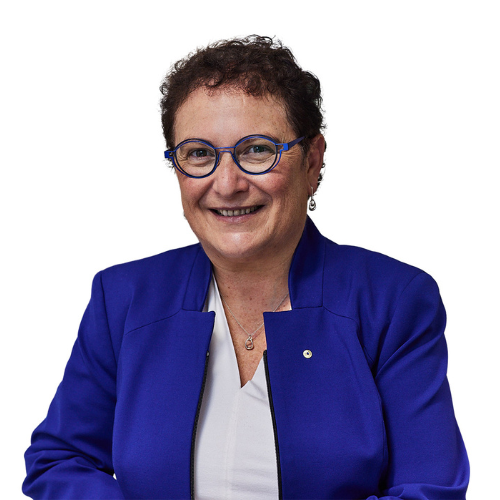
Professor Maria Kavallaris AM
Professor Maria Kavallaris AM is the Founding Director of the Australian Centre for NanoMedicine at UNSW, and Head of Translational Cancer Nanomedicine at the Children’s Cancer Institute. Her award-winning research has identified clinically important mechanisms of resistance to cancer therapies and shown effective nanoparticle-based delivery of gene silencing material and chemotherapy, can reduce tumour growth in aggressive cancers.