
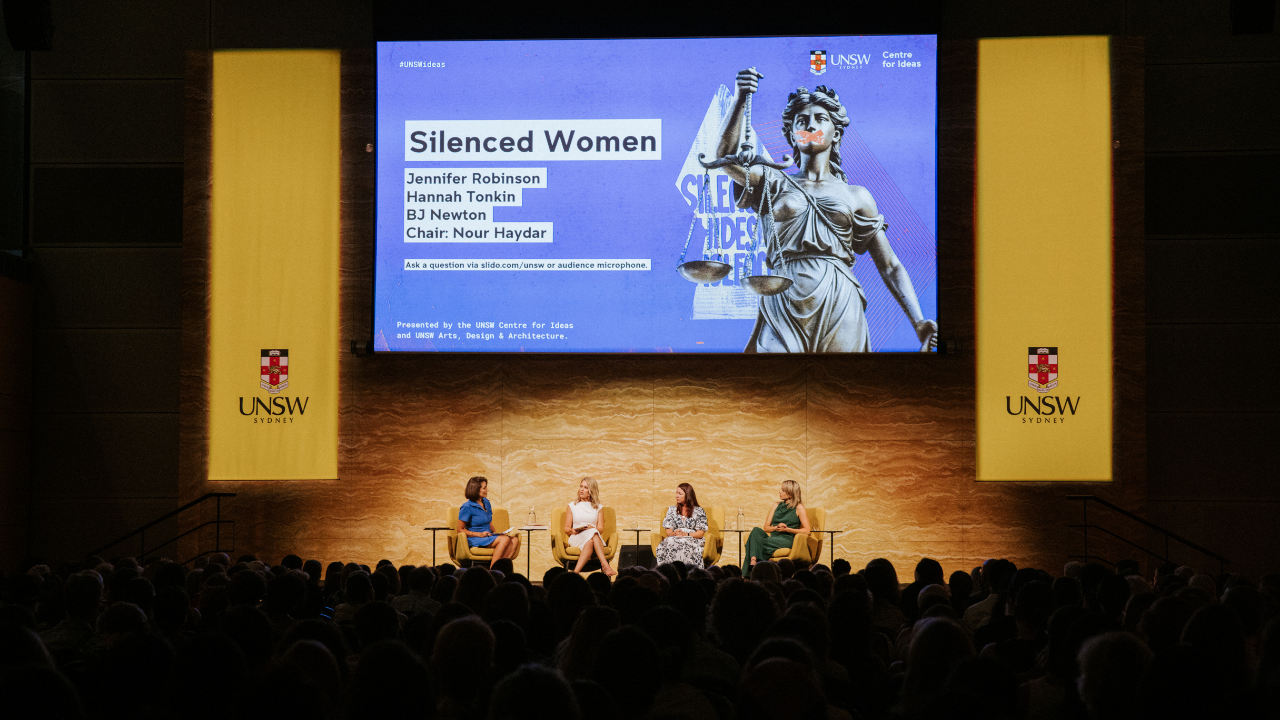
Silenced Women
There was research done a couple of years ago that showed that 40% of Australian men under 35 think that women's rights have gone too far.
More than one in four women in Australia have experienced domestic or family violence, and one in five have experienced sexual violence. Yet, despite survivors increasingly speaking out, systemic barriers to addressing gender-based violence persist.
In a powerful and necessary conversation, internationally acclaimed lawyer Jennifer Robinson, NSW’s inaugural Women’s Safety Commissioner Hannah Tonkin and UNSW academic BJ Newton joined forces to examine how legal, institutional and cultural systems suppress the voices of women, and the far-reaching impact this has on our society.
Chaired by journalist Nour Haydar, this discussion explored the growing use of legal threats and actions to silence survivors, outdated gendered views and systems, and the rise in online misogyny and abuse, and asked; how we can dismantle structures that protect perpetrators?
Presented by the UNSW Centre for Ideas and UNSW Arts, Design & Architecture.
Transcript
Nour Haydar: Good evening and welcome to tonight's event, Silenced Women. I'd like to begin by acknowledging the Bidjigal people who are the traditional owners of this land, and pay my respects to their Elders both past and present and extend my respect to any Aboriginal and Torres Strait Islander people here with us this evening.
I will be the chair of this evening's conversation. I can see some familiar faces in the crowd but for those who do not know me, my name is Nour Haydar. I'm a journalist and co-host of Guardian Australia's daily news podcast, Full Story.
I'm honoured to have been asked to facilitate this evening's conversation. Tackling gender-based violence is a cause that is close to my heart, personally, and is an issue and a policy area that I have covered professionally in my role as a journalist.
Before we begin, a quick note, we do ask that you keep your phones away and refrain from recording or taking photos. This is a space for thoughtful conversation, not just between our speakers but also with everyone here this evening. Our speakers are generously stepping aside, outside rather, of their usual spaces to share their thoughts with us, and we'd love for this to be a space where they and any of you can speak freely.
Tonight on our panel we are joined by Jennifer Robinson, Professor BJ Newton and Hannah Tonkin. We'll be discussing how legal, institutional and cultural systems suppress the voices of women, and the far-reaching impact that that has within our society. We will be discussing the use of legal threats and legal action to silence survivors and we'll be looking at the systemic barriers that women face when seeking to leave an abusive relationship, and we'll be considering how we can all dismantle structures that protect perpetrators.
Now we have a very impressive panel with us this evening, they don't need any introduction I'm sure, but I will briefly introduce Jennifer Robinson who is a barrister at Doughty Street Chambers in London. Jen has acted in key human rights and media freedom cases in domestic and international courts, including cases around violence against women. She's a passionate advocate for free speech and has acted for high-profile women speaking out about their experiences of abuse, and journalists and media organisations reporting on gender-based violence. Her book with Dr Yoshida, How Many More Women? exposes the global legal backlash that followed the Me Too movement.
Hannah Tonkin is the inaugural Women's Safety Commissioner here in New South Wales. In this role she provides leadership across government and community to strengthen responses to gender-based violence, to raise community awareness and amplify the voices of those with lived experience, victim survivors. Previously Hannah was an international human rights lawyer and for many years with the United Nations, we've got a very impressive panel, working in a range of global contexts including in Rwanda, Sierra Leone, Gaza, Ukraine and former Yugoslavia. She's also worked as the Director of Disability Rights at the Australian Human Rights Commission, and was a barrister in London and in Adelaide.
Last but not least Professor BJ Newton is a proud Wiradjuri woman and a mother of three. She's an Associate Professor based here at the Social Policy Research Centre at the University of New South Wales. BJ's research focuses on working in partnership with Aboriginal organisations to build evidence and support Aboriginal families interfacing with child protection systems. Her current research, Bring Them Home, Keep Them Home, investigates the rates, outcomes and experiences of successful and sustainable restoration of Aboriginal children in out-of-home care. And this research is making a significant impact across the child protection sector, facilitating truth-telling for families who have been silenced by the system.
Between our three panellists this evening we have a wealth of knowledge and expertise across different facets of this very pressing problem and we hope that this evening will present us with an opportunity not only to scrutinise the problem but also a chance to discuss the solutions.
So let's get started.
Jen, I might begin with you since you so handily have your book there already. Your book, How Many More Women?, is an in-depth look at how the law silences women. You talk about some of the cases that you've worked on, along with other high profile cases, along with lesser known cases. Some people this evening they might have read it, some might buy it tonight, but I was hoping to get you to talk to us a little bit about what the catalyst for writing this book was.
Jennifer Robinson: Thanks Nour, but first it's so great to be here with what a remarkable panel of women from different perspectives and with lived experience. So thank you to the Centre for hosting us, and for putting such a remarkable group of women together.
The reason I wrote this book is really my grandmother. I was sitting with her about five or six years ago having a drink and she was really depressed. So my grandmother is a survivor of domestic violence. She dedicated her career to helping women escape violent situations and worked in women's refuges in Western Sydney, and so about 20 years ago, longer, she had a nervous breakdown after one too many women was killed.
And, I was sitting having a drink with her and she said I'm so depressed. I said why? And she said, well, the rates of violence against women haven't improved since I left the refuge movement. And that really struck me and I thought, here's my grandmother who spent her life trying to make it better for women and to end violence against women. What am I doing about it? And I thought well I'm not going to go and work in the refuge movement, I'm a lawyer and I've worked really hard to become a lawyer, and be in this position, and so how do I turn my skills to this?
Nour Haydar: Mmm.
Jennifer Robinson: And then the Me Too movement happened. And so, what we were seeing was this incredible moment where women were breaking the cultural silence to speak out about their experience of gender-based violence, but what I was seeing in my practice as a lawyer who works with journalists to break stories, doing pre-publication legal advice, but also the number of women that were coming into my office being threatened with defamation suits, figuring out whether they could speak out about a perpetrator because they'd signed a non-disclosure agreement. And it really struck me that this legal backlash that we were seeing and the way in which the law was being weaponized to silence, and actually to re-establish the status quo of silence.
And so my co-author and I actually started intervening in cases that were making their way up to the Supreme Court of the UK. Interestingly, at that time all of the key defamation cases that were test cases under the UK Defamation Act - which is quite similar to the new uniform defamation law we have here in Australia now - were all about domestic violence, and that tells you something. But there was one case that really struck us and we opened the book with it, it's a case called Stocker and Stocker, and it's a Facebook defamation case where Nicola Stocker was writing on the Facebook wall of her ex-husband's new partner.
Never let old people use Facebook.
Audience Laughter
Jennifer Robinson: She thought she was writing private messages - it was on this woman's public wall. And there was a back and forth between these women saying, asking about what it was like to be in this relationship, and she said, well, there was that time he tried to strangle me. The police don't take too kindly to you having red marks around your throat. And 12 of this woman's friends and family saw it, and her ex-husband and his friends and family and he sued her. Seven and a half years of litigation, but went before a defamation judge in the UK and she had the evidence from the police that he had forcefully grabbed her by the throat, and there were red marks on her throat. Evidence from the police saying yes we saw the red marks around her throat two hours after the incident.
You'd think that's a slam dunk truth defence. Clearly happened. He tried to strangle her. Goes before a judge. The judge says, well, the technical legal definition of strangulation which thankfully has changed in law, I will interpret what her words what she meant by her own words of her experience of gender-based violence, and I don't think it's just grabbing you around the throat because strangulation requires an intent to kill, and I believe he intended to silence her, not to kill her.
Now that judgment… so she lost and had to go all the way to the Supreme Court. That judgment was so shocking to me, both in terms of the gendered perspective the judge took, but if you can't win a defamation case on truth about your experience of violence with police evidence of it, how can you ever speak out about your experience? So we wrote a book about it.
Nour Haydar: It is a shocking case but there is really a picture that you paint through all of the cases within the book that really one on top of the other makes you question how we've ended up with a legal system that so often silences women.
Hannah, we are obviously in this instance talking about the legal system. But over recent years advocates have talked about other systems that are used and manipulated by perpetrators to silence their victims. Financial services, the welfare system and we'll talk about child protection services in a moment. Within your remit are there any particular areas that you, I guess, have a focus on, or feel we aren't sufficiently dealing with at the moment?
Hannah Tonkin: That's a great question, and my role as the Women's Safety Commissioner, it's a relatively new role, so it was only in October 2023 that it was established as a standalone role. And since I started, I speak to hundreds of victim-survivors, mainly in New South Wales, and mainly women, and I hear their stories and many of them are heartbreaking, and I often hear about systems abuse, what we might broadly call systems abuse.
You hear about, certainly, the weaponisation of the law, and that could be the criminal justice system, it could be defamation law like Jen and Keina examine in their book, it could be the family court, it's very common. So we certainly see the weaponisation of these systems often by a current partner, often by a former partner. So this can continue long after a relationship has ended. Also, the weaponisation of other systems, so common ones would be child support, so a failure to pay child support, that's a big problem, weaponising the tax system, so that can be a form of financial abuse as well. And we see, as you mentioned, the private sector, so things like banking and finance, they can be weaponised as well.
So these are forms of financial abuse where the perpetrator, often a current or a former partner could be racking up debt in their partner's name, that's very common. And that can be absolutely debilitating for a woman who's in an abusive relationship, where they're experiencing financial abuse, it can be almost impossible to leave because of the economic circumstances, amongst many other barriers. And if they do manage to leave, so often they're then in this debilitating financial situation, because of that financial abuse. And actually, you might be familiar with Anne Summers' report published in 2022, it's called The Choice, and she provided really stark evidence showing that so many women have to choose between living in violence, or leaving and living in poverty. And that's a stark choice that faces many women today. And actually, incidentally, Anne has another report coming out this Friday called The Cost, which is amazing, so it's going to be launched on Friday and that looks at the cost of domestic and family violence on women's employment and education, so also really important.
So lots of different sorts of systems abuse I hear about them in my role all the time, and the other one I just want to flag quickly because it's a really critical area when we're talking about the silencing of women, and it's an area that we don't talk about enough. And that's what we might broadly call visa abuse or immigration abuse. So women who are on temporary visas, women who have insecure visa status, refugee and migrant women, if they are experiencing domestic and family violence, they are in a very precarious situation.
Nour Haydar: Still? Even though some changes were brought in?
Hannah Tonkin: The changes have been really positive, definitely. And there have been some recent changes in the immigration area which are important steps forward. But still now – and many women don't know about them yet, so there's still an education piece to happen – but still particularly when a woman's dependent on her partner for the visa, which is a very common situation, that can be used as a threat against her. That threat of deportation, the threat of being separated from your children, it's absolutely terrifying. So that can be another barrier to leaving an abusive relationship.
Nour Haydar: Yeah absolutely we know that language presents a barrier that also prevents women from being able to access essential services in addition to the other structural problems that exist within the migration and immigration system. BJ I want to bring you in here because you have expertise in another system, in child protection services, and I was hoping you could talk to us a little bit about what your research has found.
BJ Newton: Yeah thank you. So my research, Bring Them Home, Keep Them Home, is quite big and complex, where we've got quantitative methods and qualitative methods. And in our qualitative methods, we speak to Aboriginal families who have experienced their children being removed, and you know working towards what's called restoration from out of home care. And in the quantitative methods we've looked at the experiences and the kind of life trajectory of nearly a hundred thousand Aboriginal children, who have been born in New South Wales since 2004.
And I wanted to share a couple of statistics which are relevant to what we're talking about today, and one of them is that we have found that one in 10 Aboriginal children will receive a child protection report before they are even born. Now that's quite shocking because from the moment a mother is reported to have harmed her child, she is silenced she has no control over what went into the report, she's not to know who made the report, she has no right of reply to be able to correct or control the narrative around that. And then what we see is more reports that are put in and by the time Aboriginal children are at school, half of them have had a child protection investigation by the time they are 13, one in seven will have an out of home care placement.
Now it's important to, I suppose, contextualise this within, you know, what do we mean when we say, you know, Aboriginal children are removed, and why they are removed. Most children are removed for perceived neglect and emotional abuse, in Australia that's about 80 percent of children. When we're talking about neglect we're talking about poverty. We're talking about pathologizing mental health and struggles, we're talking about pathologizing and criminalising homelessness. Very, very, very often we're talking about criminalising mothers for attempting to seek help and escape in domestic violence situations.
We have so many stories from families who have told us that they have sought help for trying to escape domestic violence situations, and rather than supporting mum and bub to leave safely together, they have removed the child, and in many situations that child has then been placed with the violent partner's family, who is usually non-Aboriginal, where the father has unfiltered access to that child, and then further that mother is then alienated and excluded. But it doesn't look like she's being alienated and excluded, what that actually looks like is she's not a caring mum, she's not engaged, she doesn't want to have that relationship with her child. So at court the magistrate is seeing, mum's not interested in restoration, we'll keep bub with, you know, dad's family or whatever.
Often children move around to different placements throughout the child protection system. But then often what happens by the time kids are adolescents, they come home, they come home to their family. And what happens when they come home? They're coming home having the experience of being in the system for those years, with so much damage, and so much abuse, because the abuse that happens in care is horrendous.
You know, just the very fact of being in out-of-home care is traumatic and horrendous, but many children are abused in out-of-home care and when children come home, families don't know how to deal with and support them through that. And I’ve got lots of examples but I’ll leave it there.
Nour Haydar: I did have one question BJ you often hear politicians say that this is something that they're serious about, they want children to remain at home, and they're working towards that. Are we going backwards, or are we making improvements?
BJ Newton: So restoration is the number one legislative pathway once a child is removed. That doesn't happen, our research has demonstrated a restoration rate of about 15 percent for Aboriginal kids. I'm sure many of us in the audience are parents, how would you like to be told once your kids are removed your chances of getting them back are 15 percent? Restoration is supposed to be the priority but it really isn't in practice, and the law does nothing to help with that. So for instance, once a child is removed you've got about two years to tick off all these goals, kind of like a checklist of things that you're supposed to do to be able to get your kids back, parenting programs, get your mental health sorted out, go to anger management classes, domestic violence classes, because you're the one with the problem, you know, get stable housing. All these things much of them structural and gendered, that is beyond the control of parents, so at the end of those two years, all the magistrate sees is that you've made no progress, and therefore they will then, you know, move that child on to long-term orders or guardianship orders. And so if mum goes on to have younger children, which normally she does and she tries to get her kids back, she'll often be knocked back because the magistrate will see, oh, they're in a permanent stable placement, and let's not disrupt the attachment with the carer. You know, we'll forget about you know the attachment with blood family.
Nour Haydar: Jen clearly these problems are not isolated to the legal system we've just discussed the other ways in which women, most often women, are silenced by systems. Why is it the case in the law? Is it by design?
Jennifer Robinson: That's a really big question, but I’ve so enjoyed hearing about BJ’s research. For me when we were writing this book actually so many of the case examples that were brought to us were family law examples, and I had not even thought about child protection in Australia as a subject to consider. If you look at how these systems operate, and look at them on the paper, the way it operates in practice, considered from people's lived experience, its often very different from what was intended.
So I mean, we have a whole chapter in here about laws made by men for men. And so there is a very patriarchal structure that is our society, and is reflected in our laws, and a colonial structure, that is part of our society, and reflected in our laws in the way that it operates for first nations people, for all of us. So I think we have to look at people's lived experience, which is why research like this is so important. To understand these structures that we put in place, which on their face, are saying, we’re trying protect these children! Or the law is supposed to protect us as women.
But actually when you start to look at women's lived experience, which was the point of writing this book, we wanted to, we interviewed survivors, we interviewed journalists, we interviewed fellow lawyers who were in these cases, whether that was defamation proceedings about non-disclosure agreements, how the contracts were contempt. But also in the criminal law what it's like for women going through the criminal process. And universally we see these kinds of lived experiences, throwing up, how problematic our legal system is, and why it needs to change. Whether we talk about the silencing of women in the criminal law, in the family law, but also the ways in which the legal system itself can be weaponised as a form of abuse.
So BJ has stories, and I'd love to hear more of them actually, about how that operates in a domestic violence context with child protection. In my context, with defamation proceedings, all of the women that I interviewed for this book, and my clients, have felt that defamation proceedings have been weaponised as a form of continuation of abuse, after you've left.
So what happens? If you decide to report your rape or domestic violence to the police, that is the state taking up your case to prosecute someone. If you speak out about your experience of abuse, and then your alleged perpetrator or perpetrator, I'm not speaking about a particular case, so I don't have to worry about getting alleged in there, get sued myself.
Nour Haydar: You use an example in your book about that, about a woman saying alleged rapist, about her own experience, and that is just a shocking example of how the legal system…
Jennifer Robinson: Shiori Ito who's a Japanese, amazing Japanese journalist and filmmaker, you should see Black Box Diaries it's been nominated for an Oscar, we interviewed her for the book, she's a rape survivor who was sued for defamation for speaking out about her rape in Japan where women really don't speak out. You think the cultural problem is difficult here? Go to Japan. Women aren’t allowed to speak in the cabinet room, guys, even if you're a member of cabinet. So let alone what you can say in public.
But for women who go through this it's not the state prosecuting, like in a criminal matter, it is your perpetrator who is suing you, to accuse you of lying about your experience. Now what does being sued mean? You are at risk of bankruptcy, because of the cost of legal proceedings to defend yourself in a defamation action. He knows you're getting constant emails from his lawyers, they will probably get access to your medical records, he will know where you are, and when you have to be in court, his lawyer gets to cross-examine you in court. And this is an individual person, often a powerful person with means, not always, but in many of the cases we look at are, who's weaponising a private legal action to continue his abuse. And we actually need to start talking about it in those terms, nobody has been talking about it in that way in the context of defamation and we need to start.
BJ Newton: We actually see that a lot in the child protection sector as well, where mums go for restoration and for them to go for restoration, well then you've got to, you know, let's make it equal, we'll go and ask dad if he wants restoration too. So to make it difficult for mum, dad will put up his hand and say, well now I'm going to go for restoration. And that's just part of that violence.
Nour Haydar: Jen made the point just a short time ago about the importance of lived experience in helping to shape our systems, and we have seen policy makers accept that, and acknowledge that our laws are stronger, our policies are stronger when we lean on the lived experience of those who have insight into how the systems work in practice. Part of your job Hannah is to advocate and to bring those voices into the policy making room, how well is that working? Do you ever sense that there is friction or resistance to the perspectives of those with lived experience of victim survivors, by those who make the ultimate call about what goes?
Hannah Tonkin: Yeah, I think this has been a big shift in recent years, that there is increasingly a recognition that we need to listen to the voices of people with lived experience, particularly women who've experienced domestic family and sexual violence. And the government needs to listen. So I think until quite recently, yes, you'd have some consultations for the development of a big plan or something like that, but that would largely be it. It wasn't really embedded in government decision-making to actually get the perspectives of people with lived experience.I think that was a real mistake, so it's very positive that this is a shift now, because it's the people with lived experience, it's the women, the victim survivors, who are the experts on what's happening in this space. They know how the systems are working, they know where the gaps are, they can tell us what's the most recent experience, what's the most up-to-date advice. And so I think it's critical to have those perspectives informing government decision-making in real-time. So not like publishing a report, and a few years later everyone reading it, but actually in real time having those perspectives feeding in.
And the other reason I think it's critical, or two reasons really, one is that we need to amplify the voices of people with lived experience, and because those voices have been silenced for too long, so that's a big role of my job. But also I think in terms of government decision-making, it's the power of personal stories. I've seen ministers, senior government decision-makers, moved to action by a personal story. They would have already had the facts, they had the figures, they had the briefing note, the report, but it was actually that person's personal story that ultimately made them take that next step. And I think that's really powerful, it brings that human element that we need in the policy making. So I think it's critical that we keep doing this.
Nour Haydar: And you think that we've moved… one thing, one thing that people with lived experience often tell me as a journalist, because it is something that we in the media are also cognisant of, to make sure that stories on domestic family or sexual violence include the voices of those who've experienced, had those experiences. But do you think that we've moved beyond token representation of lived experience voices?
Hannah Tonkin: I think it's a process, and I think we're still quite early in that process, so there have been big shifts in some states like Victoria was the first to set up a formal body. The federal commissioner Micaela Cronin set up a lived experience advisory group last year. I'm in the process of setting one up for New South Wales, that will be ready very soon. So that, those formal mechanisms for government are actually still quite new, so I think we're early in this process, but we're definitely much further along than we were even a few years ago.
BJ Newton: Can I jump in? I think it's really important that when we are bringing in the voices of people with lived experience, that we're recognising the huge emotional burden that you're expecting to put onto them. They certainly absolutely need to be paid very well for their time and their expertise that they're providing. But also if it is like a paid role, you know, you're seeing so many so many jobs being advertised these days where it's like you know lived experiences, you know, preferred or you know mandatory, or whatever. That needs to be honoured and respected in the workplace that if it does take too much, they get extra time off, you know, they are provided, you know, opportunities to be able to seek support and counselling or whatever it is that they need to ensure that they're safe, they're not feeling tokenised, that they're not feeling overburdened. Because often it's not just them carrying it in their workplace, it's you know when you're impacted by domestic and family violence, when you're impacted by all the systems, and often it's not just the violence, it's the responses it's the social responses, from health, from education, from housing from, you know child protection, from Centrelink and all of those things compounding. So if you're working in a lived experience role, you're carrying that every day, not just for you but for everyone else that you're trying to support, so that really needs to be recognised in any of these roles.
Hannah Tonkin: I think that's critical, and the other thing I would flag as well is that so many women working in this sector have their own lived experience as well, and many of them choose not to disclose that. So just to acknowledge that as well that there's a big overlap between lived experience and professional experience, and we need both, but many women choose not to disclose that. So we have the formal roles but we also have many others who have lived experience too.
Nour Haydar: Absolutely.
Jen, law reform can be slow, it can be tedious and it can be time consuming. In New South Wales, in recent years we’ve seen some progress, for example affirmity of consent legislation, we’ve seen coercive control criminalised. I was wondering if there’s an area that you think, I guess, we need to be addressing? Is there a gap that you see working well somewhere around the world that we could learn from?
Jennifer Robinson: Absolutely. So, I’m a law nerd, law reform’s one of my favourite subjects, it’s not everybody’s. But, in the book we talk about, the types of things that could be changed. Both in terms of the way we argue, and argue the law, and the way it’s interpreted by judges. But also formal law reform. So, for example, what does free speech mean if you can’t afford to defend it? We talk about the power of storytelling, I always say storytelling is an entry to empathy. But if we can’t talk about it, because the law silences us, then we’re limited. So, what does free speech mean if we can’t afford to defend it? And so for most women and newspapers who are threatened with defamation actions, they will self-censor, from reporting the story. Because they can’t afford the risk of a legal claim like Bruce Lehrmann’s claim, in the millions of dollars of legal fees.
And so, one of the proposals that we have, we now have a proper public interest defence in this country. We argue in this book, forcefully that women being able to speak out, and journalists being able to speak out and report on stories of gender based violence, is a matter of public interest. And we have a clear defence now, what we would call a section four defence in the UK, in this jurisdiction, people need to start using it. And we cite a bunch of cases that I hope lawyers start using.
But there’s also, in Australia we don’t have what’s called anti-SLAPP legislation, so in the EU for example, we have a new law which is an early strike out motion to stop these lawsuits which are designed to silence. And we don’t have that in Australia. So an early strike out motion which would make throwing these cases out, like Bruce Lehrnmann’s case, throwing it out early because the public interest is involved. Which should be far more cost effective, which would mitigate the cost burden that journalists and individual women are having to bear to be able to tell their stories.
Nour Haydar: Following on from that, in your book you ask readers this question: “Is it time for a different set of laws? Or is there at least a way to ensure the laws we already have are providing gender justice?” I was wondering what your answer to that is?
Jennifer Robinson: Well I do think we have the tools in our legal system to properly argue these cases, on a strict legal point of view. So, what we’re arguing is that, often judges are getting it wrong in the balance of protecting her right to free speech, and protecting his right to protect his reputation. We say the balance should be weighted more in favour of free speech, and the public interest requires that. Now, that is entirely possible within the existing defamation laws we have. The problem is, you’ve got to have the money and the wherewithal to get through the case to be able to defend it.
And so for me, that’s one of the reasons that we wrote this book, is that we wanted to start a cultural conversation and a law reform conversation about how these cases are handled. Because it’s not just about the cases that are actually litigated and the threats that we see. And so what you see in the public domain is the tip of the iceberg, because often the stories that end up in the media, that end up in our defamation courts, are just the ones that got through were sued upon. So many things get silenced.
I wrote a book about it because I can’t talk about all my clients, because of client confidentiality, but I can talk about the patterns that we see. But actually, it’s also a cultural problem. So, even if you think about the statistics of violence against women, it’s not just about law reform, this is a cultural conversation. People will say, Jen well, what if the police did their job better? Well, if the police did their job better, if one in three women suffer sexual violence, and one in four women suffer domestic violence in this country, we don’t have enough space in our prisons. So this actually has to be a cultural conversation, which is why we have to be able to talk about it, and to find other ways to hold people accountable.
Nour Haydar: People have been talking about it Jen, and you talk about backlash in the book. Researchers have documented this wave of backlash to the Me Too movement, women talking about it online, to women talking about it in public spaces like this. So I wanted to ask the question, and this is for all three of you. We are in a moment where I’m sure a lot of people will looking over to the United States, they see Donald Trump back in the White House, you’ve got tech bro’s abandoning their social responsibilities, we’ve got the man-o-sphere in overdrive.
What can be done about it? Is it something that we can still contain and protect women against the backlash that they experience when they do talk about what's happened to them?
Hannah Tonkin: Yeah, I think we're all very conscious of the howling winds coming across the Pacific this year, but this isn't something that started this year. So we've seen backlash and resistance for a number of years. We often call it the Me Too backlash, which already dates back several years, and we're not immune to that here in Australia.
There was research done a couple of years ago that showed that 40% of Australian men under 35 think that women's rights have gone too far. Now, that's why Josh Roose and Michael Flood and some other really leading researchers, and that 40% was actually higher than older men in Australia. So younger men actually had less progressive views about gender equality than the older men in Australia. And they've repeated this research a number of times. And interestingly, that 40% was also higher than the same age group in the US and the UK. So, Australian men, we're not leading the way in terms of attitudes, but certainly this year, we've seen, you know, it's a whole different ball game. We've seen rolling back of diversity, equity and inclusion, we've seen Meta getting rid of its hate speech regulation. So it really is concerning.
I think we have a global authorising environment now for more misogyny, more sexism. And I think we need to be vigilant to guard the progress that we have made in Australia and all around the world. Because we have made a lot of progress when we look back over the decades, but we can't rest on our laurels. Now's the time to guard that really tightly.
Nour Haydar: BJ, I wanted to come back to you because I think it's important that we consider some of the solutions that people are talking about when it comes to the silencing that occurs within the child protection system. What are some of the things that are working? What are some of the community-led solutions that are working? Or are there any?
BJ Newton: Before I answer that, I just wanted to respond to the previous question and say that Aboriginal people have been resisting since colonisation, and we will continue to do so. It doesn't matter what the political climate is.
Audience Applause
BJ Newton: For Aboriginal communities in the child protection space, we look to places like Canada and the United States who are doing some better things than us. No one's doing it great. You need to burn the system down and start again. I mean, that's basically the only way that you're going to kill this problem, because the child protection system was birthed for the purposes of removing Aboriginal kids from their families. But we do know that Aboriginal community-led solutions, when they are enacted, and we look to examples from Canada, we can see where progress has been made and there has been a lot of better outcomes.
You can tell that I'm a little bit pessimistic. Generally, I'm quite an optimistic person. But you know what? We are in a really futile political climate at the moment. The New South Wales government is actually in a really good place where they have a big reform agenda. There's a Deputy Secretary of System Reform for the first time ever, which is really fantastic. One of the things that Australian scholars, Brian Jenkins and Claire Tilbury, actually have proven that structured decision-makings for assessing all children for child removal was actually racist. But they proved that, and New South Wales actually decided to stop using that scoring system and that was turned off in September. That's huge.
What it means is that we're relying on the professional judgment of individual people to make decisions on whether or not a child is at a high enough safety risk to be removed. But to me, that's a really good step in the right direction. And there's an interim tool in place, but for a more permanent tool, the New South Wales government is actually working with Aboriginal organisations to develop what this new approach is going to look like. So that's positive.
Nour Haydar: Well, at least there's some steps being taken. Jen, I wanted to ask you, by the time you finished writing the book, were you less optimistic or more optimistic about the capacity for structural change?
Jennifer Robinson: One of the most fulfilling aspects of writing this book was meeting these remarkable women around the world who were fighting back, and sharing strategies with them that we'd learnt of from women around the world. And for example, when a man sues you for defamation for saying you lied about your experience of rape, it's defamatory for him to call you a liar. So women are suing him back, counter suing. And I told this to a lawyer in India and she's like, oh, we've not done that. I'm going to give it a go!
And so I actually am seeing really interesting strategies, but just… we started the book with the Stocker and Stocker case, which I explained earlier. And we actually tried to intervene in the Supreme Court of the UK on behalf of women's rights groups and human rights organisations arguing for striking a better balance, taking a more gendered approach to the way that we look at this. It's not just her right to free speech to tell her story, and his right to protect his reputation to the extent that he deserves it, but also about her right to be free from violence and her right to equality. And we tried to make these arguments, the Supreme Court refused to hear us.
But I'm happy to say we intervened in the Colombian Constitutional Court, and the court adopted these arguments that we make in the book. And so I think there is, we are seeing progress. The problem with courts is it's so slow. You've got to wait for the right case to come up, and the right court and make sure the right arguments are there. But we are seeing change.
Nour Haydar: What about training for judges, magistrates? Do you think that they are receptive to the arguments being made by people like yourself, or are they set in their ways?
Jennifer Robinson: There is a really big problem with the gender balance of the court and I think that matters. We talk about in the book, it matters that our legal system is predominantly white old men. And that we see how that plays out in the way the law is applied and interpreted. And so I think the more diversity we can have, like more women everywhere, in all decision-making places, including in the courts, I think it will improve. But I have hope we're seeing great, incredible strategies from women around the world who are pushing back against this.
Whether we look at Chanel Contos' work here in revealing the, sort of, rape culture in this country in a way that protected her from defamation risk, and all of the women from defamation risk, but allowed to talk about the extent of the problem. So taking it away from individual perpetrators and naming individuals, but highlighting a culture.
Jennifer Robinson: And we're seeing strategies like that replicated around the world and that gives me a lot of hope.
Nour Haydar: Absolutely. We have already covered a lot of ground this evening and of course we could on an issue like this just keep on going, but I'm conscious of the time, and I believe I've already got some of the questions that have been submitted this evening. So I'll be putting some of those to you.
Hannah, I might begin with you and I mean, anyone jump in if you'd like.
What can the average audience member do to help drive change in our broken legal system?
Hannah Tonkin: That's a great question. And I think it's easy to feel disheartened. It's easy to feel powerless when we're talking about such a huge problem that seems intractable, but we're not powerless. All of us can take action. And I think there's many things that we can do.
One really important thing is to be ready, to know how to respond if someone discloses to you that they've experienced violence. We know that most women who are experiencing violence, domestic violence, sexual violence, they will disclose to a family member or a friend. They're much more likely to do that than they are to go to the police, or go to a doctor or speak to their counsellor.
So family members, friends, colleagues, these informal networks, which all of us have, you are critical. So be ready, be ready to listen, be ready to believe her, be ready to tell her that you believe her. And your response in that moment could be the difference between her never telling anyone again, staying in that terrible relationship forever, or getting formal support, improving her situation, changing her life. So all of you can be ready to do that any moment. And I would really encourage you to be.
Nour Haydar: Absolutely.
Audience Applause
Nour Haydar: I've got one here for you, Jen. How do we stop these gag orders that protect the perpetrators so that rape victims can speak up? How do we change the law when the law is based on precedent?
Jennifer Robinson: A big question. Well, gag orders. I mean, I have real issues about the way that contempt laws were played out in relation to Brittany Higgins' case. For example, Nour happens to have the collector's edition here. We had to...
Nour Haydar: It's a redacted version.
Jennifer Robinson: We had to redact our book. Now, why does the book look like this? It's because once Bruce Lehrmann was charged and faced prosecution, the judge issued a contempt order, because of comments that were made in the lead up to the trial, which delayed the trial to protect his right to be presumed innocent. And we were told, all of us who were publishing books at that time, we were to remove all reference to Brittany Higgins and her story from our book.
And we said, no, we are not going to do that. What we will do is black it out like you get an FOI document back from government. I think this is the first time its been done like this with a book in Australia, by the way. But we were like, no, we're not going to censor her story. We're going to black it out in a way that makes it so obvious to you what the law does.
So we were silenced. We couldn't tell Brittany's story. I couldn't, at events like this, talk about the importance of her speaking out about the outrageous number of defamation claims and litigation that's come out of that. I count 14 different threats or actual defamation claims that have originated from her one decision to speak out.
So I think the courts are actually getting it wrong in terms of the balance around free speech and what we should be able to talk about. Because as we know, Bruce Lehrmann, while being protected by contempt laws, now faces two more rape charges in another state with another woman.
Nour Haydar: Along with other charges.
Jennifer Robinson: Yes. Seems he can't resist going back into the lion's den.
Nour Haydar: BJ, how can we ensure that laws designed to protect women protect all women, not just cis white women?
BJ Newton: It's a really great question. And I think that comes back to recognising racism in Australia, and racist systems in Australia, like the example I gave you before about the assessment tools.
We have, like I said, a system that was designed to remove Aboriginal children from their families. And that is facilitated and implemented by a mainstream organisation and child protection systems across Australia. I'm not just saying the one.
It comes back to equity and recognising the need for that equity. I think the big issue we have is that a lot of people don't like to recognise the racism in Australia. It's like that pink elephant in the room that nobody wants to talk about. And one of the big problems is that when you hear about Aboriginal children being removed, you immediately go to stereotyping and negative judgements about Aboriginal families. And that's all part of the historic narrative that has been crafted against Aboriginal people so that they can assimilate and be good citizens in Australian society.
Well, that's all part of what we're dealing with today. And we still haven't come back from that. That's still a huge issue. We have young people that are in out-of-home care that are growing up with non-Aboriginal families, that don't want to recognise their Aboriginal heritage and ancestry because of what they are told by the people that they're living with.
So it's much broader than just the law. It's about society and social structures and the way we think about people and Aboriginal people in Australia more generally. It's a massive issue. It probably needs its own Centre for Ideas event.
Nour Haydar: Absolutely.
I think we have our first brave question from the floor.
Audience Question 1: Hi. Thank you so much to all of you for being so insightful and tenacious and brilliant. This is a question for anyone on the panel. It's a law reform question. So it might be more specific to your context, Jen.
This is something I've been really struggling with in terms of strategic advocacy.
So just very briefly, I'm working with a victim survivor whose abuser and I don't have to say alleged abuser, because there has been a finding by a judge that the abuse happened. And so that the abuser is now using proceedings in the family court in a way that we allege is post separation abuse. And that same judge has granted an anonymity order to protect his name. So I can't report his name or her name. He's a public figure. It is very obviously in the public interest for this to be reported. But that judge has granted him 18 years of anonymity, even though there's been a finding of domestic abuse against him.
So this is one of those situations where that really is a judicial discretion issue. And I just don't know what kind of advocacy to do around that. Is there a kind of legislative solution to that? Is it a lobbying MPs? Is it lobbying the law commission around changing the rules of the bench book? Or is it a cultural conversation?
Nour Haydar: Any ideas, Jen?
Jennifer Robinson: Absolutely. Well, first, this is Lucia Osborne-Crowley, guys, who is a brilliant author and writer and has a book out in Australia, The Lasting Harm, which is amazing.
Audience Applause
Jennifer Robinson Laughs
Jennifer Robinson: So Lucia and I have had lots of conversations about the law and about this book in the context of your important reporting on Jeffrey Epstein as well.
To me, one, challenge the order. I would appeal that decision. That is absolutely disproportionate, particularly 18 years. Is it here or in the UK?
Audience Question 1: It's in the UK. We're actually, we're in court tonight, Australian time. So we are challenging it. So I, as a journalist, am challenging it tonight.
Jennifer Robinson: So there's been some good progress being made on the challenging of anonymity orders in the family law context that I think is really important, where judges in the family law context are just not properly balancing the free speech aspect of your rights as a journalist, our rights as the public, to receive that information. But again, this shows how gag orders, because anonymity orders are a gag order, what we call a suppression order in this country that Bruce Lehrmann benefited from and no longer does.
So I would challenge it. I'd also go to MPs in Parliament. And we have seen instances where MPs are willing to use parliamentary privilege. It's looked down on, but it could be used, but actually to spark a much bigger public conversation.
And there's a big movement in the UK around more transparency in the family courts. And so your work on this case will absolutely feed into that process, which is also a conversation that needs to happen here. It seems not just in the family law courts, but in child protection, it seems. But thank you for your work. Don't miss Lucia's book, everyone.
Audience Question 1: Thank you so much for your work. And thank you for that brilliant answer. Now I have lots of ideas. Thank you!
Nour Haydar: I think we might have a second question from the floor.
Audience Question 2: Hello, I'm sorry in advance, because I feel like mine's gonna pale against that incredible question. And it's also slightly crazy because I love Lucia's work. My name is Lucia. So I've been following her for a while.
I'm a second year law student and I studied tort law last year. And I was really shocked by the way that like the law sort of, it was so integrated this discrimination against women, like in the damages proceedings, in the vicissitudes proceedings in tort law.
And I really wanna ask as your like advice for lawyers and law students and non-lawyers, how do we combat that? Like considering law reform is so slow, what can we do in the interim to sort of start to resolve these issues and get more justice for victims of every aspect of law? I'm sort of talking in the context of tort law, but in every aspect of law in defamation law, in domestic violence proceedings, what can we do in the interim while we wait for the law to change systemically?
Nour Haydar: Hannah, I wonder if you might wanna go?
Hannah Tonkin: Well, thanks for that question. And I think it's a really important question that many law students grapple with. I know Jen and I both were, we met almost 20 years ago when we were law students.
Jennifer Robinson: Don't tell them how long ago!
Hannah Tonkin: And we were the same, we wanted to use the law as a tool for social justice and we weren't sure how we could do that.
So I think there are many different ways. I think you can be an advocate for law reform, but you can also be a lawyer within the system who's trying to work for, whether it's Legal Aid, whether it's working for those clients who need your help, you can move into the policy space and try to advocate from that environment. You can work for a human rights organisation.
So I think there are many different ways that you don't have to go through that path of just, sort of, being within the system. You can shake things up in so many different ways, and they're all really valuable and they're all complimentary. So thank you for your commitment to change the system. And I really look forward to seeing what you do in the future, Lucia.
Audience Applause
BJ Newton: I just thought I'd throw in from that one cause that's a really great question. And that's something that I grapple with the pain of slow justice, slow social justice. I wrote that in a paper the other day and yeah, legislation change and law reform, it is really slow, but there are so, like Hannah said, there are so many other things you can do at the same time. You can be raising awareness in your various platforms.
I talk about three key pillars to liberating Aboriginal families from child protection systems. And you can use this with anything, a lot of things. One pillar is through education and research. The other pillar is from the grassroots and community. And the other is from with and within systems. And I think about all the different kind of balls that you've got in the air at once is completely necessary, because when one thing is delayed or you're told no, or you're just kind of really defeated and deflated in one area, you can kind of pick up and focus your energy and attention in another area, whether it's through something like this, or doing guest lectures or focusing on your research, or doing a LinkedIn campaign. I'm really big on LinkedIn, follow me everyone.
But that's, you've really got to have all the balls in the air. I do a lot of work with the New South Wales Child Protection System. And while that is a key part of advocacy and reform, things are slow, government is slow. So you have to have a few balls in the air at once.
Nour Haydar: I think that that is such an important point because this work can be so taxing, so exhausting that having people using their skills, pushing towards progress in tandem is really, I guess, the solution.
Is there another question from the floor?
Audience Question 3: Hi, thank you so much also to the panel. Just yeah, your tenacity in your work so far is so awe-inspiring.
My name is Vivian. I work here at UNSW in gendered violence education. And just reflecting on some of your comments around this kind of man-o-sphere and we're seeing the rise in tech-facilitated gendered violence. And I'm just curious around sort of the law reform, if there's any legislating things like algorithms that are pushing really harmful narratives that we see, particularly in young boys and men that is creating this pushback and actually bolstering and driving it to such an extent that I believe we are seeing a real increase in gender-based violence and a decrease in some of our progress that have been made.
And so what kind of reform of legislation is happening to look at things like algorithms and AI and how we can actually combat this kind of social media push that's really facilitating, I think, a dangerous narrative that's getting harder and harder to beat.
Nour Haydar: We have seen the Prime Minister, we've seen representatives in Canberra try to grapple with these changes. It's not an easy thing to do when you're talking about issues that are taking place across borders, but I wonder Jen, Hannah, BJ, if you have anything that you'd like to say on that?
Hannah Tonkin: Oh, it's a huge issue and I totally agree with you. This is really driving so much of this. And I think there's a whole generation of boys and young men who are growing up with this environment where they're being bombarded with misogynistic content online.
And they've done experiments where you start with a blank phone and you just put in that you're a 15-year-old boy. You search something about sport and very quickly you start getting all this really problematic misogynistic sexist content and all these influences. So, you can get sucked further and further into a dark hole because the algorithms prioritise more and more extreme content.
So it's a real problem. And I think in terms of solutions, I think there have been some steps forward. The eSafety Commission is doing amazing work in this space. Obviously, there's talk about having a digital duty of care, which is a big step forward in Australia. There's been legislation about deepfakes and AI, pornography at the federal level last year, which was also a really important step forward. There's of course, talking about age limits for social media, talking about age verification for pornography. There's a pilot at the moment happening in Australia for age verification for porn, which is another big issue that we don't have time to go into.
So there is a lot happening, but still, the social media companies, I think, have so much of a responsibility here that they're not fulfilling, because it's the algorithms that are pushing out this toxic content.
Nour Haydar: We have time for, I think, two more questions from the floor.
Audience Question 4: Oh, thanks very much. Thanks to the organisers who put this on. I have a friend who works in legal aid and domestic violence. And after many years of experience of hearing women and their cases, of taking rape cases, that their experience of the victim was so horrendous, because you're telling your story over and over again and reenacting the stress and going through that while the perpetrator is just sitting there in court with the right to say nothing. That in the end, she advised women who had been raped, not to go to court, because it was just so awful for their mental health.
So I was wondering how you balance that. You know, if you stop the silence, but then you've got to protect the mental health of the victims and what they're going through over and over again in a court case, which can be so damaging.
Nour Haydar: Jen, was that something that you would talk to your clients about?
Jennifer Robinson: Definitely. And when you make a decision to report to the police, I think women need a significant amount of support because of how re-traumatising the legal process is. Telling your story again, telling it in that context, being cross-examined is unbelievably traumatic.
And so, one, women need proper services to be able to go through it, but they really need to go in with their eyes open about what that process looks like. Working with clients that I have worked with more, both in a criminal context, but also in a civil context, the trauma for women who are cross-examined about their experience of gender-based violence after the court proceedings is significant. Illnesses, like physical manifestation.
So this is exactly why we need to better support women in the criminal justice process. Like, this nonsense that you hear of, like, well, it can't be true because she didn't go to the police, or it can't be true because he wasn't prosecuted. Often, women do report to the police, and the police, frankly, fuck it up. Or the prosecutors fuck it up. Or they decide they can't possibly go through it. And that is a legitimate decision. So for the women who choose not to take their complaints forward, I completely understand why they wouldn't. But it's also a reason why we need to provide better support.
Nour Haydar: Absolutely. It's something that I grapple with as a journalist when somebody comes to me and says, well, I really want to share this story. But being really frank with them about the potential backlash and the exposure and the harm that can come with that, so they can go eyes wide open into that process, because it takes a massive toll on people, and we've seen it play out in some of the most extreme ways over recent years.
Jennifer Robinson: For women in Australia watching what happened to Brittany Higgins, I'll never forget the day when she came out of court. I watched it live on the news when the case fell apart because of the juror’s misconduct. And I was sitting there and a friend texted me, and she said, are you watching this? I said, absolutely, I am. She said, this is exactly why I never reported my rape.
And how many women around Australia... to the title of our book, how many more women around Australia are having that reaction to what they saw happen to Brittany Higgins? That's why I would never report my rape.
I say the same thing about the online space. We've just been asked about that. How many women are going to speak out about their abuse in that way when they've seen what happened to my client Amber Heard? We proved that Johnny Depp was violent towards her on 12 separate occasions. But the online space is revolting and manipulated in a way to have taken her life and her career from her, really. And what's important about that is not just what happened to her, but what that signals to every other woman.
And that's to come back to something that we can all do, which Hannah mentioned earlier. It's not just about how you would handle a situation when someone comes to you to tell you their story of abuse. But all of us will know women, and men actually, who have suffered sexual or domestic violence. They may not have spoken out yet, but will they speak out to you or feel comfortable to come to you if they saw you sharing male-centric myths about gender-based violence, saying Amber Heard's crazy, she's a liar, she's a gold digger, justice for Johnny? Are they going to come to you? And the answer is no.
So when we're thinking about these, the way that we see women, the way we see women who speak out about their abuse treated in the media, the way we see our friends and colleagues engage in those stories, and the way we talk about it online and in conversations, all of us can stand up against that and call out that kind of behaviour. Make yourself the safe space for the people in your lives to come to you.
Nour Haydar: I am going to take one last question from the floor before we wrap up.
Audience Question 5: Thank you, and thank you so much for the work that you've done throughout your careers, and that I know it's difficult to use your own personal experiences to speak for other women.
My question is related to the one before, and I wanted to ask, in your personal opinion, what impact the rise in pornography culture has had on violence against women and girls, specifically in relation to the statistic that you shared about 40% of boys thinking the women's rights have gone too far.
Do you think that there's a correlation between pornography culture and the view of and treatment of women in today's day and age?
Hannah Tonkin: I'm very conscious of the increasingly young age at which children are viewing pornography, particularly boys. It's now an average age of 13 for boys and girls for first exposure, but many boys in particular, are seeing it much younger. It's often violent, misogynistic pornography, even mainstream pornography. So that's what the eSafety Commission has found. That's what Our Watch has found in a major study.
An Our Watch study also found that many young people are using porn as their default sex educator. And so we have a whole generation that's growing up very young, using quite violent porn for sex education, often long before they've even had their first kiss. And we are seeing that crossover into the real world. We're seeing a quite significant increase in what we colloquially call choking, nonfatal strangulation. Now, the majority of women aged 18 to 35 now say that they've been strangled at least once during sex. It's become completely mainstream. And a lot of those women in that major academic study that was done, a lot of them said that was because they'd seen it in porn or their partner had seen it in porn.
And we also know that a lot of porn doesn't, there's no discussion of consent, so this is a really critical time when an 11-year-old or 12-year-old boy is learning about relationships, learning about gender norms, learning about sex from a forum where it really platforms male aggression and dominance and female submission, so I do think it's problematic, and I do think it is having real-world impacts.
Nour Haydar: Mmm.
It feels like we could keep going for hours and hours, but unfortunately we have reached time. I want to thank all of our panellists for joining us this evening.
Can we give them a round of applause?
Audience Applause
Centre for Ideas: Thanks for listening. This event was presented by the UNSW Centre for Ideas and UNSW Arts, Design and Architecture. For more information, visit unswcenterforideas.com and don't forget to subscribe, wherever you get your podcasts.
-
1/5
-
2/5
-
3/5
-
4/5
-
5/5
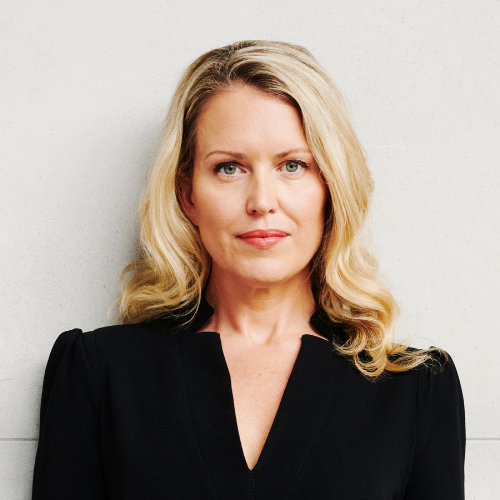
Jennifer Robinson
Jennifer Robinson is a barrister at Doughty Street Chambers in London. Jen has acted in key human rights and media freedom cases in domestic and international courts, including in relation to violence against women. Jen is a passionate advocate for free speech and has acted for high-profile women speaking out about their experience of abuse and journalists and media organisations reporting on gender-based violence. The second edition of her book with Dr Keio Yoshida, How Many More Women, which exposes the global legal backlash that followed the MeToo movement and the legal risks faced when speaking out about gender-based violence, was published in 2024. Jen sits on the boards of the Grata Fund, the European Center for Constitutional and Human Rights and the Bonavero Institute of Human Rights at Oxford University.
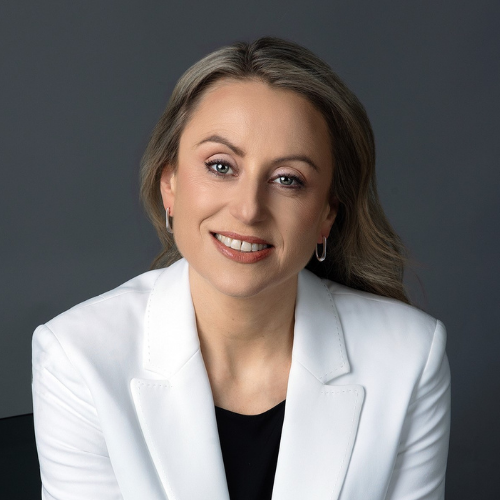
Hannah Tonkin
Hannah Tonkin commenced as the inaugural NSW Women's Safety Commissioner in 2023. In this role, she provides leadership across the government and community to strengthen responses to gender-based violence, raise community awareness and amplify the voices of victim-survivors. Previously Hannah was an international human rights lawyer for many years at the United Nations, working in a range of global contexts including Rwanda, Sierra Leone, Gaza, Ukraine and the former Yugoslavia. She also worked as the Director of Disability Rights at the Australian Human Rights Commission, and as a barrister in London and Adelaide. Hannah has published widely in international law and human rights, and lectured at the University of Oxford, the American University of Paris and the University of Adelaide. She is passionate about driving systems reform and cultural change to end gender-based violence in all its forms.
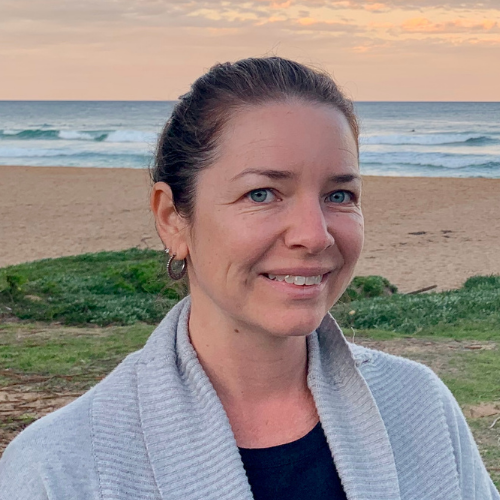
BJ Newton
BJ Newton is a proud Wiradjuri woman and mother to three young children. She is a Scientia Senior Research Fellow based at the Social Policy Research Centre within UNSW Sydney. BJ specialises in Indigenous research methods and child protection research and policy. Her research focuses on working in partnership with Aboriginal organisations to build evidence and support Aboriginal families interfacing with child protection systems.
BJ has extensive experience working on a range of child protection and domestic and family violence commissioned research for NSW DCJ, and multiple projects for the Royal Commission into Institutional Child Sexual Abuse.
BJ's current research, Bring them home, keep them home investigates the rates, outcomes and experiences of successful and sustainable restoration for Aboriginal children in out-of-home care. This is a four-year research project running from mid-2021 to mid-2025 in partnership with Aboriginal organisations in NSW.

Nour Haydar
Nour Haydar is co-host and senior producer of Guardian Australia’s daily news podcast Full Story. Prior to joining Guardian Australia in 2024, Nour was a federal political reporter with ABC News at Parliament House in Canberra, and a fill-in presenter on ABC News Breakfast. Nour has regularly reported on gender-based violence and was an inaugural fellow for the Our Watch Fellowship in 2019.