
Queer Life, Love & Identity
There’s a lot of anger and a lot of grief and heartbreak. But I think we feel that grief because the love and the joy exists.
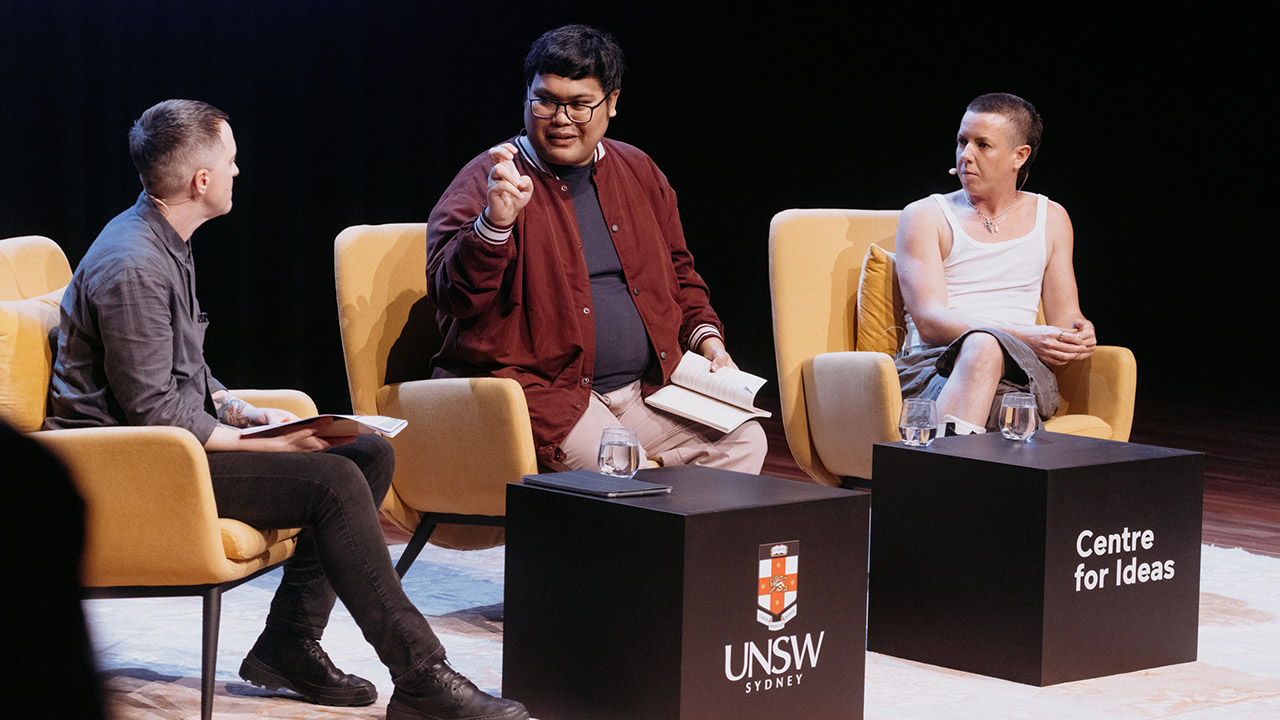
Acclaimed Indonesian author Norman Erikson Pasaribu and award-winning Australian writer Dylin Hardcastle explore the joy, tenderness and triumphs of queer storytelling.
Norman, best known for Happy Stories, Mostly, and their latest book My Dream Job, crafts tender yet sharp narratives about identity, faith and belonging, challenging the expectations of queer life in Indonesia. While Dylin, acclaimed for A Language of Limbs, offers an Australian perspective on intimacy, loss and transformation. Together their work embraces and reclaims; highlighting how storytelling becomes an act of survival and resistance for lives too often kept in the margins.
Hear Norman and Dylin, alongside UNSW’s Christy Newman, as they explore how literature creates space for voices long silenced – and how the most powerful stories are the ones that heal.
Transcript
Christy Newman: Hello everybody.
Audience Applause
Christy Newman: A good evening, welcome to tonight’s event. It’s wonderful to see so many people here, really we’re very excited we could hear you murmuring in the background and we were like this is very exciting.
My name is Christy Newman, I work here at UNSW as an academic, I’m also Deputy Dean Research for the Faculty of Arts, Design and Architecture and tonight I have the great pleasure to be speaking with Norman Erickson Pasaribu and Dylan Hardcastle about queer stories and queer storytelling across very different forms of writing and across different contexts for the expression of queer life, love and identity.
We are meeting on the unceded ancestral lands of the Bidjigal people who have remained connected to this country despite centuries of genocidal violence and racism, brought here by Captain Cook on his arrival in Kamay, so-called Botany Bay, directly in the heart of Bidjigal country just down the road from here. I pay my deepest respects to the elders of this country past and present and I honour their strength in shielding and sharing the distinct forms of knowledge, language and law required to sustain a connection to culture and to country through these many long years of brutal colonial domination.
One of those elders was Esme Timbre, who grew up in the La Perouse Aboriginal community, again just down the road from here. On the way out tonight, please take a moment to read her story on the wall. As a senior artist, I’m told she was pleased to have this facility named after her in 2019 as a space dedicated to supporting the formation, the sharing of new creative works.
I have white settler colonial ancestry, mainly Irish and I moved to live and work on this country as a young adult, so I also want to acknowledge Noongar elders, the custodians of Whadjuk Boodja, which is where I was born and raised. Their stories shaped my own ways of connecting to place, kinship and to activism and they helped me understand my responsibilities in advocating for institutional and cultural truth-telling and justice and to recognise that the privilege I hold in being able to live and speak openly today as a queer, trans, non-binary person, parent and academic is indebted to Black civil rights movements here and around the world.
I also want to welcome any First Nations people who are here tonight, including Norman. Thank you, Norman, for joining this conversation and providing us with the opportunity to listen and learn from your writing and from your ideas.
So, who is on stage with me tonight? I’m sure everybody has read their bios in detail, has already looked them up, is already following them on the socials and if not, please do that immediately, I mean afterwards.
One easy thing to remember is that we all use they-them pronouns and I think we were talking that this is for all of us the first time we’ve been on a panel of all non-binary people, which is a pretty wonderful thing. So, thank you to the Centre for Ideas for making this possible.
I’m not going to read full bios because I want to get into the conversation quickly, but I will say just a few things.
Norman Erickson Pasaribu is a Toba Batak poet and writer, born in Jakarta. They’ve won many prizes for their poetry and short story collections and they’ve held fellowships and residencies in different countries to support their craft. They’re in Australia now to promote the book My Dream Job, a collection which plays with the biblical and the capitalist meanings of job, Job, for queer Indonesians in particular and as with their other writing, it combines both laugh out loud and punch to the gut truths as you read it. Welcome Norman.
Norman Erikson Pasaribu: Thank you.
Christy Newman: Dylan Hardcastle also has too many awards and too many books to name, but the book they’re here to talk about tonight, A Language of Limbs, I’m particularly proud to say was written as part of a creative practice PhD in the UNSW School of Arts and Media. Dylan’s book is set in 1970s and 80s queer Sydney and telling intimate stories of queer resistance and survival in this place has genuinely offered deep solace to many local and international queers I know through the difficult times that we’re now again facing. Welcome Dylan.
But I’m going to jump right into my first question which is for Norman and yes here is your book which I think we’re going to need and I’ve also got Dylan’s book here. So Norman, in this book which I’ve read and you know again each time you read something it has a different meaning and different resonance, you play with a range of speculative devices like post-het world, metaphysical concepts also like ghosts, spells, biblical characters, but you also demand that we look directly at the immediate truth of the injustices that feature in the world that we are in right now, right today, and to judge the legacies that have created them, particularly colonisation, racism, queerphobia. Can you tell us a bit about how this book came to be and what those kinds of speculative and spiritual techniques, what they offer you in writing, particularly about queerness which we’re talking about tonight?
Norman Erikson Pasaribu: I think often that when we talk about queerness today, queer people often we’re situated to talk about like the suffering, like the actual condition, but then I think poetry and fiction, it has a lot of potency to talk about like many things but then there is a barrier of reality, right? So I feel the speculative fiction is kind of a gateway to be there, and there probably is not, how to say, like it’s not clearly stated, there could be anything, so we need to, how to say, do even further to just cross this little boundary, something like that.
So sometimes we can say something which is actually very simple, but somehow we need to go to like the most absurd, the most impossible, the weirdest, because sometimes there are different kind of lived experience between the queer and then the rest, the non-queer.
Audience Laughter
Norman Erikson Pasaribu: Yeah, so that’s the thing that I want to achieve with this book, like to be there. And then, can I read?
Christy Newman: I would love, please do.
Norman Erikson Pasaribu: So I will read a poem called Post-het and I will tell a little bit story about it before I read. So in 2021, the writer Alan Van Ervin emailed me and then they said that they are co-editing the issue, like Australian Poetry Journal issue, and then the theme was modern elegy, and I was like, okay, so it’s going to be about death. So who’s death that I will remember? Who’s this person who I will remember? Who’s extinction that I will make a poem about? And then at that year, a trans icon, Dorja Gamalama, also died, and then I remembered I was so angry because at the time of her death, she had to, because of the social pressure, like how to say in English, like the burial, she had to be buried as a man, and then it was so kind of like, she’s a trans icon many queer people grew up with on the TV, so it’s kind of like really making me angry.
And then there are a lot of obituaries about her written by a straight man who didn’t even know maybe gayness, so it’s kind of like, what are you doing? So I was like, when Alan emailed me that, I want to remember heterosexuality, I want to talk about its death, something like that. So I made a poem where a niece talked to the aunt about hetero people, what are they like, what were they like, in the past tense, of course, so I’m just going to read.
Post-het
Onti,
what kind of food did hetero people like?
I mean, they looked exactly like us
as magnificent as us.
I saw their photos and statues in the museum
last week—right after the dinosaurs.
The guide laughed when I asked if they
liked frozen strawberry jam on their bread.
I like a frostro on my bread, just fyi. Idk, it gives me hope.
Why did so many of them run with backpacks on?
It’s as if they were perpetually coming out
of the train station—so late for a job interview.
I mean:
THE job interview.
It’s understandable – maybe
they were poor and had families to feed.
Were some of them rich, tho? Did they
have to always work overtime?
Any of them doing accounting, like you?
Was it easy for them to get a job?
Also—when hetero people lost their job,
did they cry? When they cried, did they think of their moms?
I mean: the younger version of their moms
I mean: the version of their moms when they still had the jobs
I mean: the moms who still had bright future[s]
I mean, the sandwich generation.
Onti, should we write a poem
for all the hetero people who lost their jobs?
For all the hetero people who cried
alone on the train platform at night,
too afraid to go home—
all they could think of was jamless bread.
I’ll write for them sandwiches—ofc—but I also
want to make flowers bloom out of them
I don’t know, anything floral gives me life.
Do you think they would appreciate
this gesture? Did they ever get mad?
Oh well. No one despises flowers, obvy,
unless you have an allergy. I wonder now
whether hetero people ever
had an allergy to something that they decided to kill.
Onti, were some of them murderers? It’s quite wild
to think so, tho: they look exactly like us—
as beautiful,
as magnificent as us.
Tbh I don’t want to think about it. I prefer
a blue planet full of living beings.
But if some of them are here and want us dead
and we tell them to leave us alone
will they?
Thank you.
Audience Applause
Christy Newman: Thank you. I’m going to pass to Dylan and have a question for Dylan now.
So Dylan, your novel A Language of Limbs, I think as I mentioned, spans three decades in the lives of two people with very different experiences of growing into adult life in queer Sydney or around, including very different expressions and functions of family. And the differences impact how they love, how they identify, how their experiences intersect with local queer activist histories. Why did you want to tell this story in this way and in this place now?
Dylin Hardcastle: Yeah, so I first came up with the idea for this novel walking through Sydney CBD in 2017 and I was walking at night to a gig and my friend and I had been joking at the time about how almost kissing is sometimes hotter than actually kissing.
And I sort of was imagining what it would look like if two lives almost kissed sort of across a whole lifetime. And I think part of the reason of going back in time was because I did want to sort of do this spanning multiple decades but didn’t necessarily want to write into the future. And I think, you know, I had this idea for it to start off in the early 70s where one limb of this story, the protagonist is caught kissing her neighbour who’s a girl when she’s 15 and she’s kicked out of home.
And then in Limb Two’s story, this 15-year-old girl also wakes up from a sex dream about her best friend who’s having a sleepover and just turns the light on, looks at her friend asleep on the floor, turns the light off and goes back to sleep. And so I kind of had this idea of like following these two lives, one outed and the other one not, and through those sort of almost intersections of their lives. But yeah, I guess like going back in time meant that the difference between those two lives was so much, so stark in a way that I think, you know, it would be maybe less or more difficult to pull off if it had been now.
I think that like, yeah, the contrast between these two lives was most pronounced by going back to the 70s.
Christy Newman: So, we’re going to get you to read a piece. Are you happy to do that now? Yeah, great.
Dylin Hardcastle: Yeah, on the theme of ghosts, I’m going to read a section about being horny for ghosts.
Audience Laughter
Dylin Hardcastle: Okay.
‘You find me most often in that small corridor between night and day, when the sky is washed out white and I feel your hand clenched in tight fistfuls of thigh, feel your breath in my throat and think, oh, here you are. Tell me, where have you been? And you smile and say, my love, I never left.
For a moment, this is true. I will laugh or cry on choked joy, the softest joy, joy unbearable. I will tell you how much I’ve missed your tongue dragged over my belly. I will tell you how much I’ve missed you holding my cunt in your mouth. And as you reach your hand inside me, you will say, I’ve been here, right here the whole time.
Before, I would try to be quiet. These walls are paper thin. You said once, scream for me, and I didn’t. And maybe you felt embarrassed because you never asked again. I held back always. Held it all at the back of my throat. Why did I do that?
Scared to rejoice. Shame at the thought of others listening. Shame that they’d hear me. Shame at my pleasure. Shame straddling everything I love. Shameful body. Shame. What a shame.
Scream for me. You say, tongue wet in my ear. I am fucking myself. Can you hear me now? I arc my spine and let go of my throat and all my pleasure rushes out through open teeth, through the ghost of you, through these paper thin walls, into another room, out onto the street. Something unruly, an animal. I feel all of you here with me haunted.
I scream for all the times I was quiet, for all the times I held back, for all the times I made myself small. I scream and find myself beautiful and exploding. You make me unbearably wet still and I wonder, is it wrong to be turned on by someone who is dead? I fuck the ghost of you and learn that grief is not sadness.
Grief is the body cut open. Flows of blood and joy and salt and ache and words and memory and memories never made. Grief is undoing. Grief is wanting flesh, yearning for a voice. Grief is fear of forgetting a face. The contour of a hip. Your brilliant red hair. Grief is wondering what could have been made and what could have become. Grief is what if. It is endless cycles of why and I wish I didn’t. Grief is the guilt of the living, of my living. Grief is the sobbing into my birthday cake because I’m older than you now. Grief is the building of a world without you in it.
But then there’s the less obvious, the part no one writes about. How grief is horny. How I bend myself over the bed head and feel your fingers in my ass, real and imagined. Grief is pining for your touch. Grief is being wet for a ghost.
It is not sadness, I think. It is a kaleidoscope of desires like white light refracted through skin. Sadness, I think, is the object and grief is the negative space.
Audience Applause
Christy Newman: So I have a question which is for both of you. It’s about what feels to me in both of these books, you play with the possibilities and the limitations of translation. And when I use the word translation, I don’t just mean about language.
So I think Norman, your writing does play across languages, also religious and cultural knowledge traditions, and playing with pronouns. For example, I was just rereading ‘‘Tell Me What Happened. Dylan, as you recreate queer histories, it’s for a contemporary audience.
So I was aware as I was reading of the translational work, I think that I was kind of seeing you have to do in given some of the ways politics are articulated now are quite different from those that would have been held by some of it. And so it’s got to be resonant. So I’m wondering, I’d love to hear from both of you about your approach to writing about queer lives across different worlds, language worlds, but also different eras, environments. Yeah.
Christy Newman: Yeah. So I think, yeah, that’s very interesting picking that out as a kind of translation of, I guess, taking these stories, because I felt so much responsibility to try and, I guess, honour that time and honour the people who lived through the 70s and 80s and 90s, and who have made my living and my writing this book as an openly queer and trans person possible.
And I think there was like, you know, I kind of did the initial research. And then I spent a period of time where I like, I have a near photographic memory. And so when I was doing like the early sort of archival research and listening to a lot of interviews, but reading a lot of publications from that time, I felt like I was like so close to some of these stories that I almost like had to allow it to sort of like meld and not forget it, but to sort of let the memories become a bit foggy so that I could then gesture towards these histories without necessarily, I don’t know, I felt like I was trying to find a balance between honouring that time and, you know, trying to be on some level like historically accurate, but then also not entirely co-opting a story that I didn’t feel necessarily entitled to, or yeah, I don’t know, it was kind of a balance or a dance between those two.
And I think the sort of air of detail, so the gestures towards various moments really came from the relationships that I have with people who, with friends who were alive in that, at that time. And I think, you know, there’s something so beautiful about the queer community in Sydney that I so often am on dance floors with people in their 60s who were, you know, living this and I have friends with 78ers and, you know, through their stories was able to sort of, yeah, I think give the sort of textures of what that time was, yeah. And, you know, it just, the overwhelming thing that I got from the stories was just the charged quality of a time, you know, and so many of these friends kept saying like, oh, we had so much more fun than you, and, you know, were kind of teasing me in it, but then I was like, you know, the way that they spoke about the time, like it had this charge to it and was so electric because in so many ways it was life or death.
And so the, I guess like this sort of polarisation, you know, one friend in particular was talking about finding friends on dance floors in the 80s and knowing that it was going to be the last time you saw that person. And so just like pushing so hard to the edge of joy and pushing so hard to the edge of living. Yeah, precisely because of that.
Norman Erikson Pasaribu: It’s about translation. So I think translation is about seeking connection, but then the reason for that connection-seeking might be different for each translation work. Like today, many translators are saying that translation is an act of like to decolonise, but then before translation is the weapon of colonisation, like before, like for example, like long ago during the Dutch colonial times in Indonesia, the Bible needs to be translated into Toba Batak first before they can be Christianised.
So at the time translator, and I think it’s Herman Tuk-Tuk who translated to Toba Batak and then, well, he was an agent of colonialism, of colonisation. He would, for example, had a genuine interest about Batak people, but then his genuine interest turned into violence. So that’s the thing that is kind of like, kind of like two face of the same coin.
So it’s kind of like when you talk about translation, it’s always about seeking connection, but what will we do with this connection is another question. But then to talk about like translation as queer, I don’t know if any of you grew up in the 90s and then when there was no Google and time is still weird, we can see dinosaurs, and then we would, I know if you remember, like listen to the songs and then try to write down the lyrics.
Audience Laughter
Norman Erikson Pasaribu: But it’s even funnier for Indonesians because we didn’t speak in English to communicate, but we were consuming this like in like popular medias, like to watch like Buffy.
Audience Laughter
Norman Erikson Pasaribu: And then, I mean, at that time, when I was writing down the lyrics, I was translating. I was a translator. And then kind of like, because you need to match the meaning, right? It might sound like apple, but then it’s actually another word.
So for a moment, and the paper, the word was apple, and later it’s totally different word. And that’s, I think, I mean, to think about that time, just like putting Celine Dion songs on, oh my god. And then, yeah, I think that’s the moment I kind of like, when I first tried to seeking connection, something like that, at the time.
And I later, I realised it was an act of translation.
Christy Newman: Interesting. Also, I love that you just said two sides of one coin, that, you know, the multi effects, you know, that you can have of certain practices.
And so I was just rereading a section of your book today, where one of the characters reads a poem called Coins, which is about what new language can offer. I think it’s a generational change, kind of a, that’s really resonated for me. And again, it speaks, I think, to that thing I was asking about, how do you tell those stories now when we have new language?
Dylin Hardcastle: I mean, that was one thing that I’ve, like, initially had, like, a couple of slurs in the book. And yeah, I had like a lot of discussions with friends where I was like, do I need, like, what is the utility actually in saying this now and being like, historically accurate, versus the harm that this might, you know, could cause to people to be coming across these words. And so like, the one in particular, I just ended up taking out. And I’ve kind of was like, I don’t need the dolls to, you know, I was just like, this actually is not, I’d say no utility in sort of, yeah, saying this, but that was it. Yeah. And an interesting balance. And I think, yeah, one thing that I think was maybe how I got around it was I tried to be really internal in terms of, like, constantly seeking to sort of anchor the experiences in the body. And less so in like the sort of wider historical context. So those, like, you know, the backdrop of Mardi Gras, you know, was like a, yeah, was like sort of serving as this background, but then the, like, intimacy is, is like in a kiss under a car, whilst like chaos is devolving around.
And so like, yeah, my motto when writing it was to think less and feel more. And to try and, yeah, I guess, like speak in a way, like translation of connection, to find connection with those moments that, you know, were very outside my own lived experience. But to, yeah, sort of anchor myself in those moments by anchoring them in the body.
Christy Newman: Thank you. I’ve got a question about queer coding in your books. So I felt there’s a real rage in both of your books about the political and social restrictions on queer lives. Like that’s very tangible, like throughout.
And stories, clear stories about the harms of being forced to hide, compartmentalise queerness in order to survive, to get a job, to have children, to remain safe, to be part of family and so on. But there’s also glimpses of the thrill that can accompany being read and recognised by those who know how to interpret the visual language or other expressive codes of queerness that are not intended for others. So, and the fun behind that, the pleasure that, you know, I’m interested in whether you were imagining specific audiences in any of the pieces of what you wrote that were, you know, for particular kinds of people or were they broadly available?
Norman Erikson Pasaribu: My intended audience was my boyfriend.
Audience Laughter
Norman Erikson Pasaribu: And for some films, like the one that Alan asked, the intended audience is Alan. Like, how do I say it? I’m not really kind of like, oh, I write for to change the world. I mostly write for fun plus angry.
Audience Laughter
Norman Erikson Pasaribu: Like, kind of like, probably I wrote many poems here, like basically had to wrote it, kind of like just so angry. And then I feel like, and then I would probably get more, how to say, like, intellectual about it in revision. Because I feel like, how do I say it? Like, I don’t want to censor my anger.
And even if it’s ugly, it’s mine. So, so that’s the thing. And then about queer coding.
I don’t know how to describe it because I wrote this poem in English and I mostly talked with my queer friends in Indonesian and in sassy English, of course, because we all like mean girls. But then also like at the same time, I think, for me, love between people who shared mutual oppressors kind of like move beyond languages. Like it can be in English, it can be in Indonesian, it can be a mix of both.
And then it will be like the shared histories, the mutual feeling that will inform the words. So it’s kind of like, how do I say? Even as poets, I admit that my words will not suffice. Even if it’s, even if I wrote the best poem in the world, if the reader have rejection to the ideas in it, it won’t change. So it’s kind of like, kind of like how to say, like, I will, I could only do half of the job of interpretation. And it’s like, yeah.
And then I cannot ban straight people from buying my book.
Audience Laughter
Dylin Hardcastle: They don’t exist anymore.
Norman Erikson Pasaribu: Because I feel like, I have a funny anecdote. So when I respond to a post-het, there is this, it’s one time, and then this person, okay, gender neutral. This person asked me, so where will this person be? Like, I don’t know, maybe you’re queer?
One day, in the future, who knows? Queer is always in present tense.
Audience Laughter
Christy Newman: Love it.
Dylin Hardcastle: Similarly, I write, I just find it really fun. And I think, yeah, I very much felt like I was writing this for my friends. Yeah, and kind of wanting to capture how silly and just ridiculous they all are.
But I, yeah, I don’t know, I find when I, in a similar way to dreaming, where you’re like technically constructing a dream whilst you’re asleep, like your brain’s doing it, but you’re perceiving it in real time, I very much actually felt like that’s how I write fiction, where it’s sort of playing out, and I’m almost transcribing what I’m seeing, and therefore, honestly feel quite entertained, usually, by the process of writing. And then, yeah, I think, yeah, some of the more, like, as you said, sort of in the revisions, all of the other stuff is refined. But I think I also write in the sense that I’m just curious about something and maybe have a question, and writing is this process, it’s like untangling and sort of working out and following these leads and, yeah, sort of in answering some question that I just can’t not think about.
Christy Newman: Do you ever have somebody in mind as the audience?
Dylin Hardcastle: Well, I think, like, so when I was writing this, I was reading a lot of the sections at, like, open mic nights that Friends were running and sort of poetry nights. One of my dear friends runs a night called Word of Mouth at Join the Dots in Marrickville, and, yeah, I read so many sections at that, and I was kind of, like, yeah, excited, especially with the sort of more, like, horny bits to go and, like, just read them to my friends. But, yeah, I mean, there was, like, there’s one section I think that is a part that I’ll read later, but basically I was on this farm with a friend who I’d kind of been, who I was seeing, and she wasn’t, like, out to, or, like, the people that we were staying with kind of had an issue with it, then they were family friends, and we had this, like, three days of working on this farm where, like, every time the farmer and his wife were, like, facing the other direction, we were just, like, all these side eyes and, you know, all these, like, speaking of the, like, queer coding, you know, all of these, like, glances and kind of knowing smiles and, you know, touching and then, like, being really, like, apart from each other as soon as the people turned around again, and it was so much fun, but I like, was thinking so much it really put me in this, you know, I was thinking, what would that have felt like in the 70s and 80s to, you know, sort of be falling in love with someone where you just, like, cannot go near them in public and then sort of being, like, just craving all day and with all the, like, subtle games and then being able to, yeah, like, waiting for the moment that you’re, like, behind closed doors to, for all hell to break loose.
Christy Newman: So talking about games, maybe we could hear your next poem about the Dutch.
Norman Erikson Pasaribu: Oh, okay.
Christy Newman: What do you think?
Norman Erikson Pasaribu: Yeah, I will read.
Okay, so I will start with a small story. A few years ago, when I was reading, it’s actually not really a book, it’s a book discussion, but I changed it to reading for the poem. And then there is a Dutch person came and then asked me if I would have time to have coffee with them and then help them to speak Indonesian.
So it was like, okay, that’s odd, and then I said no, and then she unfollowed me. Okay, it’s out there. Who cares? And then she unfollowed me.
It’s so strange because I was being kind because she came to my event and then followed me after on Instagram. And I was like, okay, that’s fine. I will start this post-colonial friendship.
I am open-minded. And then when, what? Learning Indonesian? What are you doing? I mean, get a teacher or pay me. And then yeah, after that, it was like she unfollowed me and I was like, found it so weird.
And then, yeah, I wrote this kind of like, so angry. So it’s written kind of like possibilities of what will happen, and I changed it, of course, into a boy. I wrote it for Ellen van Neerven as well because I feel like Ellen would laugh when they read this, and they did.
A Dutch Boy Came to My Reading and
1) he followed me on Instagram,
I followed him back just to be kind,
he sent me DMs saying he’s doing research on Indonesian lit, for his PhD
in Postcolonial Studies, and he asked me for recommendations
(documentaries to watch, people to talk to, bookshops to visit) and asked if
I would have a coffee with him to practice his ‘Bahasa Indonesia’
and I said no because I was busy and tired and depressed
and then he silently unfollowed me
2) a Dutch boy came to my reading and he followed me on Instagram,
I followed him back just to be kind, he sent me DMs about his PhD research,
his exigent need to practice his ‘Bahasa’, the oral test
he must take next week, how desperate he wanted to graduate,
and I agreed, and we met over coffee, but he said my ‘Bahasa’
was bad, ‘Saya tidak mengerti sama sekali,’
so I left, and then he silently unfollowed me.
3) a Dutch boy came to my reading and he followed me on Instagram,
I followed him back just to be kind, and over the years
he liked all of my photos, sent me love emojis,
asked how I felt after my book won an award,
and I replied: OMAGAAAAAA!!! and until now
we have a cordial, distant relationship
as if he were an old friend from the middle school
even though nobody would befriend me in middle school
because I was fat and effeminate
4) a Dutch boy came to my reading and he followed me on Instagram,
I followed him back just to be kind, and he asked if I would
watch these real movies about the Dutch colony,
so I would have a more balanced perspective,
‘It wasn’t all that bad, you know!’
and I said no as I was tired and depressed, and he silently unfollowed me
5) a Dutch boy came to my reading and he followed me on Instagram,
and I blocked him because he sent me DMs about how I should be grateful to the Dutch,
‘YOUR SAVAGE ANCESTORS USED TO EAT PEOPLE!’
Yeah, so the Dutch framed people as cannibals. And,
6) a Dutch boy came to my reading and he followed me on Instagram, and I ate him,
the idea of him, the idea of a Dutch person
wanting to have a coffee with me
to practice his ‘Bahasa’, the idea that
to start this postcolonial connection
I am still the one who has to furnish, has to provide,
has to be the giving one, the forgiving one
7) a Dutch boy came to my reading and he followed me on Instagram,
I followed him back just to be kind, we sent DMs here and there,
he said he liked how perfectly toned my skin was,
and I said it was all the chicken feet, he
visited, we kissed, we danced, we dated briefly,
he wouldn’t touch the chicken feet, or the intestines,
we broke up because he got a fellowship to Albany, New York
to study the Dutch colonial past there, and I asked, well, is it everywhere?
And he stands up, ‘it is everywhere,’
and he left, and then my conservative aunt,
oh, don’t even get me started with my conservative aunts
8) a Dutch boy came to my reading and he followed me on Instagram,
I followed him back just to be kind, and he introduced himself as a physicist
building a time machine, and asked if I
was interested in going back to the pre-colonial Tapanuli
because he had the white man’s guilt,
the Dutch person’s guilt, the coloniser’s guilt,
but also the urge to verify if my ancestors
were really man-eaters, ‘Aren’t you at least a bit,
teeny tiny curious?’ he replied,
ending it with a chicken leg emoji
9) a Dutch boy came to my reading and he followed me on Instagram,
I followed him back just to be kind
and he offered to fund my novel.
This never happened, this one.
and he offered to fund my novel
and I sent him my account details
and he transferred €50,000 euros
and three weeks after that, after
the Dutch embassy approved
my visa application, yeah, it took months,
we met in Amsterdam, and we conversed in English,
‘You can practice your Indonesian with me,’
I teased him, he sipped the tea nervously,
and a year later, I completed my magnum opus,
the one novel that would
decolonise us all, the one novel that would rule
all the postcolonial novels, the one novel that would reclaim
all Tapanuli people of our long gone ways of life,
‘Like entering a time machine, as if I did
all the burning on my own,’ a Dutch reviewer,
also a famous local poet, wrote about my novel.
10) a Dutch boy came to my reading, and he followed me on Instagram,
I followed him back just to be kind,
and I silently unfollowed him after seeing his Insta story
complaining how the locals overcharged his nasi campur
‘I’m just a regular person like all of you!’
and he silently unfollowed me back
11) a Dutch boy came to my reading, and he followed me on Instagram,
I followed him back just to be kind,
we sent DMs here and there, he visited, we dated, we decided
to get married and that one of my uncles would
culturally adopt him, so he could get a Toba Batak name,
so the tarombo wouldn’t finish with me
so my culture continues despite colonialism
despite the cholera ghost, despite Christianity,
and my conservative aunt asked
which one of us the girl, which one of us the boy?
and I became wrathful, and threw my thick
novel draft at her teacup collection,
and she fell to the floor and cried
mourning her dead tea cups, and she
said it wasn’t her fault, it was the tradition, the cousin
you should marry and the cousin you could never marry,
and I screameeeeeeeeeeeeeeeeed,
‘Can’t he just be another Toba Batak boy?’
and my conservative aunt, still tearful, pinched my arm.
12) a Dutch boy came to my reading, and he followed me on Instagram,
I followed him back just to be kind,
and he asked if I would do a collaboration with him
for his new YouTube channel, a Dutch boy living, thriving,
in Canggu, Bali, ‘I can also sublet all the unused rooms
in the Airbnb.’
Many Dutch people do this actually.
He said, and I said no, and he silently unfollowed me
Also, doing a collab in Indonesian means making pornographic videos together, so this is the subtext. Because you need to be even gayer for the gays.
Audience Laughter
13) a Dutch boy came to my reading, and he followed me on Instagram,
I followed him back just to be kind,
and we sent each other DMs day and night,
and he admitted his attraction to me, but the guilt,
he said, the guilt, what should he do with the guilt,
and I said to him without pity, I have no idea,
I was born in modern-day Jakarta,
the past was state-delivered to me in summaries
and he asked if I wanted to watch a movie
about a postcolonial love story,
and I said yes, and in the dark of the theatre,
he reached for my hand, and it was warm, and I said,
this is how I feel, about me, he asked, about my culture,
this living darkness I can’t grasp, this faceless darkness
I can’t speak to, the lives of my ancestors
before the Dutch came
and ruined us, but that silver screen
the shimmering surface of the Toba Lake, at night,
where my old, old mother’s once danced.
Thank you.
Audience Applause
Christy Newman: We’re heading towards question time, but I think I might have time to ask one more. Yeah, and would you like to read another section as well, Dylan?
Dylin Hardcastle: Sure. Do you want to do that?
Christy Newman: Well, let me see whether my question is useful or not. If not, please ignore it. I guess one of the things I’ve been thinking about quite a lot recently is that one of the great achievements of queer progress movements was to liberate narratives of queer life and love from the frameworks which were diminishing us as aberrant, dangerous, disordered, in psychiatry, criminal codes, popular culture and so on.
So we have been very focused in the last few decades on stories of queer joy, euphoria, happiness, marriage, et cetera, and to address that absence and to uncover, be part of that reframing. But I’d love to know how you both feel about this. And whether that figures in the thinking around the kind of framing that you bring to the stories that you create.
Dylin Hardcastle: I think or I guess the thing that I was trying to be conscious of was just I guess like for these experiences in the book hopefully to be a myriad of emotions. And for sure joy features in it because that has been my experience of the world and my experience of queer community, especially in regards to my friends and the people I’m in relationship with teaching me that community is a verb and that it is something that we do for each other. And I think for the dance floors and the various ways that people come together, I feel like those joys are so often ruptures that are really necessary to sustain the rest of being. And in particular in this time, in this location in Sydney where that was like those ruptures were life sustaining I think. And yeah, I don’t know, I resisted I guess wanting, I didn’t want to shy away from any of it I think. And so there’s like a lot of violence in this book. There’s a lot of anger and a lot of grief and heartbreak. But I think we feel that grief because the love and the joy exists.
And purely from a craft perspective it’s like I love comic relief and having these moments of levity to be able to offset some of the darkness. But also because it feels true to me and it felt true to me to write this sort of like full breadth of experience. Yeah.
Christy Newman: Thank you. Do you want to find what you’re going to read?
Dylin Hardcastle: Yeah, sure, sure, sure.
Christy Newman: And Norman, would you like to also respond to that or?
Norman Erikson Pasaribu: I’m okay. Yeah.
Dylin Hardcastle: Okay. I think this is my favourite scene in the book. And it goes,
And I will think to myself, selfishly perhaps, I hope I die first because when we are outside I learn the sick pleasure of almost kisses, of side glances and wanting smiles. I learn how pining starts between the thighs and spreads outwards, stomach clenched and fingers feeling like shallow light because all the blood is rushing out of them. And it’s not that I haven’t yearned before. This feeling has been long deep in me but that now it has swollen with promise and fully realised.
Because this yearning is contained in the hour at the markets or in the waiting for the barman to pour us our beers and we feel it vibrate between us with such intensity that I want to say, fuck the beers, run with me home. Because this yearning is felt tenfold knowing that we will soon shut the door behind us. It makes me ache for her with utter desperation.
It makes it difficult to concentrate. All the books speak of butterflies but I feel birds in my stomach thick winged and thrashing. I watch her finger her purse for coins at the checkout and imagine her hand inside me. She notices the thought on my face and bites her lip. Then when the woman serving us isn’t looking she winks and I feel I might explode through my skin. This is our game of subtle gestures, a language of limbs written like words in sand. We tow the shoreline between rock and ocean, between what you see and what we are underneath. Because when we are inside, surrounded by stacked books, dried flowers and dripped wax, we undress. Not just the fabric but the skin too.
Because she tells me that fucking me is like painting the underside of my flesh, a painting that only we bear witness to. Until one day in bed and soft light she will call me Claude. I will smile and call her Marcelle and we will say these names in private over and over as I fuck her and write her onto the page as she fucks me and draws me in the margins.
Audience Applause
Christy Newman: I’ve got a question for Norman. How does it feel to be touring to countries like Australia?
Norman Erikson Pasaribu: How does it feel to be touring?
Christy Newman: And also, I guess, how does it feel to be asked to represent queer Indonesia?
Norman Erikson Pasaribu: I never thought about it that way. I kind of, okay, I’m just going to be open about this. I just see this as like an opportunity to travel.
Audience Laughter
Norman Erikson Pasaribu: Kind of like, and then, but how do I say? Honestly, I just want to see my friends who are in Australia and some of them came. I’m happy about it. I don’t get to meet Ellen van Neerven this time around, but everything will be, it will work itself out. But I feel like this kind of travel feels to me, because, I mean, Australia has different, very different case from Indonesia.
In Indonesia, the colony ended, but then exist in different ways, of course. In Australia, the colony is alive. So I feel like this is opportunity also to connect. It’s always about connection.
And then how do I say it? Like, as a queer, personally, I feel like at 35, I’m kind of tired to be angry all the time. So sometimes as a 35-year-old person, I want to, because, I mean, if you see the Dutch boy, there are parts of the poem where I actually could make a love story with the Dutch boy. I mean, I want to make, I personally, I want all of these things about colonisation to be acknowledged, but also I want to move beyond the pain somehow. Because if I’m talking about pain, it’s not just like the Dutch or the Germans who Christianise us, but also my own parents about my queerness. So I kind of wanted the same.
Whenever I go to a country, I want to connect with the people there. And I don’t want to, like, for example, how do I say it, to be picky with connection. I want to be open, something like that.
A friend of mine has this idea that you should be a door ajar, so I will be a door ajar. Something like that. Yeah, that’s how I see going to Australia or any places.
Christy Newman: Dylan, I’ve got a question for you. Your book is rich with symbolic motifs, birds, oceans, skin, limbs, oranges. What do these mean to you personally? Like, was there a thought journey in the rendering of those motifs through the book?
Dylin Hardcastle: I mean, I think the sort of like preoccupation with bodies, yeah, came from that sort of trying constantly to locate this in my body where I, you know, was sort of had that motto of think less, feel more, but also, yeah, was sort of trusting whatever impulse or instinct and sort of running with it.
And so, like, for instance, there’s parts where the text flashes forward, but very few parts in flashbacks. And I remember, like, because I wrote this as part of a PhD here at UNSW and my supervisor initially was, you know, asking me how could this possibly, like, I don’t understand how would this person be able to say in three years from now this will happen or, you know, five decades from now this will happen. And I was like, I’m not going to explain it. I just had this, like, impulse to do it and I’m trusting that and kind of trusted that whatever was emerging from these instincts and impulses was going to be, like, inherently clear because it’s emerging from my body sort of thing.
But I think also, yeah, so I think that definitely in terms of the bodily sort of fleshy motifs, but I think also the water, you know, I grew up, I didn’t really read when I was growing up, kind of until my early 20s, but I wanted to be a professional surfer. And so I spent my, like, whole childhood and teenage years in the ocean.
And, yeah, like, if you had told me when I was 15 that I was going to be a writer and not a professional surfer, I probably would have cried and then stormed out of the room. But I, it meant that I spent so many hours in the water reading, like, reading ocean and reading, like, lines of swell. And I think it taught me to sit and be still and be with myself and to observe. But also I think reading water in that way for so many hours and so many years actually has meant that, like, water just has this, like, current in everything that I have ever written. And it always is kind of, I’m a sucker for a water metaphor.
Christy Newman: And I believe you were in and around a lot of water while writing this book as well.
Dylin Hardcastle: I was. I wrote this book up on Bundjalung country where I lived actually for most of writing it. Yeah, and was in the water holes, the rivers and in the water, yeah, all the waterways that have been cared for by the Bundjalung people.
Christy Newman: So I actually also made some notes just before now about some of the water metaphors in your work. Norman, ‘shipwreck poetics’ was one of the phrases that I loved. And also this is from a note on the machine, notes on the machine, is that ‘future you didn’t come back to help colour the ocean part of the painting.’ I love that phrase. Yeah, it also reminded me a little of the visual art dimensions of yours, but yeah.
Norman Erikson Pasaribu: I think because it’s like future you didn’t come back. So I just kind of want to mix the tenses because the idea that, how to say. I mean, so I kind of like had this, I like to join like Reddit to talk about like random stuff, like science fiction. And then there is, if you try to look into it, so many theories. And then if there is one about, so you don’t actually change the future, but you, how to say, do what, like it’s already happened.
So what we leave is already the final timeline and we need to fulfil that timeline with a time machine, something like that. So I kind of like the idea, future you didn’t come back, because I mean, it’s already done. The life is a final timeline.
But then there is also a possibility about, so the poem is about kind of like thread show where they kind of like showcase different kinds of time machine. And then it’s about kind of like being, how to say, like I was kind of like saying to myself, I am writing poem because in the future, like the future has been written by me. So I’m just following what’s like in front of me, something like that.
So it’s kind of like being like a bit like, well, self-help.
Audience Laughter
Norman Erikson Pasaribu: I don’t know. Yeah, it feels like that for me, because I feel like sometimes we were like, everything is so changing so fast. Like Indonesia now, we don’t know what will happen with the new president. It’s been a wild six months so far. And many of my friends literally flee the country.
And then I was like, okay, kind of like, okay, we are not going to change the future. We are just going to do it, kind of something like that, because we did it. Our versions have gone back to this timeline several times to make a correction.
Yeah, you need to go to Reddit to understand.
Dylin Hardcastle: Can I add maybe to that? I’ve been thinking so much about this idea of sort of future memories. And I think, you know, that sort of idea of pushing out in this book to the future, like especially, you know, during the height of the AIDS crisis, these futures, queer futures are constantly collapsing in on people.
And I, you know, wanted to honour what a, I guess, like radical thing it is to push forward into the future. But also this idea so much of what you’re saying is something that I’ve been thinking about so much. Actually, since being on T for a year where like I’ve, initially I was like experiencing all these like, I guess, like feelings of sort of déjà vu everywhere.
I was like, oh, I’ve been here before, maybe in a past life. And then I was like, oh, no, it’s actually just, I’m just recognising myself from some future iteration that has already happened. And you’re just seeing into it.
Christy Newman: So, I had a last question, which was, what nourishes and sustains you in your own queer creative practice? For each of you, what are the practices that help sustain your creative life that fill you up?
Dylin Hardcastle: Yeah, I think, like, personally, being in the water is, like, the thing that really brings me back to myself, but then that just made me think, there was maybe, two or three years ago, I was at a dinner party where, you know, all the furniture in the living room had been cleared out of the living room to make way for all these plastic tables, and I was sitting on a milk crate. There was, like, 25 people around this very hoggity-boggity kind of, like, dinner table that was very ad hoc. But one of my friends, like, silenced everyone and was like, when does everyone feel most free? And we sort of went around the table, and it was really interesting because I was resonating initially with, you know, people saying, like, when you’re on your own and you’re free to make your own decisions, and then the more that I, like, heard responses and was thinking about us being there and then thinking about various spaces where I have felt most free, I realised that it was, like, when I’m in connection with my friends, and I think that’s what really sustains me the most, where, you know, it’s, like, freedom, I guess, to, like, feel into and fall into the arms of all these people that see you and are willing to hold you, and that that is, like, so reciprocated. And, yeah, I think that was really what sustained me whilst writing this book, especially, you know, the harder scenes. I was living in, like, an all-trans house for the majority of writing this, and, yeah, just really rewriting my sense of what home could be as this, like, place that, yeah, so much went unsaid in that house, and it really was just this, like, I don’t know, feeling of, like, every time we walked into Sabrina, which was named after Sabrina Impacciatore, because she was just so stylish, this house. But we, like, would go home, and it was just, like, you, like, just shared everything, and, yeah, it was the first time I had really experienced home as this sort of refuge, which I think ended up actually inspiring Uranian House, but, yeah, it just, the people sustained me in my practice, yeah.
Norman Erikson Pasaribu: Um, looking into the, like, colonial archives can be a lot of, like, nourishment, rather than nourishing, because, like, the more you know, the more you realise you don’t know, and then the more you know, you get more pain. Like, when I found out, so that’s why the first poem in the book is kind of, like, a love poem where I use the phrase linguistic polyamory, between the Greek, and then the German, and then Toba Bata, but then if you read along the book, it will come to talk more about the violence, because the idea of this linguistic polyamory came from naivety, my own naivety, but then the more I read into the colonial archive, the more kind of, like, what the fuck? So because, like, for example, the Dutch banned the Toba Batak ensemble for 57 years during the colonial times, and then for many cultures in Southeast Asia, everything is just about the ensemble.
It’s about, like, you do it to, like, for the dancing, for the ritual, for, like, basically everything, for weddings, for funeral. So if your ensemble was banned, what are you? That was the question all the time, and then in Indonesia, the treatment, how the Dutch treat Indonesian people can be quite different. For example, the Dutch like Balinese culture and turned Bali into kind of, like, tourist destination in the colonial times.
The Dutch, sorry, I almost said the B-utch, so the Dutch see Batak people as kind of, like, savages, cannibals, blah, blah, blah, and then, okay, we need to give them Jesus, something like that. So there was a heavy German missionary work there, and then the German priest, Nommensen, was really venerated in Batak people today. Like, everyone loved him, but then it was him who sent the letter to enforce the colonial ban on the Batak ensemble, and that’s also why the Batak spirituality, most of parts of it kind of, like, gone forever.
So we had this, like, freedom fighters, like Si Singamangaraja XII, and then he, during the colonial war, he invented a new Batak religion, Parmalim, which is kind of the merge of many diverse religious, indigenous religious tradition in North Sumatra. So it’s kind of like, I think it’s very cool that he invented a religion to fight Christianity. It’s really cool, but then, at some point, well, he was murdered, and then the influence of German, like Martin Luther, is so big in Batak culture today, and then two years ago, I got a fellowship to go to Berlin to look the connection between Germans and Batak people, and then I came there after a really, really traumatic visa experience, and then I met one of the descendants of the priest, and she said to me, I didn’t remember anything. So it’s kind of like Batak people has these ideas of the Germans as the kind of, oh my God, they were our friends, and then it wasn’t a love story, and then it was actually violent, and then it was forgotten, so it’s kind of like weird.
So what I want to say was, when we talk about nourishment, the best way to nourish ourselves is not to look for one, because the journey will be painful, because sometimes, how do I say it? What if you don’t understand your culture? I mean, you have your iPhone now, you have your TV, you have your car. What does this culture mean to you? Even today, that’s the question I’m still asking to myself, because it needs a lot of intellectual work to reclaim it. Do I have the time? Do I have the resources? That’s another question.
That’s like, will I have the visa? To go to this country to look at the documents? Because I mean, so in Batak people, we even have our own Zodiac, and it’s gone. It’s just become like articles in the blog, oh, we used to have a Zodiac. And then many of these become kind of like exoticised, but and then, how to say, even when you try to reclaim it, there will be people kind of like, oh, why do you reclaim it? What’s so important about it? I mean, I think that’s the thing that is like often, like it’s hard to answer.
Like you have no reasons, like you don’t know how to explain it, why this culture is so important to you. And the only thing that is often came to me is I want to know my grandparents. I want to know my great-grandparents. I want to know their lives. I want to know their God, because my father actually came from a Parmalim family before this family was told to convert to Islam because of the Indonesian government. And then, how do I say, how do I love a God that I have no idea about? If I want to understand this God, I need to go back there, and then I need to find the people, and I will have more problems because I’m queer.
Will these people who still practice the traditional religion like me, accept my queerness? That’s another question, because we have patriarchy, because blah, blah, blah, capitalism. So it’s kind of like endless questions kind of like stresses you out. And at the end of the day, no nourishment. So I feel like if we talk about nourishment, it is more about, how do I say? I have no answer.
Audience Laughter
Norman Erikson Pasaribu: I have no answer, sorry. Because the more I know about it, the more I know I didn’t know, and the more I didn’t know, the more pain I got because I didn’t know. And then, the more pain I got, how would I know? That’s the thing. Because I mean, years ago, I contacted Jan. S Aritonang, which is a really famous Batak lecturer. He’s kind of like the one you will talk to if you want to talk about the Christianisation to Batak people.
And I emailed him. I was like maybe 22, I think. And then, I want to know about this more. What should I do? And he just replied my email. Do you speak Dutch and German? And I said, no. And he never replied my email.
That’s the thing. I think the requirement to, like I said, it’s just like maybe it’s like this, like here, and then this is like three sub problems, access, access, access, access. It’s like endless questions. So yeah. No, no response, and then I just keep doing it. Yeah.
I don’t know. I don’t know. Maybe, but what I think was I want to know about my great-grandparents. Because there are also talks about, oh yeah, our great-great-grandparents was a Batak witch, so that’s why sometimes we could see ghosts. This is kind of like very exoticised discussion, but then it’s a real discussion in my family. So it’s kind of like, how to say, endless.
It’s all about long before, when the dragons are here. So then, yeah. How do I say? That’s the thing when I talk about nourishment, because no nourishment. And then, when I fight for access, I will meet, I don’t know, like invisible walls all the time. And then, at the end of the day, you can only try. That’s, you can only try. And maybe, during this journey, we’ll find people who could actually appreciate what you are doing. That’s the thing.
Christy Newman: I think that was one of the best non-answers that I’ve ever heard.
Norman Erikson Pasaribu: Sorry, sorry, but that’s, I keep getting nourishment question. It’s a good question. Really interesting. In different words.
Christy Newman: In different, yeah, yeah, yeah. Thank you to everybody who’s turned up tonight to join us at Queer Life, Love and Identity.
Thank you to the Centre for Ideas for organising the event.
And of course, thank you to Norman. Thank you to Dylan for your time, generosity with those answers and engaging with all of these ideas. So thank you. I think that’s my, thank you everybody. Thank you.
Audience Applause
Centre for Ideas: Thanks for listening. For more information, visit unswcentreforideas.com. And don't forget to subscribe wherever you get your podcasts.
-
1/5
-
2/5
-
3/5
-
4/5
-
5/5
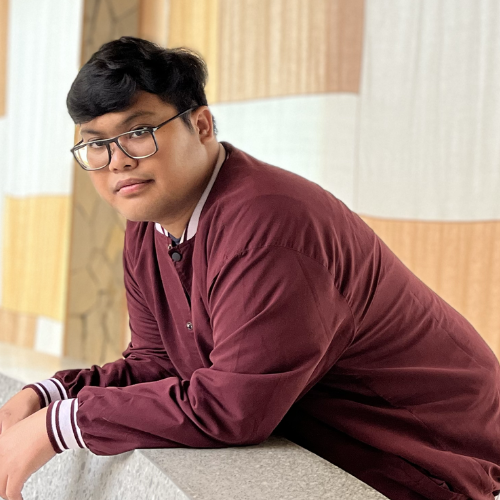
Norman Erikson Pasaribu
Norman Erikson Pasaribu (they/them) is a Toba Batak poet and writer. Their first poetry collection, Sergius Mencari Bacchus, won the first prize in the 2015 Jakarta Arts Council Poetry Manuscript Competition, and led them to win the 2017 Sastrawan Muda from the Southeast Asia Literary Council (Mastera). Norman was Harvard University Asia Center's Artist in Residence for 2023 – 2024. They are one of the 2025 fellows for literature of the DAAD Artists-in-Berlin Program. Their latest book My Dream Job juxtaposes the biblical prophet Job with the idea of being employed for queer Indonesians.
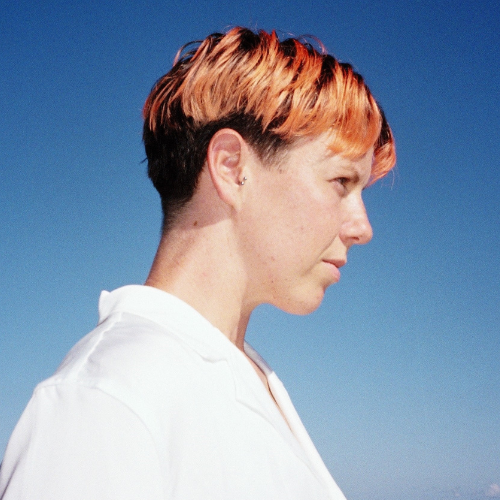
Dylin Hardcastle
Dylin Hardcastle (they/them) is an award-winning writer, artist, screenwriter and former Provost’s Scholar at the University of Oxford based on Gadigal Land. They are the author of four books. Their work has been published to critical acclaim in eleven territories and translated into eight languages. In 2023, their novel, A Language of Limbs won the Kathleen Mitchell Award, was shortlisted as Dymocks Book of the Year for 2024 and longlisted for The Stella Prize. A Language of Limbs has been optioned by Curio (Sony Pictures) and is in development with Dylin writing the screenplay.
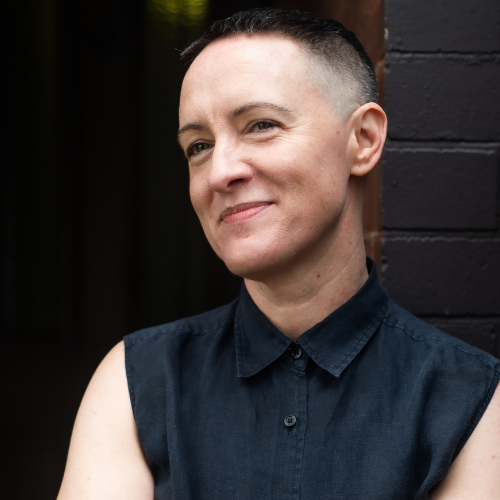
Christy Newman
Professor Christy Newman (they/them) is a sociologist of health, gender and sexuality at the Centre for Social Research in Health, and Deputy Dean Research for the faculty of Arts, Design & Architecture at UNSW Sydney. They are also an Associate of the Australian Human Rights Institute and the International Centre for Future Health Systems at UNSW. Christy is also the co-editor of the recently published Elgar Encyclopedia of Queer Studies.