
Laurie Woolever: The gluttony of life
[Many] of the responses that I've gotten about the book have been from women saying, 'there's something in your story that's very relatable to me', whether it's dealing with drug and alcohol addiction or workplace sexual harassment or doubts within a marriage, career struggles around motherhood, certainly the postpartum depression that I wrote about briefly. I think that really resonated with a lot of people.
Since its 2025 publication, Laurie Woolever’s Care and Feeding was an immediate New York Times bestseller, tracing her path from small-town childhood to working with two of the most powerful men in the food business, chefs Mario Batali and Anthony Bourdain. The book’s success is no surprise. Laurie doesn't sugarcoat the consequences of a life where desire has been met with opportunity in equal measure. She weaves her story deftly, capturing the essence of New York city during the golden era of the 1990s and 2000s food celebrity without downplaying the darker side of indulgence and the treatment of women in the male-dominated food industry.
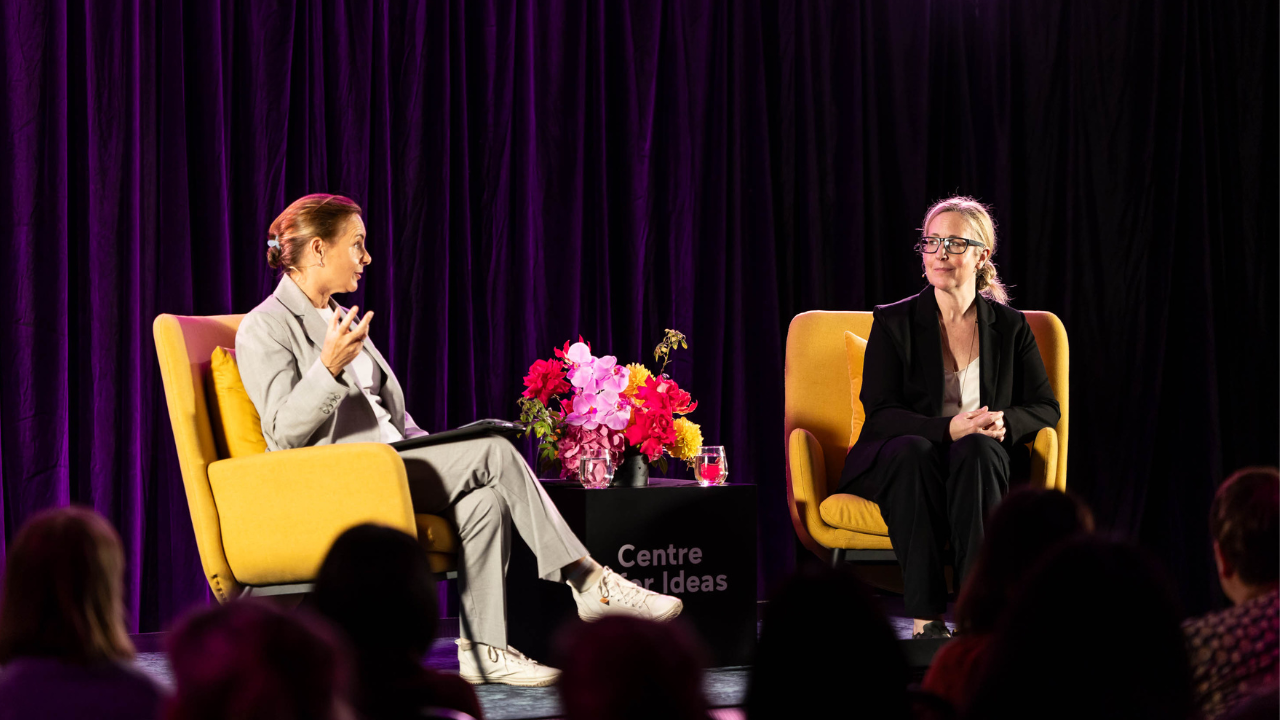
Hear Laurie alongside Good Weekend senior writer and former editor Katrina Strickland as they discuss the love language of food, living life without guardrails and learning to curb her appetites.

Transcript
UNSW Centre for Ideas
Katrina Strickland: Hello everyone, my name's Katrina Strickland and my first thing to say is thank you for coming out on such a rainy night. Gold stars for everyone. And this is Laurie Woolever and we'll be talking about the gluttony of life.
Firstly, I'd just like to acknowledge the Bidjigal people who are the traditional custodians of this land and pay respects to the elders both past and present and extend that respect to other Aboriginal and Torres Strait Islander people who are with us today.
Laurie, last time you were in Australia was for the Melbourne Food and Wine Festival when you were the assistant for the famous chef Mario Batali. Wasn't quite as good a trip as this one, I don't think.
Tell us about it.
Laurie Woolever: No, not at all. My first time in Australia was in 2002 and it was, I guess, a disaster. And I do not blame Melbourne, I do not blame Australia, I blame my boss and I blame myself.
Yeah, it was a long flight from New York to Amsterdam, to Singapore, to Melbourne. I decided to take pharmaceutical pills and drink alcohol as a way to manage the jet lag. I do not recommend that.
And once we got into town, Mario really wanted me to be sort of party person, wingman and I just really wasn't feeling up to it. So it was a tough time. I'm having a much better time this time in Sydney.
Katrina Strickland: Good to hear.
So Laurie is an editor, writer and podcaster who worked as I just mentioned for Mario Batali as his assistant after doing a culinary course, which he did after she'd worked as a kind of home cook for an east side New York family. She then has written for various publications from the New York Times, GQ, Vogue and edited various books. Then she went on to work for Anthony Bourdain and worked for him as his assistant for nine years until his death by suicide in 2018.
And I just want to say we will be traversing some difficult topics here tonight.
During all of this time, Laurie herself was really using what we say drugs, alcohol, sex to get over all the things to do with the job, motherhood, marriage. And about seven years ago, she got clean.
And last year, she released a book about her life, which brings in Mario and Anthony, obviously, but also talks about her own journey called Care and Feeding. It became a New York Times bestseller. One of the things that really struck me, Laurie, is that you weren't doing a lot of care and feeding for yourself. You were doing a lot of it for others for a lot of that time. What do you think that self-destructive thing, you've had a lot of time to, I guess, think about it because you've been clean for quite some time. What was driving that?
Laurie Woolever: Well, I think there's a number of factors. I think there are always a number of factors for someone who is on a path of self-destruction like I was. I think there's a genetic component to alcoholism and addiction in general.
There are a lot of cultural and societal pressures if one wants to submit to them, which I definitely wanted to submit to those pressures as a young person. I really enjoyed drinking and using drugs and acting out. And I think that I can say now with a little perspective that I thought if I could self-destruct, if I could cause harm, if I could make myself sick or feel pain, then I would have no choice but to take care of myself.
If I would drink to excess and be sick and have to call out sick from work, then I would be allowed to take a day home on the couch and make myself feel better. And it sounds irrational and I don't live that way anymore, but I really think that that was part of what was going on was, you know, destroy yourself so that you have some reason to try and build yourself back up.
Katrina Strickland: And reading the book, it really struck me that kitchens are perhaps hot beds for self-destructive behaviour. And when you think about it, you're in the dark, your circadian rhythms are not great because you're working at night. There's alcohol involved because you're serving alcohol and then you're knocking off at 1am or whatever.
How much do you think that contributes? You know, you're literally in this dark, sweaty hole for 7 or 10 or 12 hours.
Laurie Woolever: Absolutely. The hospitality industry really exacerbates one's tendencies to want to self-medicate with drugs and alcohol. It's a way to blow off steam with your colleagues and it can be really fun and it really becomes the social engine for getting along with your colleagues, again, for blowing off steam.
There's easy access to alcohol. You know, you don't have a lot of time to have a social life outside of a restaurant. So this becomes your whole world.
And the work is hard, it's hot, it's sweaty, it's dangerous. Pay is not great. And yet there's something really almost addictive about the work itself.
There's such a sense of pride and of accomplishment of finishing a difficult shift or even an easy shift in a restaurant. You know, to orchestrate a full dinner service in a restaurant is really no easy feat.
Katrina Strickland: You also talk about, I guess, your addiction at the time to casual sex and boyfriends who weren't good for you. I think one of them that really stuck in my mind was someone who wanted you to drink gin from the dog bowl, which luckily you didn't do. But it struck me that we're used to those kind of memoirs from men, but we don't often hear about it from women.
Is that because we don't do it as often or because we want to be nice girls and we're trained to be good and not to show that side of ourselves? Because you've probably thought a lot about that. It's rare, isn't it, for someone to write about that side of their life?
Laurie Woolever: Yeah, I think that it's becoming somewhat more common, at least from my perspective in the States. I think there have been some very good recent memoirs of women talking about their transgressions. But I think it is a very gendered subject.
I think that when men write about it, it tends to be, well, he's just having an adventure and boys will be boys and men will be men. And it's a little bit of a wink and a nod. Whereas women, myself included, tend to write about it with a great deal of shame and a great deal of self-loathing and self-flagellation. I'm not saying that my behaviour was great or that I didn't have shame about it, but I think the storytelling around it has traditionally been broken up in that way.
It's not as much in the literary tradition to be the Jezebel. For the Jezebel to tell her own story, I think, is a relatively new phenomenon.
Katrina Strickland: And how did you grapple with that, with your ex-husband still alive, your son is now 17? I think you said your mother had died, which made it a bit more possible. But what kind of things did you think about in terms of what to include and perhaps what not to include?
Laurie Woolever: Yeah, I wanted to, at the top of the list, was to be honest, to be brutally honest about myself, not to make myself into any kind of hero or any kind of victim, but just to be really straightforward about what was going on in my mind, the decision making or the lack thereof, the desires that I think a lot of people have in monogamous relationships, to tell those stories. I think that lots of people have lots of struggles and doubts in relationships, and many people don't choose to act out the way that I did, but some do. So I wanted to be careful to be fair to myself, to everyone that I interacted with.
I wanted to protect people's privacy, obviously. I had a very good piece of advice from my editor when I sent in a first draft, and she said, you know, a little goes a long way. You don't need to tell every single story.
You don't need to give us every single encounter. It gets a little bit repetitive, and really focusing on the ones that move the narrative forward. She also said, there's a lot of vomiting in this draft. Can we dial back the vomiting by, you know, we get it, and it's not really fun reading.
So keeping the audience top of mind, the readership rather, making sure that the narrative keeps moving and doesn't dwell too deeply on one subject. I tried to protect my son's privacy, my ex-husband's privacy. There's a lot of change names in the book, and some obscure details. I don't want anyone else to feel exposed or hurt by the things that I've written. The specific details of who the people are isn't really important. It's how the story unfolds.
Katrina Strickland: And have you noticed, the book's been out for a year, have you noticed any difference in either gendered responses or generational responses?
Laurie Woolever: Yes, I have mostly heard from women directly. Not entirely, but I would say 75 to 80 percent of the responses that I've gotten about the book have been from women saying there's something in your story that's very relatable to me, whether it's dealing with drug and alcohol addiction or workplace sexual harassment or doubts within a marriage, career struggles around motherhood, certainly the postpartum depression that I wrote about briefly. I think that really resonated with a lot of people.
I've also heard some very kind things from men who struggled at work, who have struggled with addiction, relationship issues. I mean, these are not limited to one or the other gender. I will say that I have not engaged with commentary at large.
I know that this can be a very unsavoury story, and there's a lot of bad behaviour, and I'm not the most likable narrator that anyone's ever encountered on the page. And so, I'm sure that there are some people that didn't like the book or found it repulsive or wanted to know more about Anthony Bourdain and less about me, and those are all valid responses. But to protect myself, I have not engaged with those.
And as far as the generational difference, I have heard from a few folks older than me, in particular one in a book club. I was invited to appear at a book club where they had read my book. It was alumni of my university, and there were several women there who were quite a bit older than me. And one woman said, well, I just found this disgusting. I could barely get through it. I was just repulsed by you. I was repulsed by your behaviour. I mean, she was extremely blunt. And it was not the easiest thing to hear, but she's entitled to her opinion. I appreciated that she showed up, that she was willing to say these things to me, to my face. And she did finish the book. She did the homework, so I give her credit for that.
Katrina Strickland: Good book club member. Your husband, you write when he discovered something that you'd written, which was very clearly what you'd done, said you better not effing be putting this in a book or be writing about this. How did you kind of grapple towards thinking, I'm going to do that anyway?
Laurie Woolever: Yeah, I mean, even the minute he said, you better not be writing about this, I was like, I'm writing about this. I knew that I couldn't write about it right away. And I certainly had no perspective in that moment.
You know, when our marriage was imploding, when Tony had just taken his own life, when everything was changing, and I didn't even know who I was, that was not the time to be writing about it. But I filed away for myself the right to write about it. It was my life, my story.
And this is the book that I've always wanted to write. I felt that if there was one thing, one project that I'm going to do in life, it's telling this story, which I think is very relatable. You know, there's just a lot of themes that I felt would be useful and relatable to people.
So I, you know, he couldn't, he couldn't legally stop me from writing the story. And so, I just waited and let some let some time pass and let him cool off a bit.
Katrina Strickland: And then your dropped the manuscript in to him.
Laurie Woolever: Yeah, I didn't ask him for permission. And I didn't necessarily ask for forgiveness. But I did say I'm writing this book. I've got an advanced copy, I'm going to give it to you. I left it on his doorstep. And that's the last I heard about it from him. I don't know if he ever read it, it may well have gone straight in the trash bin.
Katrina Strickland: But it's such the memoir kind of dilemma, isn't it? You know, what you can write and what you can't. In terms of the assistant's job, I also thought that was interesting, because you've, in every other book that you've been involved with, and you have been involved with co-writing a couple of books with Anthony Bourdain and editing and contributing to books with Mario.
As the assistant, you're the invisible thread, you're the person behind the scenes. Was that a hard thing to grapple with as well? To then put yourself in the spotlight when your whole kind of career had been making sure that you're not in the fixing it for the person who is?
Laurie Woolever: Yeah, it definitely required a change of mindset. And I had to get over the question of, who do I think I am? Why do I think I'm interesting enough to write a whole book? And why do I think anyone is going to read it? I mean, those are questions that dogged me throughout the process of writing the book, just because I didn't know. I didn't know if this was necessarily going to land the way that I wanted it to land.
But to have a literary agent who believed in me and took it out, and to find one publisher that wanted to take a chance on it, that helped sort of quell some of that. And then I just put my head down and wrote. And I thought, well, if they accept it, and they publish it, that has to be proof that my story is interesting enough.
I thought that it was. But I think we all believe ourselves to be the main character in the film of our lives. So it was a risk for sure.
And I had to, as I said, I had to sort of protect myself from some of the inevitable feedback. At the end of the day, I'm kind of a thin-skinned, sensitive little baby. And I didn't want to necessarily get hurt by negative feedback.
Katrina Strickland: You have some lovely lines. One of them is, very few people are curious about the unknown women who prop up the work of important men. And that is the role of the assistant. But it's also a powerful role in a way, isn't it? Because you're the gatekeeper, and everyone wants to get to those powerful people, and you're the one who can let them or not.
Did it ever feel powerful? And did you enjoy that aspect of it if it did?
Laurie Woolever: When I was Mario Batali's assistant, I definitely felt and enjoyed that power. I was in my mid-20s. I was straight out of culinary school. And I felt extraordinarily lucky to be working for this chef who was really on the rise.
You know, in New York in the late 1990s, Mario Batali became sort of the guy and his restaurant, Babo, was the restaurant that everyone wanted to get into. Celebrities, the press, politicians, business, real estate.
So there was a lot of power in being right up next to him and controlling the access to the special reserve tables that only he was allowed to give out. And I really enjoyed all the perks, you know, free concert tickets and CDs back when that was a thing. And, you know, people would send him.
It's incredible to me that someone who has a lot of power and a lot of money and a lot of access to things gets the most free stuff sent to him. And there was always some crumb falling off the table into my lap. So I really did enjoy that.
I was very aware of the power, less so with Tony Bourdain, in part because he as much as he was very famous and on television and had a very high profile, he didn't have that sort of immediate, tangible public access. There was no restaurant to work out of. There was no, it wasn't the same kind of gatekeeping.
I understood that he was very powerful and I understood that a favour from him or just adjacency to him really, really did open a lot of doors. But I was a little older. I was a little less kind of starry-eyed about the whole prospect by that point.
Katrina Strickland: Another one of your lovely lines is, my value was in my willingness to do anything at any time.
And that's one of the crazy things about fame, isn't it? Like you're an assistant, you're not being paid that much, but you've got to be on 24-7 for whatever moment in whatever hour of the day someone wants something.
What are some of the crazier things that they had you do?
Laurie Woolever: Yeah. One of the things that comes top of mind with Mario was he was hosting a table at a big gala event. A number of chefs were preparing food, little tasting portions, and you walk around and it's a fundraiser for some charity or another.
And he wanted to really make a splash with live goldfish. And so he sent me out just before the event started to go buy hundreds of live goldfish to set up on the table for no real purpose. I didn't really necessarily work with the theme of the food.
It was just such a strange... And so I was kind of racing down to Chinatown Manhattan and buying just bags and bags of goldfish. And then when we were done, he just kind of walked away and was like, what are we going to do with these goldfish?
These are living things. There's a story that I tell in the book about going to Atlantic City with Mario, which is sort of a honky-tonk casino town outside of New York. And I just expected to go to assist him.
Once his event was done, I thought I'll just kind of have a quiet night in the room. And we went to dinner and I tried to order just a spinach salad. And he said, no, when you're with me, you get an entree, you get an appetizer. We're going to drink several bottles of wine. We're going to have grappa. We're going to have dessert.And then we're going to go to a strip club.
And that was not part of the job description. That was not part of our interview was whether or not I was willing to do that. At the time, I thought it was very exciting. And I went along with it. And it was fun in its way.
With Tony, it was, again, not so extreme. He was traveling 200 days a year. He didn't need me to, as he used to say, I don't need somebody to chase me around with a hairbrush. So it wasn't that kind of crazy assistant setup. But he would, when he was in Rome, he would be visiting someone there. He wasn't necessarily working. So he didn't have producers and PAs taking care of him. So he would text me from Rome in New York and say, can you get me a cab to such and such a restaurant, which was down the street in Rome. So rather than, you know, walking over to the concierge, I would have to sort of arrange a car for him.
And it just was, it was not a big deal, but it was a little bit, it was a little grating.
Katrina Strickland: Back to Mario, you worked for him from 1999 to 2002. And you do describe him as being grabby and kind of sex pesty. That all came out in 2017 in the Me Too movement.
Tell us about, because you did participate off the record in some of those stories. How difficult was that?
Laurie Woolever: It was at the time very difficult. It was, I felt a lot of conflict around violating my loyalty to him. He really cultivated loyalty among people who worked for him or even people who had formerly worked for him.
There was just kind of an understanding that you were not going to speak to the press about him, you were not going to gossip about him. And when it was brought to my attention that there were several publications that were investigating him and that there were some very serious allegations, my initial first thought was, oh my God, you know, what's going to happen? What's going to happen to him?
And really, what's going to happen to everyone around him? You know, people who I had maintained friendships with, who had really thrown their lot in with him and opened restaurants or just had developed careers.
Katrina Strickland: And what were the most serious allegations?
Laurie Woolever: There were allegations of sexual assault, and in some cases, drugging, roofing. Very difficult to prove, obviously, many, many years after the fact. And people afraid to go to the police initially or afraid to go on record.
But there were among the sort of lesser offences of being grabby and being handsy and saying terrible things, there were a couple of very serious allegations, which did play out through the courts in New York and Boston. So yeah, it was not an easy thing to start speaking with the press. I was very reluctant.
Tony was very much encouraging me to talk to the press, and I eventually did, but I was terrified. That's the thing, too. Mario was terrifying.
He was a blacklister and someone who would make threats about ending your career if you crossed him. So before all of the stories broke, there was really no way to know for certain that the stories would come out. So it was a risk.
And I also felt I didn't want any of my former colleagues to know. It just felt, it didn't feel very straightforward to go on record. And the story that I, my personal story really wasn't all that extreme. You know, he had grabbed me at work. He had said some things. It wasn't, you know, legally actionable.
But I was convinced eventually that, you know, the more people that speak out, the more people, you know, the safety in numbers. And maybe if you talk, then someone else will feel a little bit safer about talking, maybe someone with a more serious allegation.
Katrina Strickland: And you write with real nuance in Care and Feeding about him. You obviously talk about all of that side, but you also talk about how he was the one that introduced you to editors, introduced you to the publications that you wrote for, introduced you and recommended you to Tony Bourdain.
We don't see that much at the moment, do we? You're either terrible and cancelled or you're up on a pedestal, particularly in the kind of celebrity chef times. Was that important to you to show both sides? And that's a risk in itself, isn't it, in this cancel culture climate?
Laurie Woolever: It's true. Yeah, it was very important to me to to be complete in that storytelling. I think it's very easy to say this is a monster with no redeeming qualities and it doesn't matter anything else that's happened. He did these things allegedly and therefore he's dead to us.
I just don't think that that's useful. I think it doesn't account for the nuance. I wanted to just it wouldn't it didn't feel fair for me to say that and not say I actually really liked my job.
Many parts of it when I was there, I benefited enormously from some of Mario's generous gestures. I benefited enormously from the access and the people that he introduced me to. And yes, his behaviour is monstrous.
And yes, he really harmed a lot of people. He could also be really fun and really funny, brilliantly smart person, very successful businessman because of some of his creative decisions and his ability to pull people in this incredible charisma. So yeah, I didn't I don't think that it would be fair to ignore that. And it wouldn't be it wouldn't be honest from my perspective.
Katrina Strickland: And we've had a lot of these kind of stories come out in Australia as well. Seems to be the case in many worlds. Why do you think it is the case in the restaurant industry? Does it attract these kind of bad people or does it create them? Does the system create bad behaviour?
Laurie Woolever: Yeah, I mean, probably some of both. I mean, I'll take some issue with, you know, bad people. I think it's a difficult business. It's razor thin profit margins. All the things we talked about before, it's hot, it's dangerous, it's long hours, it's high pressure, the easy availability of alcohol. And I don't think we can overestimate the role that alcohol and the easy access to it plays in these things.
You know, the loosening of inhibitions and the bad decision making that comes if you're if you've had a few too many. And I think that if you look at other industries where there is a very high standard of perfection and a very high amount of pressure, performing arts, banking, professional sports, any industry, I mean, there's just a, it's kind of ripe for abuse, right? Or at least ripe for pressure cooker situations that can lead to bad behaviour.
Katrina Strickland: And that person is it's almost like a military, isn't it? They are the leader and no, you know, nothing. Everyone just has to follow them to a certain deadline.
Laurie Woolever: Yeah, right. Restaurants are premised on the brigade system, which comes straight off the battlefield. And so there is a there is sort of a military mindset, which can be great for efficiency and for keeping everyone in line and having a uniform, consistent product. But it can also be really there's room for abuse.
Katrina Strickland: And so then when I got to the Tony Bourdain section, I was almost surprised at how nice he was to you, because, you know, you think fame corrupts. And yet he was very, very considerate to you. What does that say that we're almost surprised by that?
Laurie Woolever: Well, so I think Tony became known to most people through his book Kitchen Confidential, published in 2000. Huge success, translated into 28 languages.
Katrina Strickland: Really the start of that genre.
Laurie Woolever: Yeah, yeah. He really kind of started a whole new tradition of storytelling around restaurants and kitchens, or at least revived it. I mean, you know, he would point to Down and Out in Paris and London, you know, probably a few other books.
But the portrait that he painted was so compelling and so interesting because it was him at his most swaggering and he and his compatriots at sometimes at their most wild and out of control and immature and, you know, often very, very funny, but violent and sometimes felonious. And, you know, this was this really compelling narrative that he put himself in the middle of. So, it was very easy to believe that this was the man. Right.
My experience with him when I first met him, I went to meet with him to talk about editing Anthony Bourdain's Leal Cookbook, which was his first cookbook. And so and I had read Kitchen Confidential and I had just come off of working with Mario. And so I was really braced for impact thinking, well, this is going to be, you know, basically Mario in a different shape. This is going to be a pirate and I'm going to have to protect myself. And, you know, maybe I should go in smoking a cigarette or, you know, have a drink. And I was fully expecting that. And the man that I encountered was a was a kitten in a pirate costume. I mean, he was just so mild mannered and quiet and shy, self-effacing, really, you know, a little bit awkward and in a very endearing way.
So I think that it's not to say that Kitchen Confidential was not who he was, but it wasn't who he was all the time. And it was it was these nostalgic storytelling of the best of his youth in New York City kitchens.
Katrina Strickland: And then once he died and you went and interviewed 91 of his family, friends and colleagues for a book, Bourdain in Stories, a much more kind of some of them were really they weren't critical of him, but they were reflective of I think Nancy, his wife, his ex-wife said that when they went to El Bulli, he made her sit on the floor so the cameraman could sit at the table. And one of the other things that really struck me was they all didn't want to put too much on Tony. It was like, don't disturb Tony, even his brother Christopher.
And that was very poignant, I thought, because in the end, whilst he was so globally famous, even those close to him didn't want to put too much on him. Did that contribute to his loneliness? Was there a loneliness there?
Laurie Woolever: I think there was definitely a loneliness there. Yeah, I think the lifestyle just creates it. I don't think there's any way to travel as much as he did between 200 and 225 days a year to be away from your family, to be away from your friends. And then, of course, the television crew became his sort of de facto friends and family. But to be to be away from home and everything that's sort of grounding, I think that really does that did create a loneliness for him. And it wasn't he lacked people that wanted to be around him.
But again, like you said, there was that sort of awareness that he must be tired. He's been on camera all day. He's been talking to lots of people. Let's give him his space.
There's a story in Bourdain and Stories. One of the producers talks about how they were at the edge of a crater in Kenya, maybe, you know, just a very remote part of Africa. And Tony was in the fancy villa and the rest of the crew were in the sort of very downtrodden the motel across the crater. And they had had a long day. And Tony said, well, somebody should come over and have dinner with me, you know, it's and so somebody did come over every night and have dinner with him, even though they thought, let's let him enjoy his peace.
But he was as anyone, I think, would get lonely being away for that long. But I think there was also a discomfort with being a public person. I think he you know, he came to our attention as a writer. And that is a very solitary profession. And that doesn't require the scrutiny that that that being on television brings to a person. And he was always a little bit uncomfortable with this whole television thing.
I mean, if you watch, there's a beautiful documentary called Roadrunner that came out in 2021, that really explores that his ambivalence about being an on camera persona. I think he never truly got comfortable with it. And I think, yeah, sorry, that's that can be very isolating.
Katrina Strickland: And yet at the beginning, one of the things that surprised me was how much he wanted the fame and he talked you had great quotes from people, how he was like, promote, promote, promote, and fame maintenance is kind of everything. And that surprised me because he seemed so kind of, you know, like, I don't want this, I just happen to have it. But from the beginning, when he was a nobody, he really chased it.
Laurie Woolever: Yeah, yeah. And I think, again, it's that sort of unease with wanting this thing, and then feeling maybe a little bit ashamed of it, because it's vulgar, or it's, you know, he's, he felt maybe he had sold out some of his friends that I interviewed for Bourdain in Stories talked about how he, he really changed once he got famous, and they felt a little left behind. And he was, you know, said to them, well, you don't relate to you don't understand me anymore, you know, Emeril Lagasse understands me, or, you know, whoever's the big television guy understands me.
And there was just this disconnect, which I think, again, contributes to loneliness, when you know that your life has continued down a track very far away from the people that you came up with that really shaped you as a person, I think that was always a point of pain for him.
Katrina Strickland: And you write about when he killed himself, and how you had been the one who had to tell him that there were photos of his girlfriend, Asia Argento, the actress, in France, I think, with or Rome, I can't remember where, but with another man. And that the last text I think he got from him was something like, I'm okay, or we'll survive or something.
Laurie Woolever: Yeah.
Katrina Strickland: How difficult was it not to blame her? Because that's a very human response, isn't it?
Laurie Woolever: Yeah, I mean, it was a terrible set of circumstances. They were two consenting adults in a romantic relationship. And as much as I wish that things had gone differently, I wish that she had been more careful with herself and with his feelings and with the press. That's not what happened.
But, you know, he was the one who made that decision to do what he did. So, you know, I wish things had gone differently. I wish maybe he had been involved with someone else or that he had ended things in a different way. But I don't think it is fair to blame her. I think that, this is something that has caused her a lot of pain. You know, she's a very public person that took a lot of heat from his fans.
Yeah, it's and I just sort of bring it back to the book. And there's sort of a narrative crossover where I myself have been behaving in ways not too dissimilar from her. And so small part of me, you know, really had a lot of empathy for her as much as I was, you know, I was angry with her certainly and really didn't like the way that things played out. But I also understood that, you know, it's love and relationships are complicated.
Katrina Strickland: And you also write about that moment that you found out and then you had, I think it was 4.30 in the morning, and then you had about three or four hours before the world found out. And as the assistant, your instant thought was, I can fix this because that was you were the miss fix it. Tell us about that.
Laurie Woolever: Yeah, it was just, you know, the shock of what had happened was so great that it really took several days to absorb it and to understand the finality of someone making that decision to end their life and what that means. And it was just, I had to kind of rewire my brain and realize that this is not this is not a temporary problem to be fixed. This is this is a permanent situation that's unfolding.
Yeah, it's just I mean, I'm, you know, I hope no one else in this room has had that experience. But I'm guessing probably someone has to lose someone in that way is it's, you know, it's devastating.
It's just there's a there's a grief and an anger and a sort of lack of comprehension. And it's it's just, it's awful, for lack of a better term. So yeah, I couldn't, you know, we couldn't fix it.
There was there was nothing to be fixed. It was only to, to try and manage the message as best we could. And at some point, I just realised that my job was to not speak to the press and to not contribute to any of the speculation and the storytelling that was going on around his death.
Katrina Strickland: And your job, I mean, another flow on was it your job and your livelihood just disappeared because there was no one to be the assistant to you then wrote in stories. But how have you then since then, I guess, crafted? Because you've really moved much more into the writing and editing and co-writing role.
Tell us how easy or difficult that's been going from there to where you are now.
Laurie Woolever: Yeah, it's, you know, it's both easy and difficult. I've been a writer for a long time, but never really had the impetus to try and do that full time. And once Tony died, I really didn't know what else to do.
The idea of going to work for someone else as an assistant was deeply unappealing. I was very lucky to have the contract for Bourdain in Stories. We also had another book that we were Tony and I had been working on together called World Travel an Irreverent Guide.
So I had the had those two books to work on. And in some ways, it was a beautiful opportunity to process my grief, I got to spend a lot of time with Tony rewatching all the television shows, rereading everything he had written, you know, talking to everyone in his life from his mother and his brother, his daughter, his ex-wives, you know, high school friends, everyone that knew him. So, it was sort of an immersive grief exercise.
And then after that, it was, you know, I had some momentum as a writer, and I was able to get some co-authoring jobs on cookbooks. And then and then I sold my own memoir. So it's, it's been easy in some ways, because I feel like that is what I meant to do in life.
It's been difficult in some ways, financially, it's, you know, it's a very unpredictable life of a writer, but I'm, I'm here, I'm, I'm putting food on the table, I'm sometimes getting paid to write. So, I feel very, very lucky.
Katrina Strickland: And you it's interesting, because the three books that you've talked about doing in recent years, were co-authored ones, one with a Basque chef, another one, which you're working on now with a brewery, a kind of craft brewery guy, and a third one, sourdough baking. Is that your kind of comfort place? Do you think like helping make other people look good?
I mean, we know what it is to make other people's writing palatable? Is that a more comfortable place for you than being out in front, as you have been with care and feeding? Or is it more just a way to earn money?
Laurie Woolever: Yeah, I'd say it's both. I mean, I think I've got enough experience now that I think I'm okay at it. And I'm able to get that work.
I don't, I don't necessarily have the same emotional investment in those projects as I do in my own writing. But, you know, I used up my whole life to write care and feeding. So I have to sort of work hard to generate the next project that comes just from me.
And there's always a talented chef or a talented beverage person or a bread baker or someone that needs a strong writer, editor or someone to help them bring their voice to the page. So I've, you know, I've, I've been lucky to do those projects. I definitely need to, to keep doing those as a way to, again, to put food on the table, send my son to college and all those things.
Katrina Strickland: And what is the food kind of magazine world like at the moment? You write very amusingly about the kind of big food porn pictures and the words not counting as much. What's it like now in New York?
Laurie Woolever: It's an interesting time. There's, there has been a real contraction in food magazines and food publications and also, you know, things that are, have started and ended as websites.
There's a site called Eater. I don't know if you have it here, but it, for a while, it was sort of the voice of chefs and food and restaurants and everything going on and in all over the States. And they were bought up by some company and now they are, you know, they're kind of a shell of their former selves.
And I've seen that happen a lot with publications. And yet now there are a couple, they're just in the past few months, two new publications have started in New York, two food focused magazines. They're online for now. And they may, I think online is kind of where everything lives now, but they're exciting. They're, they're, they're from people that come from legacy media and they're reporting on food in a new way. There are a number of journalists who, who realized that Gourmet Magazine had stopped paying for the copyright for Gourmet.
So they have started a whole new Gourmet Magazine that has nothing to do with the old Gourmet, which is, which is cheeky and funny. I like it. So I think there is still some juice in the can.
I don't know. There's still some life in the genre, but you know, as a writer, the pay is not what it used to be. I think we're all still trying to figure out what's the business model that's going to keep media from becoming a dinosaur.
So I don't have the answer to that.
Katrina Strickland: Neither do I. And you said that you are looking at your own next personal project. Can you give us a bit of a sense of what you're thinking?
Laurie Woolever: Well, I would like to write about sobriety and different modes of recovery in a way that's sort of demystifying and maybe making it a little more accessible and a little less scary for people who are interested, whether or not they're themselves thinking about sobriety. Maybe there's a loved one that's in recovery or thinking about recovery. A friend of mine who is actually in the audience tonight gave me a book about the 12 steps and it's beautiful art book that's just sort of looking at the 12 steps, representations of 12 step recovery and art and sculpture and literature.
And it just kind of got my brain moving in that direction. So I'm trying to demystify that for people and to make people laugh, tell stories. I would like to write the kind of book that I'd wished I'd had when I was first deciding to get sober.
Katrina Strickland: It is a year since you wrote the book and it's I can't help but wonder what do you think Tony Bourdain would think now if he saw you talking about it in Australia a year on from having launched it, the book became a bestseller.
Laurie Woolever: I would hope and think that he would be proud of me. First and foremost, he was extremely supportive of me as a writer. You know, my primary job with him was as an administrator. Right. And I was good at that. And it made his life easier.
And I was valuable to him. And so in order to keep me around, he was very generous with connecting me with opportunities to work on book editing and then eventually to co-edit co-author books with him. And, you know, he again, as Mario did, he made a lot of connections for me.
So I think seeing me come full circle and write my own book, I would think and hope that he would be proud of me. It's hard to think about what the book would be like if he were still around. I mean, there wouldn't be I certainly wouldn't write about him.
I would never want to tell his story if he were if he were still around. And I did try and be very mindful of what I said about him. By and large, everything that I've said in the book, with the exception of a few small, detailed stories, are things that are kind of a matter of public record.
I mean, I think he was very he was a private person. And I didn't I didn't want to write a tell all there is sort of an unauthorized biography out there of him that really does get down in the muck. And I didn't I didn't want to follow in those footsteps.
Katrina Strickland: What have you learned about your own voice from years of collaborating with others, especially someone as distinctive as Anthony Bourdain?
Laurie Woolever: Hmm. Yeah, it's, I have long tried to cultivate my own voice. I was told early on by an English teacher in high school that I had a voice and I didn't even really know what that meant.
But it was intriguing to me. And it was very encouraging to me. So through a lot of repetition and a lot of writing, a lot of terrible writing, I'm sure as a much younger person, and maybe as an older person, too, I think I've been able to hone that voice.
Sometimes I have to hold back when I'm co-authoring with someone because they'll say something or they'll write something and my first instinct is to go in and rewrite it in the way that I would say it. And that's not always what is required.
With the sourdough baking book, I had a lot of fights with my co-author because he had a very, he had a very strong voice. And, and sometimes he would say things that sounded to my ear, not great, or they sounded just not grammatically correct, or just, you know, I really, I would wrestle with him and I and I had to, I had to stand back a lot of the time and just and just let it be on the page and let his voice come through. So it's, it's a it's a negotiation for sure.
Katrina Strickland: Here's another good one. What advice would you have for an aspiring chef knowing what you do about the industry?
Laurie Woolever: Well, don't do it. Don't do it. No.
Well, it's interesting. I have a nephew who's 22 years old, and he's finishing college. And for a while for about a year ago, he decided that he was going to drop out of college and become a cook. And this was based on about a month working for a month as a dishwasher in a restaurant. And I thought, oh no, you know, this is not good. And I understood, I was able to kind of talk him down a little bit, I understood where he was coming from. It is such a fun environment. And it's such an exciting environment and so different from school.
So, you know, what I said to him was, well, first of all, finish your education, you know, your mother will kill you and probably me, if you don't finish your education. And even if you never go back and do anything with that education, at least you have as a backup. And that's not to say everyone has to have a college degree to be a chef, certainly. But if you've already embarked on university, finish it.
And then just make really sure that it's what you want to do. And leave space for yourself in the world that maybe it's what you want to do for 10 years. But also think about, you know, what does the next phase look like, you know, your knees are going to give out at some point, your back is going to give out or, or you may just get burnt out on it. So if that's, if that's a possibility, think about do I want to then become a culinary teacher? Or do I want to transition into country clubs or something that's a little less high pressure than there's a lot of wonderful things to do with cooking, with being a cook, with being a culinary professional.
So I think being realistic about the shelf life of the human body is probably important to think about.
Katrina Strickland: You talk about aging out of the assistance job. And that is so true that a lot of chefs, once they become successful, they don't want to have a restaurant anymore. They do brand work and a whole lot of other things.
Here's another good one. What was the experience that made you stop and face your demons? Because you talk in the book actually about how you didn't, your nose didn't hit the gravel, like you pulled yourself out before you hit the ground.
Laurie Woolever: So I have a friend who is a medical examiner. So he spent his whole career in New York, face to face with death, unnatural death, and, you know, performing autopsies and investigating. And he said, and he didn't drink at all.
And he said to me, saw how much I was drinking and said, you know, I see a lot of death. I see a lot of ways that people die from alcohol, from drinking alcohol. It's not just cirrhosis of the liver or cancer. It's fall down a flight of stairs or wander into traffic or, you know, get mixed up with the wrong person, suffocate. I mean, the horrible, all these horrible ways to die. And he kind of gently would just say this to me every couple of weeks.
And it started to sink in that this was, you know, this could be a path for me. And that's not a path I want to go down. But I thought, well, I'm not an alcoholic, you know, I'm still functioning. I have a job. I have my kid. I haven't, you know, killed anyone. I haven't ended up in jail. I didn't understand the concept of the high bottom alcoholic. You know, my rock bottom was not very low.
But really what the weekend that I decided that I maybe would try and stop drinking was when my hands started to shake. And that to me was unacceptable that I was starting to exhibit those cliched classic alcoholic symptoms. I just thought, OK, well, I can’t pretend that this isn't happening anymore.
Katrina Strickland: What's one part of parenting that you wish people talked about more openly?
Laurie Woolever: Hmm. When my son was born, and I, I was overwhelmed with exhaustion and anxiety and exhaustion again, and just really not knowing what to do. I thought, why didn't anybody tell me this?
Why didn't anybody warn me that it was going to be this intense and this sort of all consuming? And I understand why people don't tell you, because I think nobody would ever have children if they were really honest about what early parenthood is like. I think our population would probably die out.
And I knew a little bit I had spent enough time around newborns mostly to think, I'm not sure this is for me. But I got on that train and I did it. I think I think if we were more prepared for what the reality of the first month or the first few months of having a baby is, I think maybe we could prepare ourselves better. I wish I had known I would have lined up some help. I would have made a bigger cushion for myself. And I wish that we would sort of address that more head on.
Katrina Strickland: Talk about how bad it is.
Laurie Woolever: How bad it can be. And I know it's not for everyone. And I, you know, I used to get really irritated by people. I'd be like, it's amazing. I love every minute of it. I'm like, shut up, you do. Maybe they did. That was not my experience.
Katrina Strickland: What's your relationship with Mario like now? I don't I don't have a relationship with Mario. Once the investigations began, I really tried to stay away from him.
He did reach out to me before the newspaper stories broke. But while he was aware that they were happening, he got wind that I was talking to the press. And that was really terrifying.
And that was the last time that we -
Katrina Strickland: And did he yell at you at that point?
Laurie Woolever: No, he just asked me, he said, I heard that you were talking to the press. And I said, oh, I don't know what you're talking about. There was no reason for me to admit it. You know, once the stories broke, we've had no contact. I can't imagine there's anything that he has to say to me that I'm interested in hearing.
Katrina Strickland: And I think he told me you changed your number and put a few things in place to make sure he couldn't get to you.
Laurie Woolever: I've blocked I've blocked him so he can't call me. I've blocked him on Instagram. I'm just I don't think there's really anything that that's of use for him to say to me.
Katrina Strickland: How do you think travel writing is shifting in the age of social media?
Laurie Woolever: It's all about the photo opportunity, right? Everything is about doing the thing that everyone else has done. I don't know.
I mean, that's been the case now for probably, what, 15 years, I think maybe something I think there's we're starting to get some fatigue with that. And people are realizing that there's more to travel than just posing with the bridge or the valley or you know, whatever it is getting the one dish at the restaurant that everyone else gets. I think that has had its moment and then probably it's moved the conversation forward.
But I think there's got to be a return to a little bit more thoughtful exploration of travel. I don't really know what the answer is. I think I'm too old. I think I'm I don't I don't do Tik Tok. So I don't really know. I don't know where we go from here.
But I know that that's not how I get travel information. And I, I think if we can get back into some, you know, being a little more curious, really digging into, you know, talking to the people that are in a place, the way that Tony did, the way that other people have carried on that tradition. I think that's really where it's and whether or not that's on social media, is a great question.
There's only so much you can get from social media, right? You get a 30 second reel. And I just don't think that's enough to really understand a new culture, a new place.
Katrina Strickland: Actually, that's so interesting, isn't it? Because he was mostly before social media. And yet what he did was cut through with the real and with telling the kind of real stories, which is we almost need something like that now, don't we?
Laurie Woolever: And to be fair, Tony loved social media. And he was definitely and I think this is part of the era and that he probably would have evolved with it. But he sort of he loved the ridiculous sandwich.
And, you know, he like he would post something that looked delicious and outrageous and say, you know, I want I want people to be really jealous. I want to make people jealous of what I'm doing right now. So he wasn't above, you know, the glamour shot.
Katrina Strickland: Do you think you would have become as successful as you are if you hadn't gone through the pain and hardships that you talked about?
Laurie Woolever: Hmm. Well, first of all, thank you for considering me successful. I don't always consider myself successful.
I don't know. I mean, I certainly wouldn't have the same story to tell. And I and I wouldn't.
I don't really have a good answer to that. I mean, I think that that the I think pain is a part of growth and pain is a part of learning more about ourselves and developing empathy for each other. So I think I have to look at that as I have to take the take what I can out of the pain that I've experienced.
So it's possible that if I had lived a friction free life that I would just be happily working in a post office or, you know, who knows, a stay at home mom or something. But, you know, all I know is that the path that that led me here.
Katrina Strickland: So in your travels, what's a food memory you return to when you need grounding?
Laurie Woolever: There's this brief story I tell in the book about my son. As things had fallen apart, Tony had died. My marriage had imploded.
Living in a new apartment with my son, just trying to kind of keep it together day to day and deal with grief and uncertainty. And I was just making snack for dinner for my son for days and days. It was like, oh, a pile of potato chips and some sliced ham and maybe a little ice cream. And isn't that great? Doesn't every eight, nine year old just want to eat a snack dinner? And at some point he just said to me, can you start making real food for me again?
And it was just such a like wakeup call that that was really important to him. That's how he felt cared for and safe and grounded was if I could, you know, boil some noodles and put some cheese and butter on them and put a little ham in there just to have a hot dinner. And that really kind of brought me back to earth and realized like I need to start paying attention and get focused on what's important, which is right in front of me.
Katrina Strickland: And what advice would you give a younger Laurie?
Laurie Woolever: Oh, God. Oh, stay home. I would not have listened to any advice because there were some very kind older people or people that were not that much older than me kind of gently trying to give me advice and telling me to, you know, keep it together and maybe not drink so much or. And I just thought, well, they're just jealous or, you know, whatever it was, whatever I could tell myself to not listen to sound advice.
But I guess if I if I could, I wish that I had followed through. I knew part of me knew in my 20s that I had a drinking problem and I came very close to starting to go to AA meetings and think about not drinking. And I just couldn't quite make it there.
So I would encourage that younger person to give it a try to, you know, to that it's OK to be a person in their 20s who decides that they've already had enough.
Katrina Strickland: Because what age were you when you went to AA?
Laurie Woolever: Forty three.
Katrina Strickland: Forty three.
Laurie Woolever: So it took me another decade and a bit.
Katrina Strickland: What's something you're reading or eating right now that gives you joy?
Laurie Woolever: Oh, I have back in my hotel in the fridge, I have a package of dark chocolate Tim Tams. Is that how you do? I was told that was I asked some friends, you know, what is what's something that I can get in Australia that I can't get in the States that I can bring back for you?
And a friend who had been here a few years ago said Tim Tams, give me some Tim Tams. So I'm trying out the different varieties myself and they're really good. You guys do chocolate so much better than we do in the States. It's really, really hits the spot.
Katrina Strickland: And here's another Sydney related question. If you could recommend somewhere to eat in Sydney, where would you say to go?
Laurie Woolever: Oh, boy.
Katrina Strickland: As a food expert.
Laurie Woolever: Yeah, I am not an expert by any stretch of the imagination in Sydney. I've been here for two days, two days. I went another friend who's also in the audience to a very good Malaysian restaurant.
I do not remember the name, Sarah, what was it called? It was in the Haymarket. It was really very, what was it? I'm sorry. Ho Jiak. Really great.
We had some chicken laksa and steamed barramundi and some morning glory. And it was huge portions. I brought all the leftovers home and I've made two additional meals from that.
So that food was great. Very reasonably priced and really friendly. So that's my one recommendation because I've otherwise got a maki tuna and avocado maki roll from Woolworth's today for lunch.
Katrina Strickland: Oh, no.
Laurie Woolever: I was, you know, I was tired and I was hungry and I was just like, great, there it is.
Katrina Strickland: If anyone has a last question, this is your moment to step up to the mic. But if not, this is a rather fitting last question. What would you want your last meal to be?
Laurie Woolever: Oh, God. The two, one of my, or two of my favourite foods that I always try and make for myself on my birthday, lasagna bolognese, made in the way that we made it in Appetites, a cookbook, which is the cookbook I coauthored with Tony in 2016. It's just lasagna bolognese, but the bolognese has chicken livers in it. And the mozzarella on top is fresh mozzarella and the pasta is, are sheets of fresh pasta.
So that, and tres leches cake, which I don't know if people are familiar with that, but it's Mexican, South American, just, it's like wet cake, sweet, white, wet cake with coconut and whipped cream and heavy cream. Just, oh, I just, yeah, I would happily go after that.
Katrina Strickland:
That sounds pretty good.
I'd just like to thank the University of New South Wales for hosting us today and to all of you for coming out on such a rainy night, but most of all to Laurie for coming to Australia and talking so evocatively and meaningfully about Care and Feeding. Laurie will be over at the table there signing books if anyone would like to buy one.
Laurie Woolever:
Thank you.
Thanks for listening. For more information, visit unswcenterforideas.com and don't forget to subscribe wherever you get your podcasts.
-
1/4
-
2/4
-
3/4
-
4/4
Laurie Woolever
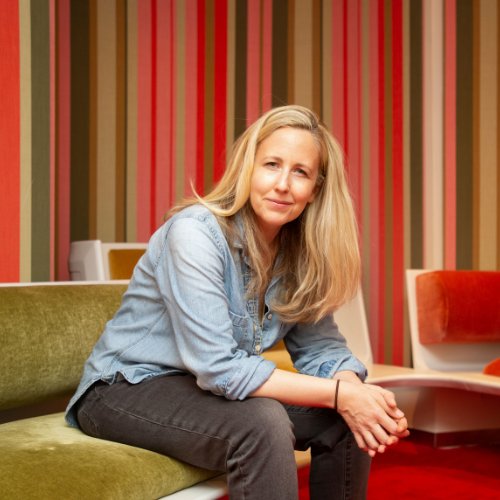
Laurie Woolever is a writer, editor, public speaker and former cook. For nearly a decade, she worked as the lieutenant to the late author, TV host and producer Anthony Bourdain. Her memoir, Care and Feeding, was published in March 2025 and was an instant New York Times bestseller.
Woolever was an editor at Art Culinaire and Wine Spectator magazines, and has written about food, travel, television and more for the New York Times, Vogue, GQ, Rolling Stone, Food & Wine, Lucky Peach, Saveur, Dissent, Roads & Kingdoms, and others. She has contributed to and co-authored a number of books, including Appetites: A Cookbook and World Travel, both with Anthony Bourdain, and the James Beard Award-winning Richard Hart Bread, with British baker Richard Hart.

Katrina Strickland
Katrina Strickland is a senior writer with Good Weekend magazine, as well as its former editor from 2017 to 2025. Prior to that she was editor of The Australian Financial Review Magazine and has held arts editor roles at both the AFR and The Australian. Her book, Affairs of the Art, about the widows and widowers who control the estates of some of Australia's most renowned artists, was published by Melbourne University Publishing in 2013.