
Kate Brady | Disasters are Awful: What Comes After Doesn't Have To Be
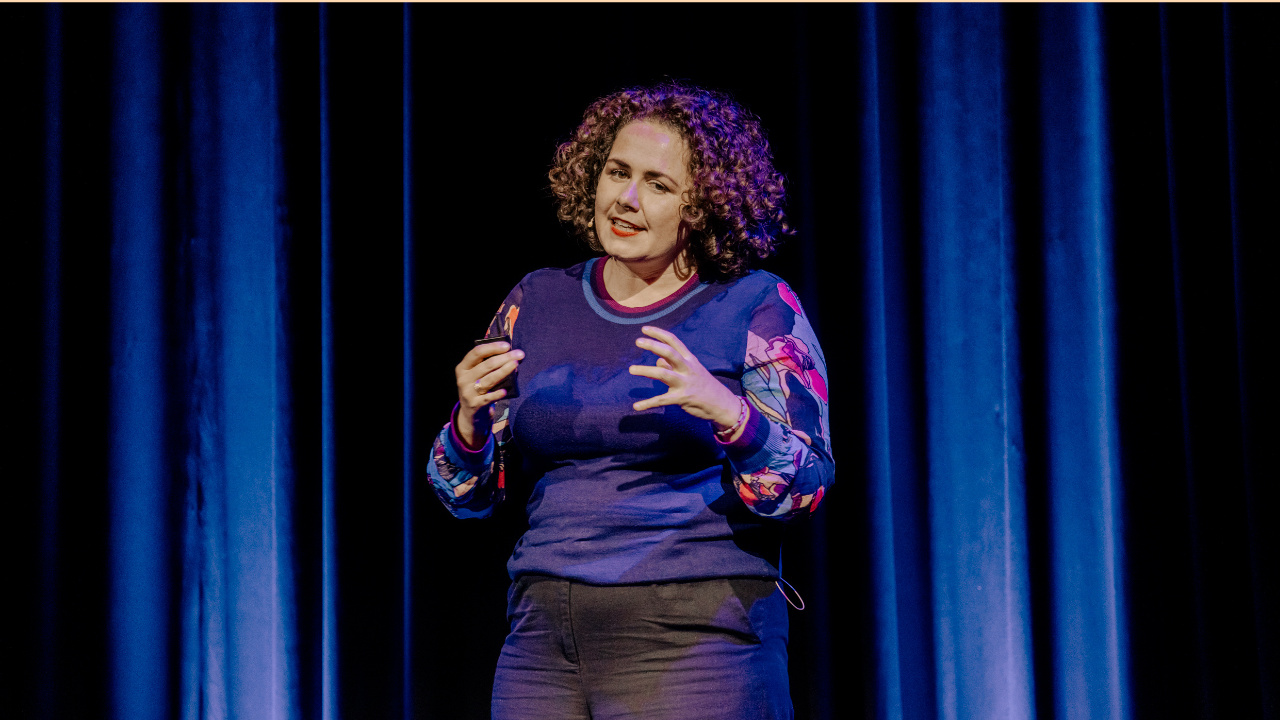
Disasters are coming for us — are we truly prepared to face what comes after them?
In a world increasingly besieged by disasters, Dr Kate Brady addresses whether we are ready for what comes after. She paints a stark picture of the escalating frequency and intensity of calamities, from bushfires to cyclones. Brady challenges us to consider whether our current strategies are sufficient and calls for a radical shift in how we approach disaster recovery. She emphasises the need for community-led approaches, proactive planning for the aftermath of disasters, and innovative solutions to withstand future crises. The increased frequency of disasters as a result of climate change is a wake-up call, Brady urges us all to rethink our disaster recovery mechanisms before it's too late.
Listen further as Dr Kate Brady paints a stark picture of the escalating frequency and intensity of calamities and calls for a radical shift in how we approach disaster recovery.
Podcast Transcript
Rob Brooks: Welcome to 'Progress? Where Are We Heading?' a mini-series from the UNSW Centre for Ideas, where we explore the ideas shaping our future. Today we're asking, what happens after a disaster? We know the dramatic images: wildfires raging, waters rising, cities flattened, occasionally heroes emerging from the chaos. But what about the people left behind when the cameras turn away? Today's guest, Kate Brady, is here to shed light on a critical but hugely overlooked part of disaster recovery, the path that comes after the bad day. Kate, thanks so much for joining us.
Kate Brady: Thanks for having me.
Rob Brooks: Now, Kate, you've got not only a lot of academic knowledge, but even more experience with disasters. How long have you been around disasters?
Kate Brady: I think I'm at about 15 years now. So, I am much newer to research than I am to practice. I accidentally started as a disaster recovery practitioner after the 2009 Victorian bushfires, and I just kind of never left, and I became an accidental academic as part of that as well. So, you can see from those answers, I'm not a great planner. Things happen by accident a lot.
Rob Brooks: Well, I mean, in the disaster business, there's planning and then there's also responding and reacting. What do you mean you accidentally got into it after the bushfires?
Kate Brady: So, during the 2009 Victorian bushfires, I was working at Australian Red Cross. I had been there for about six months, and to be honest, I'd come there as a bit of a reprieve. Prior to that, I had been working for an organisation that was an advocacy group for kids in protective care, and I'd done a spectacular job at burning myself out and had gone into this grants job as a way of having something that was a bit more structured and to give my brain a bit of a break, and then the fires happened. And at the time, Red Cross needed someone to make an assessment, a short-term assessment, of what the longer-term programme needs might be. And they needed people who had experience working with people affected by trauma, which I had, and people who had a really sound understanding of the Red Cross back catalogue of programmes, I suppose, which I also had. And so, I did that and it went from there.
Rob Brooks: Oh, wow. Talk about out of the frying pan into the fire, I suppose. You've seen firsthand how much harder the aftermath can be for survivors. Can you explain to our listeners a little bit about why the recovery period can be worse than the disaster itself?
Kate Brady: Yeah. I think it sounds really counterintuitive because for most people, they think about these hugely devastating days as being the most horrific things that will ever happen to people. And for some people, that is absolutely true. For some people, the things that happen on the day or days of an actual hazard event, they're horrifying and they split their lives into this before and after. Maybe they are bereaved, maybe they see some really horrific scenes that they just won't ever forget. Maybe they're injured permanently. And so, for those people, those days probably are the worst things that are gonna happen. But we know that disasters affect so many people, not just the people who are there on the day, but also people who are impacted by these, what we call, secondary effects. And so, the impact of that is much broader. And while for some people that bad day is a really bad day, for most people it is something that they just deal with really well. They cope with really well. Even though it's horrible, even though it's something they would prefer not to go through, they cope with it really well. So, like a blip on the radar, even for some people, is how they describe it.
There's a whole range in that experience. The things that come after, though, they last for years, and in some cases decades, and in some cases it's even intergenerational. And because disasters impact every single part of our lives, it means that we don't separate out individual impacts and just deal with them. All of those impacts, then they build on each other and they become much more complicated. And so, the aftermath of disasters can really, for a lot of people, feel a lot worse than the hazard event. And I'm sort of often hesitant to say it, because I think it feels offensive or it feels disrespectful to some people, and I don't mean it to. I absolutely don't mean it to. It's just that the sheer number of people who have said to me, oh, my God, if the worst part of this was just the flood, I would be fine. Or if the worst part of this was just the fire, I would be fine. It's the stuff that's come after that has been so hard. It's a very, very long and arduous journey for a lot of people, what comes after.
Rob Brooks: And you've spoken in your UNSOMNIA talk about the compounding effects of bureaucracies that are designed to just work in a line, do their own thing. Can you give us a bit of a feel for how those things might compound for an ordinary person who's endured this enormous thing?
Kate Brady: Sure. If I asked you to make a list on a piece of paper, just every single interaction you'd had with a bureaucracy or a private company that had some sort of regulatory function for you on a piece of paper and just list them, every agency for the last ten years, you'd have things on there like, I had to get my car re-insured or re-registered, or I sold a house, or I bought a house, or I got a new rental agreement, or I did a renovation and I had to deal with all the planning permits and things like that, or I had to register my kids for school, enrol my kids in school, or my kids changed school and I had to change that enrolment. And so, if you thought about all of them, you'd know all of them were probably pretty tedious tasks at any given time. But what a disaster does is it's an intense crucible for all of these processes, because disasters impact every single facet of our lives. You might be having to buy a new car because your car has been destroyed in a disaster event, but you have to deal with the old one as well. So, the de-registration of that. So, you have to also deal with the insurance on that. And then you are waiting for a decision about whether or not your kids' school will have, say, demountables or a temporary type of facility, or whether you have to re-enrol your kids somewhere else. That's also gonna be dependent on whether or not you have that car, so you can drive them to the new school site, and maybe whether or not you have to get a new rental place. And if you have to get a new rental place, are you eligible for rental assistance because of the disaster, and so on and so forth?
All of these things are separate, though, because these different agencies look after each of these things separately, and most of the time they look after them in what we would call in disaster management lens peacetime setting, which is not correct. Like, in a non-disaster setting. And so, those systems aren't really designed to speak to each other in a disaster setting. But if you are the person in the middle of it, you gotta jam through all of it, altogether, all at the same time. But you're doing that at a time where we know that the impacts of the disaster, they're gonna be wreaking havoc with your brain, and that is your brain's very, very sensible and very normal way of trying to cope with such a big shock. It's trying to help you with that. You're gonna be dealing with extreme levels of fatigue. And then on top of all of that, for most people have lost that everyday routineness to their lives, because that's what disasters do, they disrupt that, they shake that all up. And I think most of us don't think on a daily basis how much of our brain gets to relax because of those routines and everydayness. So, we get up in the morning, we have a shower cause we know where the shower is. We go and put our clothes on because we know what clothes are in our cupboard. We go and have breakfast and we know where the coffee mug is. Take all of that out for a lot of people. Maybe the water's not running. Maybe you haven't been able to wash your clothes or maybe you've lost your home and all of your clothes are gone. Maybe you lost your coffee cup. All of those things are gone. So, all of a sudden, you gotta think about all of that stuff, too. So, it's exhausting, exhausting, exhausting. You've got all of this going on.
Rob Brooks: And I imagine that this huge compounding effect is also gonna amplify existing vulnerabilities and inequalities.
Kate Brady: 100%. So, the way that I describe it to people who are new to this sometimes is if you think about one of those old-fashioned poker machines, like the ones where you pull the big lever on the side and three barrels roll, not like poker machines now where there are 6 billion things on the screen. If you think about each of those three barrels, the first barrel as being what was happening before a disaster event, the second barrel being what happens during a disaster event, and the third barrel as being what happens after a disaster event, you can see that there's loads and loads of different combinations there. So, that first barrel, maybe it is that you were living your absolute best life at the time. Your relationships were great, you are in a great job or your education was going really well. Your housing was solid. You had enough money to do the things that you needed to do. Things are going really well for you. Your health is good, everything's good. And then maybe you go through a disaster event and... It's annoying, but it's not traumatic for you, it's not horrific for you, and then you get the help that you need afterwards. That is the best possible combination of all of those barrels.
But if you start on that first barrel where maybe you're experiencing systemic disadvantage, maybe you don't have secure housing, maybe you're finding it really hard to get a job because of systemic discrimination in workplaces. Maybe it's that you have a chronic illness and then you can't get the support that you need. Maybe you're experiencing family violence and your life is very volatile at the time, and then you go through a disaster, and then you're trying to get the help that you need afterwards. We can see how that makes things much more difficult. And the tricky thing about the aftermath of disasters, too, because it goes on for so long, it's months, years, decades, real life doesn't stop. So, all of those other stressors that people who don't experience a disaster will also happen. There will also be job losses and bereavements and divorces and diagnoses of illnesses and the car accidents and all of the things that come along in our lives that we have to deal with anyway. But it's gonna come along at a time where you're probably not as robust as you were before the disaster. So, it's a lot. It's a lot for people.
Rob Brooks: So, it seems to me that when there's a disaster, watching from the safety of my home in Sydney or something and this has happened somewhere else in Australia, around the world, there is this huge outpouring of generosity towards people. And organisations seem to say what sound like the right things. What does work, what do people do right and what should we change in order to make sure that people get not what folks are willing to give but much more what they need?
Kate Brady: I think the first thing to say about that is we get these really generous outpourings of people wanting to help when people know that something has happened. So, most disasters in Australia don't hit the headlines, they don't hit the news, you won't be bombarded by the images of them. So, there are a lot of people who are coping with disasters who, when they try and say that to people outside the area, they say, sorry, what? Where's that? What happened there? What do you mean? And you're right. In those first couple of days and weeks, the generosity is unbelievable. People really wanna help. People are really well-intentioned and wanna help. But I think the big mismatch between the general public's perception, people who haven't been through a disaster and people who are going through disaster's perception, is that it's something that can be fixed really quickly. So, if we maybe donate some money or we donate some clothes or we donate some food, well, in a couple of weeks' time, things should be getting back to normal. And I'm always really surprised at the level of surprise that people in non-disaster affected areas have at the one-year anniversary, there's inevitably a media story about how less than 10% of the housing has been rebuilt or something. And that's really consistent across disasters, and people are shocked that things haven't gone back to normal. So, the first thing, I suppose, if we're, from outside a disaster-affected area, to remember is these things take a really long time to recover from. They're complex, they take a long time, and people need to pace themselves. They're really tired while they're going through it.
So, if you are someone who wants to be able to help disaster-affected people, think about what you can do in the long term. So, for example, if it's a tourist destination, we saw a lot of that during the 2019-2020 bushfires, for example. Yep, maybe you had to cancel your camping trip or your caravan trip that year. Book it in for the next year and book it in now so that people have the deposit that they can use. Turn up there with an empty esky and empty shopping bags and go and shop in the local shops. Buy all your food there, go to the pub there for dinner, go see the local sights and things like that, because that means that that economic injection can help people over that medium and longer term. And keep doing it. Book it in for the next year and the next year and the next year. That's the sort of stuff that really helps over the long term. People coming back, and not being worried about coming back. In terms of agencies, one of the things that we need to do is stop thinking about disasters as being these really unusual, short-term episodic things, because they're not anymore. We are experiencing more disasters than we have ever experienced before. That projection is a really steep upward line, like this is gonna happen more and more and more to more and more people in more and more locations. And so, we have to get much better at making these different systems speak to each other. And one of the things that is the most heartening and the most devastating about that, the heartening part is we can do it. We don't need any more funding to do it. We don't need any more people to do it. There aren't massive service gaps to do it. We can make those things talk to each other. The devastating thing is that we haven't managed to do it yet. The optimist in me thinks there are loads of really great people who are trying their best to try and solve these problems. The pragmatist slash pessimist in me thinks disasters are gonna force our hand on this. They're gonna become so ubiquitous that there are going to be mechanisms that agencies are gonna have to put in place, because they're gonna be ongoing issues for them, not just these temporary things where we stand up temporary teams, we have them there for a short term, we stand them down and then we think, oh, well, we probably won't need them for another couple of years. These will become ongoing issues for agencies.
Rob Brooks: So, is that just short-termism, or are there other obstacles to getting those mechanisms in place?
Kate Brady: I don't think we have made the jump yet of thinking that disasters are everyone's business. We still think about disasters as being short-term, episodic, unusual things, and unfortunately, they're not anymore. And we are at the very beginning now of what, 30, 40, 50 years of climate science has predicted that these things will rise sharply with an intensity and a ferocity and a scale that we haven't seen. We are there now, and we're at the beginning of it. And I think previously you used to have maybe five years, ten years between these really big events and people had time to catch their breath, there was a huge turnover in staff. Agencies didn't really think about it being something that they would have to think about a lot, and now that's not the case anymore. We're just at the beginning of that.
Rob Brooks: So, very useful advice that you've given us for individuals in terms of if your favourite campsite burns down, etc. But as individuals, what can we do to put the nation on the right kind of footing? Where can we apply pressure? What can we do?
Kate Brady: Well, one of the first things is, I suppose, if you're in the position to get your house in order, and I don't mean literally your house, although literally your house is a good thing to do as well, but getting your own house in order. So, one of the things that we see a lot in disaster preparedness campaigns is this real focus on surviving the hazard. So, surviving that 24, 48, 72 hours of the fire, the flood, the storm, and that is incredibly important. But the stuff that I'm talking about is what's gonna set you up for the next couple of years. And so, for some people, insurance is becoming an increasingly a privilege thing rather than a broad spread thing. But if you are in a position to have insurance, make sure you have it. Make sure that you're covered for the things that you need. Make sure you have that documentation in a place that you're gonna be able to access afterwards and know how to use it. Think about the things that are really going to have a long-term effect for you if they happen. So, one of them is, most of us aren't with our loved ones most times of the day. Most of us are at work or at school or somewhere else during the day. So, when something happens, think about what's gonna happen if I'm separated from my loved ones. And I know that sounds like a 24, 48, 72-hour issue, but that is gonna really distress you for a very long time if you had a period where you thought that your loved one was dead or was injured or was in harm's way. Those effects are gonna last for far longer than you. So, make plans with your family or your loved ones around how you're gonna keep in touch if mobile phones are down, if roads are blocked, and those things. Think about the things that are gonna really affect you in terms of a legacy piece. So, what is it that you hold on in your family that you feel like are really important things in your family that you're holding on to as a legacy, whether it's baby photos, whether it is artefacts that you're handing down? These are the things that you're going to get really upset about months and years down the line when those things haven't been replaced. So, that's at a household level. In terms of a neighbourhood level, we've got some really, really great research now showing us that social capital is one of the best predictors of how communities recover after a disaster. And social capital just means your connections. How connected are you to people? And so, that can be your people.
So, like the people that you love, but they don't necessarily live near you. So, also think about your neighbours. You don't have to love your neighbours, but it's really helpful if you know who your neighbours are because they're the people you're gonna be working with in the aftermath of a disaster at a neighbourhood level or a community level. And then think about the institutions that you're involved in. The more a participator you are in society, the better connected you're gonna be, the more useful those connections are gonna be for you after a disaster. In terms of thinking about, well, what can institutions and organisations do? Yes, you can definitely put pressure through the normal things through your MPs and your local members. But again, I would think about, what does your house look like, in terms of whatever your house is? So, is your house that you lead a team at a university, for example? Rob, I'm looking at you. What is it that you've got in place for your team if a disaster happens? What's gonna happen to your team members? What's gonna happen to the work? What's gonna happen to business continuity? What's gonna happen to your students? Have you thought about that? And so, this is this idea that disaster recovery is not a job that is in most people's titles. Most people who work in disaster recovery will work in it because their job has been put into that context. So, think about what can you do in terms of getting yourself in order.
Rob Brooks: I'm getting really anxious just thinking about it. So, what you're saying here is super helpful, individual advice and stuff we need to hear, just things like updating your will can be a huge obstacle to people. We had Athena Aktipis speak for the Centre for Ideas a couple of weeks ago, and her book is 'A Field Guide to the Apocalypse'. Now, she actually models the evolution of cooperation and studies how people cooperate in different societies, but how they mutually ensure each other against bad things happening and help to make sure that everybody's resilient because you can turn to your neighbours and depend on them. But she was also really keen on prepping. She's from the American Southwest and was really into the prepping culture, not the extreme TV version. But do you find yourself prepping in the canned foods and water kind of way?
Kate Brady: I have to say, I'm probably a very bad model for this 'cause what I find myself prepping for is for the months and years after, rather than the days. I do have things like I have extra water in my garage and stuff. Realistically, I live in a suburban area, the odds of me not being able to access food for four days are pretty low. And you can survive without food for that long. The odds of me being able to need water are much higher, so I have water. I am very lucky. I'm a very privileged person, I have insurance for my home. Once a year, I take about a ten-minute video of my home. I walk around us with the video on, and I walk through my house and the outside of my house, and then it saves to the iCloud. And that means that I have a video version of my home that if I ever had to make an insurance claim, I would be drawing on that. But the things that I have really thought about are things like, I'm involved in my neighbourhood group. It's mostly done over Facebook in my neighbourhood. I don't actually enjoy being part of that group, but I know that that is the thing that is gonna be most important. Having contacts like that. I have deliberately gone and introduced myself to all of my neighbours, even though it's a super awkward thing to do the first time that you do it, because that's gonna important. I have made a real focus on making sure that I volunteer at, say, my kid's school and the preschool and things like that, not because I enjoy going to those committee meetings, but because these are the connections that are gonna be really important. And one of the things about a focus on social capital is these are things that will benefit you, and you will benefit others in a day-to-day basis in a non-disaster setting. And then in a disaster, they'll get amplified, those benefits. So, these are the things that every single one of us would prefer to be watching Netflix with a cup of tea or a glass of wine, instead of going to a preschool committee meeting midweek. These are the things that you need to do. And you don't need to think about them as disaster preparedness, but they kind of are. They are these longer-term examples of it. And most people don't think about disasters in that way. I think that is one of the unique ways that working in this field makes you a massive weirdo. You make assessments about everything based on where it's gonna be the long-term payoff in a massive crisis, and these are some of them.
Rob Brooks: But yeah. I mean, I think that dual payoff thing is such a no-brainer. We know that this is good for us, just like we know that eating our vegetables is good for us. So, sometimes we need to make today the day that we eat our vegetables. Obviously, hopefully, every day is the day for that. But you talk about a video of your house for insurance purposes. You told a story at UNSOMNIA of just the trouble somebody had convincing the insurance company that she actually had stuff in her home.
Kate Brady: Yes. It is wild how difficult that process is. For people who have ever been through, even just a mild insurance claim, the two examples I would use, about eight weeks ago, my stepson was driving my car. It was parked and a guy reversed into him. The guy apologised, admitted fault, they both took videos of the scene, they both took photos of what had happened. There was about 15 witnesses. It still took us more than six weeks to get a claim through for the insurance company to agree that we were not at fault. It's a really long and tedious process that people go through. I was going to give another example of a personal injury. I won't go there, but literally, thousands of people that I have spoken to who the insurance process has nearly broken them because it is so difficult and it is set up as such an adversarial system once you're in it. You go, this whiplash of marketing and customer service messaging through to really having to defend your position in a time where it is almost impossible to defend your position. And it's a really gruelling process for so many people. And frankly, they're the lucky ones. They're the people who have insurance to claim. We know that insurance is becoming completely unaffordable for so many people in Australia, and also that most renters don't have insurance, even though they're also gonna need that to replace their household goods. We know that there is a really clear line in terms of income and your ability to access insurance. And so, if you don't have insurance, yeah, you're not gonna have to go through the stress of insurance, but you are gonna have the stress of having to try and replace everything that you need, and that is actually a far greater one.
Rob Brooks: It's funny that you mentioned that. I was speaking to my stepson last night exactly about this and about the different types of car insurance and how, if there is an incident, you want your insurance company fighting, at least if not entirely on your behalf, somewhat in your corner because you don't wanna be it's just little old you up against an insurance company.
Kate Brady: Yeah. I hate giving plugs to stuff that I've been involved in, I feel very self-conscious about it. But I am the host of ABC's podcast 'After the Disaster', and there is an episode on that on insurance where I get to interview some really great people who have very good experience in managing insurance claims after disasters, and they have fantastic tips and tricks, that's where I got the video trick from. But also this idea of services that you can access, one, if you're finding it really overwhelming, 'cause it is overwhelming, it's mentally and emotionally overwhelming, it is one of the most infuriating things that a lot of people go through. But there are services that can help. There are financial aid services who can help navigate that process with you. And I would really encourage you, if you're in that position, to take a look at that stuff.
Rob Brooks: That's fantastic. That's great advice and in no way is a gratuitous plug, Kate. So, we need to wrap up, but I'm just thinking, if you had one wish that you could grant, I'm your genie over here, maybe not. What would you ask for in order to get a fully supportive recovery system, and how might we take steps towards making that a reality?
Kate Brady: Oh, dear. I say oh, dear, 'cause my wish list is huge. What I really want is for everyone to be living a good and healthy and fair life before a disaster 'cause that is the thing that is gonna set you up to be living the best life you can after a disaster. But in terms of a systems wish, I would wish that there was a recognition and an obligation for agencies who are involved to have to take the burden of coordination so that individuals don't have to deal with it because that would reduce the amount of secondary stresses that people go through, and the secondary stresses can be the worst stresses.
Rob Brooks: Kate, thank you so much for joining us today. It's been such an interesting and eye-opening conversation about aspects of disasters that we seldom get the privilege of thinking about, the recovery. So, people might not be able to stop disasters from happening, certainly won't be able to stop disasters from happening, but we can definitely do something to improve how people experience the aftermath. So, thanks so much for coming on the show.
Kate Brady: Thank you for having me and for letting me be a part of the program. I've really enjoyed it.
Rob Brooks: Now, stay informed and do the preparation. Listen to what Kate says. And don't forget, the big ideas that keep us up at night are often the ones that help shape a better future. Until next time, keep exploring and stay curious.
-
1/3
-
2/3
-
3/3
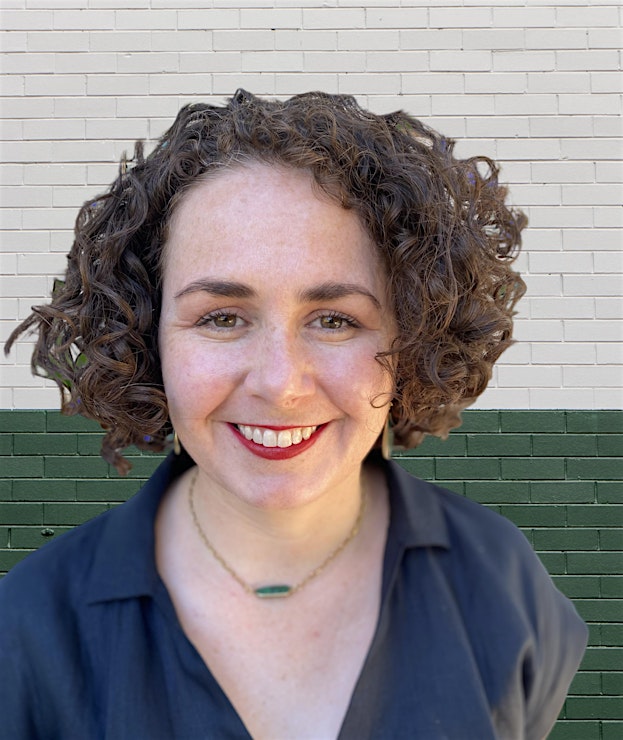
Dr. Kate Brady
Dr Kate Brady has had a distinguished career in disaster recovery operations, programming and research. Kate is the Senior Research Fellow for the UNSW How We Survive initiative, is an Honorary Senior Research Fellow at the University of Melbourne, and is the Technical Adviser to Australian Red Cross Emergency Services, where she established and led the disaster recovery program for 12 years.
Most of Kate’s work focuses on what people find helpful and unhelpful after disasters. Throughout her career, Kate has had significant influence on State and National emergency management policy and has an international profile in collective trauma, resilience and in disaster recovery programming and policy. Kate is a co-author on the Australian Disaster Recovery Framework, the Australian Community Recovery Handbook and was an advisor in the development of the National Disaster Mental Health Framework. In 2021, she became the host for ABC’s podcast 'After the Disaster'.