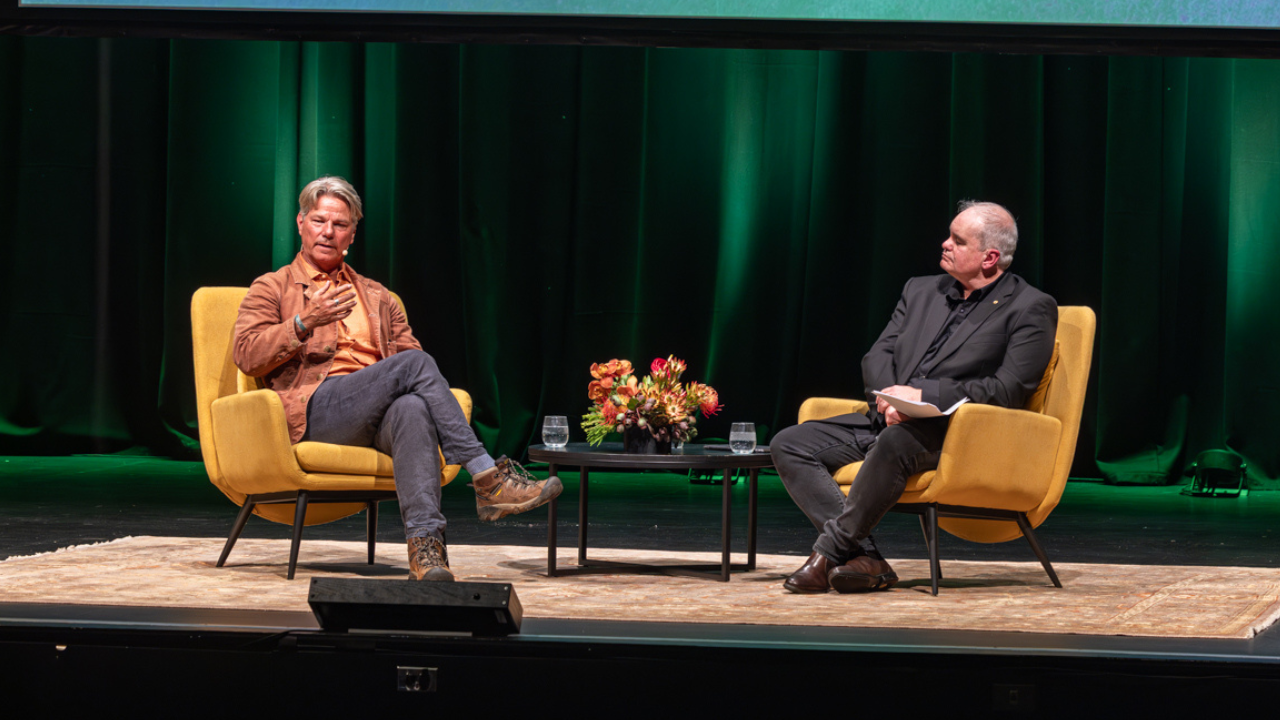
John Vaillant: Fire Weather
What fire is telling us is we have been doing it wrong. We have been relating to the land incorrectly. We've been relating to fire incorrectly by suppressing it so successfully. And that is not how fire works. That's not how landscapes work. And most of the landscapes in North America have a relationship to chronic fire.
Black Saturday razed towns, Canada’s Fort McMurray wildfire forced 88,000 people to flee, the LA fires obliterated over 12,000 buildings and Australia’s Black Summer fires scorched 24 million hectares – an area the size of the United Kingdom. Bushfires are no longer seasonal, they’re unrelenting; reshaping landscapes and lives in our rapidly warming world.
In Fire Weather, award-winning Canadian author John Vaillant tells the gripping story of a city consumed by flame – a harbinger of what’s to come in a hotter, drier, more combustible world.
Joined by UNSW bushfire behaviour expert Jason Sharples, listen in on a conversation on the science of fire, the galvanising power of storytelling and how we can survive in a world where the line between our natural and built environment is increasingly blurred – and increasingly flammable.
Transcript
UNSW Centre for Ideas: UNSW Centre for ideas.
Jason Sharples: Thanks and good evening everyone. Welcome to tonight's event. John Vaillant Fire Weather. My name's Jason Sharples, and I'm Professor of Bushfire Science and the Director of UNSW Bushfire and I'll be your host for tonight.
I'd like to begin by acknowledging the Bidjigal people who are the traditional custodians of the lands that we're meeting on tonight. And I'd also like to pay my respects to their elders past and present and acknowledge their enduring connection to country. Given the occasion, I think it's also important for us to emphasise the continuing role that traditional fire knowledge has in Aboriginal people, Aboriginal people's connection to country and in keeping country healthy.
Also, I want to say Happy National Science Week. This week is a celebration of science, innovation and discovery across Australia. It's a time to recognise the incredible contributions made by scientists, researchers and educators to our understanding of the world around us, and it's also a time to inspire curiosity in people of all ages.
But in addition to celebrating science, we're also here this evening to celebrate the power of storytelling. So tonight we have the pleasure of having the acclaimed author and journalist John Vaillant here to discuss his award winning book, Fire Weather: A true story from a hotter world. John's book provides a gripping account of the 2016 Fort McMurray wildfire, which was one of the most devastating in Canadian history.
The Fort McMurray fire forced the evacuation of nearly 90,000 residents, destroyed around 2,400 homes and burned approximately 590,000 hectares of land. It severely impacted the local economy and highlighted the growing risks posed by climate change and extreme weather events. The Fort McMurray fire takes its place amongst the growing list of extreme wildfire events, which includes Canberra in 2003, Black Saturday in 2009 black summer in the 2019 2020 season, and the unprecedented 2023 Canadian fire season. In our black summer fire season, Australia recorded 45 pyrocumulonimbus events. These are the fires so large and intense that they form thunderstorms in their plume. So we had 45 in black summer. In 2023 Canada recorded 142 pyrocumulonimbus events.
Now, in 2025 Canada is again experiencing a severe fire season, which follows the disastrous fires in LA in winter, no less, and coincides with a significant European fire season with record breaking fires in France, Turkey, Greece, Bulgaria, Portugal, and I think Spain was on fire the last time I checked. And so on it goes.
The Fort McMurray fire has become a pivotal case study in wildfire science, prompting advances in fire prediction, emergency response and land management strategies. It also underscored the importance of integrating scientific research with community preparedness and policy making, and I'm sure that we'll pick up on some of these themes in tonight's conversation with John.
But for now, let's please give a very warm welcome to John Vaillant.
Audience Applause
Jason Sharples: So thanks, John, thanks for being here. Your book, Fire Weather is a gripping and urgent read that sits along some of the other works of yours, which have explored themes of environmental catastrophes and mankind's connection to nature.
What was it about the Fort McMurray story that drew you to it, and what are the key themes that you wanted to convey in writing the book, as distinct from some of your other works?
John Vaillant: So really glad to be with you, Jason. This is a real fire scientist here. I am a journalist and an aggregator, but we have a genuine fire scientist among us, and it's a privilege to sit with you. And I also just want to say, off the top, I feel rather sheepish coming here telling Australians about fire. I know you know a lot about it. In fact, Australian fires feature heavily in part three of Fire Weather. So we've, we've been learning a lot from you in the northern hemisphere.
So I don't really choose any of my my book themes. They they choose me. And I was working on a novel completely unrelated to fire when Fort McMurray caught on fire on May 3, 2016 and Fort McMurray is about 1000 kilometres north of the US border, deep in the boreal forest, which is the northern forest system that runs across northern Canada and Russia. It's a very isolated place. It's actually a very wet place. And this is the petroleum hub of Canada, generating the largest source of foreign imports into the United States of petroleum products, to the tune of 4 million barrels a day, and the town where all these workers Live the bit. This base of operations was overrun by fire on May 3, 2016 and I was in Italy at the time, at a very swank writers retreat, working on a novel. And it's kind of embarrassing to say that, but this, you know, the biggest I'm from Western Canada, the biggest story and Western Canada. And a generation was unfolding while I was tuning into my muse.
And I looked at Twitter and saw, you know, this very important city, the fourth largest city in the sub Arctic worldwide, completely obscured by a pyrocumulonimbus fire cloud. And you know, there are 80, 90,000 people in there. Nobody knew who was still in there. Cars were streaming out on the one road. And it was terrifying to watch, you know, just as as a Canadian, to see this very important city my fellow citizens, you know, in kind of overwhelming distress, and there was so little information. So watched it very closely. I'm in Italy. There's can't get to it. It's a disaster zone. Journalists were piling on this story from all over the world. It became the chyron on a lot of newscasts around the world, because the fire burned for days.
And so for a while, I just kind of sat back and thought, well, you know, I missed this one, and then burned for a long time, and I couldn't stop thinking about it. And the more information that came out about it, the more I had the feeling that we were at a turning point in terms of our relationship to fire. And Steven pine, kind of an eminence, grease, if you will, of fire science in North America, one of the greatest chroniclers of fire, really, in the world. He's written about fire, you know, everywhere, in every ecosystem, including Australia's. And he described after the Fort McMurray fire. He said, You know, we've entered the pyrocene age, the age of fire, and that really stuck with me. And I was tuning into what other fire scientists were saying, and it was clear to me when we saw the way this fire behaved, the things that did, the way firefighters were saying, I've never seen anything like this before, the extent of the damage that this was something that as remote as it might feel to the rest of us, it was a signal to the rest of us. And that's kind of how I took it and it I spent the next seven years working on this book, for better and worse.
Jason Sharples: Yeah. I mean, it's interesting that, you know, the the connection between Fort McMurray and the oil sands industry is almost like a reflection on the broader issue we have with fossil fuels and the climate change crisis. And in your book, you actually describe fire as the voice of carbon.
John Vaillant: Yeah, yeah.
Jason Sharples: So yeah, maybe you could unpack that a little bit.
John Vaillant: Yeah, it's because I'm not a fire scientist, I get to think about things in a less disciplined way. And I can ask questions like, “Is fire alive?” I can ask questions like, “Do humans and fire have a common ancestor?” Because we always go places together. We're always together. And so we're kind of an odd couple, but we're we can't get enough of each other, and we seem to enable each other in these powerful ways.
And so thinking about carbon as as a language, as a mode of expression, and watching its vocabulary change as we increase CO2 in the atmosphere, as we increase methane in the atmosphere, we are seeing fire behaving in ways that we've never seen it behave before. And you know, one of those signal events was Canberra in 2003 the first known fire tornado. You know that this was an EF-3 tornado, 165 mile an hour, horizontal winds, funnel cloud, you know, the classic in conjunction with this fire. And the question then was, you know, well, it's happened once. You know, will it ever happen again?
2018, Redding, California, another EF-3 tornado made a fire that did catastrophic damage to that Northern California town. And I went and covered that for The Guardian and the damage I saw the in a way that this kind of savage eloquence of this medium, the only things I could compare it to would be photos I've seen of Hiroshima and Nagasaki and the you know, we, we've, most of us have seen fire damage of one kind or another, and it doesn't annihilate everything. And the idea that this fire, the car fire, which became, that the fire tornado that burned through parts of reading was started by something as innocuous as sparks being thrown by the wheel rim from a flat tire from a caravan trailer.
So these are just people on vacation trying to have a good time, and three days later, the sparks that went into the grass basically metastasized into an EF three fire tornado. And there is aerial video footage of it, and it's just absolutely terrifying to behold.
Jason Sharples: Yeah, I think we're up to about three or four Pyro tornadoes now on record.
John Vaillant: So yeah, right. Utah just had one EF-2 about two weeks ago,
Jason Sharples: yeah, and we had had one, or, I think it's, it's almost been confirmed as one during the the black summer season here in Australia, I wouldn't be surprised, flipped, flipped a fire truck. Yeah.
John Vaillant: Really?
Jason Sharples: Yeah.
John Vaillant: They're not light.
Jason Sharples: No, they're not, yeah. I mean, it's, it's interesting in your book, you do sort of describe fire as kind of a living entity, this sort of volatile, unpredictable, or an even sort of an intelligent thing. So you've talked about the tornado, but what, what aspects of fire behaviour really surprised you the most as you were learning about it?
John Vaillant: So it, I posed the question, is fire alive? We know that it isn't. It's not sentient, but when you look at the attributes of living things, it breathes oxygen. It will suffocate without it. It generates heat just as we do. It off gases CO2 just as we do. It propagates itself just as we do.
I was, I was talking about embers to my son, and he said, “Oh, they're like spores”. And I thought, and I just, you know, he was probably 14 years old at the time, but he just got it at this and he was absolutely right. And it made and that really changed my thinking about it and and that it has this ambition to persist and to flourish and to multiply. And you know, that's why there are so many of us here. You know, we're good at that too.
And so the idea of this thing that is so other from us, you know, it is not like, you know, a mouse or an octopus or a tree or a human, and it's this, you know, flickering, vaporous thing, but it is looking for food. It is seeking opportunity. It is very resourceful. You know, it can burn your lululemons. It can burn the carpet. It can burn a tree. It'll burn grass, anything with hydrocarbons in it.
The fact that it can lay dormant, you know, it can almost sleep like a bear, go underground and just smoulder in the roots with snow piled up for months, and just hang out down there, just getting enough oxygen, just to keep it going. Snow melts away and the fire revives. These are called holdover fires, or overwintering fires. Some people call them zombie fires now, but it's now been determined in Canada that these fires can persist literally for years, going through multiple seasons and continuing to burn almost like hibernating.
Jason Sharples: Yeah, exactly, exactly, yeah. And it's interesting in Australia, we call those fires sleeper fires.
John Vaillant: So sleepless, same idea, making the connection very clear there.
Jason Sharples: So I mentioned storytelling and the importance of storytelling. And I think, you know, your book is a clear example of the powerful role that storytelling has in shifting public consciousness around really important issues like climate change.
However, there are some groups out there which are promulgating a very different story, downplaying the influence that humans have on the climate. And you know the need, need for action. So I'm just wondering, when you were researching your book and talking to some of the first responders and residents, did you encounter any resistance or denial to the link between the fire and climate change?
John Vaillant: So I maybe, maybe it's cowardly of me, but I think it was a good strategy. So Fort McMurray, it's a very conservative town. It's a one industry town. It's a very religious town. There are a lot of evangelical churches there. Alberta is kind of the Texas of Canada. It's got a sort of combative, belligerent attitude, especially to the federal capital. And so I'm a guy from Vancouver that's sort of a lefty Enviro kind of place.
And and for me to go in there after this truly traumatic, truly catastrophic, you know, no hyperbole, a bona fide catastrophic event, and to say “Hi, you know, I'm, I'm John from Vancouver. Can you tell me about the worst day of your life”. And, you know, there's a, there's a two word response to that that's totally legitimate, really, you know, I mean, journalists have been all over them. They are, you know, the destruction was so total and overwhelming. You know, they're dealing with grief and disorientation and PTSD and all that. Is nobody said that to me, and like, I've been at this for for years now, talking about it. And every time I bring it up, it chokes me up to think, think what they had been through, and they sat with me, and they told me about it. And that's, you know, in terms of storytelling. They're the storytellers. You know, I gathered the stories, I set them up, but they told the stories.
There's a lot of verbatim storytelling in there by the only people who really have the authority to tell about it, and that's the firefighters and the civilians who were caught in the middle of it. And so I I didn't bring up climate unless they did, and they didn't, and they and I don't think it's because they were in denial about it. I think it's because the enormity of what they had seen and what they had dealt with transcended most of our kind of intellectual ideas about climate change, they saw the end of the world. Their world ended before their eyes, 100 metre flames across a fire front 10 kilometres wide, and darkness at midday. You know biblical scenes, biblical scenes of end times. And it almost felt like it would trivialise it to talk about climate but it has never come up, and that book has now been circulating, and I talk a lot about climate change in the book, and what's been interesting in Alberta, a province that is taken a lot of heat, so to speak, from environmentalists, and is very defensive and ready to hit back. There's been no pushback on that.
On my book, and it's it's been a number one best seller for months and months and months there. It's certainly in Alberta. People know about it. People have complex feelings about it, but I think the voices of the people who went through it have such authority, and they are so relatable. You know, when you can't help but imagine yourself, and these are people with children trying to calm their children, when there's, you know, fire out both windows, and you're stuck in traffic and there is nowhere to go, and so that kind of trumps everything. And I think all of them would agree, we've never seen this before.
And I think the leap to connecting that to climb, Oh, the other piece of this that's really important, Jason, is these folks work in the petroleum industry, and this is their livelihood, and this is their community, and this is their source of status and belonging, is being- working in this town, and adding to that is the fact that a lot of the workers in Fort McMurray come from the impoverished Maritime Provinces of the east coast of Canada. So these are people who have grown up on the dole. Their parents were on the dole, and here F1 50, and you can hold your head up. And so for them, it has a whole different meaning. And so to talk about climate with people who are trying to build a better life for themselves and be part of a new, more hopeful community, there's just a dissonance there.
And it made me I, one thing I understood is I, when I went into this is I have the tar sands are, you know, as they're called, are an appalling way to generate energy, and they've done colossal, unrepairable, irreparable damage to the country. And I knew that if I went in there with that baggage, and that, you know, kind of radiating judgement coming off me. I wouldn't get anywhere, you know. So I really just left that behind and just go in and you're here to learn from them, you know, what's it like for them? And that was in education. And I think that's one reason why the book is still going as we get a chance to see it through their eyes and to see what that industry means to them, and it means a really different thing. And I think most of us can sympathise with the impulse to go work in a place like that.
Jason Sharples: Yeah, you know, it's interesting talking to firefighters, as I do, a lot of them, you know, say they go to these fires and they're seeing things that they've never seen before in their 30 year careers. And one, one firefighter, did say to me once that you'll find very few climate change deniers on the end of a hose, because they've been through these, these things, given it's, it's science week, one of the things we have to deal with as scientists is, I guess, pushing back on scientific misinformation. I just wonder what your thoughts are on that, particularly in sort of today's political climate.
John Vaillant: So I've had a kind of a kind of unique and wonderful opportunity to really go around the world, not completely, but, you know, I've been in both hemispheres and all over the northern hemisphere talking about this book with all kinds of people. And increasingly, like some pretty heavy kind of millionaire and billionaire type people and bankers and insurance executives and people like that. And when you present the information as I do, I think probably as you would too, this combination of lived experience of the people who've been through these fires, combined with graphic photographs of what a fire can do to a bicycle now and some well-placed graphs backed up with the latest science, it's irrefutable.
And partly because so many of us now know people who've been evacuated due to fire or flood. And you know, for example, just to give you an idea of how the world has changed, you know, use Canada. Canada is the second biggest country in the world, with all due respect to Australia. It's Canada is a colossal place. And 10 years ago, if you'd asked Canadians, there's about 45 million of us, about the same as California. How many of you know somebody who has been evacuated due to fire? You'd get a lot of Yes, but it would be very patchy.
Now, if we polled Canadians from British Columbia, where I live, to Newfoundland and the Atlantic, everybody knows somebody who's either been evacuated or put on alert. The entire country knows people. And then you add to that, I did a couple of keynotes for Red Cross Canada, and I was talking to the CEO, this guy, Conrad Sauvé, and he said, “when I started working for Red Cross Canada, 15-20, years ago, probably 20 years ago now, 80% of our work was outside the country”. And that's what you would expect of a wealthy progressive, you know, soft power, valuing nation. Of course, they would be doing relief work, you know, and in less fortunate countries than them.
Now, 80% of Red Cross's work is inside Canada, because, and this is, you know, mostly due to environmental disaster. And it's not because the Red Cross has gotten smaller. It's just there is much more need inside the country. So think about what that means for Canada, you know, one of the G7 nations, its ability to be useful and helpful and participate in global affairs. It's now tied up with its own and I'm sure there's some of that in Australia too that's shrinking.
Jason Sharples: Absolutely and interesting to note that we had the G7 summit in Canada recently, and there was a wildfire charter agreed upon there amongst G7 countries. So broader, broader political acknowledgement of the issues.
John Vaillant: Yeah.
Jason Sharples: I guess in your book, one of the things that you really vividly portrayed was the experience of the individuals and the communities involved and how they dealt with the chaos going on around them on during the event. From that, what did you, what did you learn about human resilience and vulnerability of the people you spoke with? And how did that? How did the stories they told you, how did they sort of shape your understanding of the broader implications about climate driven disasters?
John Vaillant: So it was really moving. Sitting down with people and having them, you know, okay, so you really want to hear about this. And this was a, be a three-hour saga. And, you know, these are grown men who work in the petroleum industry who, you know, it's a, it's a remote, intense place. And these guys are choking up and losing it as they as they go through the, you know, the blow by blow. And just, you know how sad and frightening it was. And there the decisions they made.
What was amazing about the Fort McMurray fire, that is has not been duplicated since, is, you know, you had the biggest, most rapid evacuation due to fire in modern times, so 80,000 people in an afternoon leaving by one road. And in most places there are fatalities when there's that kind of pressure, whether it's Valparaiso, Chile last year, or Paradise or Lytton, BC. There was some fatalities, two fatalities in Saskatchewan earlier this year due to fire and many others. Now in Turkey, there's been some terrible losses in Turkey just recently.
And there, every single person made it out of Fort McMurray and the evacuation was called late. Nobody was really ready for it. And the clever answer to that, “Well, of course, it's Canadians”. But then, when you look at the census information about Fort McMurray in 2016 which was the year of the fire, you find out that in Fort McMurray, there were 80 first languages spoken there. It's like Melbourne or Sydney, you know, it's a it's a total polyglot. So different races, different religions, different concepts of what community is, different concepts of what danger is, and how one might respond to that. And it says a lot for the first responders, firefighters and police absolutely went into neighbourhoods where no one had any business safely going, and they were knocking on doors, you know, and they endangered themselves to make sure. But also neighbours did that, and the fact that you had a 100% successful and again, this is a place where people work 12 hour shifts, where overtime is the goal. So you have people who are exhausted. There's a big drug problem up there. You have people sleeping all day because they pulled a night shift. So people are down in Bay, you know, they're all over the they're it's not a uniform community in that sense.
And the fact that every single person was alerted, made it out of their home into some kind of a vehicle and got out of there and managed to not crash. And, you know, in a city of 100,000 fatal car accidents, there's probably one every day. You know, there certainly would be fatalities every day of one kind or another. And on May 3, not a single person died. And so it gave me, there's, you know, a lot of the same kind of racial issues and political partisanship in Canada that there, that there are elsewhere, that you know, certainly exist here and in spades in the United States. And yet, you know when, when push really came to shove, and when, when the world appeared to be ending, this deeper human impulse transcended.
And what you know was so extraordinary to me is the idea of this kind of babble of people, 80 different languages, and yet the net closed without any holes in it, and caught everybody. And that is a really hopeful thing and a really beautiful thing.
And everybody was under incredible stress then, and and the impulse there's, there's a great story this one guy who was, he had a company truck, and he was a kind of take-charge guy who ran one of the big camps up there, and he had his wife and his kids in the back, and they're in the trying to escape, and they're stuck in traffic, and the fire's coming. You know, the you have to have your headlights on already. It's so black fires coming, and he says, you know, the heck with it, you know. And he's going to and he pulls his light out. He's about to stick it on the roof and go bombing off, freelancing across the countryside to get out of there. And his wife sees him do it, and she says, “Don't be that guy. Puts the light back down”, and he stays in line with everybody else. And they made it out, you know, but, but they it just got me really interested in that partnership. She made him stronger. She made him a better person. He was doing what he thought he needed to do to save my family, which is something you know, any of us can relate to. And she saw this sort of bigger picture, this bigger community, like, if you start freelancing, everybody's going to be booking it across the median, and then what's going to happen? Then you do have the accident, then you do have people getting stuck. And somehow, she had the fortitude with children in the back to just, you know, do, and that you know, that there are a lot of stories like that where different people, you know, reach their breaking point, and then somebody else sort of stepped in and bolstered them. And that's just, you know, that's one of our superpowers, I think, is to embolden each other and strengthen each other and help us be our better selves.
Jason Sharples: Yeah, no, I have to say. I mean, that was really one of the remarkable things about that fire, for me, was that there weren't any fatalities everyone, everyone got out. So, yeah, it's, well, it's a testament to your countrymen.
John Vaillant: Yeah, yeah, right.
Jason Sharples: So, so given that, I mean, if, if Fort McMurray, or somewhere else in Alberta or Canada, was to experience another fire event of that scale, how do you think the first responders would take the lessons of Fort McMurray on?
John Vaillant: Oh, they're already taking it. And, you know, people say, you know, what is “Has anything changed? Is there any kind of progress?” And it's. Kind of a two steps forward, one step back. And in some cases, the opposite.
In Alberta, the Texas of Canada, they have an official policy of climate denial. It's really kind of a frightening place in terms of how information is handled. And there's just, there's, there's, it's not a place I would really want to live honestly, but and so what they did in Fort McMurray was they rebuilt the city exactly as it had been before, and they increased bitumen production, and that city could absolutely burn again. And there were photographs from 10 days ago when it was shrouded in wildfire smoke.
And basically, you may not know this, but different North American cities have basically been trading off having the worst air quality in the world over the past month. So Chicago, Montreal, Fort McMurray, it's it is really rough in North America right now in terms of fire, smoke. And there's a huge one, a mega fire in the Grand Canyon right now in Arizona. There's another mega fire in Colorado right now. There's a really big one north of LA right now. These are major, major fires.
So that's, that's one response. The other, though, is there's much more pre-emptive evacuation now, much more, you know, just proceeding with an abundance of caution. And these, these evacuations are enormously disruptive. You know, you're moving elders. You're moving children. Because of the nature of Canada, much like Australia, you have these huge distances to travel. So you might have a town, but there's no support, there's no clinic, no fire department or whatever someone's for hundreds of miles, and so you're evacuating, and so you could come, you know, to grief on the road just as easily. And so in spite of that, that's what they're choosing to do.
And so far, you know, that's one reason the Canadian fatality rate is so low. And you know, here's another stat that is really sobering. In the 2023 fire season that was our black summer, there were 125,000 Canadians on the road refugees in their own country. And that's a lot of people to put up and negotiate and move around and find diapers and toothbrushes for.
Jason Sharples: Yeah, absolutely. There's a sort of a theme that comes out of out of your writing about the fire. You often talk about the movement of the wildfire across the landscape as something akin to the advancement of a military force, something that we as society have to resist or combat.
John Vaillant: Yeah.
Jason Sharples: And I guess this is echoed in the terms we have, like firefighters, people who fight fire, it's echoed in sort of the paramilitary command and control structure that we have in our in our fire agencies.
When you contrast that with the way indigenous people view fire, they often see fire as something which is gifted to country as like a healing or restoring force. What do you make of that contrast, and what role do you think indigenous cultural fire management has in this wildfire problem that we have?
John Vaillant: I mean, what fire is telling us is we have been doing it wrong. We have been relating to the land incorrectly. We've been relating to fire incorrectly by suppressing it so successfully. And that is not how fire works. That's not how landscapes work. And most of the landscapes in North America have a relationship to chronic fire. You know, there are different rhythms, different intensities, but all of them, fire is is part of the community. It's one of the residents, you know. And so in that sense, you know, is fire alive. It it's not always there, but it shows up periodically.
You know, maybe like, you know, could be like locusts, could be like some a migration, but you know, it comes through and it has this impact, but ultimately it's an impact that stimulates growth and has a restorative, cleansing, revivifying impact. And that's not how settlers see it. And most indigenous groups didn't build permanent settlements, and so they were able to move out of the way of fire, and whatever was left behind was replaceable.
In the boreal forest of Canada, you have black spruce, which is like the eucalypts, and that's the fire driver. That's the tree that's full of sap, extraordinarily flammable. The cones on the black spruce are serotinous, meaning they will not open and drop unless they're heated to temperatures higher than the sunlight can generate, so they have to burn to propagate.
But they're also aspens and poplars, and they are deciduous trees, and they're and they're and they hold a lot of water. They're soggier and they're they act in normal circumstances as a break on the fire. So the black spruce is raging, and it's doing what it needs to do, because it's ultimately propagating itself. And then it hits the poplar and Aspen, and they don't propagate that way, and because they're so wet, it dampens the enthusiasm of the fire and eventually goes out.
Now, when the conditions in the Fort McMurray fire, everything burned. It was so hot, it was so dry. And so climate change really has changed that dynamic in terms of what we can count on. But a long way of saying, indigenous communities up there, in an area where they would, you know, often camp seasonally, they would encourage the growth of poplars there, because that would stop the fire. And so they're the areas that they like to use repeatedly would be protected in most cases.
And so it's so I mean, this is one of the challenges of the 21st Century that, and it's really one of the challenges of the past 500 years. It's a shorter period here in Australia, I realise, but that period of settlement and the mindset with which it settlement was approached is simply out of step with the previous 10,000 years of habitation. And there were people there, and obviously for far longer in Australia.
But you know, when the glaciers receded, you know, in North America, sort of 10 to 4000 years ago, people filled those voids, fire filled those voids, and there was this ongoing relationship with fire that was chronic and seasonal. This is an amazing detail.
There's a wonderful fire scientist at UBC in Vancouver named Lori Daniels, and she does dendrochronological work on, I think it's lodgepole pine in southeastern British Columbia. You can see when smallpox came through. So when you count, when you go through and look at the tree rings, you see these little, faint burn scars every five to 10 years, and then there's a gap, and then there's a really bad burn, and that gap is when smallpox came through and broke the cycle of fire keeping.
Jason Sharples: So I guess, in a broader sense, what we're really sort of seeing here is this cultural mythology of fossil fuels being connected to sort of progress and prosperity now colliding with the reality of climate disruption that it’s causing.
So this is a, this is a huge challenge, as you, as you allude to, but what gives you hope that we can actually overcome this challenge?
John Vaillant: Oh, lots of things. I think when you look at the previous - in Australia, I guess it's 60, 60,000 years of habitation. And North America, it's, you know, closer to 10, 10, or 15. And then you look at this frantic, frenzied period of the past 150 years. You know, John D Rockefeller founds Standard Oil and off we go into the petroleum age. One looks like a coke binge, and the other looks like, you know, a fairly stable, if maybe a little bit less charismatic, way of living sustainably. And I think, you know, it's Monday morning right now for us, and there is no question that in our lifetimes, we are going to see a tailing off of of the petroleum industry. And we're going to see a lot of other things too, and some of them are going to be really difficult, but we're also seeing this awakening to the connection between human activity and the relative health of the systems that keep us alive.
You know, as we connect those dots between CO2 and fire and how, on the one hand, the petroleum industry has given us all this. It's given us so much. And I think somehow you know, we need to show gratitude for that at the same time as we need to bravely acknowledge those gains that we feel as if we've acquired over the past couple 100 years are now being taken away by the externalities of fossil fuels. So as we've you know, we've also changed the climate and turned it into something that is now working against us.
And talk to people in Lismore, talk to people in the Grand Canyon right now, talk to people and in Turkey, and they're seeing a kind of violence and intensity of behaviour that they've never witnessed before, and that is, they're simply not equipped to respond to. And no fire truck can do it, no water bomber can do it. Retardant is, you know, and kind of an afterthought.
And and so we have this opportunity to awaken. And I think a lot of people are, and I know a lot of people are, and I don't think I would still be doing what I'm doing right now if people weren't interested. So I'm kind of using myself as a barometer of that, and I'm just one of many, many conversations. And I know, I mean, you're doing this work too, right here in Australia, and it's your full time job also, as far as I know.
And then on top of that is this very potent energy transition that we're in, and it's maybe harder to see it in Australia, but Australia is absolutely making gains around battery storage and solar and wind. Texas, again, this, you know, very conservative place, official policy of climate denial is leading the continent of North America in wind and solar. And that's interesting to me, and it's and I think you know, when you look at the petroleum industry as a whole as a kind of monolithic entity. It is in slow decline. And you know, there's that saying from that Hemingway novel. It's, I think, as the Sun Also Rises, how did you go bankrupt? Well, two ways, slowly, and then suddenly, and gradually, and then suddenly. And I think, you know, we're going to see some of those cliff drops as different types of energy hit critical mass, as different types of renewable and, you know, we're just in the beginning of an incredible battery revolution, and lithium is problematic, but people are already moving beyond lithium in terms of battery technology. Bigger, cheaper, you know, more. So there's, there's a lot to be. You know, we're we live in it for better and worse, and incredibly exciting time.
Jason Sharples: Well, thank you, John. Thank you for the book and for your insights and leaving us with some hope to go home with. We're going to move to our audience now for questions.
Audience member 1: There's kind of two interconnected questions. I've often heard it said in climate change and conservation science that when you engage the public, when you communicate the science to the public, it's better to provide like hopeful messages, rather than simply like facts and figures of the negative impacts we have on the environment, which can lead to the audience being apathetic instead of being as you ended your talk with hopeful.
Do you agree with this statement, and how did you present it in your book?
And just a second question connected to this one, speaking of hope, I think you ended The Tiger a previous book on a very hopeful note. And then you also mentioned in it that our impacts on the even on the environment, it's actually comparable to to natural disasters rather than any other living organisms on Earth. And I think the Fort McMurray fire is a very good example of the consequences our activities can have.
How capable are we? Do you think of like, leaving massive impacts on the environment around us in a more positive way instead of the negative?
John Vaillant: Yeah, I mean, I think it's definitely, I really, I agree completely, you know, with with your first statement, and we're sitting here in kind of a position of authority, and if, and if we tell you how you know terrible it is, and that there's really no way out. And we've, you know, we've really, we've really done it this time. It's really not helpful, and I think, frankly, it's irresponsible. And we have enormous agency as Homo sapiens and as human beings, and as inhabitants of Sydney, Australia, as members of this community, whether it's the university community or the city community. And ideally, you know, we sort of find the balance between there are some serious threats that face us and some serious obstacles, and certain cases, we are working against our own best interests.
And at the same time, we also, there are many examples of really positive, forward thinking responses, and these are in tension with each other, and just the fact that we're talking about indigenous burning and the benefits of it and the history of it, you know, in a, you know, I think a fairly Anglo group, for the most part, certainly a settler population, is, it's not 1960 anymore, you know, it's not even 1999 anymore. We're really moving forward into, you know, a broader consciousness. And that's, that's kind of part of just the the challenge and the responsibility of facing honestly what we're confronting right now. Thanks for the questions.
Jason Sharples: Question here on slido: do we risk underestimating modern bushfires by relying on historical fire behaviour models built for cooler, wetter climates?
John Vaillant: Absolutely, I think it's really dangerous and and there's a lot of evidence to suggest that it's an irrational thing to do at this point, there's we were talking about this in the green room. Alex Steffen, wonderful futurist from Berkeley, who I think I may have mentioned earlier, he talked about this notion of discontinuity. Right? And the idea that past experience is no longer a useful guide to current and future events. And I think we're really seeing that in terms of climate impacts.
And you know, the types of rainfall we've seen in Lismore, the types of fire we saw in Fort McMurray, there isn't a living historical precedent for those and so we really have to almost, I think we need to take note of those past experiences, and then we need to keep our minds open and prepare for the possibility that they could be 30% worse or 50% worse or 100% worse. And when you look at, you know, rainfall amounts like in North Carolina or even Connecticut, the the number of centimetres falling are just unprecedented in anybody's experience and so, and, you know, I think there's an analogue to that for fire. And so this is where and so much of how we manage ourselves. We learn from past experience. That's what humans do. It's a sensible, it's been a sensible programme, but, but climate change is really put a twist on that and thrown a wrench in that, and so we, I think we have to let go of that. I mean, would you? Would you agree? How would you…
Jason Sharples: I mean, definitely. You know, one of the when we look at fire behaviour science, and looking at the level of sophistication of the models that we now use to try and understand and predict wildfires compared to what they were 20 or 30 years ago, they're chalk and cheese. So there's been this real, I guess, acknowledgement that, you know, the traditional fire paradigm in science that we relied on for so long just doesn't cut it anymore.
A lot of the fire behaviours that we actually see invalidate some of the assumptions that were sort of at the heart of those sort of modelling efforts. We've really now kind of embraced what I call a dynamic fire paradigm. So really, I acknowledge that fires are dynamic entities. They interact with the atmosphere around them. And, you know, to really try and get us into a position to be able to deal with them, we have to address those hazards as scientists directly. So yeah, lots, lots of things changing.
Audience member 2: Hi there. I'm a volunteer firefighter, and I'd like to hear that statement that you're saying. There's not many firefighters that would deny climate what I've noticed is that for the agencies I've worked with, there's very little discussion about how our climatic conditions are changing. The weather extremes are changing. We have an ageing volunteer firefighter force. There's very little discussion about what is the level of fitness and health within the workforce, and is it capable to meet the future demands?
Do you see or have you heard of these types of discussions and other firefighting agencies around the world in terms of preparing their workforce, improving their fitness levels for the climatic conditions ahead.
John Vaillant: Wow, that's a, that's a really good one. And it's not one I'd heard my in terms of the fitness, I haven't noticed that being an issue. And, oh, here's what I've noticed in Canada, is they're just, they're understaffed, in other words, that the size of the need is bigger now than the available, you know, workforce is to and they, you know, they like in California, they use convicts, they bring convicts out and put them on the fire line and but in Canada, I don't think they do that.
But what I, you know, have found is, you know, talking to a 21-year-old, and she's saying, I'm 21 years old, and I'm in charge of the safety of an entire crew, and normally there'd be two people above me before I would get to that role, and they're not there. And so now I'm 21-years old, and they're recognising that they don't have the experience, they don't have the kind of charismatic authority to to be in that role. But there they are, and they're dealing with the worst fires, you know, we've ever had in the country. So that that piece is feel is more pressing in my awareness, rather than the ageing, ageing out, or the or the fitness. So that's, that's what I but I, again, I'm from my information is really anecdotal. I don't know if you've got something to add to that Jason.
Jason Sharples: Yeah, definitely. I mean, it's, it's a real kind of conundrum we have, particularly in Australia, with the volunteer workforce being the, you know, the bulk of our firefighting capacity. If you go to fire conferences in, say, Portugal. You see the firefighters there. They're some of the fittest, fittest blokes you've ever seen. But you know, the issue we have in Australia is that, you know, volunteer numbers are declining, and so if you were to put fitness standards on top of that, then you probably rule a lot of your volunteer force out. Even more, I come. From the ACT, where we do have fitness requirements for volunteers, we have to pass a test at various levels depend, you know, depending on which level you you attain, determines whether you can go on Interstate deployments and things like that.
So, yeah, it's a real, a real challenge trying to get, you know, people in the mindset where they they want to give their time back to the community. This, this volunteering, the way Australians have always been, you know, trying to get in and help, help each other. It's, it's a real issue that's been acknowledged. There's lots of people sort of working around those sort of social science issues around that. But, yeah, it's, it's a, it's a pretty complex, complex situation.
Another one from slido here: is there a Global Fire culture emerging where frontline communities from different continents now share a common language and mindset.
Wow.
John Vaillant: I mean, honestly, that's what I'm trying to promote. I really want to have those conversations and find the communities who are kind of taking a more progressive approach, and like Steamboat, Colorado, they really have a an active fire resilience culture, almost. And there's some of the coastal islands in British Columbia, you know, which is a rain forest, but now it's much more flammable. Hornby Island, a little place north of Vancouver, has a very proactive fire chief who was very engaged with climate change and the changing science of fire and and so they've taken a very proactive approach.
And I feel like what we, what I would love to do is to sort of have a some kind of a database or a way of sharing for different communities who have a lot of common risks, even though it might be different plants that are burning, different landscapes that are burning, but they're still they occupy the same niche. In terms of, you know, whether it's Portugal or whether it's British Columbia, there's we have more in common than than we have different. And in terms of that, I think we're at wildly different stages. And I think it's, there isn't one yet. There is not a common fire culture or but I think that's going to evolve through this century. It's going to have to and I would love to be an agent for that. And, you know, maybe that's something, because I would love to know what communities in Australia, you know, are the most proactive. Put them in touch with Steamboat, put them in touch with Hornby Island and other places. And then you have templates for other communities who are wanting to engage with that but don't know how yet. And there's no need for all of us to reinvent the wheel. Y
You know, there's some really, really good in California is, you know, way ahead of the game. The American West has lots of, you know, excellent people and and then there's fire wise in the US, which is where the local fire services will come into your community and advise you how to harden your cul de sac, your neighbourhood, your backyard, against fire. It's called Fire smart in Canada, I would imagine Australia would have a similar programme,
Jason Sharples: Fire wise, yeah.
John Vaillant: Fire wise?
Jason Sharples: Yeah.
John Vaillant: And, you know, those are fantastic programmes. Get to know your local firefighter. You know, they're pretty solid folks generally.
Jason Sharples: So I guess just from the research perspective as well, there's a lot more global collaboration going on amongst researchers now. There's dedicated networks out there. The European network for extreme fire behaviour is one which really encourages frameworks set up just to encourage collaboration amongst different organisations around the world. So, yeah, it's, it's a it's a global problem. It's going to need global collaboration to fix it.
I just wanted to take the moment to reflect on what tonight's conversation as offered offered us and what we think we we might do with it. So I think John, your work really invites us to reframe our perception on fire weather. So rather than ending the night here, what we wanted to do was offer these themes.
So be proactive about fire prevention reduction. So again, it's, it's it's National Science Week. It's a time to be curious and try and challenge our existing knowledge banks. So be curious about the changing environmental landscape around you and reconsider whether your fire management plans are adequate. Okay, you should be putting your fire plans together now.
Number two, broaden the literature and information sources which inform your fire knowledge. Okay? So tonight, it's been a public lecture. Tomorrow, it could be a podcast or an article. So really encourage people to really try and broaden your knowledge about bushfires. As I said, there's been a lot of science done in the last 20 years which which provides new insights into the way fires behave, and that brings us to really trying to reflect more on the changing nature of bushfires and bushfire weather. So rather than just sort of thinking about a fire as something you're going to see come over the hill towards your house and you'll have time to run away from it, think about how your perception would change if you're imagining an extreme fire or a fire thunderstorm bearing down on your house, and how would that affect the way that you prepare your home and your family and your decisions to evacuate.
So I really try and encourage everybody to go away and think about those sorts of things. It's really important. So just to wrap up, thanks again to everybody for joining us here with John valiant and talking about fire weather.
Thanks again to John for taking the time to talk to us and for sharing his insights. Thanks everyone and have a good night.
John Vaillant: Thank you very much.
Audience Applause
UNSW Centre for Ideas: Thanks for listening. For more information, visit UNSW Centre for ideas.com and don't forget to subscribe wherever you get your podcasts.
-
1/4
-
2/4
-
3/4
-
4/4
John Vaillant
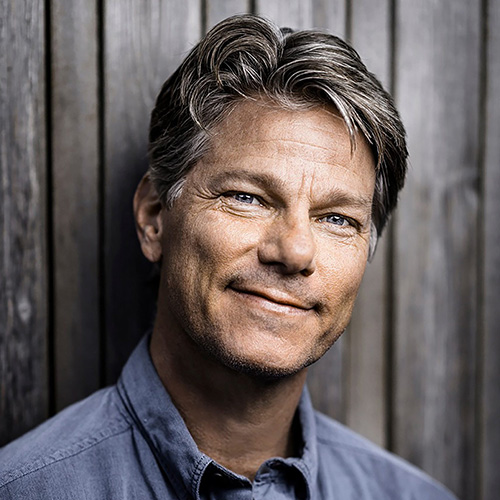
John Vaillant is a bestselling author and freelance writer whose work has appeared in The New Yorker, The Atlantic, National Geographic, and The Guardian, among others. His first book, The Golden Spruce, won the Canadian Governor General's Award for non-fiction. His second, The Tiger, was an international bestseller and was translated into 16 languages, and The Jaguar's Children, his first work of fiction, was a finalist for the Canadian Writers' Trust Fiction Prize. His most recent book, Fire Weather, won the Baillie Gifford Prize and Canada's Shaughnessy Cohen Prize, and was a finalist the Pulitzer Prize and the National Book Award.
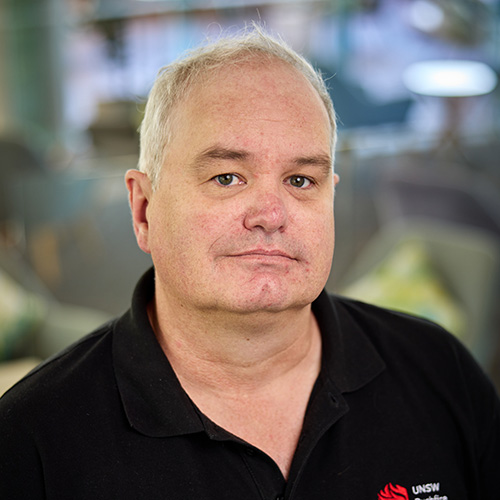
Jason Sharples
Jason Sharples is a mathematical scientist at UNSW, Professor of Bushfire Dynamics and Director of UNSW Bushfire. As an internationally recognised expert in dynamic wildfire behaviour and extreme wildfire development, his research has extensively influenced policy and practice in Australia and internationally. He uses advanced mathematical and computational models to understand the dynamics of wildfire propagation and to pinpoint geographic features and weather conditions more likely to generate extreme wildfires. He is the Operations Node Leader in the NSW Bushfire and Natural Hazards Research Centre and is further involved in various national and international research projects.