
Donna Strickland: Laser Jock
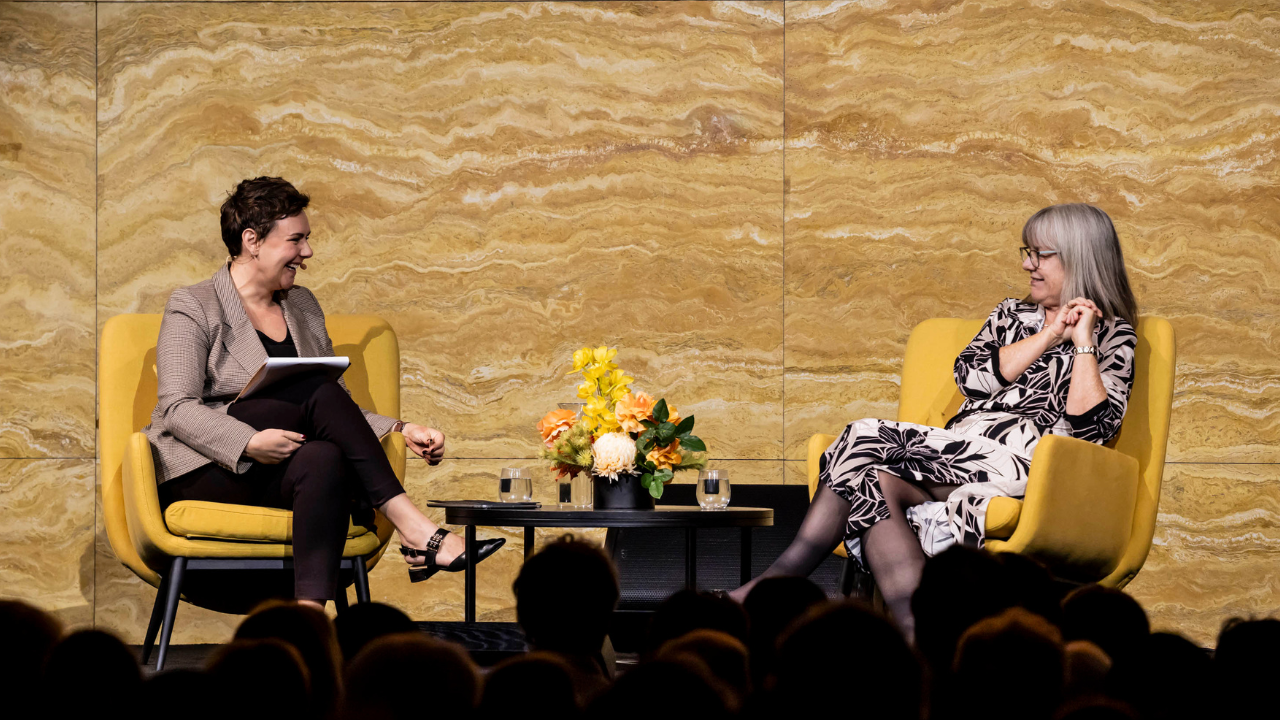
I think our governments should be more interested in supporting science, and not even necessarily with more money, but just trying to figure out how do we get everybody to work together? This is what I would like our governments to really ponder.
In 2018 Donna Strickland became the first woman in over 50 years to win the Nobel Prize in Physics, and only the third woman in history.
Her award-winning work however began decades earlier. While undertaking her PhD Donna developed chirped pulse amplification – a unique way to amplify ultrashort laser pulses. This breakthrough paved not only the way for safer and more precise laser eye surgery but also improved mobile phone technology and is now helping to advance quantum science.
Listen to Donna in conversation with the ABC’s Tegan Taylor, as she shares the early curiosity that fuelled her love of physics, the joy of discovery and how she became a ‘laser jock’.
Presented by the UNSW Centre for Ideas, UNSW Science, UNSW Engineering and the Australian Institute of Physics, as a part of the International Year of Quantum Science and Technology.
Transcript
Sven Rogge: Good evening, everyone. It's a great pleasure to have you here. My name is Sven Rogge, and I'm the Dean of UNSW science faculty, and it's my very great pleasure to introduce the event tonight, which is Donna Strickland Laser Jock. What that means we'll hear later on.
I would like to begin by acknowledging the Bidjigal people who are the traditional custodians of the lands we're on here. And I would like to pay my respect to elders past and present, and extend that respect to Aboriginal and Torres state Islanders who join us tonight at UNSW.
We're passionate about connecting world leading thinkers with our community. We're proud to host events just as this one, where Nobel laureates and meet acclaimed communicators to share their insights, stories and bold ideas. This event tonight is presented by the UNSW Centre for Ideas, the Faculty of Science and Engineering and the Australian Institute of Physics, together with the Defence Science and Technology Group, my sincere thanks for these organisations to make this event happen tonight.
As you may be aware, 2025 has been declared the International Year of Quantum Science and Technology by the United Nations. A global moment to celebrate extraordinary impact that quantum research continues to have across science industry and society. Tonight's conversation is a wonderful example of that impact in action.
Professor Donna Strickland was awarded the Nobel Prize in Physics in 2018 for her work on CHIRPED PULSE amplification, CPA, in short, you may have seen the gizmo out up front that was used for such experiments, a breakthrough she achieved as a PhD student, together with her supervisor, Gerard, their 1985 paper transformed what lasers could do, creating ultra short, high intensity pulses that open new ways in frontiers in Science and Technology.
Thanks to CPI, we gained the precision to perform laser eye surgery, as you have also seen up front, micro machine glass for smartphones and explore fundamental science in light, matter, interactions. It's a technique that has grown from fundamental physics ended up revolutionizing laboratories and operating theaters. So that spirit of discovery, where curiosity driven research leads to world leading change that is at the heart of what you have seen here UNSW, progress for all strategy.
It's an ever-changing global landscape, and the role of universities as places of progress where knowledge meets action is more important than ever before. Today, quantum technology has been sensing, quantum computation and quantum communication, and at UNSW, we have been proud to lead in this field for more than two decades.
Professors Michelle Simmons and Andrew Dzurak are both here, have built world-class programs in silicon based quantum computing efforts that have now evolved into two globally recognized companies, Silicon Quantum Computing and Diraq. Their work builds on foundational contributions from Professor Andrea Morello, whose control of single atoms in silicon was a major milestone in that achievement. Personally, I've also been fortunate to lead my own research program in quantum materials as part of the arc centre for quantum communication and technology, alongside Michelle, Andrew and Andrea, it's been a collective effort that helped to train a generation of quantum scientists here in Australia, and that's a legacy we're very proud of. Our Alumni continue to shape the field globally, most notably, probably Jeremy O’Brein, a graduate of our physics program and co-founder of PsiQuantum, one of the most ambitious photonic quantum computing efforts in the world.
As we look ahead, the future of quantum technologies from solving problems beyond the reach of any supercomputer or enabling ultra-secure communications, it's exciting to imagine what lies ahead, and it's equally important to reflect on how far we have come.
Professor Strickland’s story reminds us that a single breakthrough, whether from a student or from an established researcher, can unlock technologies never even imagined before. Her work on lasers didn't just earn her the Nobel Prize. More importantly, it has shaped industry and transformed lives. Just last week, we were thrilled to see her formal introduction as a fellow of the Australian Academy of Science, a rich, deserved honour from a small country that has benefited greatly from her legacy.
Please join me in welcoming Professor Strickland physicist, pioneer, laser jock and now part of the Australian scientific family.
Audience Applause
Sven Rogge: And joining Professor Strickland in conversation tonight is our host, Tegan Taylor, a brilliant communicator and much beloved presenter from the ABC.
Tegan is the voice behind Life Matters on Radio National and has brought scientific life through programs like Coronacast, Occam's Razor and What's that Rash. She is a walkie award winner, Eureka Prize recipient, and co- editor of UNSW book series The Best Science Writing In 2025.
Whether she's breaking down public health policy or unpacking that strange rash, Teagan helps Australia make sense of science with warmth, clarity and humour. So now please welcome Donna Strickland and Tegan Taylor to the stage.
Audience Applause
Tegan Taylor: Thank you so much, Sven and Thanks Donna. We're just going to have a cozy little chat up here with 700 or so of our closest friends. Donna and I are going to talk lasers, being young nerds, maybe going from the solitude of lab-based science to the huge world stage of being a Nobel Prize winner and possibly some non-science stuff on the way through too. I have a sheaf of questions that I'm really looking forward to put to Donna, but I feel like there's some really important groundwork for us to lay here.
What's a laser jock?
Donna Strickland: Yes. So this is just what the group of us called ourselves at the Laboratory for Laser Energetics. Looking back, I don't know why we said that, and since winning, people wondered, and I thought, well, maybe it was derogatory, and people said it about us, I don't know, but I think what we thought was that you didn't just have to be good with your brain and understand how it works. These lasers were very finicky, and you really had to tweak them just so to make them work. And so you had to both be good with your hands and with your mind. So that's why I think we thought we were laser jocks.
Tegan Taylor: I love that. So this is obviously the work of your whole career. Casting your mind right back, do you remember when you first were like, “oh yeah, this is going to be my thing, lasers”.
Donna Strickland: Yes, I do is really because I was only good at math and physics at school, so I knew that's where I was going to go. And I was looking for where I should go to university. And a nearby University, McMaster University, had a program in engineering physics, and so right away I thought, oh, that's what where I belong. Because I belong, because I couldn't decide if I should go into engineering or go into physics. So I said, that's good. I can walk the line. And then that school had four parts to it, and one part was lasers and electro optics. And I read that and went, “oh my goodness, who wouldn't want to study that?” And so that's I went off to study that.
Tegan Taylor: I feel like when you're sort of sitting here as the person who's won the Nobel Prize... Like years ago, now it feels like a fait accompli. It feels like it was predestined, but there were choices along the way that led you here, and you didn't know that when you were making those choices.
Donna Strickland: But I think choices made me. I don't know. So I chose to do that, and then to go to grad school. I asked so I did work one summer with the laser group at McMaster, and I asked the grad students where I should go now. One grad student told me, he said, “Well, if I was doing it again, I would go to either Rochester or Arizona”, which were the two big optic schools in North America. Which is wrong, because after that year, he actually quit his masters at McMaster and went to Berkeley. So obviously, if he could do it again, he would go to Berkeley.
But anyway, but anyway, so I applied to those two schools. And I applied only to one Canadian school, the University of Alberta, because it was well known for lasers. And I actually thought I would go to either Arizona or Alberta, because it was far away from home. I thought it was time to go further afield. And I kept thinking, “Oh, can I handle plus 40 in the summer in Arizona, better than minus 40 in Edmonton in the winter?” Those rules like either one was going to be a little bit much, but, and I didn't think Rochester was actually my third choice, because it was right next door, right? And yet, Alberta, first they accepted me, and then they said, “No, you applied to the wrong program. You have to reapply, but then we'll accept you”. Arizona. My file never got out of the foreign student office, so they didn't even accept me. So then I went and Rochester. I had applied for the master's program, because that's the Canadian thing to do next. But I said that I there was a check box if you wanted to go on to your PhD. And they came and they said, we've put you straight into the PhD program. And I went, program. And I went, Well, I'm going to go where they want me to come. So there we go. So I mean, choices get made for you too. So I don't know.
Tegan Taylor: Have you ever thought about going back to Alberta, like Pretty Woman style being like, “big mistake?”
Donna Strickland: Well, actually, I did give the convocation address last summer to. Alberta and told this story, and the President was going, “Oh my gosh. I hope we don't do that same thing again anymore”.
Tegan Taylor: The beauty of hindsight, I suppose. So I do want to come back to the work you did in your PhD, of course. But I'm really curious about your early life, because from what I understand about your family, your like, love of science was like genetically ordained. You sort of have this history of science, loving your family,
Donna Strickland: Well, yes, and math. So to tell the story, because I think it's remarkable that my grandfather Strickland, so my father's father had zero education, not even Elementary School. He grew up in a fishing village in Newfoundland, and so he did not learn to read or write until after he retired. Okay, yes, so that's amazing. And then he unfortunately had to watch his brother die in a different dory in a storm. And so he decided fishing was not going to be for him. And so he got in a different boat and came over to Nova Scotia and the island of Cape Breton Island totally different, I'm sure.
And there, when my dad and his older brother grew up, they didn't even have the final year of high school at their high school to go on to university, because nobody in that town should be going to university, as far as they were concerned. And my uncle was really, I guess, an exceptionally bright man, and the high school teacher said, “No, this is wrong”. He goes, “I'll get the correspondence courses for you. I'll work with you. We're going to get you through”. And the banker's wife was willing to put up the money to help this. My uncle go to university. So he was, I guess, the first one from that town to go to university. So luckily for my dad, just two years younger, they decided, oh, people actually made me want to go to university. So we should have the final year of high school, so he did not have to do that. He got to go to high school and then go to university. And so to the point where I'm getting a PhD.
And my mom and her sister, even though she grew up in a small farming village in Ontario, they must have been the two of the first women to go to university, but they both went. And my mom wanted to go into math. Her sister said, “No, there's no, there's no women doing that. You can't do that”. And she had thought she would go into medicine, and she switched into nursing, and my mom switched to do English and history. So I grew up hearing my mother say, “I should never have done that. I should have stuck to my guns. Don't let anybody tell you, Donna, what you should do or not. Do you decide for yourself”. So I had that always growing up too. But I think education was big to my parents, and I think I heard the stories of how it changed their lives. And so I think I grew up understanding, have an appreciation for education,
Tegan Taylor: And your dad planted a seed pretty early about lasers.
Donna Strickland: Okay, well, this is my mother's story. I don't remember this story, because why would you have been in this story? Well, you see, I thought I must have been younger, but apparently I must have been, I think 10, because I think that's when the science centre first started.
So the Toronto Science Center was new, and so my parents took their three kids to the brand new Toronto Science Center, and I am impressed, because so I'm the same age pretty much as the laser. So the lasers were not out that long, and the science centre already had a CO2 laser there. And apparently my dad said to us, “we have to go see this laser. This is the way of the future”. So, but I don't actually remember that. But somebody, I just remember my mum told me that when somebody asked why I studied lasers, so she told me that was the reason.
Tegan Taylor: It has become part of your mythology. Now, part of your gritty origin story when the eventual movie is made of you, who's playing you in the movie, by the way,
Donna Strickland: Oh yes, I don't know, because they would like be good if it was like somebody like Meryl Streep, but she's even older than me, so I don't know that she could still play...
Audience Laughter
Tegan Taylor: Maybe Jennifer Lawrence there.
Donna Strickland: Okay
Tegan Taylor: So talk to me about so you got put straight into a PhD program, even though you'd applied for the master's program, and little did you know at that time, the work that you were going to be doing was the work that ended up winning the Nobel Prize. Like spoilers. Talk to me about the origin of that work when you first sort of arrived in the group,
Donna Strickland: Yeah. So it was actually fellow Canadian. I do wear an iron ring, which means I graduated from an engineering school in Canada. And so he saw it the first week, and he came over and he said, “I heard there was another Canadian down here, and what do you want to do?” And I said, “I want to study lasers”. And he said, “I know the guy for you”. And actually, I will tell you the story - and he actually says it publicly himself - that I saw Gérard at a party, celebration, whatever, in the summer of 2018 and he said that he had just seen Badros. And he said, you know, Badros said to me, he said, “I think the best thing I did for science was introduced Donna Strickland to Gérard Mourou”, and we hadn't even won the Nobel Prize yet. So I thought that was pretty amazing. So, and I've said that at Livermore, where he was in the audience, so that's how I got to meet Gerard.
I will also say that I was the first year, you were just expected to take the classes. That's all that was really asked of you. And I went back to see one of my former colleagues defend his PhD, and one of the professors was there and asked me how it was going. And I said, “Well, really, it's pretty easy, because the Canadian system, I would say, at least in the British part of Canada, English part of Canada, we're halfway between the United States and the United Kingdom, so we're not as streamlined in our education as the United Kingdom, but we're not as liberal arts education like the United States. So I had a lot more of the science courses than my American colleagues did when I got there, so I didn't find it as hard as they were finding it.
And so I said this. I said, “it's not that hard, really”. And so he really chastised me, and he said, “you know, just because you don't have to do research doesn't mean you shouldn't be doing research. Don't waste your time. You get there and you get back there and you start doing research”.
So even though I'd met Gerard the month before, I then went to him and said, “Can I start working with you just 10 hours a week?” Most again, I didn't have a car. It's very hard to live in the United States without a car, because nobody walks at night there and stuff. And so then it was limited to that first year. Finally, I just told my parents they needed to help me get a car, because you can't live in the United States without a car. And so that's how I got started working with Gérard.
And then I was the first person in the group that was asked if I wanted to work on mostly what people were working in the group was making the pulses short to measure something fast. But the other reason that you would want a short pulse is to have the peak power high, because the power is the energy per unit time. So for the same energy, you can increase the peak power by making the pulse short. And so he asked if I would want to do this high order non linear optics experiment, just to see if we could do really high order harmonic generation. And so I that's what I decided to do. So that's why I was the one in the group that got to do this particular project.
Tegan Taylor: Too smart for the PhD program, pushed into doing research, ended up doing the research. I feel like we might need a little bit of a primer on how lasers work. For those of us in the room who don't have a PhD in lasers, right? Not, not too dumb for it, just didn't get around to it yet. Talk to me about what the technology currently was and what the motivation was to intensify it.
Donna Strickland: So the reason that lasers work differently than regular light, so regular light just lets all colours of light go, and the light goes in all directions, that's why we're lit up like this, and later, you'll all be lit up, and that we see each other in the colours that our eyes can see, because all of the colours are coming out, whereas a laser actually forces the light to all go in the same direction and usually with a single colour. But most important, these light rays, or photons, whatever you want to call them, don't care what each other are doing, but in a laser, they all go. And so when it's a wave and when it's peaking, they're all peaking. And so that's why it's a giant wave all going in the same direction. So that's why you see a nice, small laser beam if you were shining it on the screen. And so that's why it's brighter, because it's not just the total power, but it's the power in the area. And the area is small. So that's what's special about a laser.
But then how do you make a short pulse?
The problem was, is that we had short pulse lasers and we had big energy lasers, but if you tried to put them down, it damaged the laser rods. And that was through one of these non linear optical effects that people weren't expecting until they saw it, of course. And so we had to work around that. And so the technology that we came up with to work around it was simply, instead of having the peak power that would cause the damage, take your short pulse and stretch it and make it very long pulse. And so the energy density is very low, and then you can go ahead and increase the energy, keeping the energy density still too low to cause these effects inside the laser rod. And then when it's outside, then you compress it and make it short again.
And so I do say that what I built was a laser hammer, because sometimes, you know, there's applications that require energy.
This is laser fusion, which finally had scientific break even a couple of years ago. That one required, you know, they put three megajoules of energy in to get more than three megajoules of nuclear energy out. But other applications, and non linear optics is one of those.
It's more like if you were trying to drive a nail into a piece of wood, you can push with all your might. It doesn't go in, but you pick up a hammer and in it goes. So for those applications where it's the energy density that matters, then you want not only a lens to focus your beam down tight, but you want a short pulse for the third dimension to get all of the energy into a small, small spot.
Tegan Taylor: What did you think it would be used for when you were developing it? Or were you just sort of like, how big can I make this thing go?
Donna Strickland: It wasn't, yeah, I think that what we thought it was going to be. So I was going to try to do a ninth order non linear. So that means that I needed to have the density of photons, have nine photons in the volume of an atom, and an atom is very small. And so that's what I was trying to do. And it was just a fundamental science question, how far up can you make non linear optics work? Right? It was already working with two and three photons, but could we really push it further by trying some techniques?
And I. I'll tell you that by the time I got the laser built, the French group had seen the 33rd harmonic, and that's what led to the Nobel Prize for out of seconds in 2023 and so that already blew my project out the out of the water before I got to the laser built. So anyway, different, different story. So that's what we thought and then, but right from the very first time I gave a talk, Gerard said, “no, no, we have to tell them that this is the way to get to 10 to the 15 watts”. And he goes, Donna, what? “What is 10 to the 15?” And I go, I don't know.
I start with the two of us are running around the little library at the laser lab trying to find out that 10 to the 15 is a peta. PETA for petawatt, not kilowatts, you know, not mega, not megawatts, terawatts, petawatts. And so we had to look up the word to say. And right then I only had a gigawatt so I was six words of magnitude shy of a petawatt for my first paper.
And but still, I had to go, as a young grad student, saying, “this is this is the way”. And now it is, but this is the way we're going to do a petawatt. And so I think we really envisioned that it would stay in the big lasers, like places like the laser lab, Livermore, you know, each country has sort of one big laser system. So I don't know that it would have been so big, as it turned out to be. It would have been used for fundamental science in these big laser labs. But at the same time that we were developing that, Peter Moulton was at Lincoln Labs, MIT, and he was coming up with a whole new laser crystal.
And it's funny, because my favourite laser textbook is written by Sigmund, and that was written when I was doing this work. And in that book, in that textbook, and he only ever made one edition of it, it says that the first laser rod ever built was a chromium. It was Ruby, chromium dope sapphire.
And he writes, this will be the only kind of sapphire that ever lasers. So I don't know if Peter Moulton took that as a challenge, but he tried to get other kinds of sapphire to lase for whatever reason he had. And this new laser medium was also developed then in the mid 80s, and it could allow much shorter pulses than what I was doing.
And again, it's just energy per unit time, and all the money and size goes to the energy. So the shorter you can make the pulse, the cheaper the laser is, the smaller and cheaper the laser is. And so once we had the thai sapphire, that's when you could have lasers. And I didn't see the one that's out there, but I'm going to guess it's thai sapphire made it possible to go into just ordinary university labs. So once it was that kind of size, then everything could happen.
Tegan Taylor: So you've ended up with something that is actually relatively inexpensive, relatively accessible, then to people around. But you mentioned before the other group that published just before you did kind of cut your grass a little bit.
Donna Strickland: Yes.
Tegan Taylor: The rush to get this paper out. Talk to me about the time pressure, and the paper that sort of won the Nobel Prize was three pages. Three pages.
Donna Strickland: Yeah, yes, but I know people think that's funny, and yet, if you look back at the papers, so the major, the original letter for the maser paper, which came out in the 50s, was three paragraphs. It spanned two pages, but it was one paragraph and then two more paragraphs. So papers have just got bigger and bigger.
I don't know that they've gotten better and better, but anyway, so that's that. But also I was trying to do the different way to make okay, this is my fourth year of my PhD. I had a lot of failures before I got the success, and so we were trying a different way to make high intensity lasers. And we went to the conferences. That year, there was an ultra fast conference and a laser conference one after another, and everybody was talking about doing pulse compression of neodymium Yag lasers. And so neodymium Yag lasers is the type that you could get to 100 picoseconds, and they were using fibres to do nonlinear optics and fibres and then gradings to compress. And they were getting down to single picoseconds. And one paper in particular talked about, if you really wanted to do it, well, you had to actually use a very long fibre and stretch the pulse to make the colours disperse, just so that the gradings would work to compress them. And so we saw that, and we went, “Oh my gosh, that's how you do what we need to do”. And so it was obvious to us, because we were trying to come up with this, the way to do it, that it was like, Oh, we got to do it. Got to do it now. Because now that everyone's working on on this, it'll just get done so quickly.
And so that's why we had to do with either borrowed parts or donated parts, or the laser lab bought the gradings. That was the only thing we paid for. But they bought the gradings at the end, and we had to do it fast.
Tegan Taylor: So you kind of hacking this thing, you're getting it out the door really quickly.
Donna Strickland: It took a year, it wasn't really quickly. ,
Tegan Taylor: Well in the scale of the universe, but like you're also for easy to your PhD, you don't know that this is going to be the thing that wins a Nobel Prize. Like, what else is happening in your life at this time.
Donna Strickland: There isn't much. I'm just a grad student. It was, I was a grad student most of the time. There wasn't much else going on.
Tegan Taylor: That was where you met your husband.
Donna Strickland: Well. That's true.
Audience Laughter
Donna Strickland: But then, yeah, it was years later that he became my husband. But yes, it's true. I don't know. We weren't dating in ‘85, he was just one of the guys in the group.
Tegan Taylor: Yeah, he's here in the front row, if you can't see so I think.
We've sort of gestured at it a little bit. What are some of the applications of your work that you're most proud of?
Donna Strickland: Actually, and I tell the story a lot too. I think the thing that I was most proud of, really, was when I saw it being commercially available. And so again, at the laser conference CLEO, there was a trade show. There used to be more of a trade show back when lasers were mostly used by scientists, and I just remember seeing that they had a CPA laser on the exhibit floor, and I was with Doug this time. And I said, “Oh, come on”. We got to go see it and see how they could have engineered it, because my laser needed to be tweaked every 10 minutes, right? So you couldn't sell a laser like that. I said, “Let's go see how well they engineered it”, which, of course, they won't ever take the lid off to let you see it.
Tegan Taylor: You were like, “Don't, you know who I am?”
Donna Strickland: Well, Doug kept saying that. I felt very bad for the poor guy, who was a sales guy. And he said, “Oh, this is a new type of laser. Let me explain it to you”. And Doug says, “Yes, explain it to Donna Strickland how CPA works”.
Audience Laughter
Donna Strickland: And the poor guy did not know my name, or, you know, like he didn't know that part of the story at all. And he kept, he said, “No, no, I have to explain it to you”. And I did say, “I do understand how CPA works. I'm just trying to see how you engineered it”. And but he still had to keep going on.
And Doug kept saying, “Yes, please explain to Donna Strickland how CPA works”. So but, and he wasn't going to get I said, “you're not going to lift the lid for me, are you?” And he goes, “No”. And he goes, “No, I'm not. I can't do that”. So that was the end of that.
Tegan Taylor: He's like, “I had the weirdest day at work today”.
Donna Strickland: Yeah, let's get on to the next customer.
But yeah, I mean, it was kind of thrilled to see that. And since winning we've been to Amplitude, which is one of the companies that that sells CPA lasers, and you just saw how many were coming off the pipe, which is pretty amazing, that something that I worked on as a student has turned into something that's a commercial success. So that's cool.
Tegan Taylor: One of the most famous, I think, applications is laser eye surgery. And when you google your name, Donna, one of the first questions that comes up is, why does Donna Strickland wear glasses?
Audience Laughter
Donna Strickland: Right? Yes, yes. And I do, and I show in my talk, I do show the laser eye surgery. But I mean, then you have, it's very hard to watch even because, you know the, I mean, they cut.
If I go to an optometrist and they want, they want to put the drops in my eye, I go, okay, ready for a fight? Because I'm going to fight you on this one. I'm a very squeamish person, and then I don't like anybody coming near anything so and you're not put under. Like I think I could have surgery if you put me under, but otherwise I don't want to be there.
Tegan Taylor: I love that you're boycotting your own technology.
Okay, so I've got to know about the moment, the moment that you get the phone call you've won a Nobel Prize. Talk to me about that.
Donna Strickland: So in our time zone, because it's always 11am Swedish time, so it just depends where you are in the world, and so I think you'd be in the evening and but it's five in the morning for us, and so that's a scary time to get a phone call.
We still have a landline, which is amazing. And they called Gerard first, because they, I mean, I actually had a pretty low key life until then, so they didn't even have any kind of phone number for me, so unsure it had my home phone. And so at five in the morning it rings, and so that's scary. And then Doug picked it up and they said they're asking for Professor Strickland. So then you think fire in the lab, because at least you know, it's not your kids that are hurting or something, right? I mean, so it's better, it's better to have fire in the lab. And so then there was a woman saying, “please stay on the line. This is a very important phone call from Sweden”.
And then they put me, I thought, on hold. And so now I'm grabbing Doug, going, “oh my god, it's October 2, at five in the morning”. I think -
Tegan Taylor: It would have been Eurovision.
Audience Laughter
Donna Strickland: I think I'm winning the Nobel Prize, right? And then they actually hung up on me. And I know now they think I hung up on them, but no, I was holding the phone. So no, but I'm such a rule follower that I did hold on the line for 15 minutes, and then you start going, “Oh, it's, you know? They're just scamming me”, you know?
So finally I went downstairs, and I got on my computer, and I looked at my email, and it was from the Royal Swedish Academy saying, “we are trying to call you. Please call us”.
So I actually had to call Sweden for them to say that I had won the Nobel Prize. And then what happens after that? So then they said, “Can you join us on the press conference,” that will happen at six o'clock my time, even though at this point I said, Doug, you know, get me coffee. Find me breakfast, it’s going to be a long day. And then I also didn't know that I was the only one of the three of us that even joined the press conference. So I had to answer all the questions. Gerard wasn't there and Art wasn't there, and. Um,
Tegan Taylor: What are they doing? What, they're too busy? I know.
Donna Strickland: Well, one guy was 96 so, you know, so I don't know. He probably just said he was too busy. I don't know. He's a funny guy. Well, he wasn't before she's passed away. And I don't know, but George, he would be known for Gerard. So he probably did have something that he was already supposed to go do. I don't know. I don't I didn't ask. I said, Why short were you not there? And then one of the very first questions I got asked, and I remember, I just sat in my hall floor, and it said, “you know, you're only the third woman to win. What do you think about that?” I'm thinking, I don't think anything about that. I don't know what I'm supposed to say to that.
Yeah. So it was hard, and then it's just at six o'clock, that's when it goes out to the world. And my phone, my computer, it just went, ding, ding, ding, ding, ding, ding, ding, ding, ding, ding. And the main newspaper contacted me, and by eight in the morning, we were getting our bathroom redone, and the plumbers were there shutting my water off.
My lovely neighbour was there with a bouquet of flowers for me. I had a photographer from the news source there photographing me, and I'm on the phone with the Globe and Mail being interviewed. What I'm doing here. It was just crazy. And then by 6pm I mean, I'd been interviewed everywhere, and by seven o'clock, they woke up at the university and found out the news. And found out the news.
And so then finally, someone contacted me and said, “We'll take over”. I went, Oh, thank goodness. But then you're on, you know, like, no, it's another BBC interview. And I went, how many I've already spoken to BBC? At least three times how many BBCs are there. And so you just went from one news thing to another.
And finally, at 6pm the Prime Minister calls you, you know, and then my my wonderful husband, actually contacted the newspapers restaurant critic and said, “Where should I take my wife, who just won the Nobel Prize, out for dinner”. So we did go to the nicest place for dinner. And when we're driving there, the Minister of Science calls me and he says, “I was just talking to the prime minister, and I know your husband's taking you out for dinner”, so they're talking to the Prime Minister, talking about my dinner plans.
Audience Laughter
But that was it. Yeah, it was a crazy day.
Tegan Taylor: Amazing. So you've gone from decades, I'm assuming, of relatively not solitary, but...
Donna Strickland: I am a shy person, and so yeah, I kept a very low profile. Yes, I just, I never wanted a big group. I always just wanted a couple of students, and that was it, yeah.
Tegan Taylor: And then you're thrust into the spotlight, and it's years later, and they're still rolling you out for thee.
Donna Strickland: Exactly. See and you're still coming.
Tegan Taylor: How did you cope with that shift?
Donna Strickland: I don't know. I think you just realize that I, you know, I think with every gift, it comes a responsibility. And so you do have to think, “okay, for whatever reason, I was given this gift”. So then I have to try to to use it as best I can, and and I have to the University of Waterloo really did step up and give me a lot of help. And so that that was helpful.
And then also, one of the meetings you go to probably is Lindau, and it's Brian Schmidt, Australia that sent a handwritten letter to me saying that this is something you really should come to. Now I know that he's on the board, and so this is why he was the one doing it, but it's not bad, because you do join this club, and you wonder how they got let you in, but you do end up there, and it is so life changing that it's good to meet people who have gone through it, and you get that chance to talk to them about how to cope with it.
Because the funny one really, is Anne L'Huillier, who did the higher order harmonic generation, you know, much better than I was going to. And she's, she's in the Swedish Academy, and I'm pretty sure she was on the committee for some years picking the people, and yet she's like a deer caught in the headlights having won it, right?
I’m going, how did you not know what you were doing to people? And yes, so, so at Lindau and I convinced her to go to Lindau, and she was she goes, it's too much. It's too much. And I said, “No, no, we have a room just for us. I'll show you where we can hide”. So, because that year, there was twice as many students, because they let all the young people that couldn't come during covid in person come so and they were very proud that they had a 48% woman, and that meant there was over 300 young women for Anne and I to talk to.
Tegan Taylor: That's a lot. That's wonderful. But I would love to pick up on that, this sense that they asked you, you're the third woman to win the Nobel Prize. How does it feel? How do you navigate this symbolism of gender?
Donna Strickland: Well, of course, it has now changed. And the last time I had to speak on behalf of the laureates of the last Lindau that I went to, and I said, “Look, a lot of people made this big point about me being just the third woman, but nobody was saying at the time that I was the only woman alive”.
And actually the first three we were always the only woman alive at the time, right? There was always 50 some years between us each. And that's a lot of pressure, right? That all of a sudden you’re held is this one and only but now I'm one of three. So that's how different it is, right? Is that I was the only one and I was a third, but now I'm one of three women. So it's in six, five or six years, you know, they've managed to get two more of us.
So yeah, and I started the club when Andrea Ghez one, who I've never met, but I emailed her and I said, welcome. I've started a new club. It's the female physics lawyers club you want to join. Too bad, you’re already a member.
Tegan Taylor: So they, they've invited you to do all things in women in STEM before, but you've generally said, “No, I'd rather talk about public trust in science”. So let’s talk about that.
Donna Strickland: Yeah, that's, that's what I would rather dedicate to, but I will say that I did speak at a women in physics conference. And so for anybody now, because we do tape just about everything we do these days, you really should always prepare your talks better than you think.
Because, I mean, I'm sure I prepared to give that talk, but I talked about Maria Goeppert Mayer, and how she did not have a paid job until she was in her 50s. Okay, for science. She could be a secretary, and she followed her science husband around and worked as a secretary, and then they let her stay sitting there while she did her theoretical physics for free.
And I said, look at I don't do Nobel Prize winning work, and I've always been paid. And I guess I said that in the talk. So after you win, everybody looks up everything you've done. Next thing, you know, there's a comment, you know, says she didn't do Nobel Prize winner work. So now 1500 people have watched that. I went, “Oh my goodness”. I did not prefer a talk that 1500 people should have watched. So just be ready. You just never know when your thing is going to be thrown up.
Your other question, yeah, let's talk about trust. Let's talk about trust in science. Yes, I'll talk about it.
Audience Laughter
Donna Strickland: So the question is, why did I say that's what I would like, you know, to put some effort behind?
So in 2013 I was president of a society called the Optical Society. It's now called Optica, and the thing they had me do is travel the world and go to all the student groups. And we have student groups right around the world. And particularly when I was in Asia, I noticed how much higher regard there is for science in Asia than there is in North America. I don't know so much about Australia, but North America it’s not that much. And also I will tell you that when there was a Japanese gentleman that won when I won, and he won in physiology. And you are in Sweden for a whole week, it is a week long thing. People don't know that, but it's a week long thing of activities. And he had six to eight Japanese media around him at all times, like he was a rock star. And I'm thinking so people back in Japan every night watching the news is watching what their Nobel laureate is doing in Sweden.
I mean, yeah, and yet there were like seven, probably Americans that won. And yet there was no US, right? There was no Canadian media there at all. And I'm not saying the scientists themselves have to be famous, but it tells you what kind of regard science is held to in Asia, you know.
And I just started to wonder that. And then also during covid, I think there really was an erosion, and I just started to really worry about it. So I just think we have to start studying why this is happening. We have to start doing it scientifically. Have our social scientist people tell us what we could try to change, test it before and after, make sure that if we do something, it's changed, and this is what I'm hoping to accomplish.
Tegan Taylor: But you've actually started doing this work?
Donna Strickland: Well, we've started this network, got a little bit of funding from the Dean of Engineering, and we also got some funding from the provost so far. And so we've had a few public events. And I will say that quite often when I give the public talks, I think everybody that comes to hear me give a talk already likes science, whereas at these events, we've had people come and say, “Well, I'm somebody who has lost faith in science”.
Because right? And one of them is - speaking about quantum this year - is that Waterloo, the inventor of the Blackberry, started an institute of quantum computing at the University of Waterloo 25 years ago, and they said, look at you. When you open this great Institute of quantum computing, you said that we'd have quantum computing in 25 years. It's been 25 years, and we don't. Why should we trust you?
Right?
Exactly. And so this is one of the things that scientists have to do better, because when scientists will say to each other, 25 years, right? The whole time I was an undergrad and did a project in laser fusion. Laser fusion was 20 years in the future. Then I was in grad school at a laser fusion facility, it was 20 years in the future. You know, it was always going to be 20 years in the future. And now we'll say that we'll probably have energy 20 years from now, now that we have scientific break even.
But for scientists to say it to another scientist, what we're saying is there's no technological reason it shouldn't work, but we don't know when it will work, and so for a scientist, 20 years is that time frame that it's in the future, it's going to work, but it's in the future.
But we have to be careful now when we're talking to the public, because they're going to take us more at our word, and that if we say 20 years, they must think that we have an exact plan, and we don't. We just mean there's no reason it shouldn't work, but we haven't figured it out yet.
And also, but I, what I would really like is for our education system to start not just teaching the science that's already been figured out, but to teach the scientific process. And so when you think about watching what happened during covid, I think scientists weren't so upset that we kept changing our mind, right? Because that's that's what we do as scientists. We don't know, and that's part of the process.
And I think we need to get that into the education system that science is about answering questions that we don't know the answers to. And so if something happened and they tested it, it didn't work, well, okay, figure out the next plan and move that way and keep going. And so if people had understood that, they wouldn't have said, “Oh, you guys don't even know what you're doing. You keep changing your mind”. And that's true in science. We do keep changing our minds. So this is what I would like to see happen, is that we get more people educated on the how science is done, not so much what the science we do.
Tegan Taylor: And so you're giving talks like this all over the world. When you say something like that in different countries, do you get different responses from people?
Donna Strickland: Well, actually, I've only said it in North America yet. Well, now I’m saying it here and Australia, but I am going to be giving a talk in Taiwan, which is going to be funny, right? Because I think the Asians are going to go, “what are you talking about?” We love science over here. Yeah. So we'll wait and see what they think about that. Yeah.
So because the other network I'm trying to get going is just trying to bring technology people together with environmental scientists to see if we can speed along the measurement monitoring of environment, and that goes over better. I think again, I don't know that in North America, it would go really, really well, because we do have our climate deniers there.
Tegan Taylor: But so you're doing this outreach work to sort of build public trust in science in general. For science as a field, though, what kind of opportunities would you like to see to foster this next generation of young scientists coming through?
Donna Strickland: Well, I would like to see, and I think Australia is much like Canada this way is that I think both countries, from a government point of view, have probably invested in science fairly well. But what we aren't quite as good yet as some other countries, and my favourite countries are Korea and Denmark at bringing along academics and industry and government as joint partners.
So a lot of times, you know, especially in Canada, we were told, “Oh, if you want to get government money, now you have to also get industry money”. But it was up to you to go find the industry money. It's like, what are we supposed to do? And so I found that not really helpful.
Whereas, if you go to Korea, I don't know how many people realize that Samsung started as a grocery store. Okay, in the 1930s very smart guy – obviously - started a grocery store, and he turned it into a grocery chain. And then he realized to keep expanding he was he would have to get into the banking that and so he started the big banks in Korea. But in the 1950s Korea - and Korea was very poor at the end of their war, right? Really poor. - And in the 50s, they saw technology coming, and they went to this very smart guy and said, “we really want you to get into technology, and we will invest in your company so that you get into technology”.
And that's how Samsung got started off on this you know, look at how incredible they are. But with that help from the government, they understood they had to give back. And so if you go to Seoul National University, you will see this multi story tower building called the Samsung building. And everybody working in there is doing research that is funded, as far as I could tell, by Samsung.
Certainly I went into his colleagues lab and saw his tremendous lab, and it was certainly all funded by Samsung, and yet it was holographic TVs, and that was 2011 and we still don't have those. So they weren't funding something that was going to be on their bottom line by the next year. It was just we are investing and getting people trained to be taken into Samsung, maybe, or whatever. But that's one way to do it, and I think it's a great way to do it. And they call they call it their helical system, or something, they all benefit.
But Denmark, you know, has their system that says, you know, the Ozempic story, their companies are owned by foundations, so it's a tax break for them. But then the foundation has to give to charity. It can be anything, but it can be research at a university, and they gave, so the foundation, over that company, gave them money to start the Biotech Institute at one of the universities in Copenhagen. And when they were successful and came up with this idea, I mean, the company had to still pay, I think, $5 billion to the university, because the foundation doesn't own it had to be a charitable thing.
And so the University not only got the original donation to start it. It also earned $5 billion from licensing the patent again, right? So the university is one and one, but the company, let's face it, there's not a poor company. Now with Ozempic, obviously the United States isn't gonna buy it anymore, but Okay, but what a win-win, right? It's the academics win. The industry wins, and, of course, the government wins. So I think. Countries like Canada and Australia have to start looking at these other countries that seem to have really figured out how to really work together as a whole team to make things move forward.
Tegan Taylor: And another thing you've talked about is something like another Nobel Prize.
Donna Strickland: Like another Nobel Prize winning idea
Tegan Taylor: Like a ... yeah
Donna Strickland: Well, this is usually just in my own talk, I will point out that we had lamps, and then when the lasers came along, the intensity really shot up, and then plateaued. And then when CP came along, we've gone up 10 orders of magnitude and intensity, but now it's plateaued again. So I do we are trying to get to the point where we could break the vacuum with our intensity. So we just need six orders more magnitude. So we're looking for a new Nobel Prize winning idea.
Tegan Taylor: I didn't mean you need another Nobel Prize. I think once enough.
Donna Strickland: I think the whole world does. But Korea. But I got asked by Korea, I was in Korea, and I was like, saying how great it was, and the head of their academy said, “but what do we have to do to win a Nobel Prize in science?” And I'm going, don't you think it's just incredible that you have helped - I mean, they've gone in the 1950s their gross national income was $65 right?
Not, it was nothing, and now it's like 35,000 US dollars, right? So they've, you know, very few other countries have had that kind of growth. And I'm saying, isn't it more important that you've brought your country out of poverty, putting all your eggs in the science basket, and he goes, but of course, he's the head of the Academy of Science. He goes, “we would still like a Nobel Prize”.
Audience Laughter
Tegan Taylor: We'd just like a Nobel Prize. Well, let's keep the conversation going. One person is saying, “Can I be your PhD student?”
Audience Laughter
Donna Strickland: Yes, you can apply. Go right ahead. Apply for a master's.
Tegan Taylor: She’ll just put you straight in the PhD program.
Donna Strickland: I wouldn’t know, because you would be international. So we wouldn’t put you straight into the PhD program the way we do funding.
Tegan Taylor: Now, is there any research you've done which you wish more people knew about, or that you thought would have a bigger impact, that I thought would have a bigger impact?
Donna Strickland: That I thought would have a bigger impact? Well, I mean, there's always these things. There's things you didn't do. Well, let me tell you some things we didn't do. So the way I was trying to do the high intensity before, I was putting in fairly intense light into CS2 carbon disulfide, which smells like rotten eggs once it's and it would be sort of a clear liquid.
And then, as after a couple of weeks of me firing my laser into it, it would not only turn yellow, but it would have soot on the bottom of the cell, and so I'd have to clean it out, and that's when it really smelled like rotten eggs. And I did not like that part of the project. But had I been smarter, and I would have thought to myself, “Why is there soot falling down, and when I keep hitting the laser into this carbon disulfide”, because now people realize that it's carbon nano products, dots, everything, and so obviously I could have been, like, a whole decade ahead of the Nano crowd, but I was not smart enough to think of that one. So that was one of my failures.
But, you know, I had fun. I did a post-doc with Paul Corkum, and we were studying why does is white light generation, where this is just one of these cool things that when high school kids come into my lab, I show that we can just fill a cell with just ordinary water, I take them out to the water fountain and show this is ordinary water, but it can be anything clear, and we put our short pulses in it, and they're infrared, and out comes every colour of the rainbow.
It's like magic, right? And we were studying that for my post doc, but then we thought we had really figured it out, and Gerard scooped me, because then he had set his laser down a hallway one night when people wouldn't be walking in the hallway. They did the people on all the doors, making sure no one would because you could be really hurt, and they saw the filament go right down the hallway. And that started filamentation. So it took over from what we were doing. So it sort of ours got sidelined by his filamentation.
Tegan Taylor: Did you ever consider commercializing your work yourself, or were you always comfortable sticking to research?
Donna Strickland: Yeah, I've never had any understanding of how to make money, and it's never really, yeah, I've never, I'm somebody who knew I belonged in school. And so I think for whatever reason, this is why I got a PhD. I wasn't trying. I wasn't thinking, “oh, I need a PhD to do a certain job”. I just wanted to stay in school. And so, yeah, no, I haven't thought of commercializing anything.
Tegan Taylor: Do you regret not doing No, oh, that's good. No regrets.
Donna Strickland: I don't I never, yeah, I don't believe in regrets.
Tegan Taylor: One person saying, as laser intensity keeps increasing, do you think we're approaching physical limits, or is there still unexplored territory in the ultra fast high energy regime?
Donna Strickland: Well, I think 10 to the 29 will be the limit. I could be wrong, but this is what we talk about, is a break in the vacuum. And so our high energy physics friends will tell us that the vacuum is not nothing. It's, you know, matter attached to antimatter.
Our quantum friends will call that quantum fluctuations. Different people call it different things. It's okay, but I have a colleague who has thought about it. And you know, why is the speed of light? The speed of light? I mean, Einstein is famous for just saying it. Is, and we'll all live with it, and we have to work all of the science around the fact that it is. But why is it? And he thinks it could be that dipole response of the charged matter, with the charged anti matter being dipoles, because soon as you leave vacuum and go into air or glass, it is this dipole response. So it would be cool to see now, as we focus down and get towards 10 to the if we could get our lasers intense enough so that we could focus down to 10 to the 29 probably we would be blowing up those dipoles a little bit, or it would, I don't know, but I think that'll be the limit when we start making matter out of vacuum. I think that'll be the limit.
Tegan Taylor: Oh, well, that's a throw down to anyone here who reckons that they can do that work to prove her wrong. A question, what are you most excited about in the future of laser physics and its applications?
Donna Strickland: I don't know if I'm most excited about anything in particular, because, I mean, in my own lab, I mean, we're just seeing these extra peaks, and we're still trying to figure them out, and we think it's this quantum thing that nobody else is thinking about. So I like doing puzzles, so that's one thing, but I also have a colleague, Toshi Tajima, and he's the one who invented laser acceleration, which is the big use of the most powerful lasers. But he's come to me and he said, “Okay, fine, for the big lasers. Let's do it that way”.
But I would like a way to actually go into the body, and so let the surgeon cut out most of your tumour, but leave some behind so you don't have to cut too deep. And let's do the laser acceleration right there, so you only have to get to Kev. It'll only go on micron, so you don't have to worry about radiation damage, because it'll only go the micron of the tumour. And let's do that. And so he knew that I was working now on trying to make intense fibre lasers. So first he said, “Can Can you get it to 10 of the 14?” I went, “easy”, and then when I hung up off the phone, I realized, oh, yeah, that's right, but we use gradings after the fibre, and that's not actually at the end of a fibre, but things to work on. But that's that's he's gathering quite a group of us to try to work on that.
Tegan Taylor: As a scientist, one person is asking, how do we communicate our work with the public to build trust?
Donna Strickland: Right? For one thing, the things that I think that we do wrong is over-hype, right? And so I think this was the problem with quantum maybe AI seems to not only over-hype, it over-scares. I don't quite know that shouldn't do either of those things. And so I think we do have to be careful about that, but I think what I really want the public to know is not only the scientific process, but just the implications of science, right?
I think our governments should be more interested in supporting science, and not even necessarily with more money, as I said, but just trying to figure out, how do we get everybody to work together? This is what I would like our governments to really ponder. How do we all come together to get that ecosystem so we are all working together, and to make the government want to do that, the public has to want to do that. And so this is why we have to start talking about the importance of science and what it's done for society.
Tegan Taylor: It is tricky, though, like, I'm not a scientist. I work in science communication, and there is a tension between having enough of a story that people actually want to listen and engage with it and get excited about it, but not over hyping, like you say, not over promising.
Donna Strickland: Well, also so one of the people that I've talked to with both the gem network that we're trying to do the environment measurement and also the trust is she works in environmental science, and so she is on the media a lot, and she's had to learn to do these sound bite amounts of stuff, right? And she actually met her partner because he's a playwright and had written a play about the climate change, and when they had the opening of his play, they got a panel of experts, and she ended up being one of the panel of experts they invited. So that's how they met.
Tegan Taylor: Oh, that's how they met.
Donna Strickland: That's how they met. Isn't that cute? And then she said, But then, when she was having this problem of how to communicate, she said, I'm gonna get her partner to help introduce her to the improv group. And then she studied improv for a while, and she said, it really helps, it really helps you figure out how to say something in a few minutes that is impactful. So I'm kind of hoping that maybe she can, or she can get her partner to bring some people into our trust network for a little bit of a workshop.
Tegan Taylor: That's so interesting. Another question here, without funding, we have a brain drain of scientists. How do we attract government investment in research, to attract more scientists better research and trust
Donna Strickland: Well, I, you know, if the whole world isn't right now trying to have the brain drain, that has to be, they must be trying to escape the United States right now, just saying, and don't be taping me, or I won't ever get back in the States. I, you know, obviously, I think every other country has to have their eyes wide open on that one, and be trying to find some funds to bring those people, because this is what's made the United States the great country that it is, and why their leaders can't figure that out, I don't know.
But the brightest minds went from around the world, because there, there was opportunities there, and so it is. It is strange how the world keeps working. You know, I mean 1000 years ago. The Golden Age of Islam, and I don't know why they let it go, right? And somehow we it was the West was in the dark ages at the time. And so I don't know why the whole world can't be bright all at once, but apparently we can't. So it is an opportunity for the rest of us, and we have to jump at that. So I'm hoping most governments see that this is an opportunity to spread science. I think science will be done. The question is, where we'll be done? And I hope all of the rest of us wake up and go, Okay, this is our chance to really say we are open to doing science and come on here. What does that look like in action?
Well, we're, I mean, certainly Canada is close, and so I know Toronto's the University of Toronto is touting the fact that they got these two stars from Yale. Now they're actually on the art side, not on science, but that's okay. We'll take great minds. And Toronto, of course, has more money than the rest of our universities, so they have a big endowment, so they're using their money that way. But I heard that the head of the European Union say that they've now put up a new fund just to attract these people. So I hopefully I have not heard my Canadian government say that we're putting this money forward, but let's hope they do. I think your Australian Government should be thinking about it.
Tegan Taylor: One person asks, What do you think has influenced your seemingly optimistic, determined and curious nature?
Donna Strickland: Yeah, I don't know. Like my dad was a very contented person, and I think I'm just a very contented person. I also, I think one of the best pieces of advice I got from my mother, who got it from our neighbour, the woman that was beside us when I was growing up, and she was the one who said she taught me, “learn to be happy where you are, not always wishing you were somewhere else”. And so I remember even telling myself, because I did go off the academic stream, right? My husband, I could not get science jobs at the same place he thought he had died and gone to heaven because he got to work at Bell Labs, which was the place to be for an ultra fast laser jock, and I had taken a post doc position, right? So it was up to me to try to find another job. I couldn't get a job in New Jersey. I took a job at Livermore, which was in California. And so I, you know, job came up to be a technician at Princeton, and I went and did it because I thought, “Okay, enough”. And I remember telling myself at the time, remember, be happy where you are. Don't wish you were somewhere else. And I thought, I'm trying to make the most of that job, and I think I did pretty well.
Tegan Taylor: So sort of observing in the beginning, this sense that at this point in your career, you look back and you're like, “Ah, yes, this was destined”. What's your observation of what it feels like to hear you talking about your career? What's your advice to a young laser jock or not, young laser jock here on how to get started, how to make the decisions about where to go next in your career?
Donna Strickland: Well, this is it, though. I mean, this is why I don't feel like I'm equipped to do that, because I really just went with my gut always. I never had. I didn't study that, didn't think about it. I didn't do anything. I just, I think I'm lucky in a way. I've had friends who, when they finished undergrad, they were accepted both into law school and a PhD in physics. And I went, ooh, how do you even - if you're good at everything? - How do you make up your mind? I mean, I don't even know. Whereas I just, you know, I knew my path was really sort of math and physics. There wasn't too much more for me, right? And I also couldn't be told it wasn't where I belonged, because it is. It was so obvious to anybody that that is where I belonged, right? On my it was obvious to my teachers, it was obvious to me, it was obvious to the guys that I was in undergrad with. Nobody ever thought, “This isn't her lane”, right? And so I just kept going down my lane. That's all right. And so in a way, I didn't have to make these big decisions, because it was very clear what I was good at. And so why? Why fight that and just go with what I was good at? I mean, obviously it would be nice to be musical, but I studied piano. And finally my piano teacher said, “I think you're tone deaf”. I think so too. And I'm not athletic at all, and I'm not artistic. So, you know, I really, there really wasn't much choice for me.
Tegan Taylor: The decision was made for you. Oh, well, thank you so much, Donna. And before we finish up, I do want to take a moment to reflect on what tonight's conversations offered us and what we might do with it, because it's great to sit around and be inspired, but we want people to walk out the door and put it into action. And so the work that you've done and the conversation we've had really invites us to think differently about what we can do to foster a diverse generation of young scientists, which we spoke about a little bit.
And some of the key points that have sort of come through for us is promoting a multitude of careers in science, engineering, math, technology, obviously, your decision was really clear for you, but for other people, their strengths might lie in different areas. There's not one way to be a scientist. You talked about interdisciplinary collaborations before as well, so sharing various pathways into scientific career to help more girls and young people succeed, especially in some of these fields that have traditionally been male dominated, but not as much as they used to be.
The second thing is taking science outside the classroom. So thinking about the scientific process, encouraging literacy in science across the field, the young people participating in extracurricular activities like community events and citizen science as ways to show that science exists outside of just classrooms, and it's literally part of our lives, and championing evidence based research, so that public trust in science being part of that change that we want to see in the world, advocating for the scientific method, engaging with debate and discussion founded on evidence based research, and perhaps contributing to the evidence base around that as well, like you're saying, Donna, so that we can all internationally, do a better job of lifting up science and the scientific process in our communities. So thank you again for joining us. Thank you lasers, Donna Strickland, and stick around and mingle after the event as well. Thanks again, Donna. Thank you. Applause.
UNSW Centre for Ideas: Thanks for listening. This event is co-presented by the UNSW Centre for Ideas, UNSW Science, UNSW Engineering, and the Australian Institute of Physics as a part of the International Year of Quantum Science and Technology.
-
1/4
-
2/4
-
3/4
-
4/4
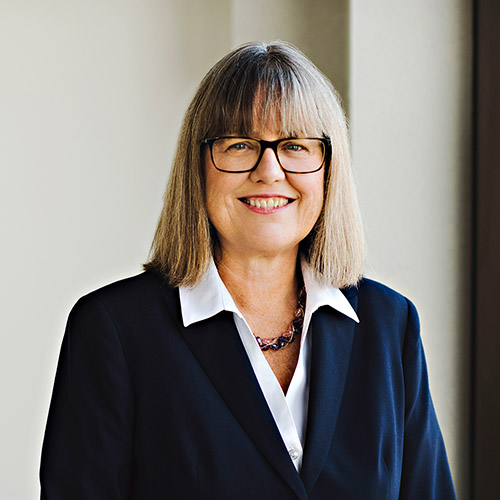
Donna Strickland
Donna Strickland is a Professor in the Department of Physics and Astronomy at the University of Waterloo and is one of the recipients of the Nobel Prize in Physics 2018 for developing chirped pulse amplification with Gérard Mourou, her PhD supervisor at the time. They published this Nobel-winning research in 1985 when Strickland was a PhD student at the University of Rochester in New York state. Together they paved the way toward the most intense laser pulses ever created.
Strickland was named a Companion of the Order of Canada and was named a recipient of a Sloan Research Fellowship, a Premier’s Research Excellence Award and a Cottrell Scholar Award. Strickland served as the president of the Optical Society (OSA) in 2013. She is a fellow of OSA and SPIE, the Royal Society of Canada and the Royal Society. She is an honorary fellow of the Canadian Academy of Engineering as well as the Institute of Physics. She is an international member of the US National Academy of Science. Strickland earned a PhD in optics from the University of Rochester and a Bachelor of Engineering from McMaster University.
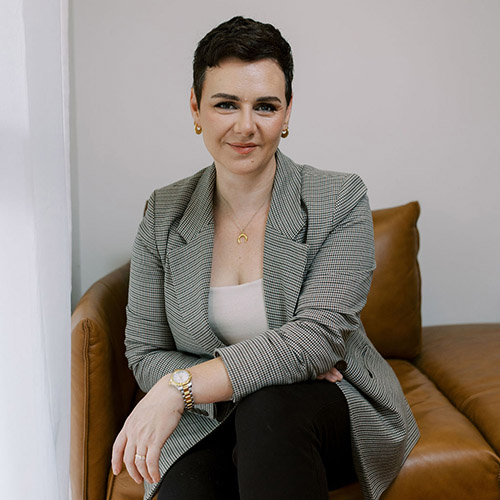
Tegan Taylor
Tegan Taylor is a multi-award-winning broadcaster for the ABC with a strong interest in health and science. She hosts Life Matters on Radio National as well as the cheeky health podcast What’s That Rash? Previously, she’s hosted Radio National’s Health Report, Quick Smart, Ockham’s Razor and Coronacast. She’s received a Walkley Award, the Eureka Prize for Science Journalism, and her work has appeared in the annual Best of Australian Science Writing anthology, of which she was the co-editor in 2025.