
David Cooper Lecture | Ending AIDS: A Global Responsibility
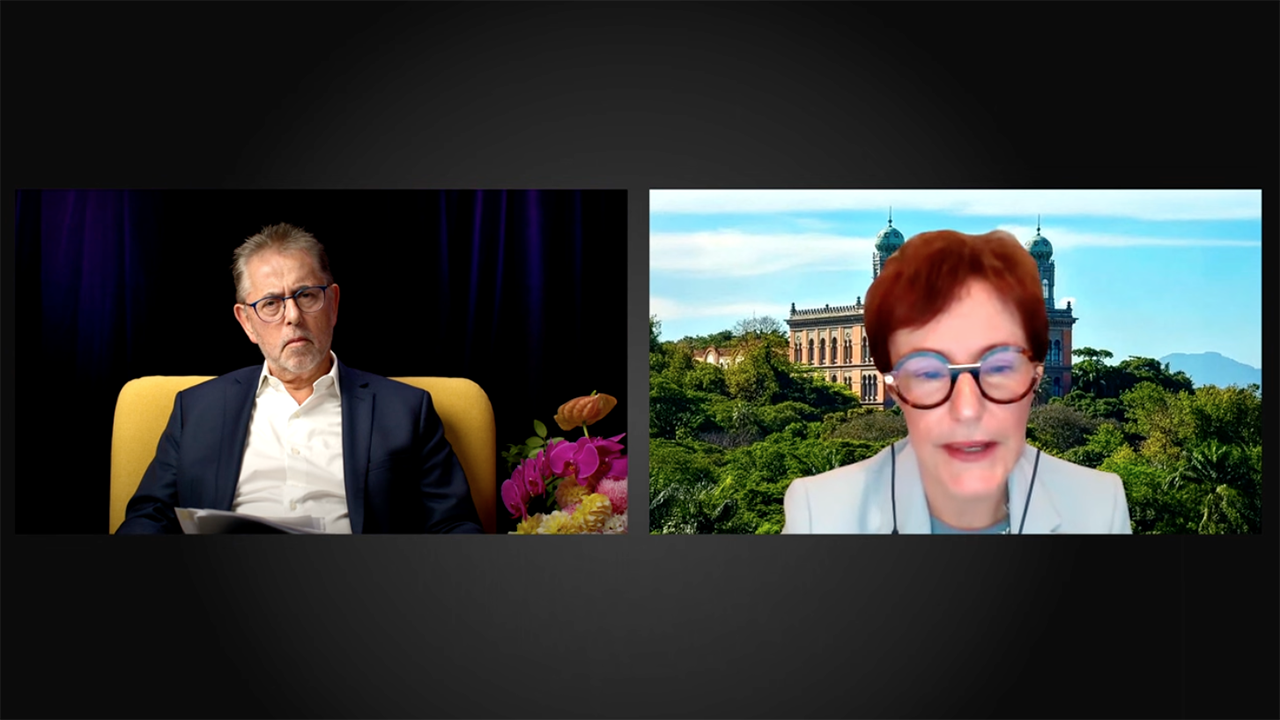
The HIV response that was born from activism, solidarity and science remains one of humanity's greatest collaborative achievements. So, to preserve it, we must protect what works, invest in what is new, and never forget who is most at risk of being left behind.

With Australia on track to be among the first countries in the world to eliminate the transmission of HIV, there is a lot to be optimistic about. Yet globally the rates of transmission and AIDS-related deaths are predicted to rise, disproportionately impacting marginalised communities and people living in low and middle income countries.
Weakening US political commitment and recent funding cuts are threatening the delicate global healthcare architecture designed to prevent and treat HIV/AIDS. High-income countries, like Australia, have a crucial role to play in enabling accessible research, testing, treatment, healthcare and public education with international communities.
Join renowned leading infectious disease researcher and President of the International AIDS Society, Dr Beatriz Grinsztejn, in conversation with Australia’s Dr Norman Swan. From diversifying funding sources to strengthening universal public health systems and promoting community involvement, Dr Grinsztejn and Dr Swan will discuss how to overcome the setbacks deepening the inequities between who gets care and who goes without.
This event was co-presented by the UNSW Centre for Ideas, Kirby Institute and UNSW Medicine & Health.
ABOUT THE DAVID COOPER LECTURE
The David Cooper Lecture honours the legacy of the Kirby Institute’s founding director, Professor David Cooper AC, who passed away in 2018. David was an internationally renowned scientist and HIV clinician who laid the foundations for Australia’s ongoing leadership in the fight against the global HIV epidemic.
Make a donation today to support David Cooper’s incredible vision for equitable access to healthcare: unsw.to/DavidCooperMemorialFund.
Transcript
Norman Swan: Good evening and welcome to tonight's broadcast of the 2025 David Cooper Lecture. The topic is Ending AIDS, a global responsibility in a very important moment of time. My name is Norman Swan and I produce and present the Health Report on ABC Radio National.
I'd first of all like to acknowledge the Bidjigal people who are the traditional custodians of the land on which we are broadcasting to you tonight. I'd like to pay my respects to Elders past, present and future and pay my respects to Aboriginal and Torres Strait Islander people watching the lecture tonight. The David Cooper Lecture honours the legacy of the Kirby Institute's Foundation Director, Professor David Cooper AC, who passed away in 2018.
David was internationally recognised for his research work and his clinical work and his pioneering work in understanding the roots of the global HIV pandemic and how to deal with it. Tonight, we have Dr Beatriz Grinsztejn joining us from Brazil, who is a renowned STD AIDS researcher based in Rio de Janeiro. But to really put this into context, I'm joined by the Kirby Institute's Director, Professor Tony Kelleher.
Tony, thanks for joining us. Can you put this tonight's lecture and the lecture in context?
Tony Kelleher: Thanks very much, Norman. So David Cooper was all about health equity through evidence, and he did that by really trying to identify strategic interventions that would make a difference across all communities for all patients. But that had to be based on scientific rigour.
And so he managed to bring together elegant scientific approaches with community consultation on a global basis to come up with solutions that were not just practical, but highly accessible. And those interventions still underpin many of the approaches we have to treating and preventing HIV to this day. Currently, those approaches have been implemented through a range of global approaches.
And with the changes in the geopolitical landscape, and particularly in the changes of funding of both research and implementation programmes, we are at a real inflexion point in how the global response needs to adapt to the new challenges that we face. And so when we were thinking about who would give the lecture this year, we immediately fell upon Beatriz Grinsztejn, who, you know, is a clinician researcher, much like David was, has conducted many pivotal clinical trials. So she's President of the International AIDS Society, which is also known as IAS.
So one of the advocacy organisations, one of the representative organisations that really is leading the charge in terms of addressing these challenges going forward. So I think she's the perfect person to give this lecture tonight. Thanks, Tony.
Norman Swan: And welcome, Beatriz. We're honoured to have you as this year's 2025 David Cooper Lecture. Did you know David?
Beatriz Grinsztejn: So I had the privilege of knowing, not only knowing, but also working with David Cooper, and his legacy continues to shape the way many of us think about science and solidarity. So David believed that research was not just about discovery, but also about responsibility to communities, to equity, and to the global sharing of knowledge. He showed that collaboration between the global north and the global south could be grounded in mutual respect and shared purpose.
Norman Swan: Thanks, Beatriz. Take me back to the day, if you remember, you probably do remember it, where you knew something was happening and you were seeing situations in the clinic which you hadn't seen before.
Beatriz Grinsztejn: Oh, yes, I still remember very vividly the very beginning of my journey with HIV, as it happened yesterday. So I was a very young medical student in Rio de Janeiro when the first AIDS cases appeared in Brazil. So at that time, I imagined myself becoming a psychiatrist, actually.
But everything changed the moment I stepped into the infectious diseases ward at my university hospital. So those moments profoundly transformed me. The wards were filled with young people absolutely terrified by a disease we barely understood, one that came with both biomedical uncertainty, but also with crushing burden of stigma, silence, and social exclusion.
So suddenly, there were many people dying from this new disease, some of whom I knew personally. And that sense of responsibility struck me very deeply. So in those days, HIV was not just a virus, it was a mirror reflecting who we were as a society.
Many of the first people I cared for were gay men whose lives were devastated not only by an illness for which no treatment existed, but also by prejudice and rejection, family rejection. The suffering I witnessed was not only biological, but deeply social. People were dying from lack of medicines, yes, but also from loneliness, discrimination, and the system totally unprepared to care for them.
So those encounters shaped the way I understand medicine as a field where science and justice must work together. So as I progressed in my training and became an infectious disease specialist, the epidemic intensified in Brazil. So when I arrived at Fundação Osvaldo Cruz, where I worked since 1998, so back in 1998, immediately after I finished my residence training, Brazil at the same time was undergoing the redemocratization after a long dictatorship process.
And so at that time, our national public health system, called SUS, was being built. There were no senior mentors wanting to take on HIV at my institution. So my colleagues and I stepped forward and created one of the country's first integrated HIV services, combining care, research, and teaching.
Norman Swan: So just to interrupt you there for a second, so you're saying that there wasn't a universal health care system in Brazil till the late 1990s?
Beatriz Grinsztejn: No, that was in 1988.
Norman Swan: 1988.
Beatriz Grinsztejn: And in the very beginning of the 90s, we had this, our national public health system was established, just when the redemocratisation was going on in our country. So it all happened at the same time. And the HIV response was fully, completely built within the national public health system.
So if we didn't have the opportunity to build our national public health system, the HIV response that was designed in Brazil would not have been possible at all.
Norman Swan: You talk about stigma and the deep integration of HIV AIDS into the social determinants of health. But before we go on to the research and the advances since and what's made those things possible, I want to hear your personal reaction, because you talk about how no senior clinicians wanted to take this on. You and your colleagues had to develop your own system.
I mean, there was a lot of fear and stigma globally amongst the medical community.
Beatriz Grinsztejn: Oh, yes. And the same here. The same here.
So stigma and discrimination were major. Our epidemic, exactly as your epidemic in Australia, affects mostly key populations, very vulnerable populations of MSM, transgender women. So these people are already discriminated a lot.
And so with the HIV on board, it all became even worse.
Norman Swan: So all you had to begin with was prevention. And in the early days, you didn't even know what the agent was, what the infectious agent was. How has prevention, before we get to treatment, which has obviously made a huge difference and has been a preventive element in the story of HIV AIDS, how has that undercurrent of prevention maintained itself, particularly in Brazil, before we get to the international scene?
Beatriz Grinsztejn: Okay, so of course, the beginning of the fight against HIV was all based on decreasing sexual exposure, so that we could decrease new infections. So it was condom based only. And of course, Brazil was the first middle income country to establish a national AIDS programme with universal access to antiretroviral therapy.
So we started very soon against all the counselling that was got by external aid. So Brazil mounted a response that made universal access to antiretrovirals available since the very beginning. So initially, the projections would be that we would have a huge epidemic.
But as we started distributing antiretrovirals, first AZT, of course, alone, as it was at the standard of care, then dual therapy, and then as soon as HART, named at that time ART, as we know it now, as soon as it was implemented in the rich countries, Brazil also incorporated it in the late 1996, so that it became a policy in our country to offer universal access to antiretroviral treatment. So you know very well that undetectable is untransmissible. And so before this concept was truly known, we already practised it in Brazil as we were able to offer antiretroviral therapy.
So the numbers, the figures expected that our epidemic would reach, we never got there, because since the very beginning, we had not only prevention with condoms, but also as soon as antiretroviral drugs were made available, it was made a policy in Brazil, and anyone, Brazilian or not, living here can have access to antiretroviral therapy. So when pre-exposure prophylaxis became a reality, it was also incorporated within our public health system in late 2017, and now we also have PrEP available in the public health system. But you know, achieving zero new transmissions in a middle-income country where stigma and discrimination is a major barrier, we need to confront deeper structural challenges.
So not only persistent stigma, but social exclusion, late diagnosis, and very uneven access to high quality services across regions and populations. So whatever we have available, it doesn't appear, not everyone, although we have a universal access public health system, not everyone has the same access because of the social determinants of health. So it's worse for the less educated, it's worse for the black, it's worse for very young MSM and for transgender people.
Norman Swan: And how's that, when you look at those vulnerable populations, how's that reflected today in HIV prevalence?
Beatriz Grinsztejn: So we have, we still have, very unfortunately, we are one of the three regions in the world where new infections are still on the rise. So it's still a big problem, and the most affected populations are very young MSM and transgender women and commercial sex workers. And when we look more in depth, we see that the less educated, non-white have the worst burden.
Norman Swan: I think you said when we were talking before that you were up to 30% prevalence in some of those groups
Beatriz Grinsztejn: So we have the latest data on MSM prevalence is around 18%, but it can vary across ages. So it's, of course, it's that high among the youngest, but it's lower when they get to 40, prevalence is lower at that age. We have prevalences around 30% among transgender women and around 5% among women commercial sex workers.
Norman Swan: I mean, that's getting to levels that we saw in the early 80s in places like Kinshasa.
Beatriz Grinsztejn: Exactly. And so these micro-epidemics are exactly like you see in certain African countries in generalised epidemics. So this is exactly what's going on here.
And if you go to South Brazil, so overall we have a concentrated epidemic among MSM and trans women and commercial sex workers. If you go South, you also see higher prevalences among CIS women. So we have different patterns of the epidemic in different regions of the country.
Norman Swan: We tend to look at medical solutions, often in medicine, to solve social problems. And I don't want to criticise that too much because immunisations made an enormous difference and lifted people out of poverty and so on. But have there been social interventions to try and make a difference?
Because obviously you've got medicine available, but you've still got these high prevalence areas. And this starts to get to the global story of interventions that really make a difference. Sure, if you could get everybody down to undetectable viral loads, that would be a great advance, but that's not as easy to achieve in the current situation.
Beatriz Grinsztejn: Yeah. So I would just like to point out a very important example from Brazil that is the conditional cash transfer programme. We have the Bolsa Familia that we were able to show that it's a small amount of money that goes to mothers and they need to keep their children in school.
They need to vaccinate their children. So there are specific parameters they need to follow so that they receive this monthly contribution that is not huge. But looking at the data analysis on the HIV epidemic that was done, we were able to show amazing results related not only to mortality that was slashed and even more among those really in deep poverty.
So we were able to show decrease in mortality and also in hospitalisation. So saving resources from the public health system. So it's a small amount of money, but it can make a huge difference.
And you asked about the global scenario. So just to point out that Brazil does all of it without international help. So we are not at all dependent on the global fund or the PEPFAR.
And what we are seeing since the beginning of the year with the new government in the United States, there was this big, huge change in PEPFAR and USAID with severe cuts that were made. And now two months ago, a new global health strategy was launched that now the United States is starting to work bilaterally with each country in Africa so that they can design how they will evolve with this funding in a totally different fashion that was done before. Focussing on financing healthcare workers and buying things that are needed, antiretroviral drugs for prevention, treatment, HIV testing, but very targeted actions will be funded.
And as we could see so far, community is completely left out of this new design of the international aid from the United States. Besides that, their contribution to the WHO is not in place anymore and Gavi as well. And also we still don't know, we will know tomorrow about the contributions to the global fund, the replenishment will be soon announced.
But besides the United States, we were expecting that other countries would step forward and provide further support, more support to overcome this situation with the United States not providing the same amount of resources. But what we are seeing very unfortunately is that other countries such as Germany, the United Kingdom, and we heard about France today are also decreasing significantly their contributions. So it's a very critical moment.
And this is certainly impacting already HIV new infections, HIV related deaths, especially among children who are always the first to be even more affected than the entire population. But also it is impacting severely the rollout of this new prevention technology that is the long acting, that are the long acting antiretrovirals for prevention. More specifically cabotegravir and lenacapavir.
And lenacapavir being an every six month drug, there was a huge expectation that it could really change the face of the epidemic globally. But these severe cuts are impacting the rollout of this amazing prevention strategy that is lenacapavir.
Norman Swan: What are the early statistics? You talked about an impact on HIV infections, childhood HIV, but do we know numbers yet in terms of what's been happening this year? Because there were cataclysmic predictions when USAID effectively shut up shop.
Beatriz Grinsztejn: Oh, yes. I don't have exact numbers on the top of my head, but I truly, what I know is that many services from the very, very beginning in January, services were shut down. A lot of the work was done by community health workers, and this is totally out of the new financing structure.
So HIV care is being integrated into regular care in these countries where the cuts were major. And it's always very hard to talk about integration of HIV services into the regular services, especially in places where criminalisation of homosexuality is in place. So how can you talk about bringing people to regular services if it is a crime to be homosexual?
So this brings huge challenges for the integration of services in several countries where criminalisation is in place.
Norman Swan: With this rise in HIV prevalence, enormous impact locally, because, well, actually, before I get to that question, just give us a clear idea, because I'm not sure I'm clear in my own mind, has PEPFAR just turned off or is it going, or what's happening with PEPFAR?
Beatriz Grinsztejn: No, PEPFAR is not off. It has decreased its scope of action. For instance, I will give you a very practical example.
For HIV pre-exposure prophylaxis, PEPFAR was responsible for the large majority of people on PrEP globally. And in this new era of PEPFAR, PrEP is only allowed for pregnant women. So it's not even allowed to women on childbearing age.
So it's very limited PrEP that is allowed within the scope of the new PEPFAR. And so multiple programmes clashed and people are being left behind. And there are several reports of children that are dying.
There are several mathematical models already published showing that infections will terribly rise if funding doesn't come to a regular flow. And as I said, this new era of PEPFAR is being structured now with these bilateral agreements between the United States and countries. So there will not be any NGOs doing this middle service.
The United States is doing bilateral agreements with the countries establishing what is to be done in these agreements. They will take from three to five years, but there is also a lot of language there about pandemic prevention. So even if these agreements will only last three to five years with the aid to HIV, tuberculosis, and malaria, these countries will need to provide data on any surge outbreak, new pathogen that may arise within the next 25 years.
So it's a very complex moment of neocolonialism and extrativism against the poor countries.
Norman Swan: Just take us through the chronology of this year and what's happened with US funding and how that's changed.
Beatriz Grinsztejn: After Trump came into power, there were the initial orders and PEPFAR and USAID were dismantled. And now from two months ago, the United States released the America First Global Health Strategy outlining the vision for forging direct agreements with countries. So increasing collaborations with the private sector and faith-based organisations, discarding relationships with traditional non-governmental organisations.
And so now all the relationships will be based in bilateral agreements and less with multilateralism. And so the new agreements in this American First Global Health Strategy will be done in bilateral agreements between the US government and countries that were initially funded by PEPFAR and USAID. So these bilateral agreements will take from three to five years and they focus on specific diseases, targeting specifically HIV, polio, tuberculosis, and malaria.
Importantly, the family planning is absolutely absent in these agreements. So the strategy pillars are shifting from multilateral to bilateral engagement and narrowing the funding priorities, mostly to commodities and frontline health workers. And communities are totally out as well from the funding priorities.
Norman Swan: So give me a sense of, I mean, the current administration is in place for another three years. Things aren't going to change in terms of the US approach to this. They could win again and you could have J.D. Vance as the next president. So you could be looking at eight years more. Who knows? And therefore you can't rely on the United States now for a global public health response to HIV AIDS, maybe also tuberculosis, maybe also malaria, but we're here to talk about HIV AIDS.
What is the global response? You alluded to a little bit earlier, but what is the global response that's required now? Not only are there tragedies within each country and within those populations, those vulnerable populations that you talk about, there's also a global public health risk as well.
Beatriz Grinsztejn: Yes, there is a huge global public health risk and it's about, it's all about safety, right? We need to invest in HIV, tuberculosis and malaria because it's safe for the entire planet. So it's not about the countries where these diseases are happening, it's about the safety of the entire world.
So, we are very much concerned about what we will hear tomorrow about the replenishment of the Global Fund. As I mentioned before, there is a risk that not only the United States, but other countries such as Germany, the United Kingdom, and France decrease their contribution, which is a threat to the multilateral architecture that has supported global health security for decades. So, I think that we are in a critical moment.
And another point that I wanted to highlight is also the funding for science. It's also a critical moment to discuss funding of science and the next generation of researchers, because the United States has been the major funder for research, international research, and biomedical research. So, it's really an unknown where my own institution has been granted resources from the Division of AIDS of the NIH, and we are really grateful because it changed it.
It brought us conditions to do truly amazing, important research in Brazil funded by the United States. And as happened with us, multiple countries participating in this major HIV network, so the HIV prevention network, the HIV vaccine network, the AIDS clinical network dedicated to clinical research, the ACTG, so everything that was built within this network brought a lot of knowledge that helped to put together guidelines that guide us for many, many, many years. So, it's not only the United States, but they are the major contributor to the advance of biomedical research.
And it's an unknown how it will go forward. And the impact on the next generation of researchers is also of major concern for everyone.
Norman Swan: I mean, it's an enormous issue. I mean, the way I think about it, it's almost like NATO, where the NATO countries relied on the United States for their defence and protection and allow their defence spending to go down and realise now that they've got to be more self-sufficient. It's harder for middle-income countries like Brazil, rather than places like Australia, where we've probably got more free cash in the system.
But nonetheless, we haven't come to terms with the fact that we need to boost national levels of research expenditure so that we're more self-reliant.
Beatriz Grinsztejn: Yes. But even in countries like mine, where we have a nationally funded public health system, as I mentioned, the most vulnerable populations have difficulties in assessing systems. The system is not friendly for the most vulnerable.
So, we actually have a lot of problems related to the inequities that are pervasive in our environment.
Norman Swan: So, do we need structural changes here? I mean, is the Global Fund fit for purpose in this environment, for example?
Beatriz Grinsztejn: Yes, I think that it still has a lot to do. And of course, we totally understand that changes are needed and the level of support that countries can get will not remain the same. So, adaptation is needed.
It was well known that changes were needed in the PEPFAR structure. But the problem is that the way things have been done and the pace of the changes are not reasonable and the impacts are already being felt. So, we are truly looking forward to what will happen with the replenishment of the Global Fund and what are the next steps so that we can pursue a strong response to the epidemic.
Norman Swan: And let's assume there is money and be more optimistic, if not this year, then next year. How would you grade the funding priorities globally?
Beatriz Grinsztejn: So, I think that, for instance, in this new PEPFAR design, countries also have the opportunity to put together their agenda where the resources could fit best to strengthen their own health systems. So, I think that it is critical that countries use this opportunity and affirms the principle of national ownership and put together programmes that can strengthen their own public health system. Also, another important point is manufacturing.
We have seen with COVID-19 pandemic that countries that didn't have any infrastructure for manufacturing vaccines were totally left behind. And the same was seen very recently with the mpox outbreak. So, it is really important that there is this aim of strengthening the manufacturing capacity.
And this is also already very clear for African countries that this is a major aim. In Brazil, we could do better despite the terrible government we had at that moment. But given we had infrastructure of manufacturing, we were able to overcome the initial devastating epidemic that was in place because we could respond somehow because we have the manufacturing capacity.
So, it's important that the resources that countries get cannot only get the supplies that are needed for prep, for treatment, but also to help strengthen their health systems and the manufacturing capacity.
Norman Swan: And what role today in a very different world for community activism? One of the things that made a huge difference in the 80s, huge difference.
Beatriz Grinsztejn: Yeah, I think it's critical that we get to this point. So, again, going back to the funding, there was this huge component in the USAID and PEPFAR resources that was driven to community support. So, services were built to serve communities and service delivery was done within the community so to facilitate access.
And within this new model, community is not funded. So, we don't have resources to fund no community activists, but also no community health workers. So, we will need to find resources to keep community alive.
And also, this is where the IAS can contribute to give a platform where we can really have community voices being heard at this critical moment where funding cuts are threatening community responses and even community voices to be heard currently. So, I think that the IAS has its mission. And one of our missions is to really advocate for communities and have the community voices being heard as loud as possible.
Norman Swan: Do you think that the communities in rich countries who do have more of a voice are letting that voice be heard in the way they used to be heard, particularly gay men?
Beatriz Grinsztejn: I think that there is still a strong community movement. I think that as things happen that there is a kind of fatigue. But I think that this new environment that we are all facing is bringing back some new energy for people to put their voice louder.
Norman Swan: It's kind of been a sombre story. Is there a positive message buried in here, Beatriz?
Beatriz Grinsztejn: So, I think that the world has now the tools to end AIDS as a public health threat by 2030. What is missing is a sustained political will, predictable and adequate funding, and the courage to confront inequity head on. We also need to preserve investment in science and in preparing the new generation of scientists to continue to work.
So, the HIV response that was born from activism, solidarity, and science remains one of humanity's greatest collaborative achievements. So, to preserve it, we must protect what works, invest in what is new, and never forget who is most at right of being left behind.
Norman Swan: Beatriz, it's been an honour to speak to you. Thank you so much for delivering this David Cooper lecture, conversation, whatever we're going to call it, for 2025. Thank you so much.
Beatriz Grinsztejn: Thank you.

Beatriz Grinsztejn
Dr Beatriz Grinsztejn is a physician and scientist renowned for her leadership in infectious disease research. She specializes in HIV/AIDS and global health clinical research, with a focus on transforming HIV care and prevention through evidence-based strategies. She has published over 540 papers in peer-reviewed journals. Her work spans clinical practice, translational research, and public health policy, aiming to reduce health disparities worldwide. Throughout her career she has led major international clinical trials, contributed to the development of guidelines, and driven capacity-building initiatives in low- and middle-income countries. Dr Grinsztejn currently serves as President of the International AIDS Society.
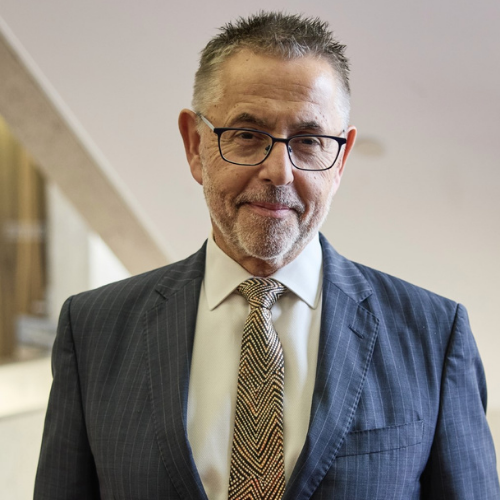
Norman Swan
Dr Norman Swan is a physician and journalist who co-hosts the ABC's Health Report and What's That Rash. He also reports for 7.30 and has won multiple awards including the most prestigious in Australian journalism – the Gold Walkley. He has three best selling books: So You Think You Know What's Good For You, So You Want To Live Younger Longer and, the latest, So You Want to Know What's Good For Your Kids, which covers the critical years between birth and age ten. In 2023, Norman was awarded an Order of Australia in the 2023 Australia Day Honours.