
Climate Warriors
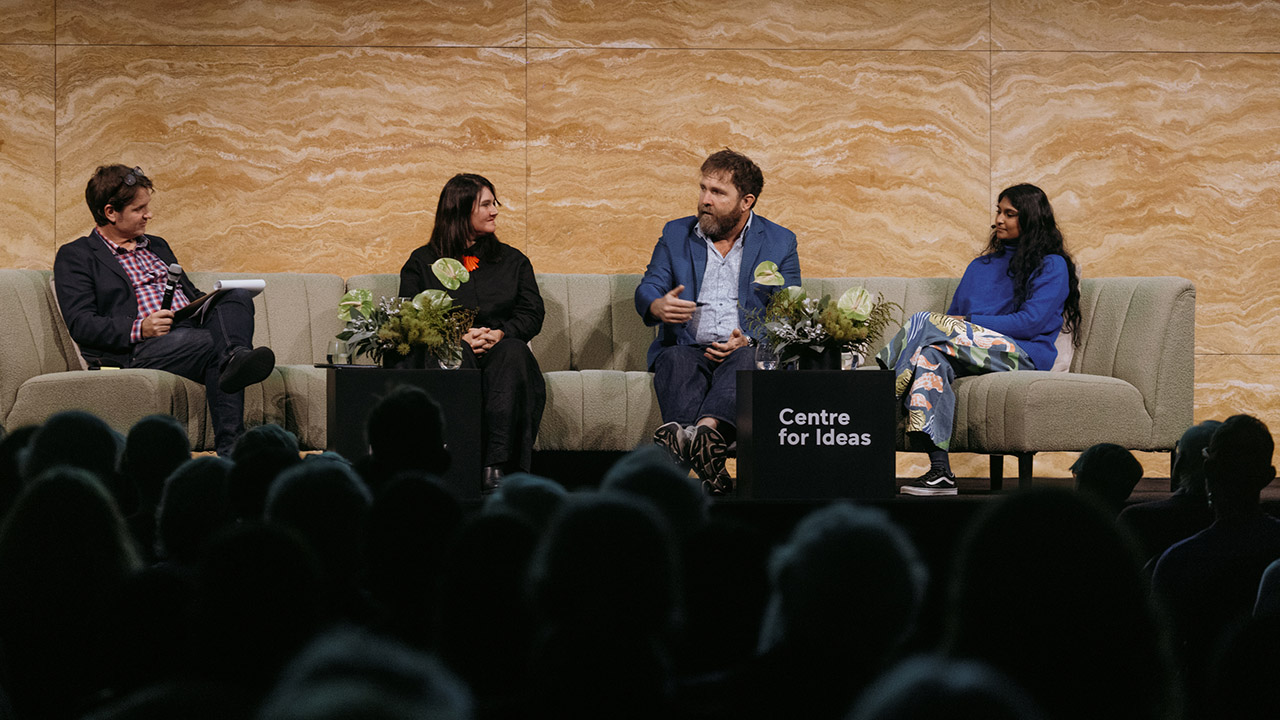
A huge amount of the work to be done [includes] decisions made by everyday people – with all of their normal, everyday economic responsibilities.
The climate crisis is vast, complex and often feels both imminent and frustratingly out of our control. With global systems slow to change and the scale of the challenge immense, it’s easy to wonder if individual action could ever be enough.
On World Environment Day, Climate Warriors brought together four transformative voices; renewable energy expert and former Biden administration advisor Saul Griffith, Solar Citizen CEO Heidi Lee Douglas, climate activist Grace Vegesana along with host and journalist Craig Reucassel, to unpack the power and limitations of grassroots action, climate innovation and community-driven change.
From local initiatives to systemic shifts, they unpacked what’s working, what isn’t, and where real impact is being made. While no single effort can solve the climate crisis, collective action has the potential to tip the balance.
Presented by the UNSW Centre for Ideas and UNSW Engineering, in association with the Right Here, Right Now Global Climate Summit.
Transcript
Craig Reucassel: My name is Craig Reucassel. I'm your host for the night. I'm not one of the climate warriors, although I am a climate worrior in the W-O-R-R-I-E-R sense of the word. Certainly worried about what we're doing, which is why it's good to be here.
Today is World Environment Day, which I must admit can feel a little token when so many of the days of the year we are, or at least should be, talking about climate and other environmental challenges that we face. But it's a good time to sit back and ask the questions, what can I do? What really makes a difference? How do I make my influence as powerful as I can? And how do I find hope in this often difficult time? So we couldn't have a better panel of climate warriors to answer these questions, Saul Griffith, Heidi Lee Douglas, and Grace Vegesana.
Saul Griffith is an engineer and entrepreneur specialising in clean and renewable energy technologies. Saul has founded a dozen technology companies across 20 years in Silicon Valley, and yet he's quite normal. It's amazing. He's the author of three books, including Plug-in!, Electrify, and The Big Switch. He's not only influenced clean energy policy in the US, but he's doing the same here through Rewiring Australia and Electrify 2515.
Heidi Lee Douglas is not only an award-winning film and TV writer and director working across documentaries and feminist horror. I do not know what that category is. She is also the CEO of Solar Citizens and the Deputy Mayor of Bayside Council as well.
Grace Vegesana is the National Director of the Australian Youth Climate Coalition. She was also the founder of the People of Colour Climate Network and the first Western Sydney branch of AYCC. She sits on boards of the Foundation for Young Australians, Sweltering Cities, and Cricket for Climate.
Please welcome our guests tonight.
Audience Applause
Craig Reucassel: So let's get on with the questions.
To start off, I want to ask each of our panellists, what's something you are proud of achieving, and I want to make it clear, in the climate space? So I don't want this to be a spelling bee in year three, okay? So we'll start with you, Grace.
Grace Vegesana: Yeah, well, it's a shame I can't talk about the spelling bee in year three, because I'm actually quite proud of that one. But for me, I think recently, through the federal election campaign, which it's hard to believe that that was a month ago now, we really saw that young people turned out in force on climate.
We saw that for AYCC and young people we support across the country, that we had 350 young people show up in 30 electorates, and had over 10,000 conversations with regular people about where the parties stand on climate issues, had conversations that need to be had, like why nuclear is a terrible idea, why we need to move away from fossil fuels into renewable energy. And yeah, we really saw quite a huge shift in young people really stepping up to take those conversations that need to be had in communities into their own hands. I think that was particularly really prominent in regional communities like Geraldton, where our AYCC Geraldton crew was kind of born out of the campaign, and really had a lot of hard conversations about gas in WA, which we're really seeing kind of hit the headlines this and last week around the Northwest Shelf expansion. And so yeah, I'm really proud of supporting young people to do incredible things and step up into their own leadership.
Craig Reucassel: Look, I'm quite nervous to ask this follow-up question as I look across the crowd. But shouldn't the young people be talking more to the old people? Aren't they the ones that know less about climate change?
Grace Vegesana: Yes, I hope they do. I think intergenerational conversations are really important. But I think that what we saw through this election was that three out of four young people told us through polling that they were voting with climate in mind, and that's 75% of young people under the age of 35. And so I think that we have seen a really huge shift in this last eight years that I've been involved in the youth movement, that we have moved from young people being either unaware of the issue or apathetic to the issue to actually deeply caring about it and seeing it as part of their future and the world that they inherit. And so I think that those intergenerational conversations are really important. But I think what's gotten us to the point that we are now is young people supporting each other peer to peer.
Craig Reucassel: Absolutely. Saul, what are you proud of?
Saul Griffith: The founder of Honda Motor Company was a guy called Honda, and he was about 90. And someone interviewed him and said, "what are the three things you're most proud of?" And he said "the Honda Rabbit was a little 50cc motorcycle that started the company, and the Honda S600", which was this gorgeous two-stroke 600cc convertible. And then he sat back, very thoughtful, and said nothing more.
And the interviewer said, "so what's the third thing?" And he says, "I haven't done it yet".
So I would have said I was really proud of the Inflation Reduction Act and getting the demand side into climate policy in the US, but now it's being torn apart by fascism incorporated. I have to revert to the Honda answer, which is I haven't done it yet.
Craig Reucassel: Yeah, we'll go on that. I did want to ask, you put some amazing effort into the Inflation Reduction Act. You had a big influence on it. Is any of it surviving Trumpageddon?
Saul Griffith: A lot of it will survive. A lot of the money went out the door and made it to states and so that money is starting to be spent. Elon Musk's DOGE has tried to claw that back, including the money had already been transferred to Rewiring America started a consortium with Habitat for Humanity and Prospect Homes and some people to decarbonise all electric homes. And they got a $2 billion award through the Environmental Protection Agency. DOGE froze our bank account, which is illegal because it's a privately held bank account. We sued them, they opened it, they froze it again, we sued them, they opened it. Now they're actually cancelling the contract from the EPA. So everyone thought that the IRA money that had moved was Trump-proof. But they're actually doing illegal things. Like we've been told not only by our lawyers, but their lawyers that we will win the case. But they know that if they just make it really painful, we'll probably give up. And in fact, Habitat for Humanity has pulled out because they can't afford, they're meant to be nonpartisan. So through will and the shock and awe that you're seeing, I think Australians think it's bad over there. It's so much worse than you think.
We hired a beautiful woman, Stacey Abrams. She was an African American community organiser. She won Georgia for Biden. Rewiring America is now called Stacey Abrams slush fund. And we are under FBI investigation for fraud and abuse. And the witch hunt is on and it's everywhere. So they won't get all the money, but they are trying very hard and it is a fear.
Craig Reucassel: All right. Well, I promise to give people some hope. We've really gone downhill so far, haven't we? I do apologise for that.
Heidi, what are you most proudest of?
Heidi Lee Douglas: I mean, hearing you speak, Saul, it does make me proud to be in Australia right now, to be honest. This election result was a resounding win for renewable energy in Australia, and for Solar Citizens, we've been working for three years for a federal home battery rebate. And that's to marry our great rooftop solar uptake, the best in the world per capita with home storage and make that home storage more affordable for everyday Australians, for people all around Australia who want to have energy independence, but also to share that cheap, clean energy from the sunlight during the day with their neighbours at night as well. So, I mean, I'm just incredibly proud of us as Australians that we voted for positive change and that we managed to secure that from the Labor Party. I think it probably feels like two steps forward, three steps back at the moment with the Labor Party also endorsing gas. But, you know, we have to have the clean energy in to get the dirty energy out. So, I am very proud of the work we did with the federal home battery rebate.
Craig Reucassel: Yes, a battery in your backyard is fantastic. Well done.
Well, I work for the ABC, so I do need to be balanced and just ask you, did you consider small modular nuclear reactors for the backyard?
Audience Laughter
Craig Reucassel: Just, you know, think about that.
Look, when people ask me what they can do themselves to help solve climate change, one of my first pieces of advice is always to find others that have similar concerns. All three of you have worked with communities to amplify your voice, so I want to hear about the lessons you've learned from those experiences. Heidi, let's start with you. Talk to us about Solar Citizens' history, where they came from and where it's evolved to.
Heidi Lee Douglas: Well, Solar Citizens began under the banner 100% Renewable Community Campaign, and we rebranded to Solar Citizens about thirteen years ago. I've only been the CEO for three years, but it's been an ongoing growing movement in Australia to take up rooftop solar. So, Solar Citizens is like a voice, basically, for rooftop solar owners. We have 200,000 supporters around Australia. We are spread out as wide of the demographic as Australia is in terms of population base, and in fact, you know, some of the most avid solar supporters are in Queensland, in Liberal electorates, where there is up to 60% solar uptake.
So, solar cuts across politics. It's a great unifier, partly or mostly because of the cost of living benefits, but also I think that energy independence, that idea of not being beholden to big energy companies, there's the rebel spirit in Australians where we do want to, you know.
Craig Reucassel: Yeah, absolutely.
I think that's a huge part of the success of solar. It's because it's been on people's roofs, and to be fair, some of the people that took it up in the early days, when I talked to them, some of the older blokes, they're the kind of people who I reckon could have been climate deniers, but are now just passionate solar citizens, because they've seen the reality of it, and that's been a huge part of Australia's success going forward. As you say, you go to Mackay in the heart of the coal area, everyone's got solar. It's absolutely everywhere. So, it's been such an amazing success.
Grace, I want to ask you, you've sought to expand the diversity of the climate movement in many ways. Firstly, getting it out of the inner city, out to the west, and then opening up the People of Colour Climate Network. What's your experience being there and how has that worked? How has it changed the face of the climate movement?
Grace Vegesana: I think it's been really positive, actually. I think that I really grappled with the feeling of being the only person of colour in the room for a lot of climate events that I was at. I got involved in 2017 for Context. It was pre-Black Lives Matter movement blowing up, so I think people had a lot less consciousness of what was happening, and who was in the room, and the dynamics that surround that. I really clearly remember being 17 when I first got involved with climate organising, and being the only person of colour in the room, and feeling quite alone in that, but also being like, where are all of the people who are being impacted by this? I know that Western Sydney should be in this room.
I know that the urban [heat] island is playing out. I know that Black Summer bushfires were going to happen. It was deep in the conditions of what we were seeing around climate change at that point in time.
I think for me, I really saw a need to make sure that the movement is more representative of the people it seeks to serve. 50% of Australians right now come from multicultural backgrounds, whether it's them being born overseas, or it's their parents being born overseas. I think that that's a really unique opportunity to make sure we are diversifying the movement, yes, because it needs to be representative, but I think that the more diverse solutions we can bring to the table, the better our solutions actually become, because they work for more people.
I think in starting the People of Colour Climate Network, it's blown up. I think it's like 800 young people of colour now in two years, which is too much for me to manage. I cannot remember that many names. But I think it's a really exciting opportunity where people are yearning to take action on climate, but need to find the communities for themselves. I think creating access spaces for them has been a really important part of that work.
Craig Reucassel: Now, you've got lots of people involved. You haven't necessarily got your parents on your side yet.
Grace Vegesana: Oh, look, ethnic parents on climate is the next step, I think.
Audience Laughter
Grace Vegesana: Yeah, look, it's a crazy ball game. We actually run quite frequently through the election campaign and before it, workshops on how to talk to your immigrant parents about climate change. And they are so vastly different to our regular how-to-talk-to-people-about-climate-change workshops.
Audience Laughter
Grace Vegesana: But I think it's really important. I think that people shouldn't be left behind in the transition. I think that the transition is becoming inevitable, but justice is not. And so I think that we need to make sure that we're bringing everyone along. And I think it's young people who can actually support that work.
Craig Reucassel: Can you give us an example? I need an example from these workshops. What's one of the people? Howdy, what's the what's the line? What's the angle you take?
Grace Vegesana: Oh, there's so many. One of the things we were talking about before was actually like, my parents are climate deniers because they, they're very religious, I would say borderline far right. And they don't believe in climate change. I've accepted that they now believe that climate change is an act of God to punish the earth, which I've, I've just like, let it go. I was just like, you know what I've tried for eight years. That's, that's good enough. But they have rooftop solar now. And I think it was actually—
Audience Laughter
Grace Vegesana: —a win. Yeah, and I think it was like, actually thinking about the ways that you can not win the argument, but bring them on side without talking about climate change. I think for me, it was like talking about the economic benefits of rooftop solar, it was talking about the ways that you can save energy, which they already deeply cared about. It was talking about the ways that it would make me happy as their daughter. And so I think it was a lot of like, intergenerational guilt tripping and economic arguments.
Craig Reucassel: What a part of climate change is guilt tripping. Yeah.
So, Saul, talk us through the goals of your groups in Australia, Rewiring Australia and Electrify 2515 and how you've got the community involved in those groups.
Saul Griffith: So about globally, about 40% of our emissions come from decisions that are made around the kitchen table. And what I mean by that is the water heaters that we buy, the cars that we buy, the heat pumps, or how you heat your home, how you cook. So if you include small business decisions, it's about 60% of global emissions. So those are the cars that small businesses use and what fuels are used in small businesses.
So this is inverting a little bit the normal way of framing climate. And it's understanding that a huge amount of the work to be done are decisions made by everyday people with all of their normal everyday economic and like, get the children to school, and the ailing parents to hospice kind of responsibilities. And so we wanted to elevate that as a really important big lever that wasn't being addressed, even in the international treaties, most of the climate work has traditionally been about the supply side, which makes real humans feel a bit disenfranchised, because it's just about where the energy comes from just about industry. And it was ignoring at the peril of not solving the problem, this, you know, half of our emissions that are our decisions. So that was the founding of Rewiring America, let's sort of be the union of households for representing households in the energy and the climate transition. And that's very much the same thing we're trying to do with Rewiring Australia.
And you don't even know this, but you barely have any say about the energy system in Australia, because the regulators are designed to protect the existing industrial and generating players, even though our rooftops in our cars will be the biggest generator in the new system, the biggest energy storage in the system. So in a policy and regulatory sense, we wish to be there to represent the household, win things like, kudos to you, the battery rebate and other things the government can do. So we're trying to convince the government that your household infrastructure is national energy infrastructure, worthy, you know, we give special interest rates to Macquarie Bank to build infrastructure, yet we won't give special interest rate to a single mum of colour in the western suburbs, even though her solar is also part of the national energy infrastructure.
So we're trying to fight for those types of arguments, trying to fix the regulatory system. So right now, you selling your solar electricity back to the energy system, you're forced to sell it to the big wholesale market for pennies. It would be easy for you to sell it for more pennies to your neighbour, lower their energy bill and provide you more income. But that's illegal by the design of the regulations of the system. So I fight those really wonky regulatory fights, so you don't have to. Because I think if we can do that, then we make the economic benefits that both of my colleagues here have spoken of even better for the Australian people.
So that's sort of the why, then you say, so what about Electrify 2515? I'm a real fan of lighthouse projects, they call them in the US. So let's make the future happen in one place to prove that the grid won't fail, it'll be more reliable, the air will be cleaner, households will save money. So we worked with our local community, and we got something like 40% of our local community members or households to sign up to try and speed up the electrification of 2515. It's a group of six suburbs, south of Sydney. And it's going really well. And you know, when we’re, literally I had tea with the latest recipient of a heat pump, hot water heater in our community last week, it was the 60th electrified household. We call it D-Day, it's decarbonisation day, he has cut off his gas connection as of that water heater.
But what we're learning is just, you know, even though the economics work, even though the social license is improving, people still aren't doing this fast or easily, the tradesperson will still show up and say, "Yeah, nah, you don't want that mate, I've got a cheap gassy on the back of the truck. You know, if you give me cash, I'll take 100 bucks off it." And then someone locks in 15 years of carbon emissions and higher energy bills for their home, because the tradies are selling against us. So we're learning on the ground lessons like that, and trying to prove the experience for the next 11 million households.
Craig Reucassel: I think it's really important to do that.
It's interesting that you're working at kind of two different levels. You're working in the extremely wonky level. And because it is the amount of times when I'm looking at climate change solutions, and I go, where is this falling over? And sometimes you will get it's falling over in this incredibly frustrating bit of legislation that has stopped the transition happening.
You know, community battery legislation, all this kind of stuff. There's some crazy rules there that get in the way of the transition happening. But you're right as well. Sometimes it comes down to the most tiny little thing. It's literally that final bit, people who for years wanted to get solar or wanted to get a heat pump. And then the final thing is just the tradie or something like that. It's amazing how many barriers are up from the highest level to the smallest thing that get in our way.
And let's move on to talking about this. Because you know, we've talked about being involved in these community organisations, but some of us are shy. We want to be alone. We don't want to talk to other people about it. We want to do our own thing.
Let's talk about this. I mean, what can people do? What do you think of the most impactful thing that people can do in their own lives to make a difference on this front? And I think it's important at this instance to kind of recognise that in climate change, those small decisions can feel like a very small thing that doesn't add up. But they add up in an absolutely massive way. I was looking the other day, there's some statistics that show, put aside EVs and all that kind of stuff, just electric scooters and little electric bikes and electric scooters in the world are now replacing just under a million barrels of oil a day. And that's all these tiny little decisions that people have made over the world that are replacing that. They actually replace more than electric vehicles, electric buses, and all those others combined by double. It's far more.
But again, you don't think of those small decisions and small changes having an impact, but they have a massive impact. So let's talk about those small changes. Let's talk about where we think we should change. What's the kind of, what's the gateway drug to get you involved in this kind of stuff? Heidi, let's start with you.
Heidi Lee Douglas: It's a really interesting question.
I mean, I would obviously say solar.
Craig Reucassel: Solar Citizens, I would have been disappointed in a way if a Solar Citizen didn't say that.
Heidi Lee Douglas: I mean, I think, especially right now, if you're sitting here in New South Wales, you're eligible come the 1st of July for a federal home battery rebate that will take 30% off your home battery.
And we hope with putting pressure on the state government, they have a, they already have a Peak Demand Reduction Scheme battery rebate. It's a wonky term, which basically means battery rebate, and you could stack those. So that means you can get a rebate at the state and federal government. That was promised by Minister Bowen. We're just working on some background lobbying on that, but it has been promised. So the economics for getting a home battery really add up and they won't be like that forever.
The battery prices will go down, but the rebates will fade out. So you should get in now and you should combine that with solar if you haven't already.
It's a great time, but I mean, personally, I have an electric vehicle. Before that, I have a, I bought an, a long tail electric bike and replacing the car or the second car with an e-bike is a great, fun way to get around. And it massively reduces your costs as well as your carbon emissions. And I think it just makes you more connected to your community as well, because you, you don't have to worry about parking. You, you get to see your neighbours as you ride through the streets, you get to smile and wave and experience your community. So I think it's a great way to make our communities more connected. And that's why I'm also a big campaigner for safer streets as well, because I think living in urban environments, we need to reclaim our streets away from vehicles and make them people friendly.
Craig Reucassel: Yeah, absolutely. And it's interesting because putting a battery on, as you say, it's, it's useful for you. It's great for you at home.
I think that one of the best experiences you can have, if you have a battery, and this can, can happen rarely, is when your energy company owes you money. And you know, the funny thing about this is that whenever I owe the electricity company money, I'm automatically have to pay them. But when they owe me money, I have to specifically ask them to pay it back to me. Isn't that strange? What a strange situation that happens there. But, but also to go to that point—
Saul Griffith: There's, there's a regulation for that.
Craig Reucassel: Yeah, you should, can you fix it, please? Saul hurry up.
But as Saul says, though, those batteries are actually like, if you look at AEMO's plan, the ISP for 2050, more of our energy will be coming from household batteries than from gas, substantially more become from household batteries, and cars feeding back to the grid. So yes, you're doing this thing that is for your household and that, but you are doing the thing that is part of building.
Saul Griffith: —So this begs the question, why are we going to use low interest government loans that guarantee the returns of the gas companies and guarantee the returns to the electricity company, but we won't guarantee the returns on your solar or your battery. Like these are the issues that are fundamentally equity issues. So we're guaranteeing sovereign wealth funds, 10% returns to build our poles and wires, yet we won't guarantee the, and this is why it's important to work at high levels, but on the street, a lot of people in our community, when we're talking to them, we're like, well, I'm not sure whether we buy the battery yet because the government keeps changing the tariff laws and whether I can sell my solar back to the grid.
So we're willing to give multinationals fifty year commitments and we're not willing to give our Australian households six month commitments. You should be angry. You should be up in arms.
Craig Reucassel: We should be lobbying like they do. Exactly.
Grace, what do you think? Like if somebody's like, oh, I don't know what to do. I don't want to be part of this. What do you say to them? How do you tell them to kind of get involved and do their own thing? Maybe creates that kind of next step and gets them to the next level.
Grace Vegesana: Yeah, I think a good place to start is actually to talk to the people around you.
I think what we're really finding is that people are increasingly sceptical of external voices, but are really listening to the people closest to them and their communities. And I think that what we've seen through, particularly the last six months through a federal election period, is that we have so much mis and disinformation floating around about renewable energy, about nuclear, about like literally everything under the sun. Like I open up Facebook and then I close Facebook.
And so I think that actually having good, reliable information that you're sharing with the people around you actually creates a really positive ripple effect across society that actually people do care about the things that aren't always being spoken about. People actively show support for things. And I think that really contributes to a larger wave of social license for solutions like renewable energy and helps counter mis and disinformation that we're really seeing run rife through society.
And I think like I live in the Illawarra, and I've moved there a few months ago and the mis and disinformation around renewables and offshore wind is unbelievable. I've never seen anything quite like that. But when I talk to real people about it, they're like, no, I do support offshore wind.
And I'm like, there's a clear disconnect in what like the media and the broader narratives are telling you versus what regular people can tell you through real connection. And I think that I want you to have real conversations with the people around you and get out of your bubbles. And then also I want you to email your Labor MP.
Craig Reucassel: Yes, email. We're going to get to that in a second. It's interesting what you say about that.
But the other thing with getting around the misinformation, like just the behaviour, like there's a lot of studies that show that if you put solar on your roof, you're more likely to influence your neighbours doing it. If you get an EV, you're more likely to influence your neighbours doing it.
I was at a school in Tasmania recently in South Hobart. Had a lovely story of like a couple of years ago, there were three families that got the kind of e-bikes, the kind of caddy ones that you can put the kids on the back and that. And now it's like forty families that have done that. And that's just through that influence of it kind of growing and growing. So it's huge. You can have a big impact through what you actually do and show your community.
Let's get to that second point. You said email your Labor Party member.
Community action is very important. What you do yourself is very important, but let's go to the next level.
How do you engage with the existing power structures, with government, with those levels there? Heidi, I'm going to start with you. You're also a counsellor. What capacity do you see for change through that? Like why are you involved in counselling? Do you actually kind of go, wow, actually I can make a lot of change in this organisation?
Heidi Lee Douglas: I am an accidental politician.
Craig Reucassel: Best kind.
Heidi Lee Douglas: So I got involved because I was almost hit twice in one week by dangerous drivers in Bayside. And I set up a petition, which 3000 people signed. And they all contacted me with the same issues around hooning. And we set up a local community action group called Peaceful Bayside. From watching council meetings and seeing my representation, we got very frustrated. The local representation wasn't reflective of the values that we had. And we were finding it immobilising in terms of trying to make change. We would see the debates die on the floor in the council chambers. And so we decided to run our own candidates.
And so I was the lead candidate on a ticket of independents and got elected in late 2021. And as one independent counsellor, I was getting about 60% of what I wanted across the line, but we wanted more. And so we set up Peaceful Bayside as a local party.
So we're a community first party. And in the last council elections, we got two of us up. So we now hold the balance of power. We're there to keep Labor honest, basically. And it's a very exciting thing to be able to have the voice and to be able to be the voice of change for your community. You also have to be a really good listener.
So I often take calls from very angry people and have to convert that into a tangible action that we can take together to lobby council. Everything's going to take a long time. Like we just got a new master plan approved, or it's just about to be approved to go into planning process, I should say. It's not approved for a healthy streets project for Bay Street in Brighton, which is where the hooning is. So this is a master plan to put people first in this environment where we've had people subjected to hooning and cars really being very dominant. But that master planning process will take quite a few years and then the implementation.
So it's going to take a lot of patience. And I can see why councillors end up being on council for twenty years to get things done. So I may still be there in twenty years.
Craig Reucassel: Yeah, well, what about taking your experience with Solar Citizens into the council? Because I've found a lot of people you talk to, you said there's a lot of misinformation. So people go, I want to get solar or do something like this, but then I'm worried about dodgy people and I'm worried about dodgy deals and this kind of stuff. I've seen a lot of councils sometimes step into that void and go, there's a trust for us. If we kind of step forward and say, we'll help you, we'll help you, we'll vet people, we'll make sure we get past that kind of trust barrier, they can do something. Have you looked at doing that kind of stuff within the council?
Heidi Lee Douglas: Not with Bayside Council. We're not a very rich council. So a comparative to say the City of Sydney, so that we haven't really got a lot of money to pay for people to get renewable energy locally.
Craig Reucassel: I'm actually, the interesting examples I've seen, they don't pay anything. It's not about that. It's about actually going, we're going to use the fact that we have people that trust us and use that trust to kind of inform people and it doesn't cost anything. So it's an interesting, there's some fascinating examples in South Australia where they've done that kind of thing.
Heidi Lee Douglas: They have, yeah.
Craig Reucassel: Yeah, so I don't know. It's just interesting that, taking your experience from Solar Citizens into the council, how do you then grow that?
Heidi Lee Douglas: It's a good question. I mean, I think there's a lot to do.
I mean, circular economy, for instance, is a huge issue that we're trying to work on locally because we're in a waste crisis as well in Sydney with waste landfill running out in 2030. So there are so many issues at a local council level that you have to try and solve simultaneously. But I feel the kick up the—
Craig Reucassel: No, no, no, no, seriously.
Saul Griffith: I think this is why we know we're not serious as a country yet about this, right? I think the existence of Rewiring Australia and Solar Citizens is a failure of government to communicate where the country's going, where the future is. Like really, success for Rewiring Australia looks like local councils are doing what we're doing, right? So I think these non-profits shouldn't have to exist. This should be done.
Like we used to, as a nation, plan public schools and public works. My father, my grandfather actually ran the Department of Main Roads as secretary. We used to do nation building projects.
There was, and it was, we believed in the bureaucracy, and we believed in local government. And, you know, if we were serious as a nation, the federal government would fund every council to have one person to be the concierge of electrification, answer the questions like, yes, the kettle will still work when it's an induction cooktop, right? And that's, they're the real questions. They're the real fears.
But like we can, as a nation, we can afford one person on every council to help. That's roughly what we're doing in the Electrify 2515 is sort of a concierge service for somebody who's just a bit anxious about the last step in the decision. But if we're going to rely on philanthropy to do it, we're never going to get there.
This should be done, paid for by state or federal governments and implemented at local government level.
Craig Reucassel: Here, here.
Audience Applause
Craig Reucassel: Saul just to follow on from that, and probably this might be the worst time to ask you this question, given the story you gave at the beginning about the IRA and what's happening there, but just how important do you think it is to then engage with government to try and get the change through those mechanisms? Do you think that's an essential part of change?
Saul Griffith: Like the answer was in the question after that, 40 or 50% of the emissions are on us, the decisions that we make. But the other half is on structural decisions that the government is involved in, what renewable projects they approve versus what gas projects they approve. It's in making sure industry is doing it. It's in funding the universities to train for the industries of the future. That's something we used to do as a nation. We don't do so much anymore. We're too neoliberal.
So we're not going to get there unless government's seriously engaged. And all of our governments, doesn't matter what stripe they are there, they all believe in choice, right? Everyone's like, "oh, but you have to have choice about what vehicle, you have to have choice". I'm like, well, really no.
If you give everyone choice forever, then we're going to continue to burn all the things. And we need legislation, we need regulation, and we need to do it right, we need to do it fairly. But this is a government project. It needs to engage, government finance is absolutely critical in the build out of large scale renewables. It should be more critical in the electrification of family homes. Like we will not get there without federal governments taking it more seriously than any we have seen yet.
Craig Reucassel: Grace, I want to ask you, you talked about AYCC in the last election and going out there and talking to people about climate policy and the different policies of the different parties. Do you feel like those answers would have been very different had you known what the Labour Party was going to do very soon after they elected with Northwest Gas Shelf? Do you feel like you were in some ways hoodwinked there?
Grace Vegesana: I think that young people have become incredibly good at seeing through the veil of politics. And I think that sometimes that translates into disillusionment, which is fair enough, actually. But I think that sometimes that also translates into action. And I think that like Saul and Heidi are incredibly correct in that this is like the national energy grid is in fact a federal issue. Like the choices that we make are fundamentally going to impact our lives.
Like for context, the Labour government in their very first act in their second term, literally three weeks in, didn't even sit down for a parliamentary sitting week, approved the biggest gas project in the Southern Hemisphere till 2070, which I think can feel like a very far away, like long time away, but like I'll be seventy in 2070. Like this is very much within my generation's lifetime. We will very much bear the consequences of every single decision that we make today, every single new gas fracking project that we open up in Northern Australia, that is within our lifetimes, that is within our remit of choice.
And so I think that with young people, I think that what we're really seeing is a push for accountability and ambition. And I think that's what our focus will have to be through this term of government. In fact, we're probably staring down a three term Labour government. And so this will take us to the rest of the critical decade for climate.
And so, yeah, I think that it wasn't necessarily a surprise, but it was still quite bitterly disappointing to be like, wow, you did it anyways.
Craig Reucassel: Yeah, I want to ask you about that actually, because my next question is kind of about how you deal with disappointments, because in this particular space, you are definitely not going to have every day being a win. There are a lot of back and forth. How do you, you're dealing with a lot of people through AYCC and in different organisations. How do you keep up that positive energy and that hope when you do strike the negatives, when you do strike these kind of things that like this decision?
Grace Vegesana: Yeah, I think something that we often support our volunteers to understand alongside like all of the climate anxiety workshops, all of the climate grief that I think young people really feel for how much we've already lost, but how much is worth saving, is a framework we use called Anger, Hope, Action, which is like on one end of the emotional spectrum is like deep anger, like getting fucked over. Oh, I shouldn't swear. Oops, like there is one end of the spectrum is deep anger at the decisions that are being made that fundamentally impact our lives, but also impact all of the lives of all the people around the world. Like these aren't just disposable projects that are happening that happen in our peripheries and sacrifice zones somewhere in WA.
These are real life projects that translate into lives that are lost through climate change and climate impacts. And then I think on the other side of the spectrum is the relentless hope that young people can feel because they haven't been jaded by the system yet and don't quite know what they've got coming down the line, which I think can be nice. And I think that young people using naivety as a power is actually really important because there are generations and generations of young people to still come.
And we need to keep the relentless hope and life for young people. Otherwise we lose the ability to persevere. And so finding that kind of intersection of anger and hope is where you'll often find your drive to action.
That being said, I oscillate between the two maybe every thirty minutes. So that's fine.
Craig Reucassel: Anger and hope.
Audience Applause
Craig Reucassel: Heidi, I want to ask you. Thank you. Heidi, you're a documentary maker, you're a writer. What do you think, but you also campaign obviously. So what do you think motivates people more? Do you think anger motivates them? Do you think those negative stories that make you get so angry? Or do you think it's actually the positive stories and that we can bring change? Do you think there's one that motivates people more? Are different people motivated by different things? What is your thoughts?
Heidi Lee Douglas: I think hope and solutions is a great unifier. Like my professional background goes back to working on the Tasmanian forest campaign in the noughties. And my role as a filmmaker there was to document the mass destruction of Tasmania's forests including the poisoning of the wildlife for clear felling and the native wildlife that was being killed, and napalm being dropped on logging coops to clear the land there. So we would use those images, those very powerful images but we would always combine them with the beauty images the nature storytelling piece and the people power piece as well because you can't drop people in, I think, misery. You have to build them up and believe, and help them believe and let them know, that people power makes a difference.
And I think I was very lucky as that in my early career in my twenties, working at the Wilderness Society to be surrounded by very amazing climate activists who were forest activists, who helped to save the Franklin Dam, who had lost Lake Pedder. You know, they were real people who had made a real difference and been through real grief and they were my mentors. So they gave me a lot of hope that we could make change and we did, we got a large percentage of the Tasmanian forest protected through our work together.
So I think that you have to give people that hope and that empowerment as part of the storytelling. And I think that's what I love about Solar Citizens so much is that we are focused on positive. We are focused on what we can do as individuals but also on mass. So the democratisation of the power system which gives people power, literally and figuratively.
Craig Reucassel: And Saul, finally from you, when you're dealing with Electrify 2515, when you're trying to get a community to make all these changes and get them together, what do you think motivates people the most? What do you think gets them up off the couch, gets them to make the changes?
Saul Griffith: The work at community level is awesome. I swim every day in the local pool and I can't go a day now without a which heat pump should I get Mitsubishi or Daikin? And I just bought the new VW electric bus and everyone's like, wants to know all the details of the bus and how long should I hold onto my twenty-two year old Volvo before I get a BYD? Like, it's great. And you really realise that most of the action is just enabled by the permission of the community. So I think there's some very local version of social license, which is sort of, we've tiptoed around it, but like the more electric cars you see in your neighbours’ driveways, the easier it is to make your own choice, the more solar, the more things, people have a lot of conversations about which pots and pans are the best ones for the induction stove in the pool now.
So I really think that very personal, local permission, license, support, that trust is really what we've learned more than anything else is the secret of doing this work from the ground up. And once they then have a good experience, then these people trust you on the offshore wind farm and in the debate, nuclear versus not nuclear, et cetera. So unbelievably important is those little personal interactions.
Craig Reucassel: All you need is a friendly local engineer down at the pool to solve climate change. I think that's the lesson. It's true that we need that kind of local stuff. I had the exact same thing today. I was charging my electric car on the street, on a street charger. People always come up to me and ask me questions about it. How fast are these? How long does it take? It's always those conversations.
Saul Griffith: Oh, it changes my... I just electrified a 1966 Vespa, the little tiny Italian motor scooter, and it's got a sidecar. It's like the... It's the Wallace and Gromit mobile.
Audience Laughter
Saul Griffith: And everyone... We live at the bottom end of the national park. So everyone drives their Harleys and their street bikes through the park on weekends. But now I'll have this whole crowd of giant men in leather jackets and grey beards, absolutely loving this extremely cute little Italian scooter and asking me, when are they going to be able to electrify their motorbikes, et cetera, et cetera.
So I think there's absolutely no reason that we shouldn't go all in on this project now. Every Australian household would save $4,000 a year starting tomorrow, if they went to zero emission, solar and renewables and all electric. The country had saved $2 trillion by 2050.
We're going to win huge. There is no reason... There is every reason the government should go absolutely full speed, because it's in our interest economically, it's in our interest for health reasons. You know, even the bikies agree now.
So my disappointment is, you know, you're right. The engineer at the swimming pool doesn't scale. Like we're still not serious if we're relying on the engineers. Like this should, you know... Why didn't Albanese stand up and say, this is where we're going? Why don't we fund councils to do this work so that people have more faith in the system? Like, yeah.
Craig Reucassel: We should swap the Commonwealth car for maybe an electric Vespa and then he can tell the story on a broader level. The... That's great.
Look, so here's our first question. Can you give an example that you've seen of genuine co-creation of climate policy with community? Lots of organisations seem to talk the talk, but not act... Not act. Who wants to dive on that bomb?
Heidi Lee Douglas: I'm happy to talk about the Renew Australia for All Alliance that we're part of. So it's a group of seventy... It's a coalition of seventy different groups, including faith groups, trade unions and different environmental NGOs. And we have co-created a big ask for the federal government and the home battery rebate was one of those asks. And there's a lot more asks on that wish list and that includes solar for renters. And these policies have been taken through the filter of all of these different community groups. So I would say that it has been a co-design grassroots up process. And we will continue to work as an alliance together, pressuring this government and hopefully in the lead up to COP31 to continue to play a very active community voice to make sure that the Australian COP is the people's COP.
Craig Reucassel: So seventy groups that have joined together to do that. That's great.
Saul Griffith: I was at Canberra on Tuesday at an event and there's a group there called Electrify Canberra and they were doing a little... I was doing a book signing event and they were fundraising alongside and they made a special tea blend called electrici-tea.
And I just mentioned them as representative. We're now supporting, it's about seventy-five community groups. They're sort of roughly affiliated by postcodes around the nation. And they were all wanting to do some nuanced version of Electrify 2515, where they want to focus a little more on strata and how to solve the strata property problems, how to solve the renter challenges and the landlord challenges. And so we are very genuinely co-creating programs to apply for federal funding. Chris Bowen liked what we were doing with 2515. So he's trying to get ARENA, that's the Australian Renewable Energy Agency to pilot more of this type of electrification in communities across Australia. So we're going to help all seventy-five of those groups try to get those resources. And there's so many little nuances that we need to fix, that it's wonderful that we have so many communities and it is a genuine co-creation of like, each of these communities are going to pick one thing and try and solve that problem.
Craig Reucassel: Yeah, and I'd also say, they don't have to be perfect processes as well, which they change at this point.
I'll go to this question on the side here.
Audience Member 1: Yeah, thanks, Craig.
I feel like Saul's just stolen my thunder actually, because I was going to ask about the strata thing, but I was also thinking that you probably need regulators for climate change or something, you need an organisation where you get, it's not just you, you got another bunch of people who are helping you. Anyway, the question about strata is I live in a complex, a hundred and sixteen. We tried to get people together. Can we do some sort of, can we transition the whole complex? There was companies that said stuff like, "if you lock in for twenty years, we'll pay for everything". So it's really hard to get people on board. The council is really interested. Then when we started, push came to shove. We need to rewire the whole place. It was built in 1978. Can we just do it for ourselves? There's a million problems. I think you haven't quite got a solution yet, but do you want to just talk about the problems that people who live in strata could do? Because a heap of people in Sydney live in strata, and it would be great if we could individually or collectively do that. I think it would make a real impact. So just talk about that.
Saul Griffith: I think you did a great job of talking about it. Strata is complex.
And there's, speaking of old engineers, there's one old engineer on the strata community who's a climate denier, and that can pretty much tank action at any strata. You know, there are problems. I can mention all the problems for which we don't have solutions yet.
Some of them, like the fire brigades, still are nervous about putting charges in underground car parks. And a lot of strata sits over an underground car park. Getting enough power down there and satisfying the local fireys is just one of the challenges. Some of this will not. There was a little rider in the federal policy announced before the election where Labor said, you know, they're trying to compel the landlords or the strata committees to do it. They can't reasonably reject a request from someone to put solar on their roof or a battery on the house.
So I think we need that type of clever regulatory teeth on every piece of legislation to really compel this to happen. It's not going to happen realistically unless it happens through regulations because otherwise it's just going to create frictions as everyone fights that one climate denier on the strata committee.
Craig Reucassel: Yeah, absolutely. I think that area, you absolutely need intervention from the government. It has to be quite strict in saying, you've got this many years, you have to transition, there has to be a step forward because without that, it's always going to stop. And it's a classic example of, you know, it's like with War On Waste or whatever.
You do all the little things you can and then you're going to hit a barrier. When you hit that barrier, that's going to be like, who's in charge of changing this barrier? And that's when you start becoming more politically active when you hassle your council or your state government or your federal government. With strata, we absolutely need to change the rules there. It's a nightmare.
Heidi Lee Douglas: Well, we have had a real change so that you only need 50% of people in your strata now to get environmental improvements rather than seventy-five. So it is a little bit easier, but a big push that we have at Solar Citizens at the moment is for the transport-oriented development.
So this high-density push from the state government to make sure that those buildings have a clean energy mandate so that they've got solar, they're battery ready, they're EV ready and no gas, because there's no point in us building another 185,000 homes, which have the same problems from the last thirty years or plus. And we also have a big push in Victoria, the same thing, they're building 500,000 new homes in their activity centres. So we've got to get that right, those new homes and get them to have clean energy.
Craig Reucassel: Yeah, and Victoria's already banned having gas in new homes as well, which is a step ahead. Yes, sir, your question on this side.
Audience Member 2: Thank you, Craig. I have to admit, I'm a bit dismayed by the whole tone of this evening's discussion. I mean, the science on climate change is irrefutable, as is the extreme urgency. And yet it seems that when it comes to persuading Australians to do anything about it, the only argument that works is the hip pocket one, or in the case of ethnic parents, please do it for me, you'll make me feel proud. I mean, we as a human race, can't we rise a little bit higher than that? I mean, are those of us who actually sort of take action on this, such a sort of vanishingly small minority of people, you know, the ones who do it because it actually is vitally urgent. It's the most important problem facing humanity.
I'll keep this short.
I would really be interested to get a comment from each one of the three panel members on this sort of opinion.
Saul Griffith: I'm happy to go first. I remember, we were very proud with a whole bunch of climate and energy nerds for the passage of the Inflation Reduction Act in the US. It was the largest climate bill anywhere on earth at the time. Looks like a deep commitment from America to decarbonise. And Biden gave a one-hour-long speech that sounded like a union rally and barely mentioned climate once.
And I would dare any of you to name a single politician who has stood up and said with conviction, leading as, you know, these people are nominally leaders, saying this is where we're going and the future can be great, which is what we asked Biden to say and why we wrote the legislation. This is going to be an abundant, clean, incredible future. I think there are people in the Labor Party who could give that speech, but none of them have seemed to say it out loud.
And I haven't seen Albo do it. Like, we're not serious until we have our leaders lead. And we can do the best we can.
Audience Applause
Saul Griffith: And I'm sad, like you, that it is a hip pocket argument. I'd fall on hip pocket. I just wrote a whole book about hip pocket arguments. It shouldn't need to be. I mean, we are blessed monkeys surfing through infinite cold on stardust. How lucky are we? And we want to risk it all for fucking Woodside? I agree with you.
But at the end of the day, it can't be me and my civil society leaders. It needs to be the actual leadership of actual countries actually taking the problem like it's fucking serious.
Audience Applause
Craig Reucassel: That said, I think that if we try to win the battle for climate only by appealing to those who care about the climate, we are going to lose.
And we need quicker change on that front, unfortunately. So, you know, the psychology of climate change, as many people that see it as a long-distance problem and don't understand. At the same time, some people see it as the biggest challenge and most frightening thing at all.
Unfortunately, I don't think we can only appeal to those who are scared by what's happening in the climate. And I think that that's, you know, that's the ideal situation, but that's not how the world actually is. The most successful climate policy in Australia is home solar.
If you actually look at statistics, about 30% of people that have put that on for environmental reasons. Now, I actually don't care. I would rather that we come up with solutions that everybody's going to do, whether they give a shit about the environment or not.
That's where we're going to get the solutions. And that's where making changes to policy, making changes to your neighbour and all that kind of stuff has to come together. Unfortunately, we cannot battle this war on one front and not the ideal front.
Audience Applause
Grace Vegesana: I've got a piece. There's a Simpsons quote. I can't believe this is what I'm pulling out with. This is what you get for a twenty year old panellist. There's a Simpsons quote that Homer says, where he's like, there's a Chinese word for a crisis and an opportunity. It's crisis-tunity. And that's often how I describe the climate crisis to particularly like early high school students, where they don't want to be overwhelmed, but they also don't want to see their future burn in front of them like it probably is. And that's the world that we are starting to inherit. And I think this crisis-tunity piece is actually really where we need to land ourselves in, of like, this is the climate crisis.
I'm here because I believe in climate justice, not because I want to save thirty bucks on my solar bill. Like, fundamentally, I'm here because I believe that we can actually create a better world. And I think that a crisis of this scale that is so deeply intersectional, touches every single part of our lives. It touches the food that you eat, where you can safely live, where you can get insurance, the returns on your investment if you have an investment account. Like, it touches every single part of our lives. But it also means that this is the biggest opportunity that we've had for society-wide transformation, for us to actually create something better. Because it forces us to reimagine everything that we have right now. Because it's not working. It's simply not working.
Like, our energy system has always fundamentally been a part of who we are. When we were in caves, putting logs on the fire, that is an energy system. And so, this has just fundamentally been a part of who humanity has always been.
And that means that we have this huge opportunity for the biggest infrastructure rehaul in literally human history, since the Industrial Revolution, at least, to actually reimagine what our societies look like, to actually have better infrastructure in homes. So, we're not building shit Australian houses that can't even insulate you in the cold Sydney winters. But actually, places that are, like, communities are actually supported and can thrive in.
And I think that's what we should be striving for. And I think that the economic arguments are a step along the way. But we should hold the vision for what is actually possible in our lifetimes.
Audience Applause
Craig Reucassel: I think that's a fitting place to end, because I don't think we can top a Homer Simpson quote to sum up climate change, to be honest. It's perfect. Everyone can get it.
Before we wrap up tonight, though, I want to take a moment to reflect on this conversation and what it's offered us, and what it might inspire us to do next. Tonight's panel has reminded us the positive climate change action and results are achievable. And through their inspiring stories, I think we've seen lots of different actions taking place in so many different places across the country.
It is very inspiring to hear your work. The work is urgent, but also can be shared, and that helps us make it even bigger. You know, you can make your voice a lot bigger with others as well.
But before we say goodnight, we want to leave you with a few ideas, practical steps that might carry the momentum forward, wherever you are on the climate journey. Sorry, they're in slightly university language. So let's just...
Audience Laughter
Craig Reucassel: Empowering diverse leadership means get everyone involved.
Audience Laughter
Craig Reucassel: Engaging in grassroots initiatives means talk to your neighbours and get them involved.
Audience Laughter
Craig Reucassel: Understanding policy implications means sometimes you've got to piss off the government to get change, right?
Audience Laughter
Craig Reucassel: That's what they all mean.
Audience Applause
Craig Reucassel: Thank you for joining us tonight at Climate Warriors.
And a huge thank you to Saul, Heidi and Grace. Please, a round of applause.
Audience Applause
UNSW Centre for Ideas: Thanks for listening. This event was presented by the UNSW Centre for Ideas and UNSW Engineering, in association with the Right Here, Right Now Global Climate Summit.
-
1/6
-
2/6
-
3/6
-
4/6
-
5/6
-
6/6
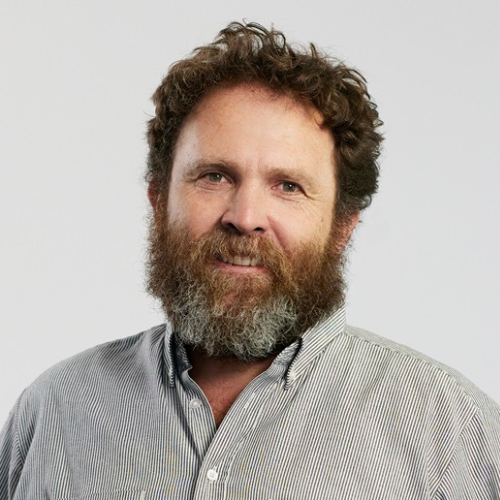
Saul Griffith
Saul is an engineer and entrepreneur specialising in clean and renewable energy technologies. Saul has founded a dozen technology companies across 20 years in Silicon Valley. Saul is the author of three books including Electrify, and The Big Switch. Saul has recently turned his attention from Otherlab, his independent Research and Development lab, to policy work and writing, including founding Rewiring America, Rewiring Australia and Rewiring Aotearoa, non-partisan organisations dedicated to electrification and decarbonisation. Saul is an Honorary Professor of Practice with the School of Mechanical, Materials, Mechatronic and Biomedical Engineering at the University of Wollongong, and a UNSW alumnus.
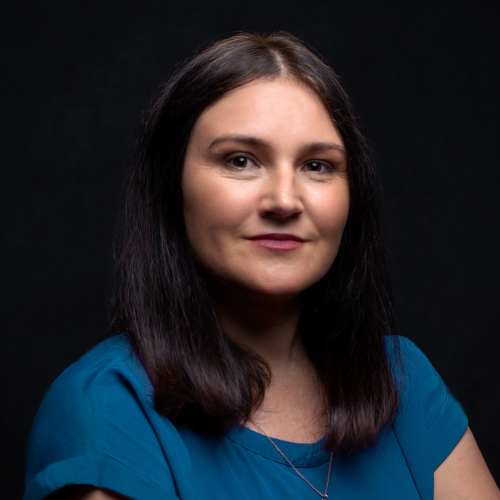
Heidi Lee Douglas
Heidi Lee Douglas’ work across advocacy, government, and filmmaking focuses on giving power to the people. As the CEO of Solar Citizens, she's led successful campaigns for state and federal home battery rebates, New Vehicle Emissions Standards, and solar for social housing, renters and apartments. Heidi believes that enabling a plurality of home power generation will create a fairer Australian economy, greater energy security and drive down carbon emissions.
Heidi is also Deputy Mayor of Bayside Council, and an award-winning film and television Writer/Director whose work across documentary and feminist horror specialises in moving the dial. Living in one of the most diverse areas of Sydney, Heidi is constantly reminded of the challenges and opportunities to find common ground, build bridges and create a better tomorrow.
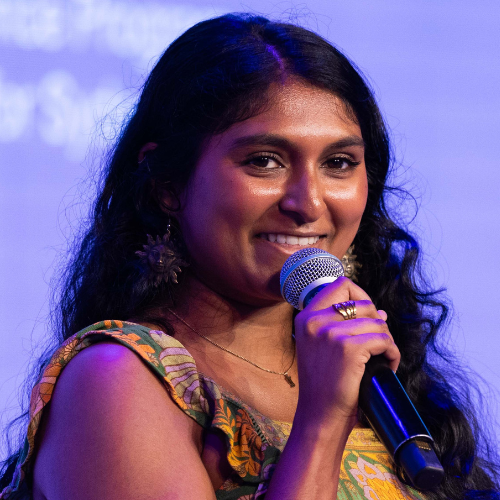
Grace Vegesana
Grace Vegesana (she/they) is the National Director of the Australian Youth Climate Coalition, and a 25 year old woman-of-colour who has been building youth power to end fossil fuel expansion since she was 17. Her legacy includes co-founding the People of Colour Climate Network, pioneering climate justice organising on Dharug Country in Western Sydney with AYCC, and mobilising 3000 Australian businesses to join the Climate Strikes. At the heart of Grace’s work is a fierce belief in a better, brighter, and more climate-resilient world for young people to inherit and thrive in - and a reminder that hope is not just a feeling, but a call to action.
Grace's commitment to justice extends beyond activism to governance, and she sits on the Boards of the Foundation for Young Australians, Sweltering Cities, and Cricket for Climate. She believes that we should not just advocate for change, but shape the institutions that drive it.
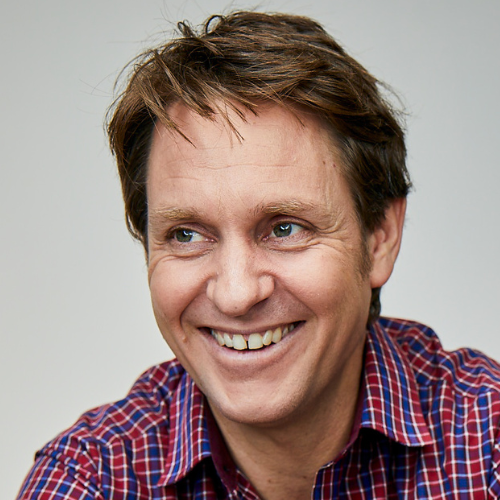
Craig Reucassel
Craig Reucassel is an Australian writer, director and comedian who is best known for his work with The Chaser and for going through your bins on The War on Waste. He is currently the host of breakfast for ABC Radio Sydney. He and some friends started the satirical newspaper The Chaser which went on to TV shows like CNNNN and The Chaser's War on Everything.